Marantz CDR600
A professional CD recorder that broke the five-figure price barrier and made the recordable disc a studio tool rather than a fantasy.
Overview
The number to know on the Marantz CDR600 is $7,500. That was the list price when Marantz Professional Products brought it to market, and in the early 1990s that was disruptive. Electronic Musician (undated clipping, p.64) described the CDR600 as the machine that was "smashing the $10,000 price barrier." It noted that the CDR600 and its consumer-oriented twin, the CDR1, recorded discs that could be played back in any CD player once the recording process was complete. For a working studio, that was the point. You could hand a client a reference disc and they could play it in the car on the way home.
The same write-up listed the use cases in detail. Studios would run reference mixes, demos, and master-tape archives. Radio stations would compile libraries of jingles, station IDs, and sound bites. Post houses would assemble volumes of sound effects. Sampler users would cut custom discs packed with thousands of samples.
Marantz leaned hard on the audiophile angle. The company's advertising carried the phrase "Audiophile Quality" prominently, and period publications repeated the claim without necessarily endorsing it. Read it as marketing, not a measured verdict.
Per contemporary coverage, the CDR600 offered analog and digital I/O, Red Book and Orange Book compatibility, and both automatic and manual track incrementing. Those aren't glamorous specs, but track incrementing is what separates a usable mastering recorder from a frustrating one. You could drop index points on the fly or let the machine do it automatically, depending on the session.
The unit was distributed in the U.S. by Dynascan Corp, and Marantz Professional Products ran support out of the Chicago area. Blank media was sold direct to owners: 63-minute discs at $15 apiece.
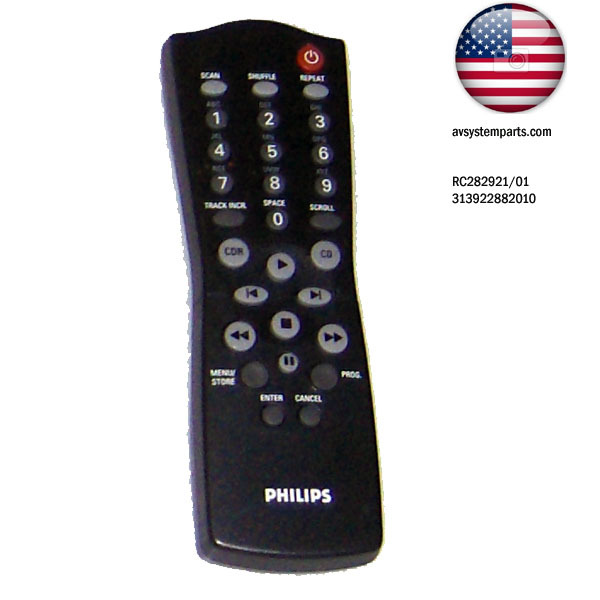
Marantz didn't leave early adopters stranded. The company later introduced the CDR610 at $4,000 and dropped the CDR600's price to $3,500 at the same time. It also offered a $400 factory upgrade that brought a CDR600 up to full CDR610 functionality. That upgrade added true AES/EBU digital I/O, cascade connections for running several units in parallel, switchable balanced +4 dBm or unbalanced -10 dBu operation, and calibration pots for matching the digital meters to an external reference. The CDR610 also shipped with a 16-key wired remote that could control CD players, cassette decks, and DCC recorders as well as the recorder itself, with a parallel port for external controllers and event generators.
That upgrade path is what makes the CDR600 interesting to collectors today. A CDR600 is effectively a CDR610 waiting on a modification that may or may not still be obtainable.
Recording Engineer (March 1992, p.57) covered the Marantz CD recorder in a column roughly a year after first discussing it, offering background on the Philips purchase of the Marantz name and its reintroduction to the American market. That corporate history matters for anyone trying to date or contextualize a CDR600 — this is a Philips-era Marantz professional product, not a Saul Marantz-era hi-fi piece, and it should be valued accordingly.
Know the caveats before buying. Mix (February 1993, p.106) noted in its audition coverage that the unit does not automatically convert incoming DAT index numbers (start ID markers) into CD-R track increment flags. Anyone planning to use a CDR600 as a DAT-to-CD transfer station has to work around that by hand. Recording Engineer (March 1992, p.57) noted the machine has digital inputs and outputs but lacks AES/EBU connections, with analog ins and outs via XLR and RCA and SCMS not implemented. The CDR610 upgrade fixes the AES/EBU gap.
Electronic Musician's technical editor went on record rejecting the idea that digital is inherently less warm than analog. That is a period opinion, not a measurement.
eBay Listings


As an eBay Partner, we earn from qualifying purchases. This helps support our independent vintage technology research.
Related Models
- Marantz 1090
- Marantz 10B
- Marantz 1120 (1971–1977)
- Marantz 1180
- Marantz 1200B