Marantz 10B (1968–1970)
The tuner that swapped a needle for a beam of light - and set the standard for FM reception for decades.
Overview
The Marantz 10B weighs 28 pounds, which is heavy for a tuner and heavy for anything that doesn't make its own power. Inside is a fully solid-state FM stereo tuner that Marantz introduced in 1968 as its most complex and expensive model ever. It was not an incremental step up the line.
The 10B was the first all-solid-state FM stereo tuner Marantz ever produced. Other manufacturers were still bolting transistors onto tube-era chassis designs. Marantz went all-silicon, with silicon transistors throughout and extensive use of printed circuit boards. High Fidelity (January 1966, p.63) described the results in fringe-area reception as "rather spectacular" - a phrase that appeared repeatedly in period coverage of the model.
The circuitry wasn't the only thing that set the 10B apart. Instead of a conventional tuning meter, it used a beam-of-light tuning system - a small light source and calibrated scale that responded to signal strength with a visual precision no needle could match. Saul Marantz was still deeply involved in the design, and this was his last great statement before stepping away.
Owners describe the 10B in terms that border on reverence. One AudioKarma member with an original factory alignment reports it "still does stereo spread perfectly," and the 10B is called one of the most reliable tuners of its era. It isn't a perfect instrument, though. The beam-of-light bulb fails. The power supply capacitors dry out. And if a crystal filter goes, you're looking at a custom job. More on that below.
Key Features
Beam-of-Light Tuning Indicator
Every tuner of this era had a signal-strength meter. The 10B had a beam-of-light system instead of a conventional needle: a small lamp that projected a beam onto a calibrated scale, giving a visual lock on the station that was faster to read and more precise than any mechanical movement. It's the first thing anyone notices about the front panel, and it remains the model's signature feature half a century later.
The beam depends on a small 12V bulb, and Marantz no longer makes it. Owners have adapted substitute bulbs, but it's a consumable you should factor into ownership. When it fails, and it will, the tuner still works. You just can't read the beam.
Phase-Locked-Loop Stereo Decoder
The 10B used a phase-locked-loop multiplex decoder, which was genuinely unusual technology for 1968. Most tuners of the period used simpler stereo demodulation schemes that could struggle with multipath distortion and separation drift. The PLL approach locked onto the pilot signal with a precision that kept stereo separation stable and clean, even on weak or reflected signals.
This was a fundamental architectural choice that put the 10B years ahead of its contemporaries. When High Fidelity (November 1965, p.57) interviewed company founder Saul Marantz about the model, the discussion centered on how this design improved fringe-area performance - the exact scenario where lesser tuners fell apart. The PLL decoder is a big reason why owners report the 10B can sound as good as a modern high-end tuner when properly aligned.
Crystal Filters in the IF Section
The intermediate frequency section is where tuners live or die. The 10B used crystal filters here, not the ceramic or LC filters found in lesser designs. Crystal filters offer a much steeper, more precise bandpass than the alternatives, so the 10B can separate a weak station from an adjacent strong one without mushing them together.
The trade-off is one of the model's few genuine weaknesses. Original crystal filters are effectively unobtainium now. If one fails, you're not ordering a replacement part — you're commissioning custom work from someone who knows what they're doing. That's a real consideration for anyone buying a 10B today, and it's worth asking the seller whether the filters have ever been touched.
Regulated Power Supply and Solid-State Construction
Marantz didn't just swap tubes for transistors in the 10B. It used a regulated power supply, extensive printed circuit boards, and silicon transistors throughout. A regulated supply means the tuner's performance doesn't sag when the wall voltage fluctuates or when the circuit warms up. That's the kind of engineering that lets an original factory alignment still perform perfectly decades later.
The all-silicon design also means the 10B doesn't generate the heat of a tube tuner, which is easier on the surrounding components. It isn't maintenance-free, though. The capacitors in the power supply dry out over time, as do the small electrolytics in the audio path. Any 10B that hasn't been serviced in the last decade is living on borrowed time in that regard.
Historical Context
The Marantz 10B was introduced in 1968 and sold only until 1970, a short production run. It was Marantz's most complex and expensive tuner, and the most expensive tuner Marantz ever sold. The original MSRP was $1,200, which in 1968 was an extraordinary sum for a component that didn't amplify anything. You could buy a decent used car for that money.
The timing matters. Solid-state audio was still finding its footing in 1968, and many early transistor designs were harsh and unreliable compared to the tube gear they replaced. Marantz's decision to go all-silicon with a regulated power supply and crystal IF filters was a bet that solid-state could match — and exceed — the best tube performance. The 10B proved it could, but at a price point that limited its audience to the most serious enthusiasts.
The short production window means total numbers are limited, though no definitive production count exists in available documentation. What's clear is that the 10B arrived at the peak of Marantz's engineering ambition and left the catalog just as quickly — a brief, brilliant flash that defined what a tuner could be.
Collectibility & Value
If you're shopping for a 10B today, bring patience and a thick wallet. Current asking prices sit around $4,500 for a working unit with cosmetic wear — and that's for one with a recently recapped power supply, otherwise original. The model has developed a devoted following among collectors who recognize it as the culmination of Saul Marantz's design philosophy.
Maintenance is the other cost. The beam-of-light indicator is prone to bulb failure, and the small 12V lamp is no longer available from Marantz, so owners use substitutes. The capacitors in the power supply dry out and need replacing, as do the small electrolytics in the audio path. Budget for a professional service visit, because a 10B that hasn't been touched since the Nixon administration is not going to perform to spec.
Owners consistently report that the 10B can sound as good as a modern high-end tuner when properly aligned. One AudioKarma member with an original factory alignment reports it still does stereo spread perfectly. The sound has a warmth that is unmistakable, though as one Klipsch forum member put it, it is "not neutral in the way modern tuners are."
The crystal filters are the one item you cannot replace off the shelf. If one fails, you are looking at a custom job from a specialist. The beam-of-light bulb is annoying but solvable. The capacitors are routine.
eBay Listings


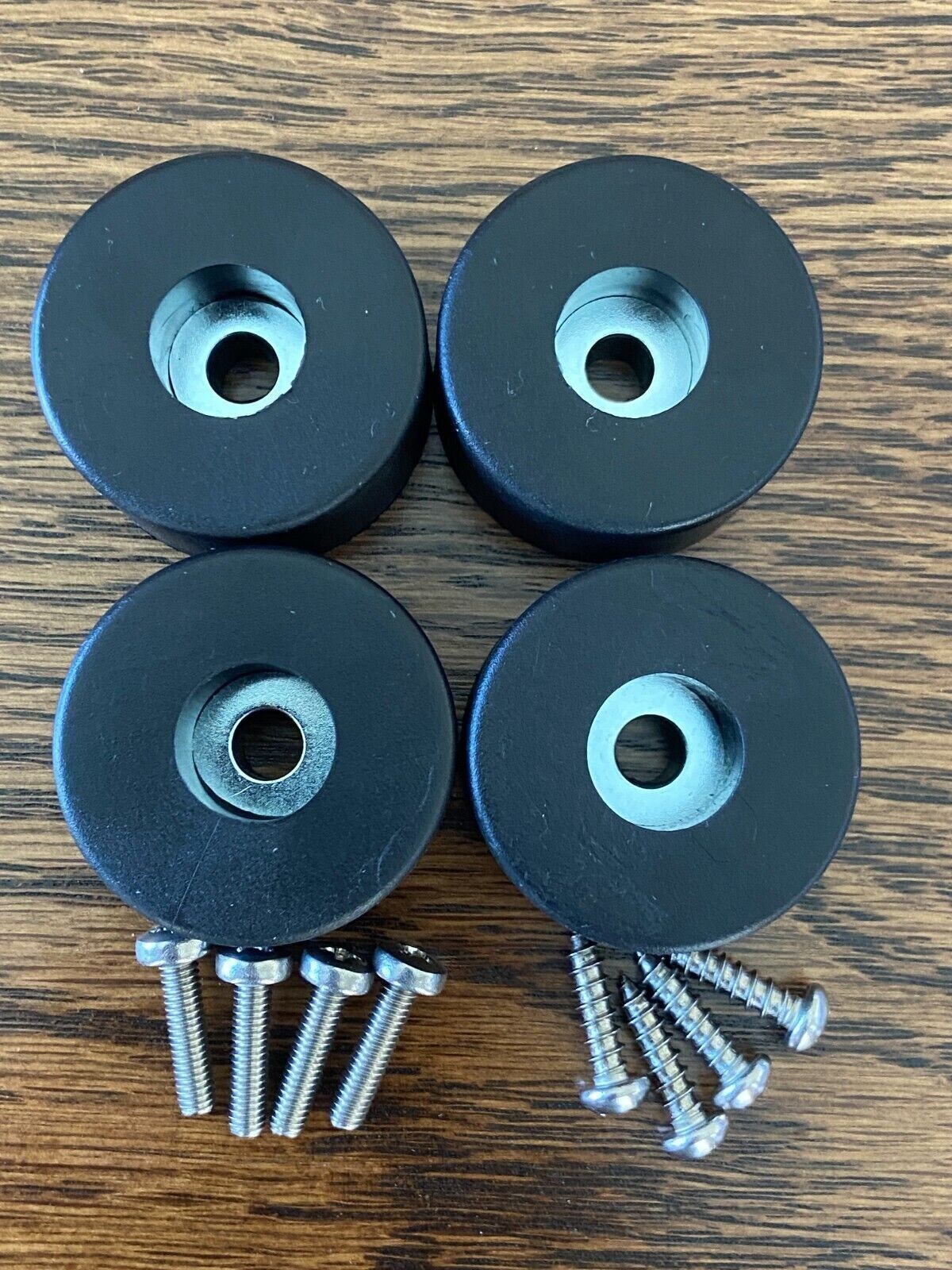
As an eBay Partner, we earn from qualifying purchases. This helps support our independent vintage technology research.
Related Models
- Marantz 1090
- Marantz 1120 (1971–1977)
- Marantz 1180
- Marantz 1200B
- Marantz 1515L