Marantz 2238 Stereo Receiver (1977)
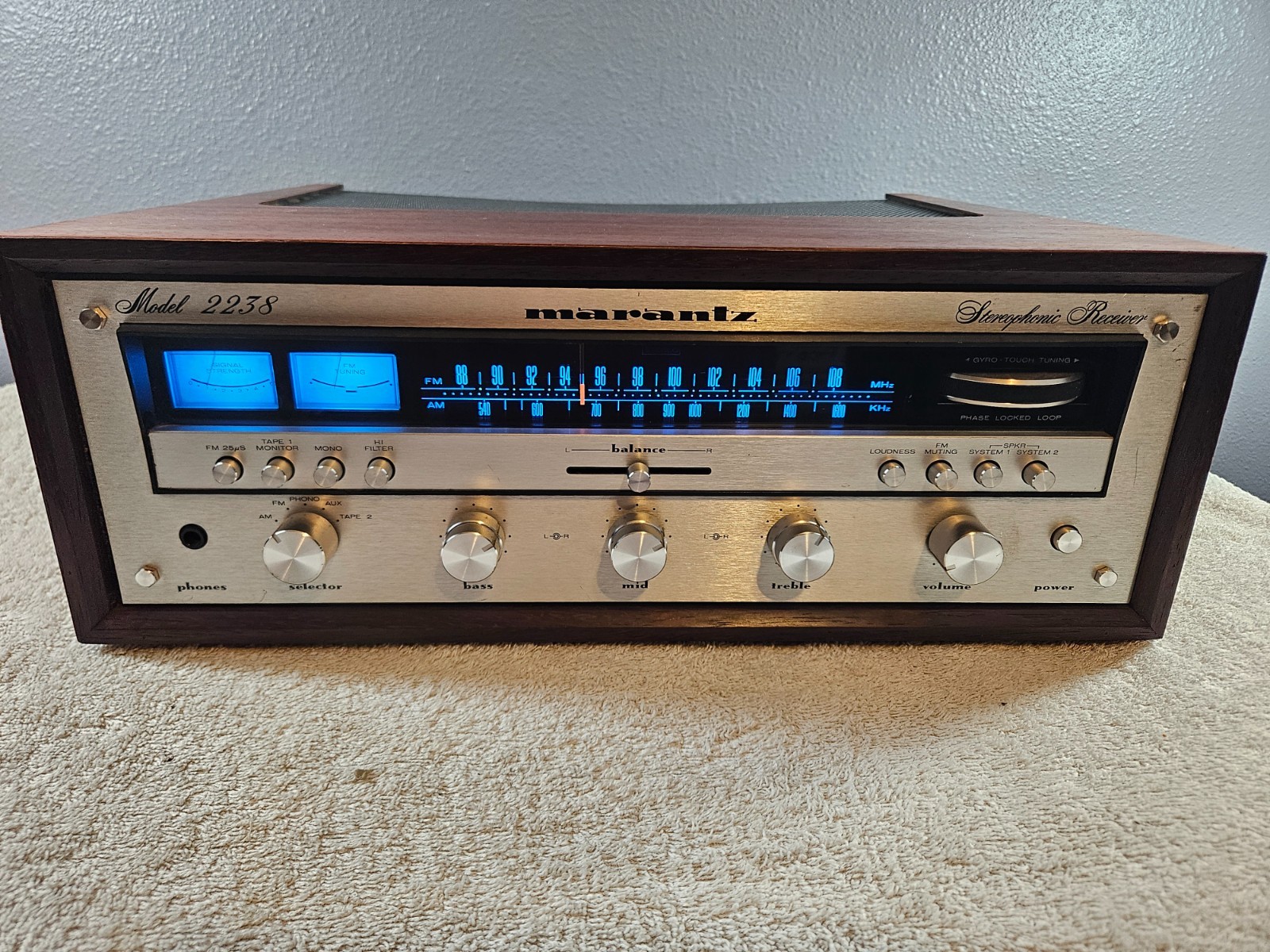
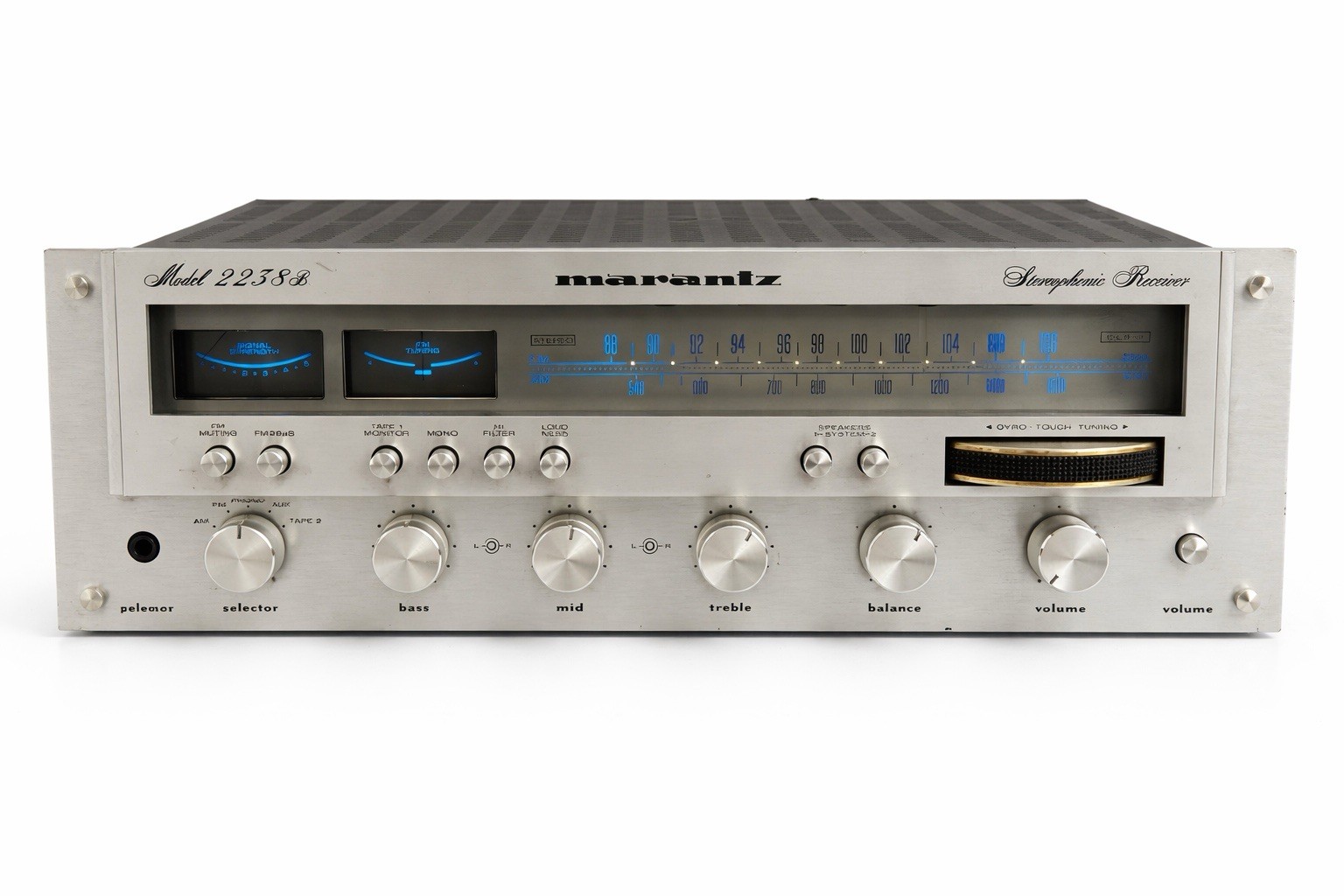
The Marantz 2238 is a classic stereo receiver produced from 1977 to 1978, representing the golden era of analog audio design. As part of Marantz’s revered 22xx series, the 2238 combines robust engineering, elegant aesthetics, and a warm, musical sound signature that continues to attract audiophiles and vintage gear enthusiasts today. With its dual power supply, high-quality phono stage, and refined feature set, the 2238 stands as a testament to 1970s receiver excellence.
Specifications
| Feature | Specification |
| Year of Production | 1977–1978 |
| Power Output | 38 watts per channel into 8 ohms (stereo) |
| Impedance | 8 ohms (nominal) |
| Sensitivity | 1.8V for full output |
| Total Harmonic Distortion | <0.1% (at rated power) |
| Frequency Response | 20Hz – 20kHz (+/-1dB) |
| Phono Input | MM with high-quality RIAA equalization |
| Tone Controls | Bass, treble, and loudness contour |
| Inputs | Phono, Tape, Aux, Tuner |
| Outputs | Tape out, Preamp out, Headphones |
| Tuning Display | Analog tuning meter |
| Power Supply | Dual power supply for improved channel separation |
| Dimensions | 17" W × 6" H × 14" D |
| Weight | 24 lbs |
| Finish | Black or silver front panel with walnut veneer sides |
Historical Context
The Marantz 2238 was introduced during a peak period for integrated receiver design. As part of the 22xx series, it followed in the footsteps of legendary models like the 2225 and 2230, building on Marantz’s reputation for reliability, craftsmanship, and sonic excellence. The 2238 was engineered to deliver high-fidelity performance in a single chassis, integrating a preamp, power amp, and AM/FM tuner with a dedicated MM phono stage—making it ideal for vinyl enthusiasts.
Its walnut veneer cabinet and clean, functional layout reflect the design ethos of the late 1970s, where form met function without excess. The dual power supply design was a notable feature, reducing crosstalk and enhancing dynamic range—uncommon in many receivers of its class at the time.
The 2238 is now recognized as a well-balanced performer that captures the "Marantz sound": warm, smooth, and highly musical. It remains a favorite among collectors and users who appreciate vintage gear with genuine sonic character.
Sound Signature
The Marantz 2238 delivers a warm and smooth sound with a slightly laid-back presentation, making it ideal for extended listening sessions. Its detailed midrange brings vocals and acoustic instruments to life, while the rich bass provides a solid foundation without overpowering. Highs are well-extended but never harsh, contributing to an overall natural and engaging listening experience. Whether paired with vintage or modern speakers, the 2238 offers a timeless analog warmth that digital systems often struggle to replicate.
Maintenance and Tips
Like all vintage electronics, the Marantz 2238 benefits from proper care and occasional maintenance to ensure optimal performance:
- Cleaning Controls: Over time, volume knobs, tone controls, and input selectors can become noisy due to oxidation. Cleaning the potentiometers and switches with contact cleaner often resolves crackling or channel dropouts.
- Capacitor Replacement (Recapping): Aging electrolytic capacitors can degrade, affecting power supply stability and audio quality. A full recap of the power supply and signal path capacitors is recommended for units that haven’t been serviced in decades.
- Lamp Replacement: The tuning meter and power indicator lamps may fail over time. These are typically low-voltage incandescent bulbs and can be replaced with modern equivalents or LED retrofits (with appropriate resistors).
- Bias and Alignment Check: For peak performance, especially after recapping, a professional alignment of the tuner and amplifier bias is advisable.
- Ventilation: Ensure adequate airflow around the unit to prevent overheating, particularly during long listening sessions.
Collectibility and Market Value
The Marantz 2238 holds a collectibility rating of 7 out of 10. While not as rare as some earlier Marantz models, it is highly regarded for its build quality, sound, and place in the brand’s legacy. Fully functional units in good cosmetic condition typically sell for $300–$600, with original packaging, manuals, and unmodified internals commanding higher prices. Originality and working condition are key factors in valuation.
Enthusiasts often seek the 2238 for its warm sonic character and compatibility with classic speaker pairings, making it a practical collector’s item that can also serve as the heart of a vintage stereo system.
Conclusion
The Marantz 2238 is more than just a relic of the 1970s—it’s a high-performing, sonically rewarding receiver that continues to deliver exceptional value. Whether you're building a vintage setup or exploring the roots of high-fidelity audio, the 2238 offers a compelling blend of style, substance, and soulful sound that few modern receivers can match. With proper care, it can provide decades more of musical enjoyment.
eBay Listings


As an eBay Partner, we earn from qualifying purchases. This helps support our independent vintage technology research.
Service Manuals & Schematics
- Service Manual — archive.org
Related Models
- Marantz SR-2000 (1999–2001)
- Marantz 2240 (1974)
- Pioneer QX-949A (1978)
- Pioneer SX-2000 (1978)
- Pioneer SX-2500 (1978)
- Onkyo TX-1500MKII (1975)
- Pioneer QX-646 (1978)
- Pioneer SX-1900 (1978)
- Pioneer SX-201 (1978)
- Pioneer SX-251R (1976)