Carl Zeiss Jena Cardinar
A modest name that covers two different lenses. Neither is common, and both are curious.
Overview
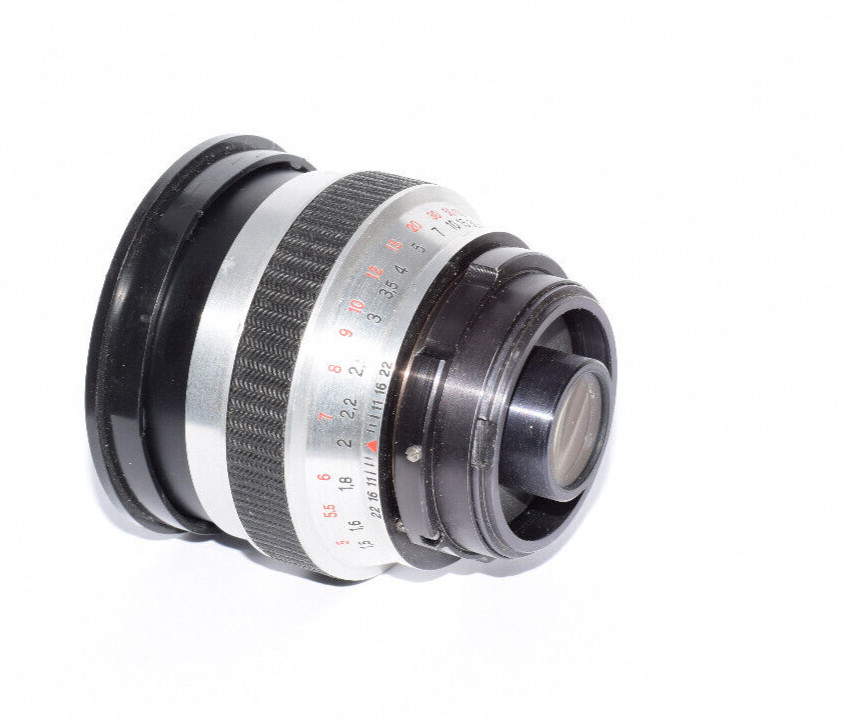
The Carl Zeiss Jena Cardinar isn't a single lens. The name was applied to at least two different optics from the East German maker: a 100mm f/4 and an 85mm f/2.8. They share a name but differ in mount, speed, and intended use. The 100mm f/4 was built for Werra bayonet cameras, a less common system that kept it out of most hands. The 85mm f/2.8 used the Pentina mount, another proprietary connection that tied it to a narrow range of bodies. Neither followed the mass-market M42 path, which helps explain why they're obscure and hard to find now.
Owners report the 100mm f/4 as a telephoto suited for portraits and detail work, though its f/4 maximum aperture keeps it from being a low-light lens. The 85mm f/2.8 is faster by one stop and fits more comfortably in the classic portrait category. One user described it as following "a typical Sonnar design :)", which would point to its likely optical lineage, though no official design documents confirm this. Both lenses carry the Carl Zeiss Jena name, but neither appears to have been positioned as a flagship.
Specifications
| Manufacturer | Carl Zeiss Jena |
| Product type | Lens |
| Focal length & maximum aperture | 100mm f/4 |
| Focal length & maximum aperture | 85mm f/2.8 |
| Mount | Werra bayonet (for 100mm f/4) |
| Mount | Pentina mount (for 85mm f/2.8) |
| Minimum focusing distance | 0.8 m (for 100mm f/4) |
| Minimum focusing distance | 1 m (for 85mm f/2.8) |
| Filter size | 49mm (for 85mm f/2.8) |
| Optical Formula | 4 elements (for 100mm f/4, reportedly) |
Key Features
Werra Bayonet Mount (100mm f/4)
The 100mm f/4 was made exclusively for the Werra bayonet system, a mount used on a small family of East German cameras. That limited its compatibility from the start, and today adapters are scarce or non-existent. Collectors note that using this lens on modern systems often requires custom solutions, and even then mechanical quirks come up, particularly with aperture control.
Pentina Mount (85mm f/2.8)
The 85mm f/2.8 was designed for the Pentina mount, another proprietary connection. Pentina is slightly better documented than the Werra system, but it remains a niche in vintage circles.
49mm Filter Thread (85mm f/2.8)
Unlike its sibling, the 85mm f/2.8 has a 49mm filter thread. That's a practical advantage if you want to add UV, haze, or mild effects filters. No filter size is documented for the 100mm f/4, so it may lack one or use a proprietary fit.
Reported 4-Element Optical Design (100mm f/4)
According to the D65 product page, the 100mm f/4 version uses a 4-element optical formula. That's a simpler construction than many contemporary Zeiss designs, and it may reflect cost or size constraints. A conflicting report from the Flickr/zeissikonveb tag page claims the design evolved from 6 elements in 4 groups to 6 elements in 5 groups. That can't be reconciled with the 4-element claim. With no official documentation, the 4-element count is presented here with caution, marked as "reportedly" to reflect uncertainty.
Typical Sonnar Design (85mm f/2.8)
One user described the 85mm f/2.8 as following "a typical Sonnar design :)", implying a triplet-based telephoto layout known for high contrast and moderate aberration control. Factory data doesn't confirm it, but the comment fits the lens's focal length and speed. If accurate, it would place the Cardinar 85mm in a respected optical tradition, even though it was built for a limited mount.
Collectibility & Value
The 100mm f/4 version is frequently described as "RARE" in listings, and multiple owners report difficulty finding one at a sensible price, noting that "prices are usually far too steep." That suggests strong demand among collectors of obscure Zeiss Jena optics, likely driven by brand prestige and scarcity. The 85mm f/2.8 appears less discussed, though one example was listed for 850 lei (Romanian currency), indicating some market presence. A known quirk of the 100mm f/4, when adapted to Nikon F-mount, is that the user has to unmount the lens to adjust the aperture. That's a significant usability flaw for modern shooters.
eBay Listings


As an eBay Partner, we earn from qualifying purchases. This helps support our independent vintage technology research.