Canon EOS R7 (2022)
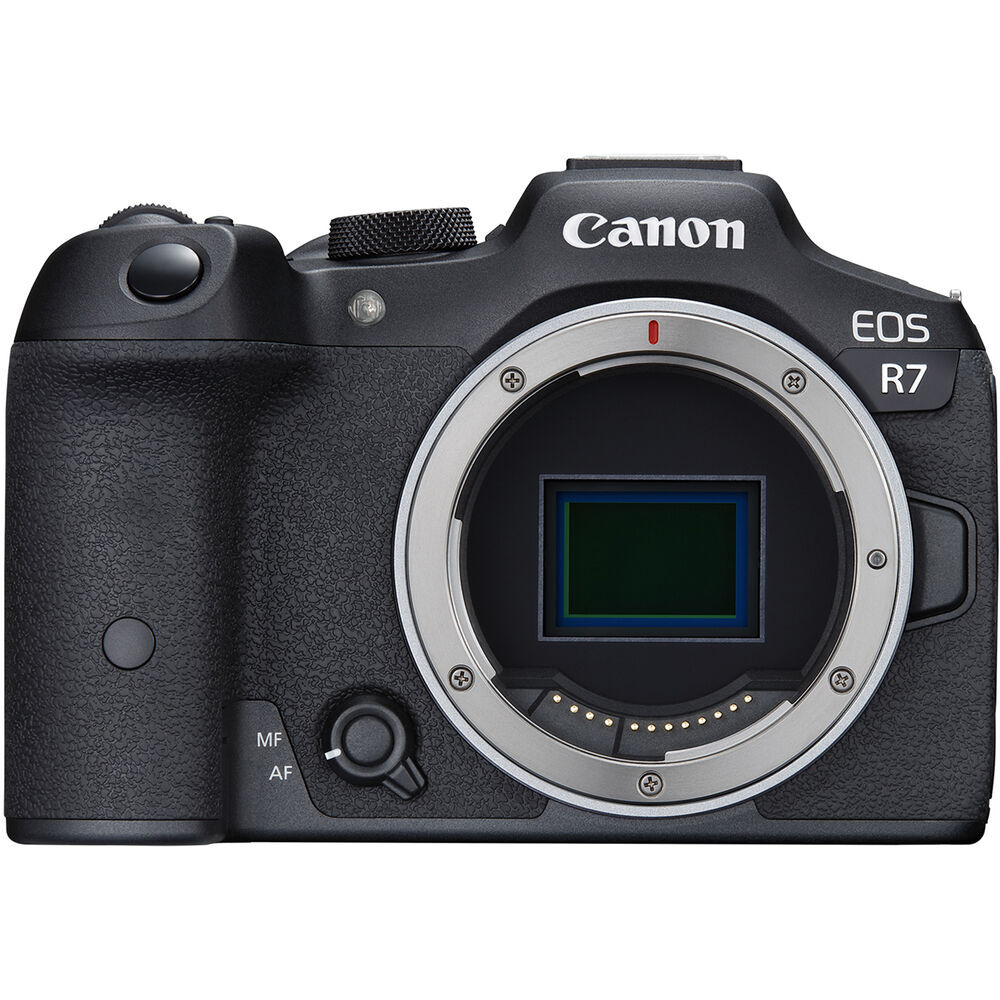
At 612 grams, it is light enough to carry all day and still feels like a serious camera in the hand.
Overview
The Canon EOS R7 is a mirrorless interchangeable lens camera introduced in 2022. It is Canon's first high-end APS-C body in the EOS R system, and it sits above the EOS R10 in the lineup. It costs $1,499 for the body alone. That targets enthusiasts and semi-professionals who want pro-level speed and resolution without the full-frame price. The camera builds on Canon's Dual Pixel AF II technology, with fast, reliable autofocus across nearly the entire frame. That matters for action and wildlife shooters who can't afford missed focus.
The sensor is a 32.5 MP APS-C CMOS that records images at 6960 x 4640 pixels, with a pixel pitch of 3.20µm. Owners report excellent dynamic range and detail, particularly in good light. High ISO beyond 12800 can show noticeable noise, even though the expandable range goes up to 51200. Sensor readout takes approximately 29.2 ms. That helps reduce rolling shutter in video and with the electronic shutter, but it doesn't eliminate it. The diffraction-limited aperture is f/5.2, so optimal sharpness is typically found between f/5.6 and f/8.
Speed is where the R7 stands out. The mechanical shutter manages 15 fps and the electronic shutter hits 30 fps shutter: 30 fps), which keeps up with fast-moving subjects. Buffer depth isn't specified in the fact sheet, but user reports suggest it handles extended bursts well, especially with UHS-II cards in both of its dual SD card slots card slots). The camera shoots 4K 60p video oversampled from 7K), a rare feature in its class that gives sharp, detailed footage. Video recording limits, codecs, and bitrates are not documented in the available sources.
In-body Image Stabilization (IBIS) is a major addition, offering up to 8 stops of correction with compatible RF lenses. Some sources cite 7 stops with coordinated control IS, so the benefit varies with lens and shooting mode. Either way, handheld shooting gets much easier, especially in low light or with longer telephotos. The camera uses the LP-E6NH lithium-ion battery, which several other Canon bodies share. That means wide availability and third-party support.
Dimensions are approximately 132.0mm x 90.4mm x 91.7mm, which is compact for what the camera does. The body weighs about 612 grams including battery and memory card. The multi-function hot shoe supports traditional Speedlite flashes and newer digital accessories like microphones and transmitters. In many setups that removes the need for external power or audio interfaces.
Autofocus is a highlight. There are 651 AF areas covering approximately 100% of the frame, and 5915 individually selectable points. The system supports phase detection, face and eye tracking, subject recognition, and multiple manual selection modes including AF point expansion and flexible zone AF. Users say the tracking is strong, though some report inconsistencies with certain third-party lenses or in low-contrast scenes.
Specifications
| Manufacturer | Canon |
| Model | EOS R7 |
| Type | Mirrorless interchangeable lens camera |
| Introduced | 2022 |
| Sensor | 32.5 MP APS-C CMOS |
| Pixel Dimensions | 6960 x 4640 |
| Pixel Size | 3.20µm |
| Diffraction-Limited Aperture | f/5.2 |
| Sensor Readout Speed | 29.2 ms |
| Image Stabilization | In-body Image Stabilization (up to 8 stops with compatible RF lenses) |
| Continuous Shooting | Mechanical shutter: 15 fps, Electronic (silent) shutter: 30 fps |
| ISO Range | 100-32000 (expandable to 51200) |
| Video | 4K 60p (oversampled from 7K) |
| Card Slots | Two SD (UHS-II) card slots |
| Dimensions | 132.0mm x 90.4mm x 91.7 mm |
| Weight | Approx. 612 g (including battery and memory card) |
| Battery | LP-E6NH |
| Autofocus Points | 651 AF Areas covering approx. 100% of the frame, 5915 individually selectable AF points |
| Manual AF Selection | AF point Expansion 4 points (up, down, left, right), AF point Expansion surrounding, Flexible Zone AF 1 |
| Hot Shoe | Multi-function shoe for digital audio accessories and other accessories |
Historical Context
The EOS R7 is part of the Canon EOS R series), and it is the brand's first high-resolution APS-C mirrorless body in the R lineup. It was introduced a step above the EOS R10, for users who wanted more speed and resolution than entry-level models but didn't need a full-frame sensor. Canon's press materials called it "the First EOS R-". No direct predecessor is documented, and no successor has been announced.
Collectibility & Value
The Canon EOS R7 launched at $1,499 for the body only. As of available data, new units sell for approximately $1,449, and the used market runs between $1,060 and $1,215. Collectibility is low, since the model is recent and still in active use. Canon has issued service advisories for certain units, which points to possible quality control issues in early production runs. User reports mention disappointment when comparing it to the full-frame R6, particularly in ergonomics and lens compatibility. Some forum discussions point to problems with lens adapters, specifically screws loosening on the metal flange, and to ergonomic criticisms suggesting the control layout was not adequately tested before release. These factors may affect long-term reliability and resale appeal.
eBay Listings


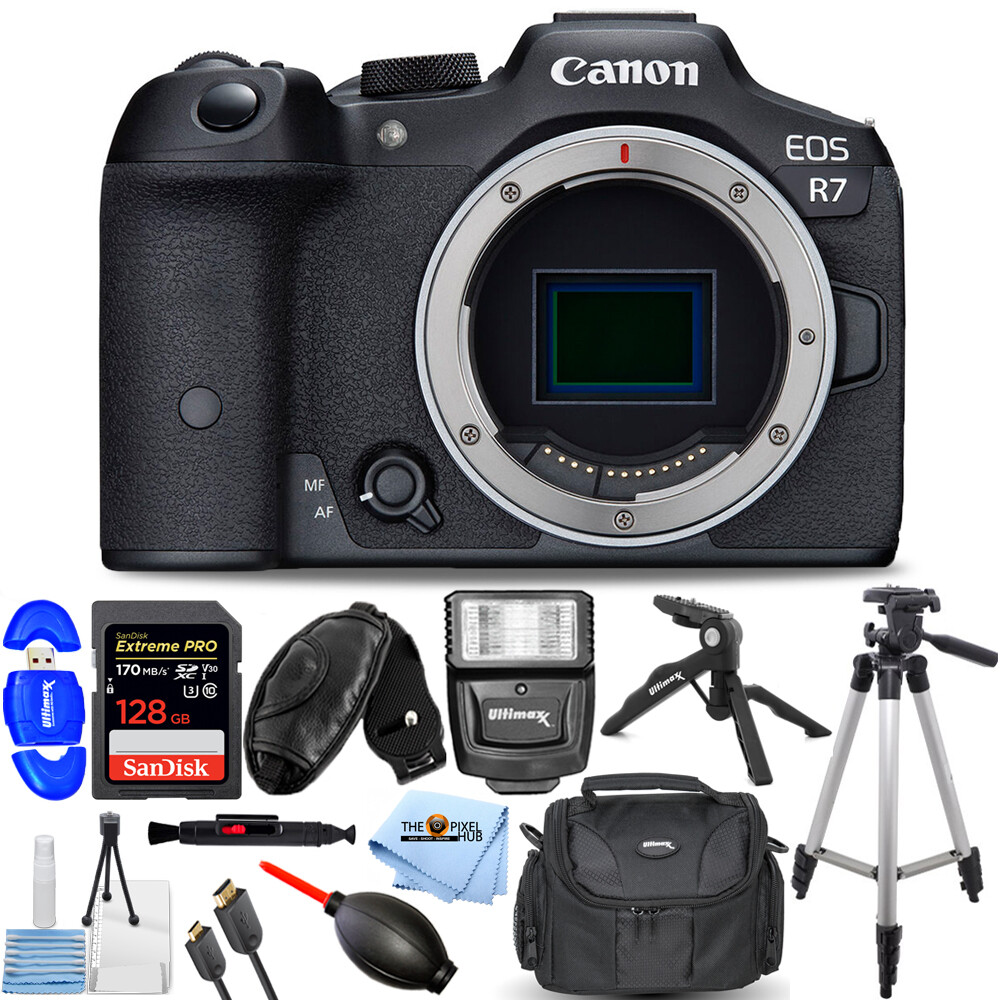
As an eBay Partner, we earn from qualifying purchases. This helps support our independent vintage technology research.