Canon EOS R6
At 680 grams, it sits in your hand like a reflex—familiar, poised, ready to move.
Overview
The Canon EOS R6 is a full-frame mirrorless camera introduced in 2020 as part of Canon’s push into the RF-mount ecosystem. Announced on July 9, 2020, it was positioned as an advanced tool for enthusiast photographers and videographers who needed speed, reliability, and high image quality without the extreme resolution demands of the flagship R5. At $2,499 for the body alone, it carved a space between pro and prosumer, offering a 20.1-megapixel full-frame sensor paired with the Digic X image processor. That combination delivers a balance of resolution and performance, particularly in continuous shooting, where it can manage 12 frames per second with servo AF or 20 FPS in electronic shutter mode with single AF—numbers that remain competitive years after release.
Owners report it handles like a DSLR reborn: the grip is deep, the controls are tactile, and the weight distribution with most RF lenses feels natural. The camera uses a Canon RF lens mount, which supports fast communication between lens and body and enables advanced autofocus features. It features two SD card slots, a practical touch for backup and overflow, though the specific SD compatibility (UHS-I/II) isn’t documented in available sources. The body measures 138.4 × 97.5 × 88.4 mm and weighs approximately 598 grams without battery or memory, rising to 680 grams when loaded—solid but not excessive, especially for those transitioning from DSLRs.
One teardown noted the presence of a “clock circuit” and examined how thermal management is implemented, suggesting internal engineering attention to timing stability and heat dissipation during sustained operation. While full details on construction materials or circuit topology aren’t available, the emphasis on thermals hints at design considerations for extended use, particularly in video or high-speed burst scenarios. Sample images from early reviews were captured hand-held as standard JPEGs, with no reliance on tripods, fine-quality settings, or RAW files—implying confidence in the camera’s out-of-camera rendering and stabilization performance.
Specifications
| Manufacturer | Canon |
| Resolution | Approx. 20.1 megapixels |
| Sensor Size | 35.9 x 23.9 mm |
| Pixel Dimensions | 5472 x 3648 |
| Processor | Digic X |
| Continuous shooting | 12/20 FPS |
| Lens Mount | Canon RF |
| Dimensions (W x H x D) | 138.4 × 97.5 × 88.4 mm |
| Weight | Approx. 598 g (body only); 680 g with battery and one SD card |
| Card slots | two SD card slots |
Historical Context
The EOS R6 was introduced to serve enthusiasts and semi-professionals seeking a capable all-rounder within Canon’s mirrorless lineup. It sits below the higher-resolution EOS R5 in the product hierarchy, offering slightly reduced specs in exchange for better thermal performance and a lower price point. Marketed toward photographers and videographers who prioritize speed and handling over maximum resolution, it filled a critical gap in the early RF system’s development. Its announcement on July 9, 2020, marked a pivotal moment in Canon’s mirrorless evolution, signaling a commitment to performance beyond the flagship.
Collectibility & Value
As of August 2025, used Canon EOS R6 bodies are listed between $1,531 and $1,627 at KEH, reflecting depreciation from its original $2,499 body-only price. A kit pairing the R6 with the RF 24-105mm f/4L lens was available new at Crutchfield for $3,399, representing a $200 discount. No data is available on long-term collectibility trends, common failures, or maintenance requirements specific to this model. The presence of the newer R6 Mark II in the market may influence demand for the original, though exact effects are undocumented.
eBay Listings
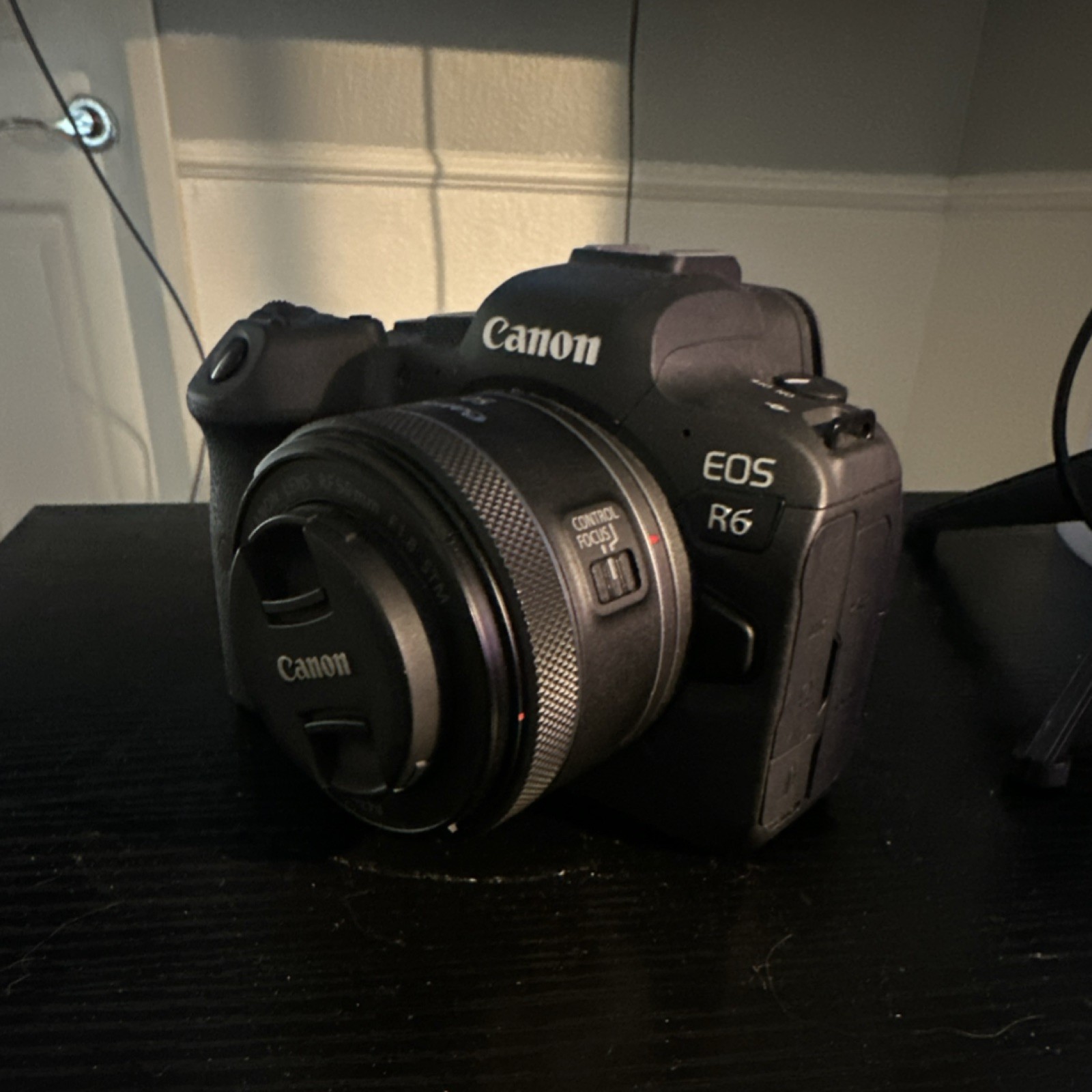


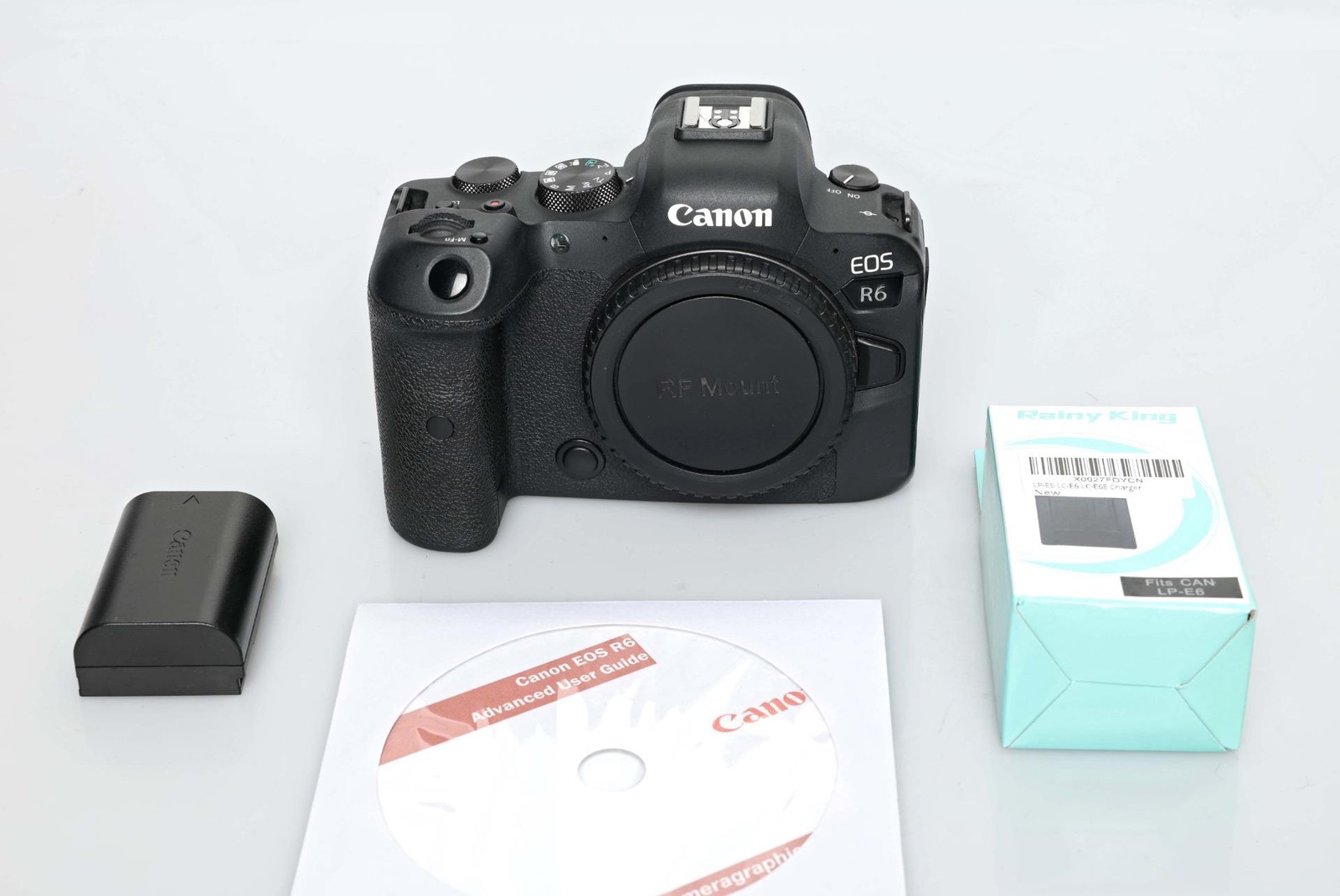
As an eBay Partner, we earn from qualifying purchases. This helps support our independent vintage technology research.