Sony TC-K333ESG (1989)
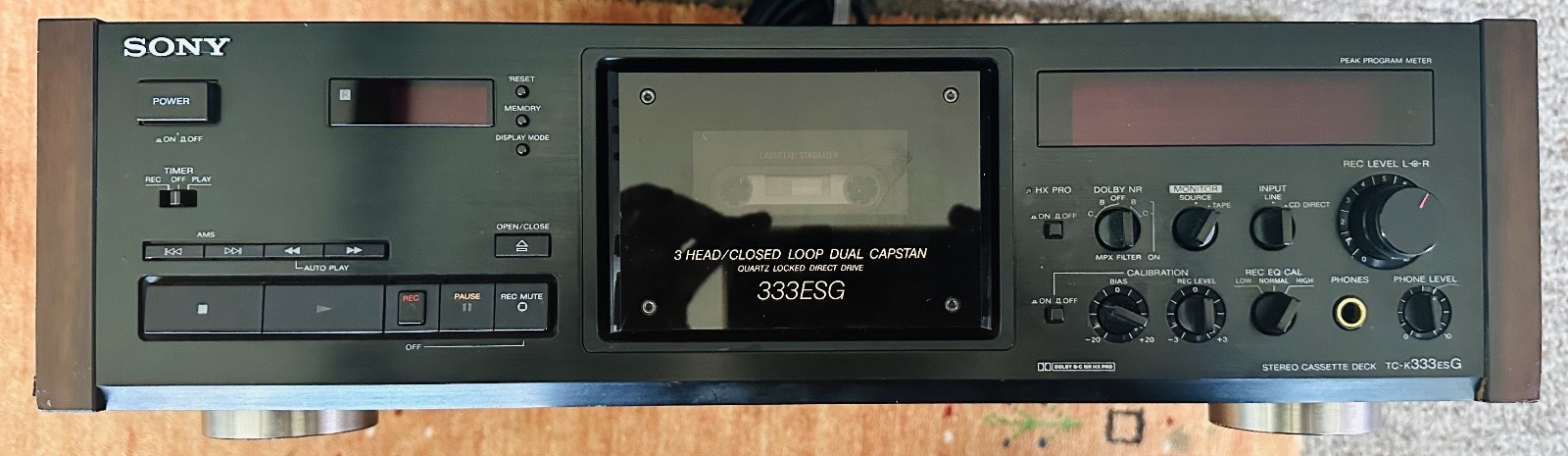
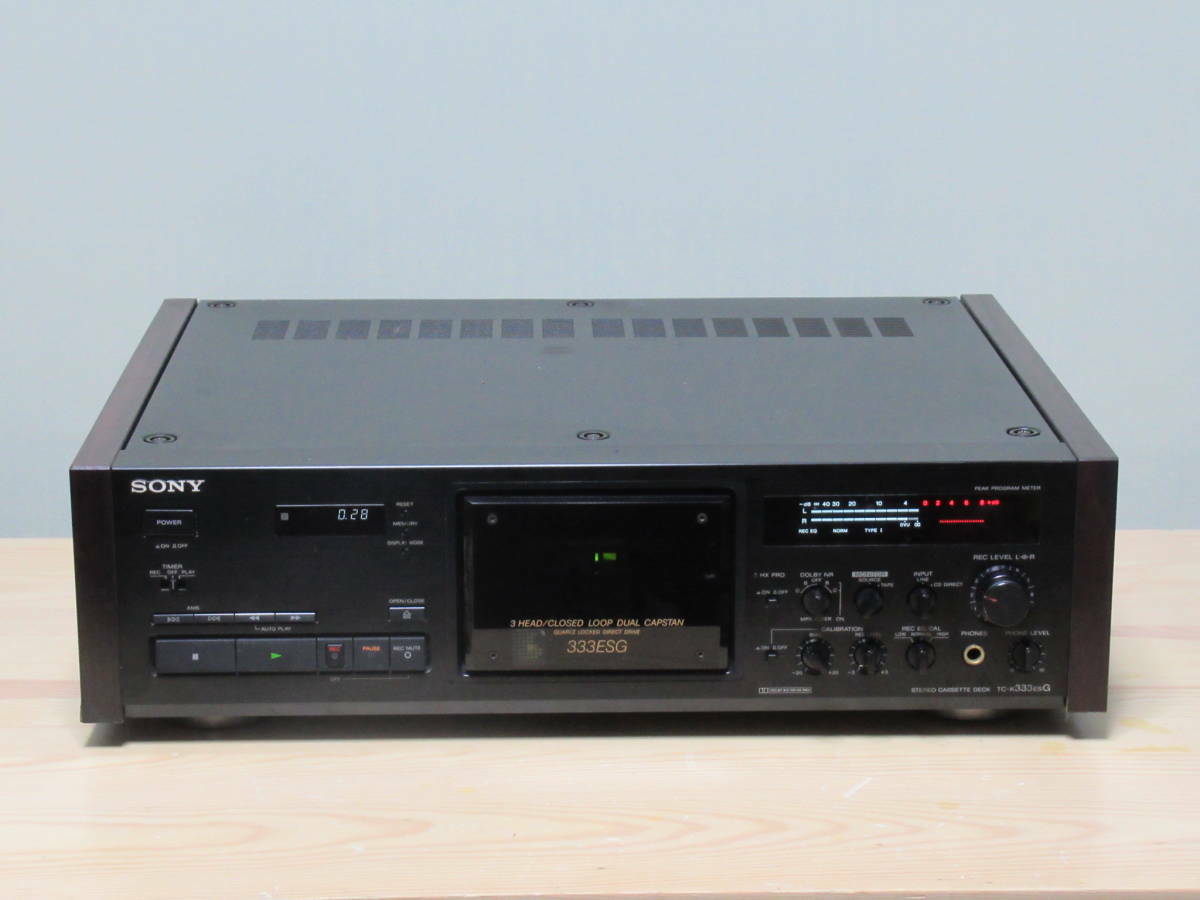
The Sony TC-K333ESG is a high-fidelity cassette deck released in 1989 as part of Sony's prestigious ES (Elevated Standard) series. Designed for audiophiles and professional users, this deck represents the pinnacle of analog cassette technology, combining precision engineering with advanced materials to deliver exceptional tape recording and playback performance.
Despite being categorized under amplifiers due to its integrated discrete amplification circuits for record and playback functions, the TC-K333ESG is technically a two-channel cassette deck with line-level inputs and outputs, making it a key component in high-end stereo systems of its era.
Specifications
| Feature | Specification |
| Model | TC-K333ESG |
| Brand | Sony |
| Category | Cassette Deck (Line-level amplifier component) |
| Production Years | 1989–1991 |
| Series | ES (Elevated Standard) |
| Tape Transport | Dual capstan, direct drive |
| Motor Type | Quartz-locked DC direct drive |
| Heads | Amorphous sendust record/playback head |
| Noise Reduction | Dolby B, Dolby C |
| Headroom Extension | HX Pro |
| Tape Calibration | Auto tape calibration |
| Amplifiers | Discrete record and playback amplifiers |
| Frequency Response | 20Hz–20kHz (typical, with tape-dependent variation) |
| Signal-to-Noise Ratio | >70dB (with Dolby C) |
| Total Harmonic Distortion | <0.05% (1kHz, reference level) |
| Input/Output Level | Line-level (standard RCA) |
| Impedance | Not applicable (line-level interface) |
| Sensitivity | Not applicable (line-level input) |
| Power Consumption | ~28W |
| Dimensions (W×H×D) | 430 × 142 × 335 mm |
| Weight | 10.5 kg |
| Finish | Silver with black front panel |
Historical Context
The TC-K333ESG was introduced during the final golden age of analog cassette technology, when manufacturers like Sony, Nakamichi, and TEAC were pushing the limits of tape fidelity. As part of the ES series, this model was engineered to meet elevated standards of performance, durability, and material quality.
Sony leveraged cutting-edge technologies in the TC-K333ESG, including the amorphous sendust head, which offered superior high-frequency response and reduced core saturation compared to traditional ferrite or permalloy heads. The quartz-locked direct drive motor ensured exceptional speed stability (±0.05%), minimizing wow and flutter for near-studio-grade accuracy.
The inclusion of HX Pro (Headroom Extension) allowed for higher-level recording without distortion, especially on high-bias tapes, while auto tape calibration simplified optimal bias and equalization settings across different tape types (normal, chrome, metal).
This model competed with high-end decks from Nakamichi and Denon, offering a more balanced, neutral sound signature compared to the sometimes aggressive highs of its rivals.
Sound Signature
The TC-K333ESG is renowned for its neutral, transparent, and detailed sound. It delivers a clean, uncolored reproduction of the source material with excellent channel separation, low noise floor, and extended frequency response. Thanks to Dolby C and HX Pro, it achieves one of the lowest noise levels in its class, making it ideal for critical listening and archival tape transfers.
Its discrete amplifier stages contribute to a dynamic and controlled presentation, with tight bass and crisp highs. The deck excels at preserving the original character of recordings without adding warmth or coloration, appealing to purists who value accuracy over sonic embellishment.
Maintenance and Tips
Like all vintage cassette decks, the TC-K333ESG requires regular maintenance to perform at its best:
- Belt Replacement: The rubber belts can degrade over time, leading to transport issues. Replace with high-quality silicone or urethane equivalents every 10–15 years.
- Head Cleaning: Clean the tape heads, capstans, and pinch rollers regularly with isopropyl alcohol (90%+) and a lint-free swab after every 20–30 hours of use.
- Demagnetizing: Use a non-powered hand demagnetizer every 50 hours of playback to prevent head clogging and high-frequency loss.
- Capacitor Aging: Electrolytic capacitors in the power supply and signal path may dry out. Consider a recap if the unit shows power instability or audio distortion.
- Head Alignment: If azimuth drift is suspected (poor stereo imaging or high-frequency loss), professional alignment is recommended.
- Tape Usage: Avoid using excessively worn or damaged tapes. Use IEC Type I (normal), II (chrome), and IV (metal) tapes with proper calibration.
Market Value and Collectibility
The Sony TC-K333ESG holds steady in the vintage audio market with a collectibility rating of 7/10. While not as rare as the Nakamichi Dragon, it is highly respected among cassette enthusiasts for its engineering and reliability.
- Market Value: $200–$400 USD, depending on condition, functionality, and completeness (original packaging and manuals add value).
- Demand: Moderate, with strong interest from analog purists and ES series collectors.
- Restoration Potential: High—many units can be restored to like-new performance with proper servicing.
Conclusion
The Sony TC-K333ESG stands as a testament to the sophistication of late-era cassette deck design. With its robust build, advanced features, and transparent sound, it remains a sought-after component for vintage hi-fi systems and tape archiving projects. For those seeking accurate analog tape reproduction with minimal maintenance overhead, the TC-K333ESG is a worthy centerpiece of any ES-series collection.
eBay Listings


As an eBay Partner, we earn from qualifying purchases. This helps support our independent vintage technology research.
Related Models
- Sony TC-2050SD (1978)
- Sony TC-2130A (1974)
- Sony TC-2220 (1972)
- Sony TC-FX6 (1982)
- Sony TC-K96R (1986)
- Aiwa AD-F990 (1993)
- Kenwood KX-3060 (1982)
- Stromberg-Carlson RS-404 (1975)
- Akai CS-F33R (1985)
- Akai DX-59 (1983)