Nakamichi DRAGON: The Apex of Cassette Deck Engineering
In the golden age of analog audio, few machines captured the imagination and reverence of audiophiles quite like the Nakamichi DRAGON. Introduced in 1982, this cassette deck wasn't just another high-end component—it was a technological tour de force that redefined what was possible with compact cassette technology. At a time when many were beginning to question the fidelity limits of the cassette format, Nakamichi answered with the DRAGON: a precision-engineered masterpiece that elevated magnetic tape to near-LP levels of sonic performance.
A Revolution in Tape Alignment
Before the DRAGON, cassette decks required meticulous manual alignment to achieve optimal playback. Azimuth—the angle at which the playback head meets the tape—was notoriously difficult to set correctly and would drift over time or between tapes, leading to high-frequency loss and stereo imaging issues. Most decks treated azimuth as a fixed, static parameter. Nakamichi saw it as a dynamic challenge.
The DRAGON introduced the groundbreaking AZ-1 Automatic Azimuth Control system, a servo-driven mechanism that actively adjusted the playback head’s angle in real time during playback. Using a dedicated high-frequency test tone recorded on the tape, the AZ-1 continuously monitored and corrected azimuth misalignment, ensuring perfect tracking regardless of tape quality or wear. This innovation alone made the DRAGON the first cassette deck capable of consistently extracting the full bandwidth and stereo separation the format could offer—up to 18 kHz at 30 ips equivalent, a staggering achievement for consumer audio in the early 1980s.
Technical Specifications
| Specification | Detail |
| Year Introduced | 1982 |
| Type | 3-Head, Full-Logic Auto-Reverse Cassette Deck |
| Tape Speed | 1⅞ ips (4.76 cm/s) |
| Heads | Record: Discrete, Fixed; Playback: AZ-1 Auto-Azimuth; Erase: Fixed |
| Motor System | Three direct-drive motors (capstan, supply, take-up) |
| Wow and Flutter | < 0.055% (weighted) |
| Frequency Response | 20 Hz – 18 kHz (with CrO₂/Type II tape) |
| Signal-to-Noise Ratio | > 68 dB (Dolby C) |
| Total Harmonic Distortion | < 1.0% |
| Dynamic Range | > 60 dB |
| Azimuth Correction | Real-time, servo-controlled AZ-1 system |
| Tape Compatibility | Type I (Ferric), Type II (CrO₂), Type IV (Metal) |
| Noise Reduction | Dolby B, C, and HX Pro support |
| Output Level | 120 mV (line level) |
| Inputs/Outputs | RCA line in/out, 3.5mm mic in, remote control jack |
| Dimensions | 485 × 146 × 395 mm (W×H×D) |
| Weight | 15.5 kg (34.2 lbs) |
Sound Characteristics and Performance
The DRAGON wasn't just a technical marvel—it delivered sound that stunned listeners. Its three-head configuration (separate record, playback, and erase heads) allowed for true monitoring during recording, while the AZ-1 system ensured that every high-frequency nuance was preserved. The result was a soundstage of exceptional clarity, depth, and precision.
Listeners praised the DRAGON for its lifelike imaging, extended high-frequency response, and tight, controlled bass—qualities rarely associated with cassette decks of the era. When paired with high-quality metal tapes and well-recorded source material, the DRAGON could produce a listening experience that rivaled reel-to-reel systems at a fraction of the cost and complexity.
Its dynamic range and low distortion made it a favorite among professionals for field recording, broadcast dubbing, and pre-mastering. Even today, well-maintained DRAGON units are sought after by analog enthusiasts for creating high-fidelity cassette dubs of vinyl and digital sources.
Notable Features and Innovations
Beyond the AZ-1 system, the DRAGON was packed with cutting-edge features:
- Full-Logic Transport: The DRAGON used a sophisticated microprocessor-controlled transport system that eliminated the need for manual tape flipping. It sensed tape end via back-tension detection and reversed direction seamlessly.
- Dual Capstan Drive: For exceptional tape stability, it employed a dual capstan system with direct-drive motors, minimizing speed fluctuations and ensuring consistent tape-to-head contact.
- Discrete Head Amplifiers: Each head had its own dedicated, high-bandwidth amplifier circuit, preserving signal integrity and reducing crosstalk.
- HX Pro Compatibility: Though not a Nakamichi invention, the DRAGON fully supported Bang & Olufsen’s HX Pro (Headroom Extension) system, which dynamically adjusted bias during recording to increase headroom and reduce distortion on metal tapes.
- Build Quality: Housed in a massive, rigid chassis with a brushed aluminum faceplate and precision mechanical components, the DRAGON exuded quality. Its weight alone—over 15 kg—helped dampen vibrations and ensure stable operation.
Common Issues and Maintenance
As with any complex vintage machine, the DRAGON requires careful maintenance to perform at its best:
- AZ-1 Mechanism Wear: The auto-azimuth servo is delicate. Over time, lubricants dry out, gears wear, and sensors can misalign. A malfunctioning AZ-1 often results in muffled highs or unstable tracking. Reconditioning the AZ-1 requires specialized tools and expertise.
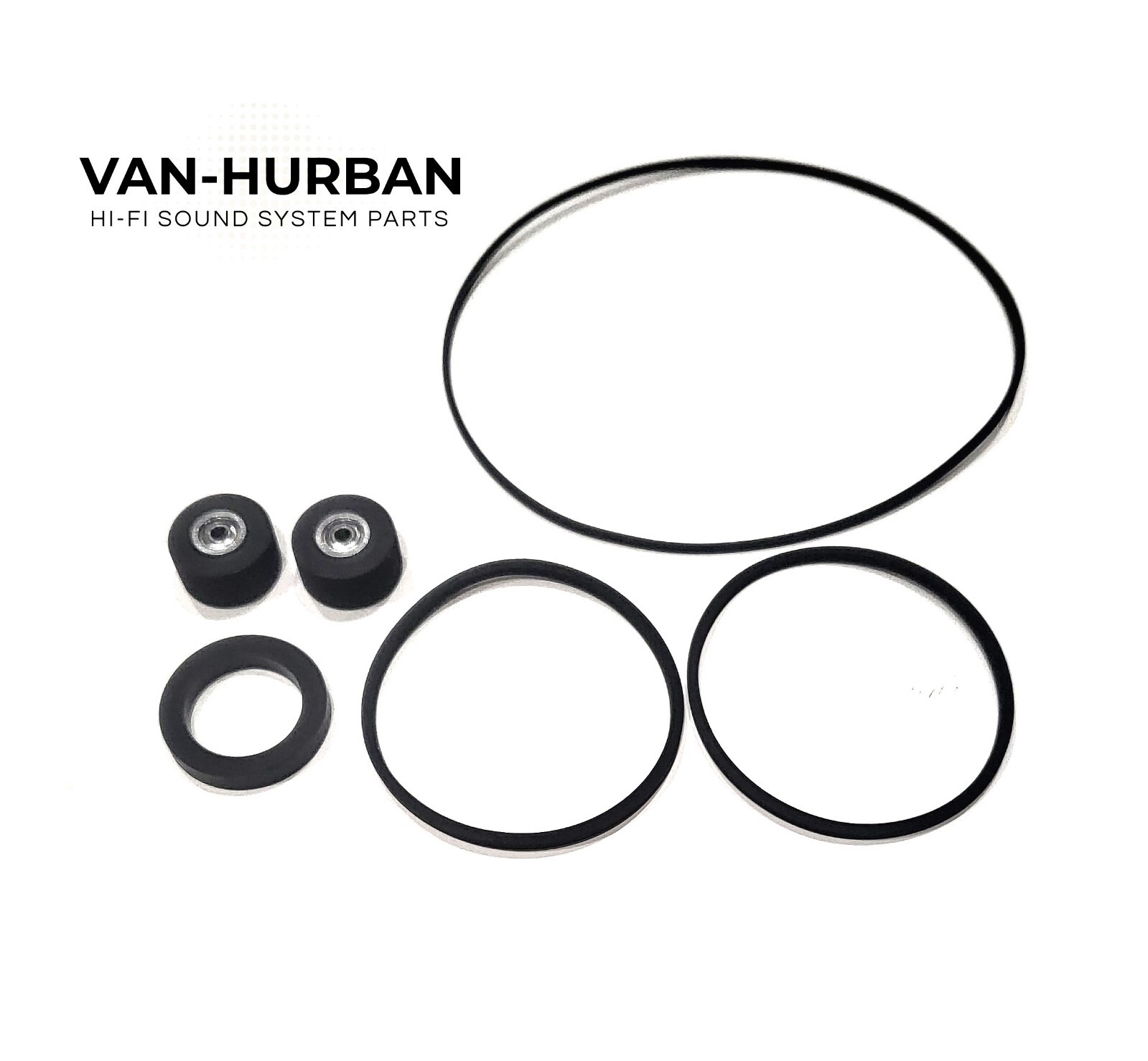
- Rubber Components: Idler tires, pinch rollers, and belts degrade over time. These must be replaced during a full service to restore proper tape tension and speed accuracy.
- Head Alignment and Wear: Although the AZ-1 corrects azimuth, the heads themselves can become misaligned or worn. Professional demagnetization and alignment are essential.
- Capstan Shaft Corrosion: In humid environments, the capstan shafts can corrode, leading to speed instability. Regular cleaning and lubrication are recommended.
- Electrolytic Capacitors: The power supply and signal path capacitors may need replacement after 40+ years to prevent noise, distortion, or failure.
Due to its complexity, servicing a DRAGON is best left to experienced technicians familiar with Nakamichi’s proprietary systems.
Current Market Value and Collectibility
Today, the Nakamichi DRAGON is a highly collectible icon of analog audio. In excellent working condition, with a fully functional AZ-1 system, units routinely sell for $1,500 to $3,000 USD, with pristine, low-hour examples commanding even higher prices. Fully restored models with service documentation and original packaging are especially prized.
Its collectibility stems not just from its performance, but from its historical significance. The DRAGON represented the peak of cassette deck engineering—a final, glorious push to extract every last ounce of fidelity from a format soon to be eclipsed by the CD. It’s a symbol of analog ambition and precision craftsmanship.
Conclusion and Legacy
The Nakamichi DRAGON stands as one of the greatest achievements in consumer audio history. It wasn't merely a cassette deck; it was a statement—a declaration that analog technology, when pursued with uncompromising vision, could achieve extraordinary results.
Its influence extended beyond its era. The AZ-1 system remains unmatched in consumer equipment, and its engineering philosophy inspired later high-end decks from brands like Revox and Tandberg. Even in the digital age, the DRAGON is revered by tape enthusiasts, collectors, and purists who value its unique blend of innovation, build quality, and sonic excellence.
For those who experience it, the DRAGON is more than a relic—it’s a living testament to the art of analog sound. In a world of streaming and silence, it roars back with warmth, detail, and soul. It is, quite simply, the dragon that ruled the analog kingdom.
eBay Listings



As an eBay Partner, we earn from qualifying purchases. This helps support our independent vintage technology research.
Service Manuals & Schematics
- Service Manual — archive.org
- Manual — archive.org
- Service Manual — archive.org
- Service Manual — archive.org
Related Models
- Nakamichi 1000ZXL (1985)
- Nakamichi BX-150 (1983)
- Nakamichi CR-4 (1969)
- Nakamichi 1000-II (1974)
- Nakamichi 1000ZXL-LIMITED (1985)
- Sony TC-2050SD (1978)
- Aiwa AD-F990 (1993)
- Kenwood KX-3060 (1982)
- Polk AUDIO-SRS-1.2TL (1991)
- Sony TC-2130A (1974)