Sony st-s333esa (1991-1992)
A high-end FM/AM tuner from Sony’s 333 series, released in 1991 with precision circuitry and MUSE-grade components.
Overview
The Sony ST-S333ESA is a stereo FM/AM tuner released in 1991 as part of Sony’s premium 333 series, following the ST-S333ESG and preceding the ST-S333ESJ. Marketed from 1991 to 1992, it was sold in Japan for ¥55,000. Designed for audiophiles, it features a station name display, multi-process memory for storing tuning settings, and a microcomputer that stops during reception to reduce noise and preserve sound quality. Two color variations exist: gold and black.
Specifications
| Receiving frequency band (FM) | 76.0 mhz to 90.0 mhz |
| Practical sensitivity (FM) | 10.3 dBi (1.8 µV/75 ohms) |
| FM 50 dB quieting sensitivity | Mono: 14.8 dBi (3.0 µV/75 ohms); Stereo: 37.3 dBi (13.0 µV/75 ohms) |
| Frequency characteristic/response (FM) | 30 Hz - 15 kHz (+0.2, -0.8 dB) |
| Signal-to-noise ratio (FM) | Mono: 84 dB; Stereo: 80 dB |
| Effective selectivity (FM) | 80 dB |
| Total harmonic distortion rate (FM, wide, 1 kHz) | Mono: 0.08 %; Stereo: 0.1 % |
| Image interference ratio (FM) | 100dB |
| Stereo separation (FM) | 45 dB at 1 kHz |
| FM capture ratio | 1.0 dB |
| Antenna terminal (FM) | 2 x 75 Ω unbalanced type |
| Receiving frequency band (AM) | 531 kHz to 1602 kHz |
| Sensitivity (AM) | 300 µV/m |
| Signal-to-noise ratio (AM) | 50 dB |
| Total harmonic distortion rate (AM, 400 Hz) | 0.8 % |
| Selectivity (AM, 9 kHz) | wide:50dB narrow:65dB |
| Antenna terminal (AM) | External antenna terminal |
| Power | AC 120 V, 60 Hz |
| Power consumption | 15 W |
| External dimensions | 430 x 105 x 328 mm |
| Side Wood Removal | Width 430 mm |
| Weight | 6.0 kg |
| Attachment | Wireless Remote Control RM-J300 |
Design
The ST-S333ESA uses a radial power supply layout that connects the power and signal paths to the front-end, IF, DET, MPX, and AM circuits with minimal distance, and employs single-point grounding for reduced noise. It features a newly developed GIC filter for the MPX stage, which remains permanently on—unlike earlier models where it could be switched off. The tuner contains Nichicon MUSE green capacitors, particularly in the power supply section, which includes 2200μF 63V 85℃ negative black and 1000μF 63V 85℃ MUSE capacitors. Key ICs include the Sony CXA1064 (MPX), Sanyo LA1235 (IF), Sanyo LA1245 (AM), and Sony D75108CW (control microcomputer), the latter running different ROM firmware (C79) compared to the ST-S333ESG (A76). The front-end includes RF coils L101–L104 and a grounded shield plate, while the mixer uses a 3SK122 FET and the PLL section uses the CX-7925B. Adjustment components include multiple trimmer capacitors (CT101–CT103, CT271), potentiometers (RV201–RV402), and IFT units. The internal circuit board layout is identical to the ST-S333ESG, but the ESA adds a muting circuit diode and omits the MPX filter relay. Antenna and IF band switching are handled by Fujitsu relays.
Context
The ST-S333ESA was part of Sony’s 333 series (333シリーズ), a line of high-end tuners that began with the ST-S333ESXⅡ, followed by the ST-S333ESG, then the ST-S333ESA, and finally the ST-S333ESJ. It was purchased new by the original owner at launch and was intended to be stacked atop an amplifier, a placement that likely caused significant heat buildup. Despite its advanced design, subjective listening tests revealed no clear sonic difference between the ESA and the earlier ESG model for some users, though others noted subtle changes possibly due to the MUSE capacitors. After full capacitor replacement, one owner reported a dramatic improvement in sound.
Market
Common issues include drift in fuse resistors (R119, R203, R207, R211, R227, R259, R274, R279, R292, R301, R327, R403, R410, R511, R516, R626, R910, R921, R931, R-JW) due to heat exposure, often from poor ventilation or stacking. The memory backup capacitor C605 (0.1F/5.5V) frequently fails, causing station presets to erase overnight. Trimmer capacitor CT271 can develop noise, and solder cracks are common at ground bars, audio terminals, and antenna connectors. RF coil cores like L102 may crack, and adjustment cores (e.g., in IFT101) can become stuck if over-tightened. Many units show signs of prior improper adjustments, with potentiometers turned fully. Repair involves replacing fuse resistors (some requiring 1W rating), upgrading C605 to a 1F/5.5V capacitor, replacing C604 with a 10uF/50v electrolytic, and re-soldering cracked joints. Faulty IFT units can be replaced using donor parts from earlier 333-series models.
eBay Listings
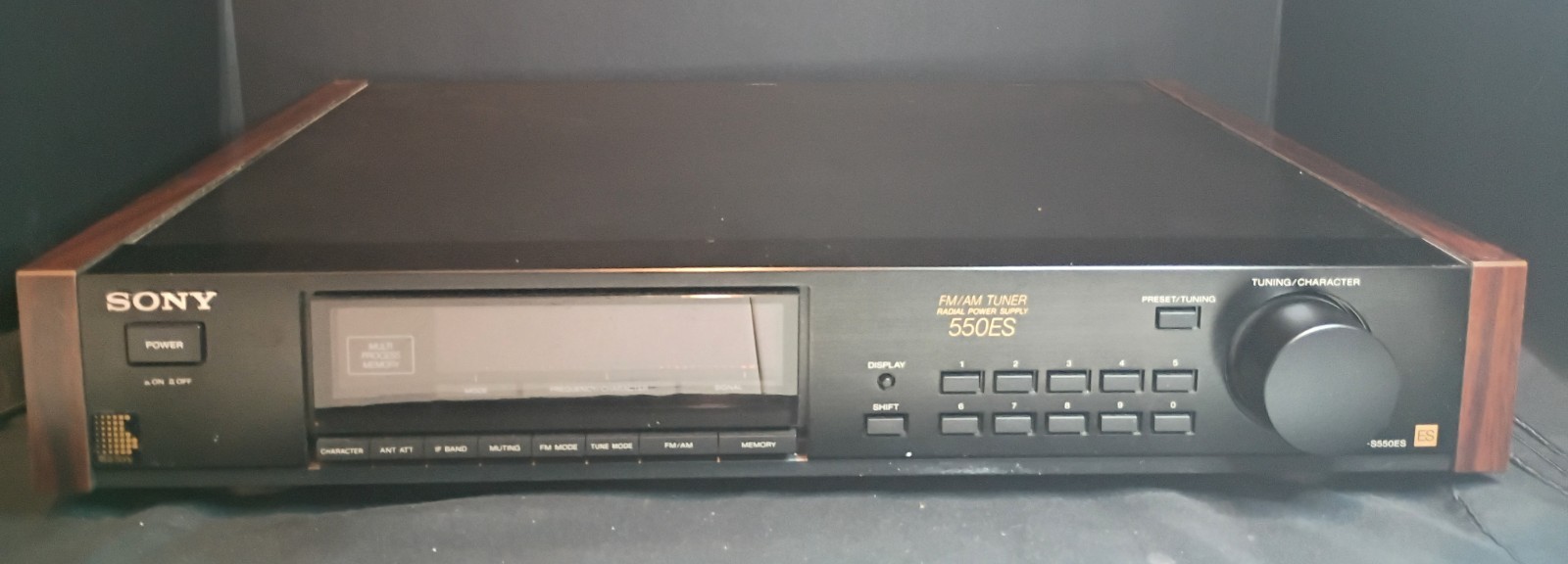

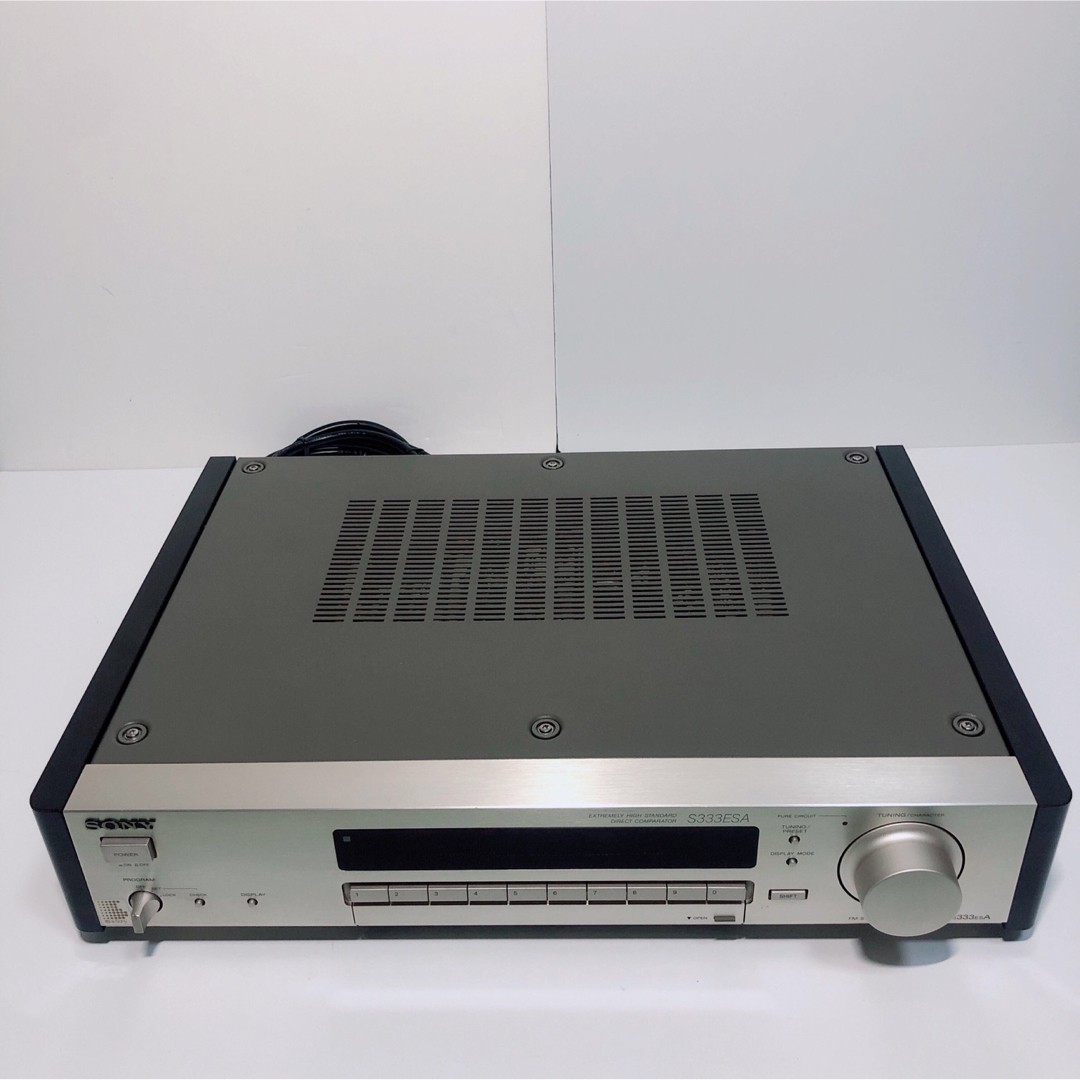

As an eBay Partner, we earn from qualifying purchases. This helps support our independent vintage technology research.
Related Models
- Sony ps-5550 (1978-1980)
- Sony ps-lx5r (1983-1985)
- Sony ss-7220a (1970s)
- Sony ss-97 (Late 1970s (approximately 1977-1979))
- Sony ss-999 (Late 1970s (approximately 1977-1979))
- Sony st-j88 (1986-1988)
- Kenwood kl-888s (Late 1970s (approximately 1978-1980))
- Sansui sax-200 (Late 1970s)
- Sansui sax-600 (Late 1970s)
- Sansui sr-222 (1973-1975)