Sony ss-97 ()
Big, boxy, and built like a tank. These floorstanders give warm, room-filling sound.
Overview
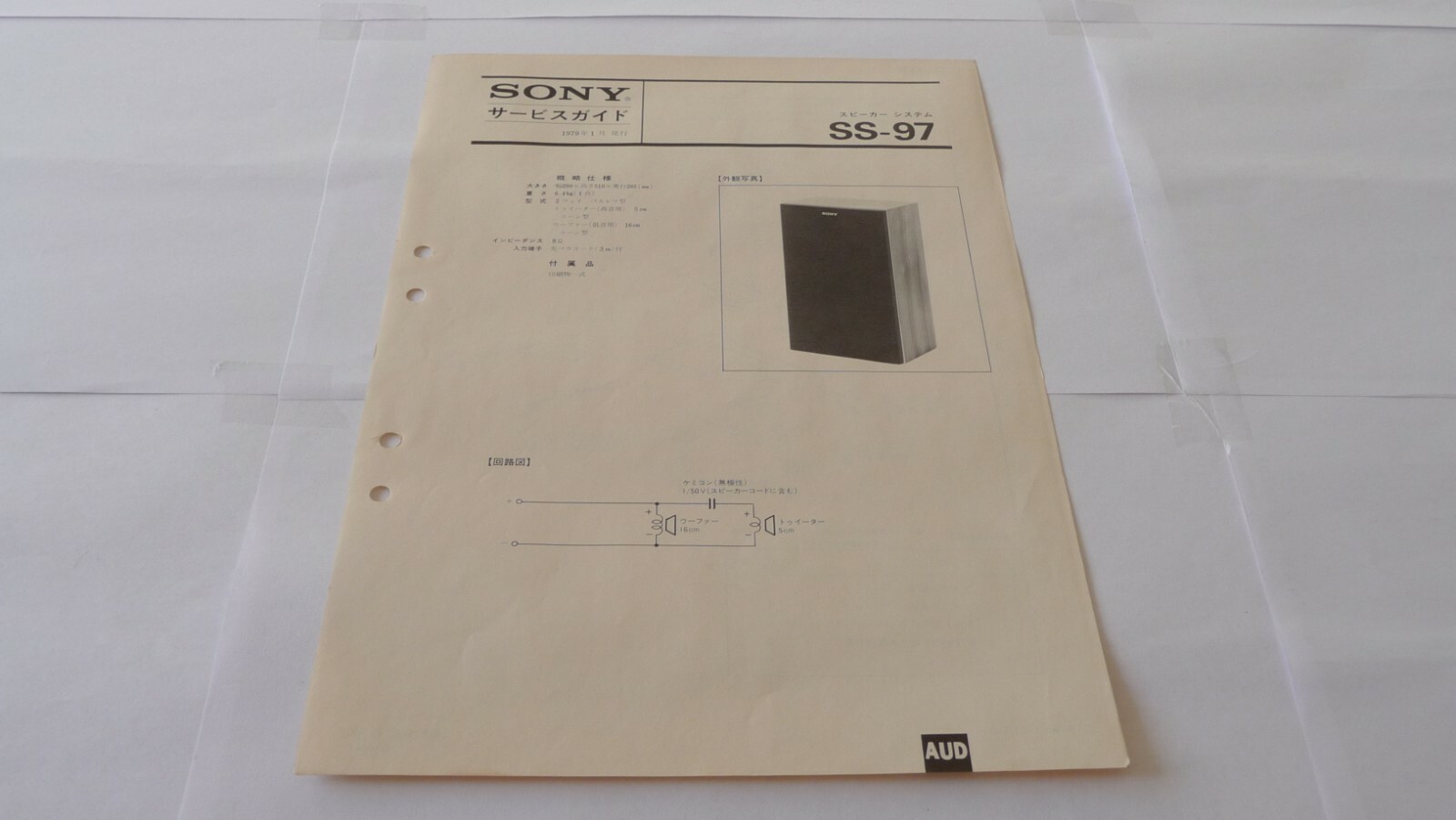
The Sony SS-97 isn't the speaker you pick for clinical precision or razor-sharp imaging. The sound is a little soft around the edges, but inviting. Owners still talk about how solid they felt the moment they came out of the box. One longtime listener put it simply: "these things just looked like they were great quality." The cabinet is built from thick, real wood, finished in a walnut veneer that ages gracefully. A removable brown fabric grille covers the front, and it looks very 1970s living room.
Sonically, the SS-97 has a warm, smooth character that flatters vinyl and AM radio alike. The bass goes down to 30 Hz from a sealed cabinet, and the 12-inch woofer moves plenty of air. Up top, the 2-inch horn tweeter doesn't scream for attention but gives enough sparkle to keep strings and cymbals from vanishing into the mix. The 5-inch midrange driver has a natural, slightly rounded tone. It's not hyper-detailed, but it's expressive. Some owners note they're not as crisp as certain contemporaries, and that's fair. They were never marketed as studio monitors, and they don't pretend to be.
Specifications
| Manufacturer | Sony |
| Impedance | 8 ohms |
| Woofer | 12-inch |
| Midrange | 5-inch |
| Tweeter | 2-inch horn |
| Crossover | 2-way |
| Frequency response | 30-20,000 Hz |
| Power handling | 50 watts |
| Dimensions | 25" H x 15" W x 12" D |
| Weight | 40 lbs |
Key Features
Acoustic Suspension Cabinet
The SS-97 uses a sealed cabinet design, which Sony calls "acoustic suspension." It trades efficiency for tighter, more controlled bass. Unlike ported designs that can boom or overhang, these speakers give a damped, punchy low end that stays coherent even at higher volumes. The trade-off is that they need a bit more amplifier power to open up. Feed them clean power and the bass is both deep and disciplined, especially for a consumer-grade floorstander.
Three-Driver, 2-Way Design
With a 12-inch woofer, 5-inch midrange, and 2-inch horn tweeter, the SS-97 might look like a 3-way on paper, but it's wired as a 2-way crossover system. That likely means the midrange and tweeter share the high-pass section, which simplifies the crossover network and reduces phase complexity. The sound is cohesive and blended, and no single driver jumps out. The horn tweeter adds presence without harshness, and the midrange driver handles vocals and instruments with a natural warmth.
Built to Last (Mostly)
The cabinet is a standout: thick real wood, solidly assembled, and finished in a walnut veneer that's held up well on surviving pairs. The removable brown fabric grille is simple to clean or replace if it's frayed with age. At 40 pounds each, these are not lightweight. The weak spot is the foam surrounds on both the woofer and midrange drivers, which are prone to rot over time. Decades of oxidation turn them into crumbling rings, killing bass response and causing distortion. Any buyer today should assume reconing is either already done or will be needed soon.
Collectibility & Value
In today's vintage audio market, a pair of Sony SS-97s typically trades hands for $150 to $300. As one owner noted, "Sony is not really a brand that most people think of when it comes to great speakers." That keeps prices low. Condition is everything: original finish, intact grilles, and replaced foam surrounds can push a pair toward the top of the range. Unrestored examples are common at the lower end, often sold "as-is" with the expectation that the buyer will do the work. Given the known issue with foam rot, a pair advertised as "fully refurbished" should come with documentation, or at least a clear photo of fresh surrounds.
eBay Listings
As an eBay Partner, we earn from qualifying purchases. This helps support our independent vintage technology research.
Related Models
- Sony STR 202 (1972)
- Sony STR 6000 (1973)
- Sony STR 6450 (1973)
- Sony STR 6500 (1973)
- Sony STR 6550 (1970)
- Braun AUDIO-1 (1965)
- Braun AUDIO-250 (1965)
- Magnavox Component Systems (1972)
- Acoustic Research AR (1967-1976)
- Acoustic Research 11