Sony SS-X10A ()
A pair of Made-in-Japan bookshelf speakers with serious specs on paper — but good luck finding one that still sings
Overview
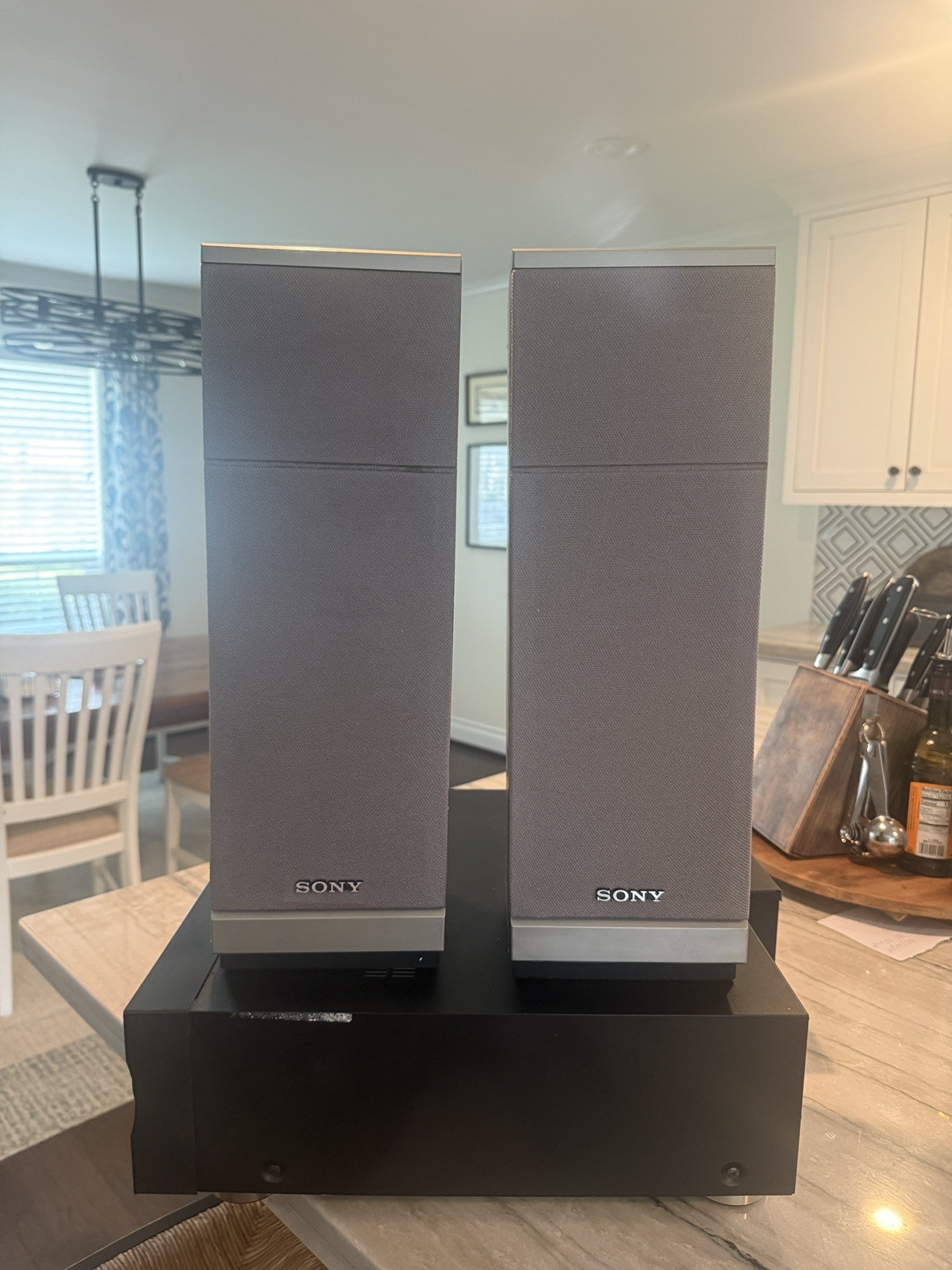
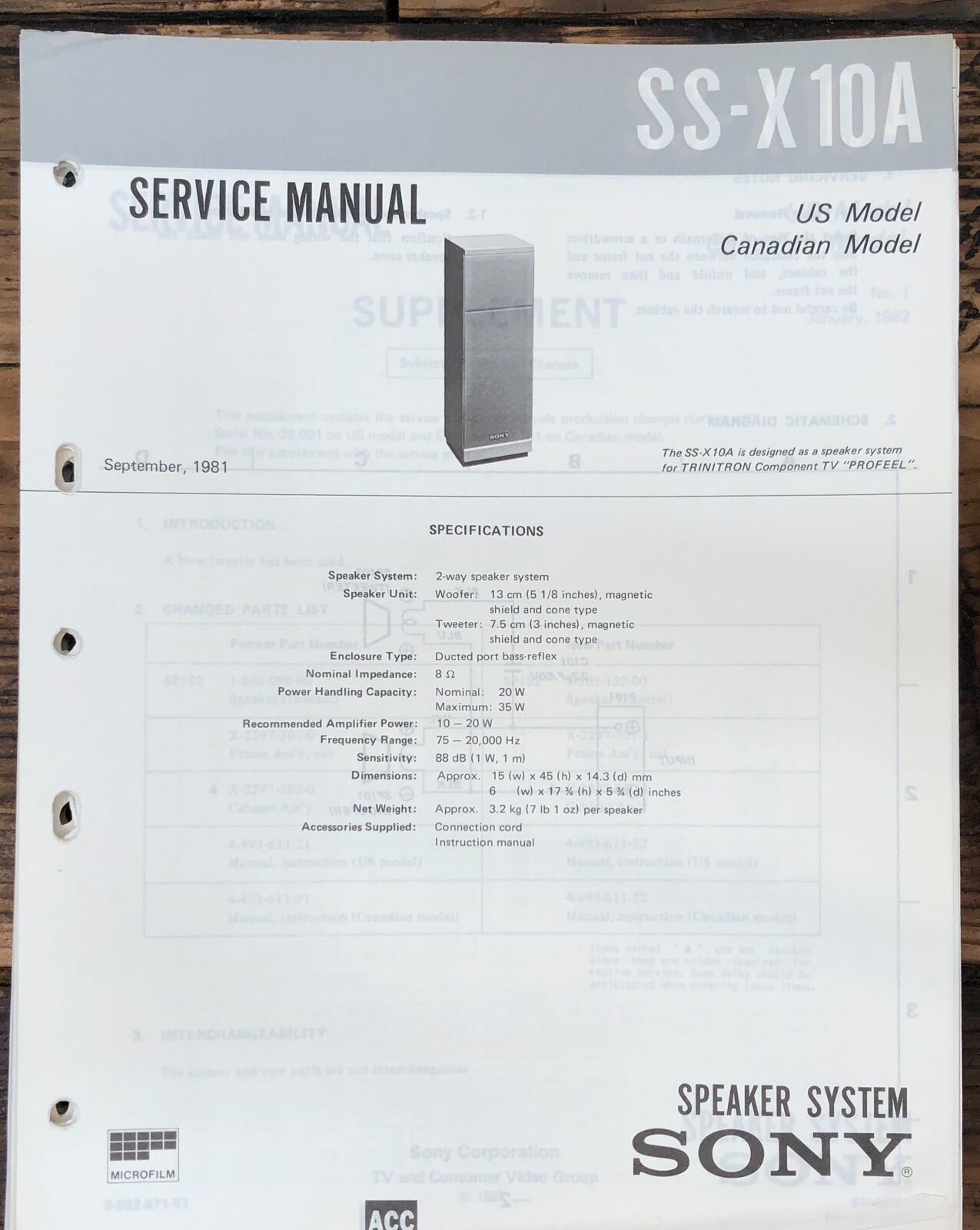
You don’t stumble on the Sony SS-X10A at garage sales or flea markets expecting a revelation. These are not the flashiest boxy relics from Sony’s golden era, nor do they carry the cult mystique of the LS3/5A or the brute force of the ES line. But if you’re the type who flips over forgotten bookshelf pairs just to see what’s under the grill, the SS-X10A shows up with a quiet promise: solid build, thoughtful engineering, and a spec sheet that doesn’t lie. Made in Japan during a time when Sony still poured real effort into mid-tier home audio, these are two-way bass-reflex speakers designed to disappear into a living room while delivering a full-range performance that, on paper at least, borders on ambitious.
They’re hefty — 15.5 kg each — which tells you this isn’t some hollow particleboard afterthought slapped together in the late ’90s. No, this is high-density particle board with a front baffle dressed in thick walnut veneer, the kind of finish that says “I belong next to a TA-F570 and a TC-K775,” not “I came with the apartment.” Owners who’ve actually tracked down a working pair report they were marketed as a stereo pair (labeled explicitly as “(PAIR)” in at least one listing), suggesting Sony intended them as a matched set right out the door. Whether they lived up to that promise sonically remains a mystery — there’s not a single review, owner comment, or forum post in the wild that confirms how they actually sound. But given the component-level attention in the crossover and driver materials, it’s safe to assume they weren’t aiming for mediocrity.
Specifications
| Manufacturer | Sony |
| Product type | Loudspeaker |
| Enclosure type | Bass-reflex |
| Dimensions (H x W x D) | 450 x 280 x 330 mm |
| Weight | 15.5 kg |
| Frequency response | 35 Hz - 50 kHz |
| Nominal impedance | 6 ohms |
| Sensitivity | 88 dB/W (1m) |
| Maximum input power | 100 W |
| Crossover frequency | 2.5 kHz |
| Woofer | 20 cm cone type |
| Tweeter | 2.5 cm dome type |
Key Features
2-Way Bass-Reflex Design with Quality Materials
Sony didn’t cut corners on the build. The “2-way, 2-speaker bass-reflex system” is more than just marketing jargon — it reflects a deliberate effort to balance compact size with extended low-end response. The bass-reflex port helps squeeze usable output down to 35 Hz, which is impressive for a bookshelf cabinet of this size. The enclosure itself is constructed from high-density particle board, which resists resonance better than standard MDF or cheaper composites. That’s not something you see in budget speakers of this era — it’s a nod to acoustic integrity, even if the rest of the world ignored it.
Mica-Filled Polypropylene Woofer
The 20 cm cone-type woofer uses a mica-filled polypropylene cone, a material choice that was gaining favor in the late ’80s for its stiffness-to-mass ratio and damping characteristics. It’s not exotic, but it’s smart — resistant to deformation, relatively inert, and capable of clean midbass without the brittleness of metal cones. Paired with a 100-watt maximum input rating, it suggests these speakers can handle some punch without flinching, assuming your amp respects the 6-ohm load.
Soft Dome Tweeter with Extended Response
Topping it off is a 2.5 cm soft dome tweeter — not a ring radiator or exotic beryllium job, but a reliable performer known for smooth, non-fatiguing highs. The frequency response claims an eyebrow-raising 50 kHz upper limit, which is almost certainly more about ultrasonic headroom or measurement artifact than audible benefit, but it does hint at a tweeter designed for speed and low distortion within the audible band. Soft domes like this tend to age better than horn-loaded or metal domes, provided the surround hasn’t perished.
Premium Crossover Components
Where the SS-X10A might have quietly outclassed its price point is inside the crossover. Air-core coils eliminate magnetic saturation and hysteresis distortion, while polypropylene capacitors offer stable, low-loss filtering — components you’d expect in a higher-tier model, not a forgotten bookshelf pair. This isn’t just functional; it’s a sign that someone at Sony cared about signal integrity, even if the marketing department never bothered to shout about it.
Gold-Plated Speaker Terminals
The rear panel features gold-plated speaker terminals — a small but meaningful touch. Gold resists oxidation, ensuring a solid connection over time, especially important in Japan’s humid climate. It’s a detail that suggests these were meant to be kept and used, not discarded after a few years. Whether they’ve survived decades of neglect is another story — but at least they started with decent hardware.
eBay Listings

As an eBay Partner, we earn from qualifying purchases. This helps support our independent vintage technology research.
Related Models
- Sony ps-5550 (1978-1980)
- Sony ps-lx5r (1983-1985)
- Sony ss-7220a (1970s)
- Sony ss-97 (Late 1970s (approximately 1977-1979))
- Sony ss-999 (Late 1970s (approximately 1977-1979))
- Sony st-j88 (1986-1988)
- Kenwood kl-888s (Late 1970s (approximately 1978-1980))
- Sansui sax-200 (Late 1970s)
- Sansui sax-600 (Late 1970s)
- Sansui sr-222 (1973-1975)