Sony SS-RX5 (1983)
These bookshelf speakers from 1983 don’t shout — they reveal, with a clarity that makes you hear past the recording and into the room where it was made.
Overview
The Sony SS-RX5 isn’t one of those speakers that grabs you with boomy bass or glossy highs. It’s the kind you take home, hook up, and then spend the next week noticing things you’ve never heard in records you’ve played a hundred times. Released around 1983 as part of Sony’s RX series, these 3-way bookshelf speakers were priced at ¥45,000 per unit — a serious investment at the time, aimed at listeners who cared more about accuracy than showmanship. They’re not small — standing nearly 58 cm tall and weighing 16 kg each — but they’re designed to disappear sonically, not physically. The RX5 delivers a frequency response from 35 Hz to 30 kHz, which was ambitious for its era, and with a sensitivity of 92dB/W/m, they’re efficient enough that even modest amplifiers can drive them without breaking a sweat. Owners report they don’t need brute force to shine; in fact, they thrive on clean, transparent electronics.
This is a bass-reflex design, meaning it uses a port to extend low-frequency output, and it’s built as a true 3-speaker system: a 25 cm cone woofer handles the lows, a 7 cm cone midrange takes the middle, and a 2.5 cm soft dome tweeter covers the highs. The crossover points are set at 800 Hz and 4.5 kHz — fairly standard for the time, but executed with what Sony called “high-grade components,” suggesting more than just paper caps and iron-core inductors. While we don’t have a schematic or teardown data, the general consensus among those who’ve owned them is that the crossover contributes to a seamless handoff between drivers, one of the reasons the imaging is so precise.
Specifications
| Manufacturer | Sony |
| Product type | 3-Way, 3-Speaker, Bass reflex system, Bookshelf Type speaker |
| Playback frequency band | 35 Hz to 30000 Hz |
| Output sound pressure level | 92dB/W/m |
| Impedance | 6 Ω |
| Instantaneous maximum input | 160W |
| Rated maximum input | 80W |
| Crossover frequency | 800 Hz, 4.5 kHz |
| External dimensions | Width 320 x Height 580 x Depth 340 mm |
| Weight | 16kg |
| Accessories | Speaker cable |
| Driver complement | Low-frequency: 25cm cone type; Mid-range: 7cm cone type; High-frequency: 2.5cm dome type |
Key Features
Cabinet Design: Built to Stay Quiet
Sony didn’t just box these drivers together — they engineered the enclosure to stay out of the way. The cabinet is constructed from high-density particle board, a step up from standard MDF in terms of rigidity and damping. More interesting is the internal architecture: a non-parallel, asymmetrical bracing structure meant to disrupt standing waves. That’s not just marketing fluff; uneven internal walls scatter resonances that would otherwise color the sound. The front baffle is thickened, and all drivers are flush-mounted — a detail that reduces diffraction, the kind of edge interference that smears stereo imaging. You won’t see this kind of attention in most bookshelf speakers from the early '80s, especially at this price point.
Drivers: MRC, POM, and Soft Dome
The low end is handled by a 25 cm cone woofer with a mica-reinforced cellular (MRC) diaphragm — Sony’s proprietary material designed to be stiff yet lightweight, reducing breakup and distortion. The midrange, a 7 cm cone, uses POM (polyoxymethylene) whiskers in the diaphragm, a material known for its high internal damping and resistance to flex. This combo helps maintain clarity in the vocal range, where even slight coloration is noticeable. Up top, the 2.5 cm soft dome tweeter uses a “soft dome diaphragm,” which typically means a fabric-dome design that rolls off gently rather than harshly — though owners note these can sound a bit bright with certain recordings, especially digital ones from the late '80s and early '90s that were already on the edgy side.
Crossover and Internal Components
While we don’t have a full parts list, the fact sheet confirms the crossover uses “high-grade components.” That likely means metal-film resistors, polypropylene capacitors, and air-core or laminated-iron inductors — the kind of build quality that supports the speaker’s reputation for neutrality. With crossover points at 800 Hz and 4.5 kHz, the midrange driver carries a lot of the sonic weight, and the use of POM in that driver suggests Sony prioritized coherence over convenience. These aren’t drivers chosen for ease of integration; they’re chosen for performance, and the crossover is built to match.
Collectibility & Value
Today, the SS-RX5 trades in the $250 to $300 range per pair, according to current listings — a fraction of their original cost when adjusted for inflation, but reflective of their niche appeal. They’re not flashy, and they don’t carry the cult status of some Japanese classics like the Kenwood FF-901 or the Yamaha NS-1000, but they’ve developed a quiet following among listeners who value transparency over warmth. The most common issue reported is foam surround deterioration on the woofers — a typical aging problem for speakers of this era. Re-coning or replacing the surrounds is often necessary, and while it adds to ownership cost, it’s a well-trodden path with plenty of specialists who can handle it.
Owners praise their neutrality and detail, noting a wide soundstage and excellent imaging — qualities that make them ideal for critical listening or small-room setups where precision matters more than volume. They’re not bass-heavy, but the bass they do produce is tight and well-defined, thanks in part to the MRC woofer and bass-reflex tuning. And while they can sound a bit bright with some recordings, that’s often a sign of their honesty: they’re revealing the source, not coloring it. If you’re pairing them with vintage gear, a tube amp or a warmer solid-state receiver can help balance their top end.
One thing to watch: these were sold individually, not as a matched pair, so collectors should ensure both units are from the same production batch if possible. The included speaker cable is a nice touch, but most owners will replace it quickly — it’s functional, not audiophile-grade.
eBay Listings
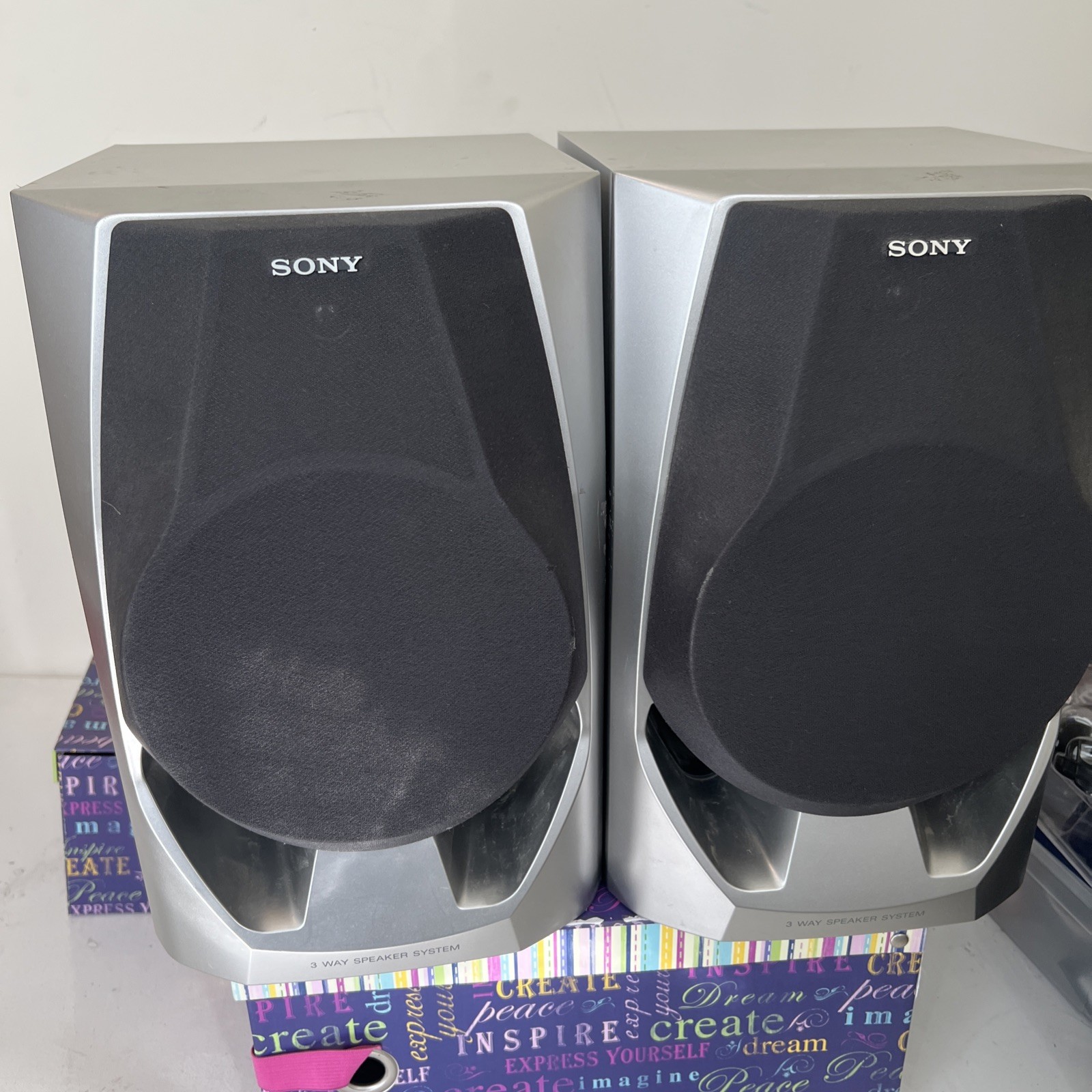

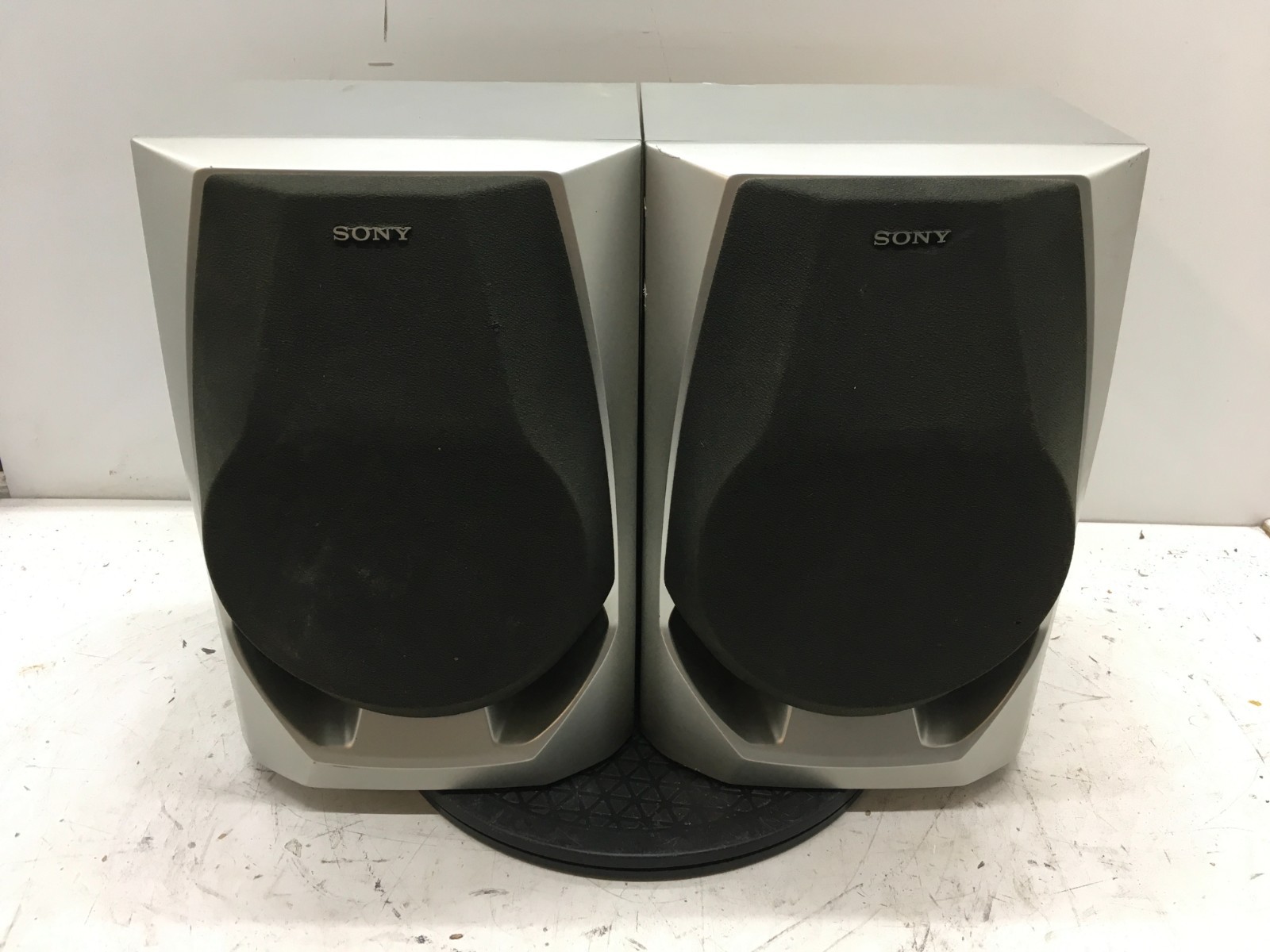
As an eBay Partner, we earn from qualifying purchases. This helps support our independent vintage technology research.
Related Models
- Sony ps-5550 (1978-1980)
- Sony ps-lx5r (1983-1985)
- Sony ss-7220a (1970s)
- Sony ss-97 (Late 1970s (approximately 1977-1979))
- Sony ss-999 (Late 1970s (approximately 1977-1979))
- Sony st-j88 (1986-1988)
- Kenwood kl-888s (Late 1970s (approximately 1978-1980))
- Sansui sax-200 (Late 1970s)
- Sansui sax-600 (Late 1970s)
- Sansui sr-222 (1973-1975)