Sony SS-1250 (Late 1970s)
Big sound from a box that looks like your dad’s old stereo — until you hear that deep, articulate bass punch out of a 20 cm passive radiator doing silent backflips.
Overview
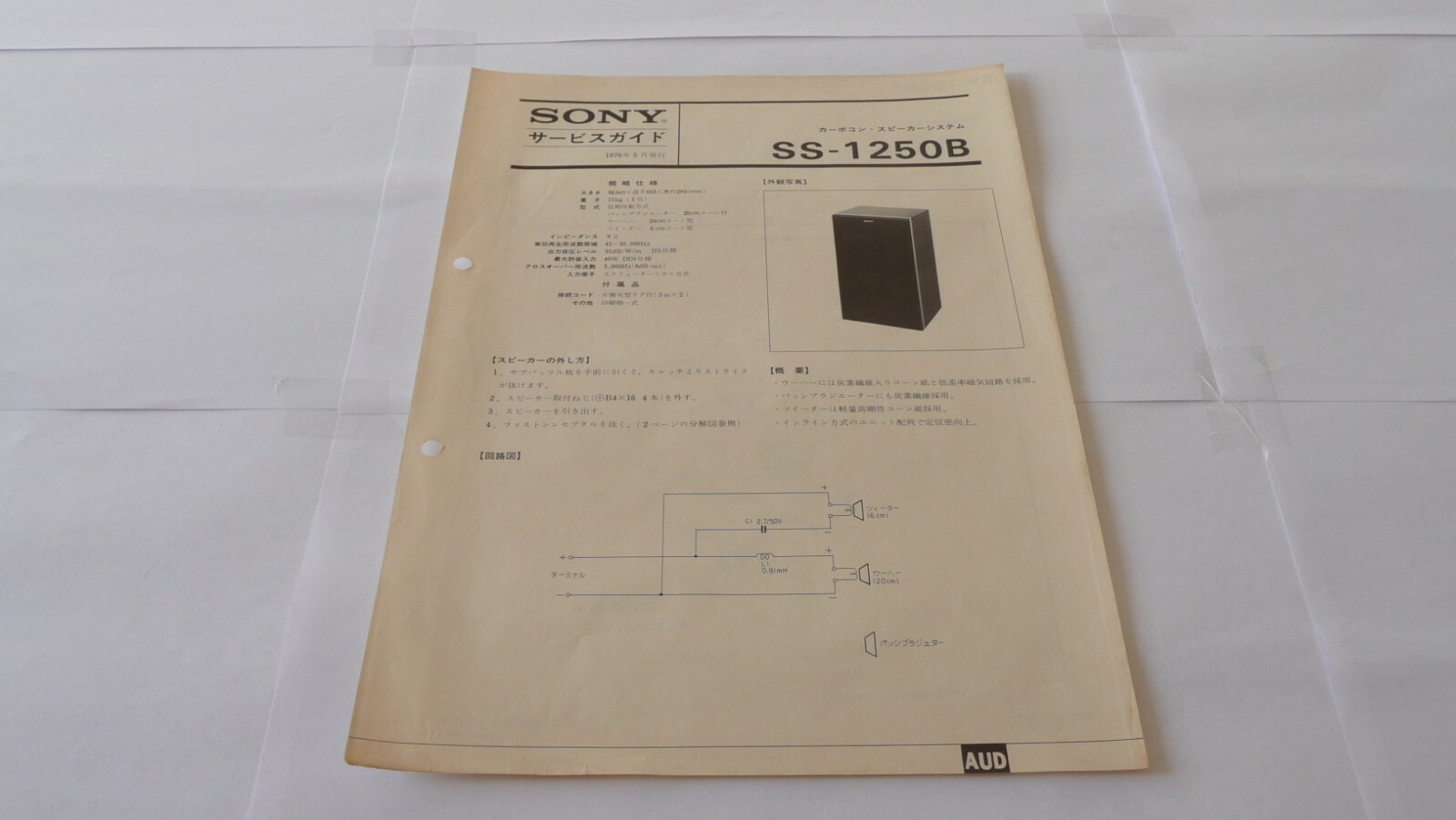
The Sony SS-1250 isn’t trying to be sleek or discreet — it’s a full-bodied bookshelf speaker with the presence of a floorstander, built when Japanese manufacturers were going all-in on high-fidelity audio. Introduced around the mid-to-late 1970s (with pricing noted around 1975), this was Sony’s statement piece in their SS lineup, a no-compromise design meant to prove they could go toe-to-toe with the American giants. It carried a price tag of ¥39,000 for a pair in Japan — not cheap for the time — and it showed in the build, the materials, and the engineering. The SS-1250 and its variant, the SS-1250B (which featured a different finish), were marketed as premium bookshelf systems, though “bookshelf” feels like a stretch given their 650 mm height and 11 kg weight. These are speakers that demand space, both physically and sonically.
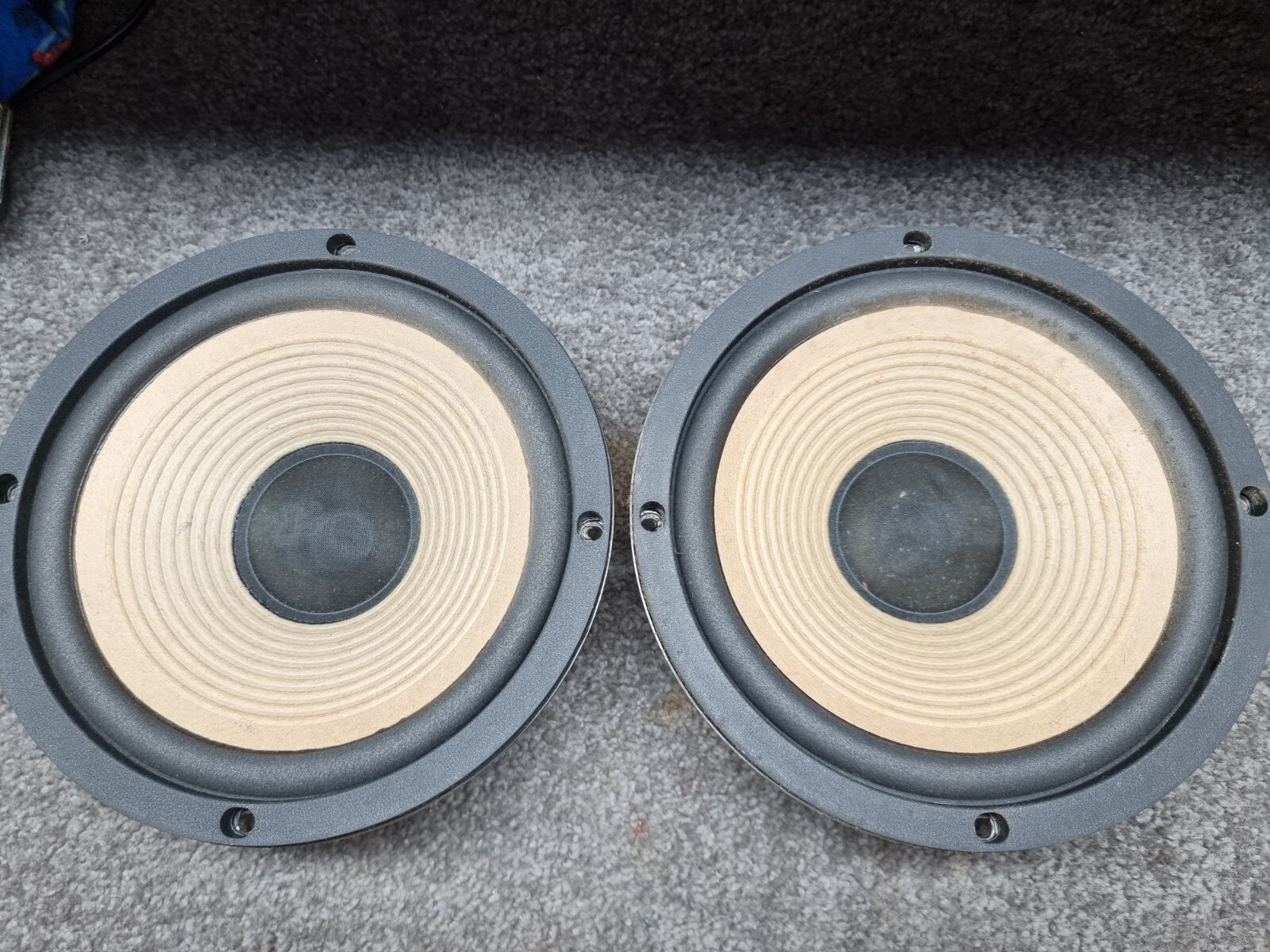
What sets the SS-1250 apart from a lot of its era is the use of Carbocon — Sony’s proprietary carbon-fiber-reinforced cone material — on both the 20 cm woofer and the identically sized passive radiator. That’s not something you saw every day in the '70s, especially not in a bookshelf format. The idea was simple: stiffer cone, less distortion, better control. Paired with a low-distortion magnetic circuit and a high-compliance special edge on the woofer, the system was engineered for efficiency and accuracy, not just raw output. The 6 cm cone-type tweeter handles the highs, crossing over at 4,000 Hz, which is a bit higher than some contemporaries — a choice that likely contributes to the clarity owners report, though it can edge into brightness depending on the amp.
And let’s be real: these aren’t subtle cabinets. They’re made from particle board with a walnut veneer finish, the kind that either ages into warm, dignified maturity or starts peeling at the edges if they’ve spent time in sunlight or humid basements. The grilles are removable, with acoustically transparent fabric stretched over a wooden frame — practical, but the fabric yellows and tears easily after 40+ years. If you’re hunting for a pair today, condition is everything. Even if they look solid, there’s a near-guarantee the foam surrounds on the woofer have degraded — a common flaw with vintage speakers using foam suspension. Same goes for the crossover capacitors, which tend to dry out and lose their spec over time, dulling the sound until they’re recapped.
But when they’re working right? Owners often describe the sound as “balanced” and “non-fatiguing” — the kind of speaker you can leave on for hours without your ears begging for mercy. Contemporary reviews highlighted the “tight, accurate bass” and “detailed midrange,” which makes sense given the passive radiator design. Unlike ported boxes that can sometimes sound boomy or one-note, the SS-1250’s sealed-like tuning with a passive radiator gives it a controlled low end that starts at 45 Hz — impressive for a speaker of its size and era. The 91 dB/W/m sensitivity means it’s not a power hog, and the 8 Ω impedance plays nice with most vintage receivers. Just don’t push it past 40W, or you’re asking for trouble.
Specifications
| Manufacturer | Sony |
| Model Rating Method | 2-way, 2-speaker, passive radiator system |
| Type | Bookshelf type |
| Unit For low band / Woofer | 20 cm cone type |
| Unit For high pass / Tweeter | 6 cm cone type |
| Passive radiator | 20 cm cone type |
| Effective frequency band | 45 Hz ~ 20000 Hz |
| Output sound pressure level | 91dB/W/m |
| Impedance | 8 Ω |
| Maximum allowable input | 40W |
| Crossover frequency | 4000Hz |
| External dimensions | Width 345x Height 650x Depth 290 mm |
| Weight | 11kg |
Key Features
Carbocon Drivers and Passive Radiator Design
Sony didn’t just slap generic cones into the SS-1250 — they used their own Carbocon material for both the active 20 cm woofer and the passive radiator. This carbon-fiber-reinforced diaphragm was stiffer than paper or polypropylene, which meant less flex, lower distortion, and better transient response. The passive radiator, also 20 cm, acts like a tuned mass that moves in response to the air pressure inside the cabinet, extending bass response without the chuffing noise of a port. It’s a smart solution for a bookshelf speaker that needs to deliver deep, clean low end without a huge box.
Engineered for Low Distortion
The woofer’s low-distortion magnetic circuit and high-compliance special edge weren’t just marketing fluff — they were real engineering choices to improve linearity and reduce harmonic distortion. The high-compliance edge allows the cone to move more freely at low frequencies, which helps with efficiency and bass extension. Combined with the sealed cabinet design (implied by the passive radiator system), this setup gives the SS-1250 a tighter, more articulate bass than many ported designs of the time.
Cabinet and Finish Options
The cabinet is built from particle board with a walnut veneer, a common but practical choice for the era. It’s sturdy, but not immune to age — chips, peeling, and warping can occur, especially if the speakers weren’t stored properly. The SS-1250B variant offered a different finish, likely aimed at buyers who wanted a more modern or subdued look. Whether you prefer the warm wood tone of the original or the updated finish of the B model, both share the same internal design and performance.
Removable Acoustic Grille
The grille is made of acoustically transparent fabric stretched over a wooden frame, designed to protect the drivers without muddying the sound. It’s removable, so purists can take it off for a slightly more open high end. But after decades, these grilles often suffer — the fabric discolors, sags, or tears, and replacements are hard to find. Some owners opt to re-cover them with modern mesh, but it’s a delicate balance between aesthetics and acoustic transparency.
Historical Context
The Sony SS-1250 was part of Sony’s broader push into the high-fidelity speaker market during the 1970s, a time when Japanese electronics companies were rapidly gaining ground on established American audio brands. It was positioned to compete directly with speakers from JBL, Acoustic Research (AR), and KLH — all of which had strong reputations for accuracy and build quality. As the flagship model in Sony’s “SS” speaker series, the SS-1250 sat above models like the SS-1150 and SS-1050, offering the largest drivers, the most advanced materials, and the most refined tuning. This wasn’t a budget offering or an entry-level upgrade — it was Sony’s answer to the question: “Can we build a world-class speaker that doesn’t say ‘USA’ on the badge?”
Collectibility & Value
Today, the SS-1250 trades between $150 and $400 per pair on the secondary market, depending heavily on condition. Unrestored units with original foam and grilles tend to sit at the lower end, while fully serviced pairs — with refoamed surrounds and recapped crossovers — command top dollar. The most common failure point is foam rot on the woofer surrounds; some owners report issues with midrange surrounds as well, though the SS-1250 is a 2-way design and doesn’t have a dedicated midrange driver (this may refer to the woofer’s surround in general usage). Crossover capacitors also degrade over time, leading to dull highs and muddy mids, so a full restoration often includes replacing those with modern equivalents. Cosmetic issues like chipped veneer or torn grille fabric are common but repairable. For collectors, a clean, original pair with both grilles and no cabinet damage is rare — and worth holding onto.
eBay Listings
As an eBay Partner, we earn from qualifying purchases. This helps support our independent vintage technology research.
Related Models
- Sony ps-5550 (1978-1980)
- Sony ps-lx5r (1983-1985)
- Sony ss-7220a (1970s)
- Sony ss-97 (Late 1970s (approximately 1977-1979))
- Sony ss-999 (Late 1970s (approximately 1977-1979))
- Sony st-j88 (1986-1988)
- Kenwood kl-888s (Late 1970s (approximately 1978-1980))
- Sansui sax-200 (Late 1970s)
- Sansui sax-600 (Late 1970s)
- Sansui sr-222 (1973-1975)