Sony PS-V800 (1998)
Press one button, sit back, and let the arm do the work—this unassuming black box from Sony made analog easy, even if it didn’t try to impress.
Overview
You know that moment when you just want to drop the needle without fuss? The Sony PS-V800 was built for exactly that. No ritual, no calibration dance—just a start button, a spin, and silence when it’s done. Released in 1998 at ¥12,400, it wasn’t positioned as a high-end turntable, but rather a no-nonsense, full-auto player for people who wanted vinyl without the overhead. And honestly, for what it is, it delivers. Owners report being pleasantly surprised by the sound, calling it “clean,” “sufficiently good,” and even “beautifully clear” across vocals, cymbals, and acoustic guitars. One noted the richness of string tones, another said it punched above its price class—especially for a turntable over 10,000 yen. But let’s be real: this isn’t a statement piece. It’s a utilitarian slab of late-'90s Sony engineering, matte black and minimalist, with zero indicator lights. Power it on and it’s pitch black—no glow, no flash, just quiet readiness.
It’s also not without quirks. The output cable is painfully short—about 50cm—so you’ll likely need an extension just to reach your receiver. The power cord draws criticism too, listed as a definite minus. And while the full-auto function (start and return) is a selling point, the tonearm’s movement is tied to a rubber belt drive system that, decades later, is prone to deterioration. Multiple users report the turntable failing to rotate due to degraded rubber—no surprise, given its age. Still, when working, it’s described as stable: wow and flutter are rated under 0.25% WRMS, and one owner said distortion of that sort is “almost controlled.” The built-in phono EQ amp is a real convenience, letting you plug directly into line-level inputs, and the ability to switch it off means you can bypass it if your amp has a proper phono stage. That flexibility matters.
What’s interesting is how divided impressions are on playback performance. Some say it plays “normally,” others mention noise during silent passages as slightly concerning. But no one seems to hate it. One owner summed it up: “no particular bad points.” Another admitted the sound feels a bit thin—but chalked it up to the price. And that’s the truth: this was never meant to compete with audiophile decks. It was a modest, self-contained solution for casual listening, maybe even headphone use (it lists earphone compatibility). It came with a 45 rpm adapter, a dust cover, and—crucially—a spare stylus (ATN3600LX), which users called a “charm” of the package. That foresight says something about Sony’s intent: this was a turntable meant to be used, not just displayed.
Specifications
| Manufacturer | Sony |
| Production years | 1998 |
| Original price | ¥12,400 |
| Weight | 2.7 kg |
| Dimensions | 幅350 x 高さ97 x 奥行342 mm |
| Speeds | 33 1/3 rpm, 45 rpm |
| Drive type | Belt Drive |
| Drive motor | DCモーター |
| Turntable | 295mmアルミダイキャスト製 |
| Wow & flutter | 0.25% WRMS未満 |
| Tonearm | ダイナミックバランスストレート型 |
| Original stylus model | Sony N-6516 |
| Power supply | AC100V、50Hz/60Hz |
| Power consumption | 2W |
| Compatible devices | イヤホン |
| Features | フォノイコライザーアンプを内蔵, ON/OFF可能なフォノイコライザーアンプ, |
| Plug Regional Fitment | Type A |
| Color | Black |
| Generation | 1st Generation |
| Included accessories | 本体装着品に加え、予備の交換針も付属, 45回転アダプター, ダストカバー, 交換針 ATN3600LX |
| Output cable | 出力ケーブルがとても短い(50cmくらい) |
Key Features
Full-Auto Simplicity
The PS-V800 is, first and foremost, a full-auto turntable: press the start button and the arm swings in, drops, plays, lifts, and returns—all without you lifting a finger. It’s the kind of feature that feels almost quaint now, but in 1998, it was a selling point for convenience. The tonearm comes with Up and Down buttons and a lifter mechanism, giving you manual control when needed. But the design is stripped down—no fine-adjustment dial for speed, no visual feedback. It’s functional, not flashy.
Built-In Phono EQ with Toggle
One of its smarter features is the built-in phono equalizer amplifier, which can be turned on or off. This means you can connect it directly to a line-level input (like an AUX port) without needing an external preamp. But if your receiver has a proper phono MM input, you can disable the internal amp and use it like a standard turntable. That dual-purpose design gives it flexibility few budget decks offer.
Turntable and Drive System
The platter is a 295mm aluminum die-cast unit, driven by a belt and a DC motor. This setup helps isolate motor noise and provides stable rotation, reflected in the sub-0.25% wow and flutter rating. But the belt is also the unit’s Achilles’ heel—owners report it deteriorating over time, leading to no rotation. Replacement belts are available ($18.90 on LP Gear), but it’s a common maintenance item you should expect if buying used.
Tonearm and Cartridge Setup
The tonearm is a straight, dynamic balance type—simple, no frills. The original stylus is the Sony N-6516, and the included spare is the ATN3600LX. There’s some confusion in the aftermarket: parts vendors list the cartridge as the Sony VL-55G MM, and replacement styli under different model numbers (like 211-DE). But the key warning from users is this: if the original cartridge has been replaced, a new N-6516 stylus might not fit. So check what’s installed before ordering.
Design and Practical Quirks
The case is compact (350 x 97 x 342 mm) and lightweight (2.7 kg), making it easy to place on a shelf or desk. But the dust cover sits very close to the tonearm, which can make cartridge access or stylus inspection a tight squeeze. And while the minimalist black design appeals to some, others lament the lack of any indicator lights—even the power status is invisible. It’s a design that prioritizes silence over feedback.
Collectibility & Value
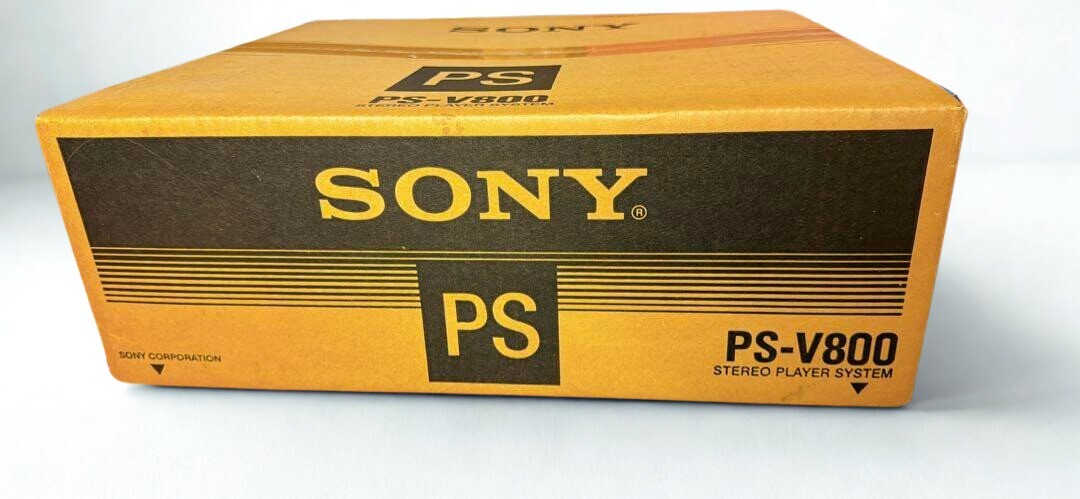
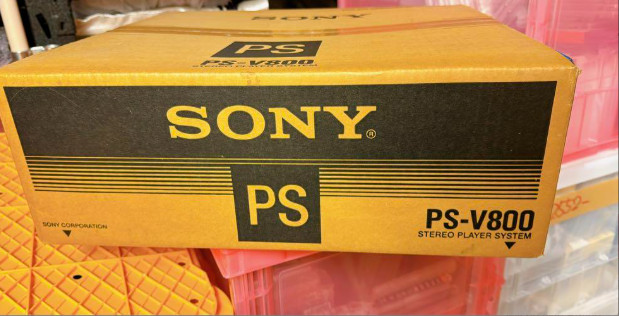
The PS-V800 isn’t a high-value collector’s item, but it’s not forgotten. One eBay listing shows a “New” unit priced at $311.56 plus $63.00 shipping—likely NOS (new old stock), given its 1998 production. For most buyers, it’s a functional vintage player rather than a trophy. Replacement parts are available but not cheap: a basic stylus runs $38.70, the upgraded N-6516SE is $56.95, and the high-end ViVid Line version hits $129.95. That’s a steep jump, but it reflects the aftermarket’s effort to improve on the stock sound.
The most common failure point is the belt, so any used unit should be checked for smooth, consistent rotation. Users also note that the cartridge and stylus may have been swapped over the years, which complicates replacements. If you’re buying used, verify what’s installed before investing in new needles. The short output cable (about 50cm) is another practical limitation—plan on using an RCA extension. And while the internal phono stage is convenient, its quality isn’t documented, so audiophiles may prefer to bypass it entirely.
eBay Listings


As an eBay Partner, we earn from qualifying purchases. This helps support our independent vintage technology research.
Related Models
- Sony ps-5550 (1978-1980)
- Sony ps-lx5r (1983-1985)
- Sony ss-7220a (1970s)
- Sony ss-97 (Late 1970s (approximately 1977-1979))
- Sony ss-999 (Late 1970s (approximately 1977-1979))
- Sony st-j88 (1986-1988)
- Kenwood kl-888s (Late 1970s (approximately 1978-1980))
- Sansui sax-200 (Late 1970s)
- Sansui sax-600 (Late 1970s)
- Sansui sr-222 (1973-1975)