Sony PS-5100 (1973–1976)
A turntable that hums with quiet precision—where Sony’s engineering obsession met the living room, and didn’t try to show off about it.
Overview
Turn it on, and the first thing you notice isn’t flash or flourish—it’s silence. The PS-5100 doesn’t announce itself with chrome or aggressive lines. It sits low and wide under its removable acrylic lid, a slab of walnut-veneered particleboard that whispers “serious audio” without screaming it. This isn’t a showpiece; it’s a worker. But don’t mistake restraint for compromise. Under that lid is a 30 cm die-cast aluminum platter, spinning on a belt so precisely molded from polyurethane that it doesn’t chirp or stretch like the rubber bands some manufacturers passed off as drive belts in the ‘70s. The motor? A custom 4-pole hysteresis synchronous unit, engineered for minimal vibration—because Sony knew that even a whisper of motor noise could unravel the illusion of live music in your room.
It was released at a time when turntables were either clunky automatics with wobbly arms or exotic, hand-built decks that cost more than a used car. The PS-5100 carved a middle path: semi-automatic operation (auto return and auto cut-off), but with a tonearm—the PUA-305—that wouldn’t embarrass itself next to higher-end models. Static-balanced and S-shaped, it tracks with a grace that belies its era, offering 216 mm of effective length and a carefully calculated offset angle of 23°30′. It’s not a unipivot, not a gimbal monster, but it’s *right*. Owners report that it handles moderate-mass cartridges with ease, and its ability to cancel inner groove distortion with an integrated force-canceling mechanism was a subtle but meaningful touch in an age when many decks just let the stylus skid toward the label.
And then there’s the cartridge: the VM-26G, an IM-type (inductive magnetic) moving magnet design with a 0.5-mil elliptical diamond tip. For the price, it was a generous inclusion—better than the ceramic blobs often bundled with budget decks. It outputs a clean 4 mV into a 50 kΩ load, with frequency response stretching from 15 Hz to 22 kHz and channel separation hitting 25 dB at 1 kHz. Not flagship-level, but more than enough to reveal the grain in a vocal or the breath behind a saxophone. The shell conforms to international standards, so swapping it out for a Shure or Ortofon is straightforward—something not all OEM cartridges allowed back then.
Specifications
| Manufacturer | Sony Corporation; Tokyo |
| Production Years | 1973–1976 |
| Original Price | ¥24,800 (Japan, ~1973); 498 DM (Germany, incl.) |
| Turntable Type | Stereo turntable system |
| Drive System | Belt drive |
| Motor | 4-pole hysteresis synchronous motor |
| Platter | 30 cm aluminum die-cast, 1.0 kg |
| Speeds | 33⅓, 45 rpm |
| Start-up Time | Within ½ rotation (33⅓ rpm) |
| Wow and Flutter | < ±0.09% weighted (DIN 45507) |
| Signal-to-Noise Ratio | > 63 dB weighted (DIN 45544) |
| Tone Arm | PUA-305, static-balanced universal S-arm |
| Effective Length | 216 mm |
| Overhang | 16.5 mm |
| Offset Angle | 23°30′ |
| Tracking Force Range | 0–3 g (adjustable in 0.5 g increments) |
| Cartridge | VM-26G, IM-type moving magnet |
| Cartridge Output | 4 mV |
| Cartridge Compliance | 5 × 10⁻⁶ cm/dyne |
| Needle Type | 0.5 mil elliptical diamond |
| Power Supply | 100–240 VAC, 50/60 Hz (AEP model) |
| Power Consumption | 14 W |
| Dimensions (WHD) | 450 × 175 × 395 mm |
| Weight | 8.3 kg |
| Accessories | 45 rpm adapter, tracking force gauge, silicon cloth, dust cover |
| Available Separately | Replacement shell SH-150, stylus ND-126G |
Key Features
A Platter That Earns Its Mass
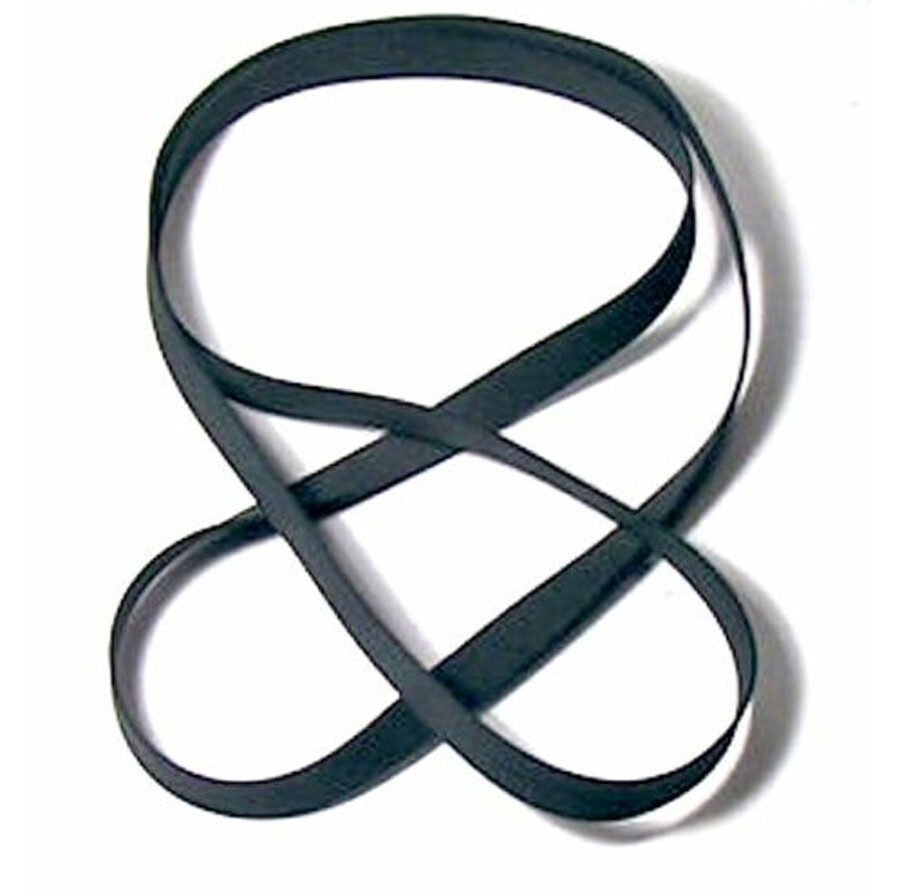
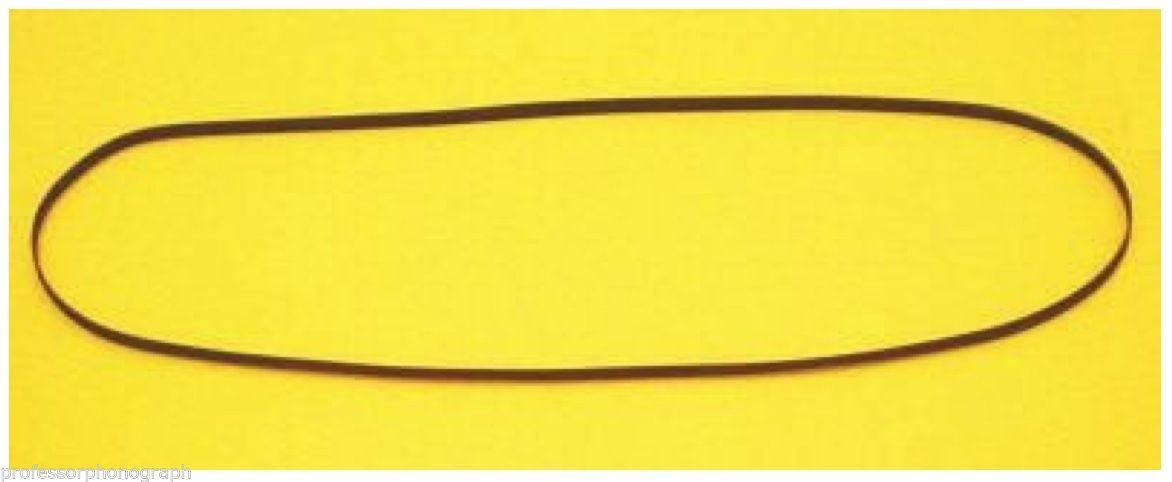
The 1 kg die-cast aluminum platter isn’t just heavy for show—it’s a deliberate inertia play. At 30 cm across, it stabilizes speed with authority, resisting external vibrations and minor belt inconsistencies. Combined with the hysteresis motor’s consistent torque, this setup delivers a wow and flutter spec under ±0.09% weighted, which in 1973 was competitive with decks costing twice as much. The polyurethane belt, while not immune to aging, was a step above the rubber belts that dried out and snapped on lesser turntables. When replaced (a five-minute job with a fresh flat belt), it restores near-original speed stability. Service technicians observe that original belts still functioning after 50 years are rare, but not unheard of—especially in decks stored away from sunlight and heat.
The PUA-305 Tone Arm: Understated Excellence
Sony didn’t reinvent the tonearm here, but they refined it. The PUA-305 is a static-balanced S-arm with a universal headshell mount, allowing for cartridge swaps without recalibrating the entire arm geometry. Its effective length and offset angle were chosen to minimize tracking error across the record’s surface, and the built-in arm lifter and anti-skate mechanism are smooth, reliable, and free of the sticky plastic gears that plague some contemporaries. What stands out is the “inside force canceler”—a damping system designed to reduce the inward skating force that pulls the stylus toward the center. It doesn’t eliminate it, but it tames it, reducing distortion in the final grooves where most budget arms start to collapse. Collectors note that while the arm isn’t adjustable for VTA (vertical tracking angle), its fixed 15° angle works well with the included VM-26G and similar cartridges.
Semi-Auto Operation Done Right
Semi-automatic doesn’t sound exciting—until you’ve used a fully manual deck in a dimly lit room, fumbling for the lead-in groove. The PS-5100 automates the tedious: press the cue button, the arm lifts, swings out, and lowers at the edge of the record. At the end, it lifts again, returns to rest, and cuts power to the motor. It’s not lightning-fast, but it’s precise. No lurching, no missed returns. The mechanism is gear-driven but well-damped, and failures are uncommon—especially compared to the microswitch-laden autoloaders from Philips or Dual. The only real wear points are the cam that controls arm lift and the belt, both of which are serviceable with basic tools. Unlike changers, it plays one record at a time, which means no stack wobble, no tonearm drops from ten inches up—just clean, focused playback.
Historical Context
The PS-5100 arrived in 1973, a year when hi-fi was democratizing. Solid-state amplifiers had replaced tubes in most living rooms, stereo was no longer a novelty, and consumers wanted quality without the boutique price tag. Sony, already known for transistor radios and color TVs, was pushing into high-fidelity audio with its ESPRIT series—modular systems that paired clean design with competent engineering. The PS-5100 wasn’t the flagship (that was the PS-LX7 or later the PS-X series), but it was the sweet spot: a complete turntable system that didn’t require aftermarket upgrades to sound good. It competed with the Technics SL-1200 (then still a year from launch), the Dual 1219, and the Thorens TD-147—all respected, but often more expensive or mechanically fussy. Sony’s advantage was integration: a matched cartridge, arm, and platter in a single chassis, designed to work together without tuning PhDs. It was sold alongside the TA-2100 receiver and FM-2100 tuner, forming a compact, cohesive system for the emerging middle-class audiophile.
At the time, belt-drive turntables were still gaining credibility. Many manufacturers clung to direct drive, believing belts were inherently unstable. Sony’s choice of a high-precision synchronous motor and polyurethane belt was a quiet rebuttal: with the right engineering, belt drive could be stable, quiet, and musically transparent. The PS-5100 didn’t convert the diehards overnight, but it proved that mass-market decks could deliver performance that approached the high end—without the fragility or price.
Collectibility & Value
Today, the PS-5100 trades in the quiet corner of the vintage audio market—respected but not hyped. On the open market, working units in good cosmetic condition fetch $150–$250, with pristine examples (original dust cover, accessories, clean plinth) occasionally reaching $300. It’s not a “grail” deck, but it’s a “keep” deck: the kind you buy, recap if needed, replace the belt, and enjoy for years. The wooden case holds up well, though the veneer can chip at the corners, and the acrylic lid often has fine scratches—replaceable, but original lids are preferred.
Failures are predictable and mostly avoidable. The most common issue is belt degradation—dry, cracked, or stretched—leading to speed drift or startup hesitation. Replacement flat belts are widely available and inexpensive. The motor is generally robust, but electrolytic capacitors in the power supply (if present in later revisions) can dry out, causing hum or failure to start. The tonearm bearings are sealed and rarely need servicing, but if the cueing mechanism feels sticky, a careful application of synthetic grease on the lift cam usually restores smoothness. The VM-26G cartridge is still supported—stylus replacements (ND-126G) are available from specialty suppliers, though many owners upgrade to a modern MM cartridge like the Audio-Technica AT-95E or Ortofon 2M Red for improved clarity and tracking.
Buying advice? Test the auto-return function first. Watch the arm lift cleanly and return without hesitation. Check for platter wobble—none should be visible. Spin the platter by hand: it should glide silently, with no grinding or scraping. Listen for motor hum through the speakers; a faint whine is normal, but loud buzzing suggests motor or power issues. If the unit has been stored for years, assume the belt needs replacement—budget $15 for a new one. And don’t overlook the accessories: the 45 rpm adapter, tracking gauge, and silicon cloth add authenticity and function. A PS-5100 with all original bits is a complete artifact of 1970s hi-fi philosophy: integrated, elegant, and engineered to last.
eBay Listings


As an eBay Partner, we earn from qualifying purchases. This helps support our independent vintage technology research.
Related Models
- Sony ps-5550 (1978-1980)
- Sony ps-lx5r (1983-1985)
- Sony ss-7220a (1970s)
- Sony ss-97 (Late 1970s (approximately 1977-1979))
- Sony ss-999 (Late 1970s (approximately 1977-1979))
- Sony st-j88 (1986-1988)
- Kenwood kl-888s (Late 1970s (approximately 1978-1980))
- Sansui sax-200 (Late 1970s)
- Sansui sax-600 (Late 1970s)
- Sansui sr-222 (1973-1975)