Sony APM-2 (Unknown)
Flat diaphragm planar magnetics in a foam-filled cabinet—this obscure Sony experiment sounds like nothing else they ever made.
Overview
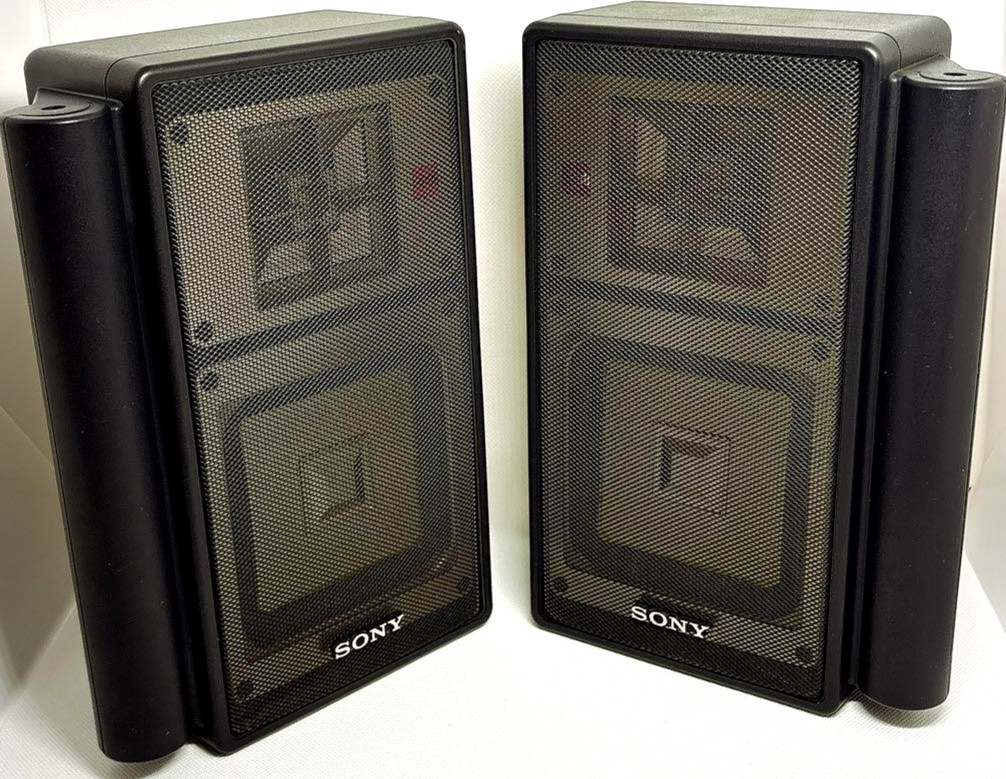
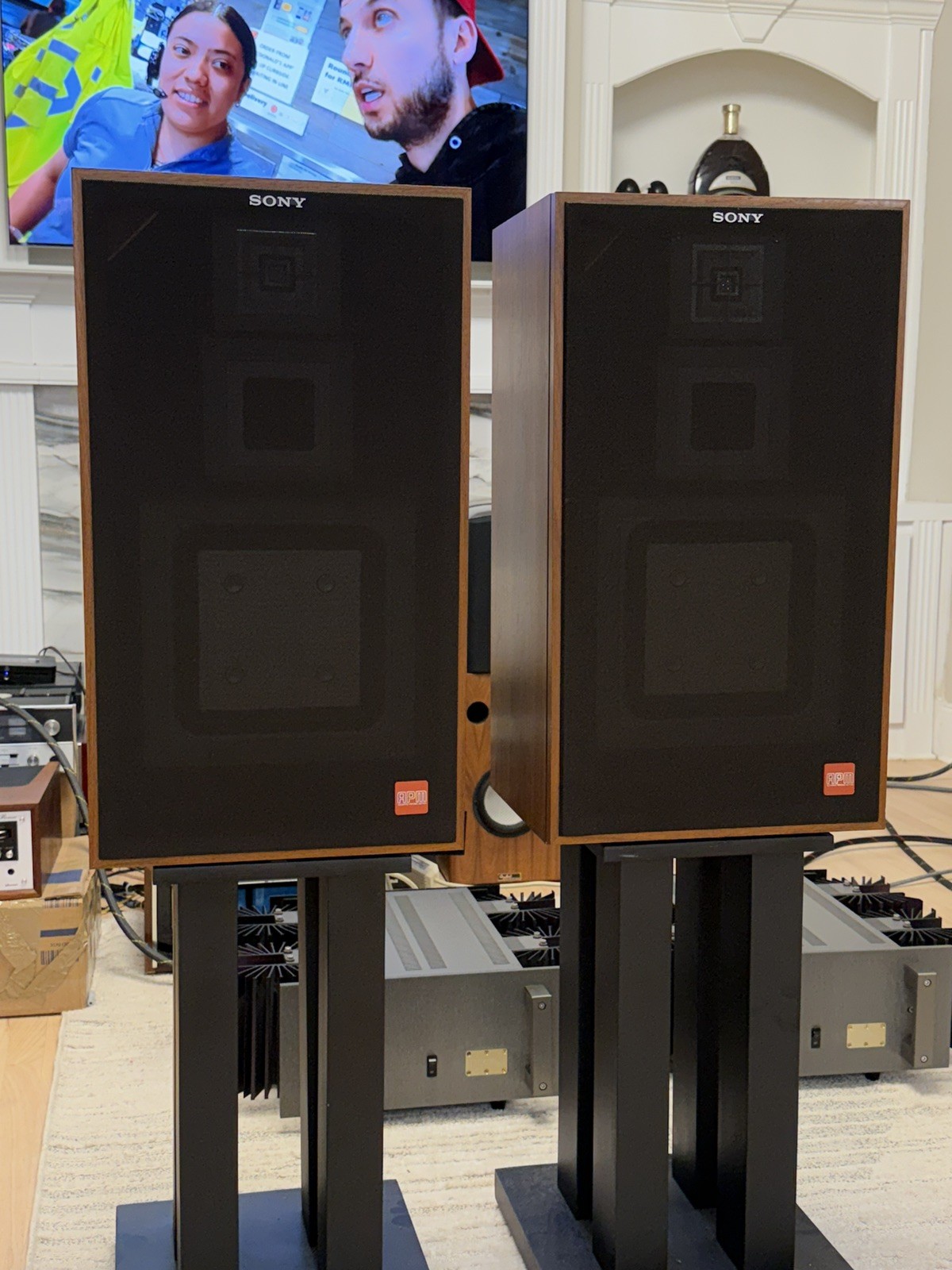
The Sony APM-2 isn't one of the company's celebrated speakers, and you won't find it in glossy brochures or vintage catalogs. It’s a shadow model, barely documented, slipping through the cracks of Sony’s otherwise meticulously archived speaker lineage. But what little we know makes it fascinating: it’s one of the few times Sony ventured into square planar magnetic drivers with a flat diaphragm design, a radical departure from the cone-based APM series like the APM-22ES that followed. These aren’t dynamic drivers with paper cones flapping in a magnetic field—they’re rigid, flat panels suspended in a magnetic array, promising piston-like motion and ultra-low distortion. Whether this was a prototype, a limited regional release, or an engineering test bed, the APM-2 stands apart from Sony’s mainstream speaker output.
It uses a bass reflex enclosure, so it wasn’t built in isolation from acoustic conventions—there’s a port somewhere doing its job—but the internal construction is where things get curious. The cabinet is foam-filled, which suggests Sony was serious about damping internal reflections, possibly to keep the delicate planar drivers from being colored by cabinet resonance. That kind of attention to enclosure behavior is more typical of high-end audiophile designs, not experimental one-offs. And despite the lack of specs, the presence of bi-wire capable terminals hints that the APM-2 was meant to be taken seriously by enthusiasts, giving users separate connections for highs and lows, likely to preserve signal integrity to those sensitive planar drivers.
But here’s the catch: we don’t know when it was made, how much it cost, how loud it plays, or how big it is. No frequency response, no impedance, no sensitivity rating—just silence in the archives. It doesn’t even appear in the same breath as the better-known APM-22ES, which came later and used conventional (though advanced) cone drivers. The APM-2 feels like a prototype that slipped out the back door, a lab experiment that somehow got a model number and terminals but never a datasheet.
Specifications
| Enclosure type | bass reflex enclosure |
| Terminals | bi-wire capable terminals |
Key Features
Square Planar Magnetic Drivers
Sony didn’t mess around with the APM-2’s driver design. These are square planar magnetic units with a flat diaphragm, a technology more associated with brands like Magnepan or certain high-end Japanese manufacturers. The idea is simple: replace the cone with a thin, rigid sheet suspended in a magnetic field, driven across its surface rather than at a single point. This should, in theory, eliminate breakup modes and deliver cleaner midrange and treble. The “flat diaphragm” aspect suggests minimal flex, aiming for what Sony might have called “accurate pistonic motion” long before they trademarked APM for their cone drivers. Whether it worked as intended is unknown—but the very fact Sony tried this in a product labeled APM (Accurate Pistonic Motion) is telling. This might be the true origin of the APM concept, even if it never made it to marketing materials.
Foam-Filled Cabinet
The cabinet isn’t just sealed or ported—it’s foam-filled. That’s unusual, especially for a speaker using planar drivers, which typically rely on open or lightly damped enclosures. Filling the box with foam kills internal standing waves, but it also adds mass and damping, possibly to prevent the cabinet from resonating and smearing the transient response. It could also be a way to control rear-wave energy from the planar driver, which often radiates both forward and backward. But without knowing the density or layout of the foam, or how much space it occupies, we’re left guessing. Was it a full fill? Strategic baffling? Either way, it shows Sony was thinking deeply about enclosure interaction—a level of detail that didn’t always make it into their mass-market designs.
eBay Listings


As an eBay Partner, we earn from qualifying purchases. This helps support our independent vintage technology research.
Related Models
- Sony ps-5550 (1978-1980)
- Sony ps-lx5r (1983-1985)
- Sony ss-7220a (1970s)
- Sony ss-97 (Late 1970s (approximately 1977-1979))
- Sony ss-999 (Late 1970s (approximately 1977-1979))
- Sony st-j88 (1986-1988)
- Kenwood kl-888s (Late 1970s (approximately 1978-1980))
- Sansui sax-200 (Late 1970s)
- Sansui sax-600 (Late 1970s)
- Sansui sr-222 (1973-1975)