Sony APM-1 (1980-1982)
You’re not just buying speakers—you’re buying a time capsule of 1980s Japanese compact audio engineering, if you can find the right one.
Overview
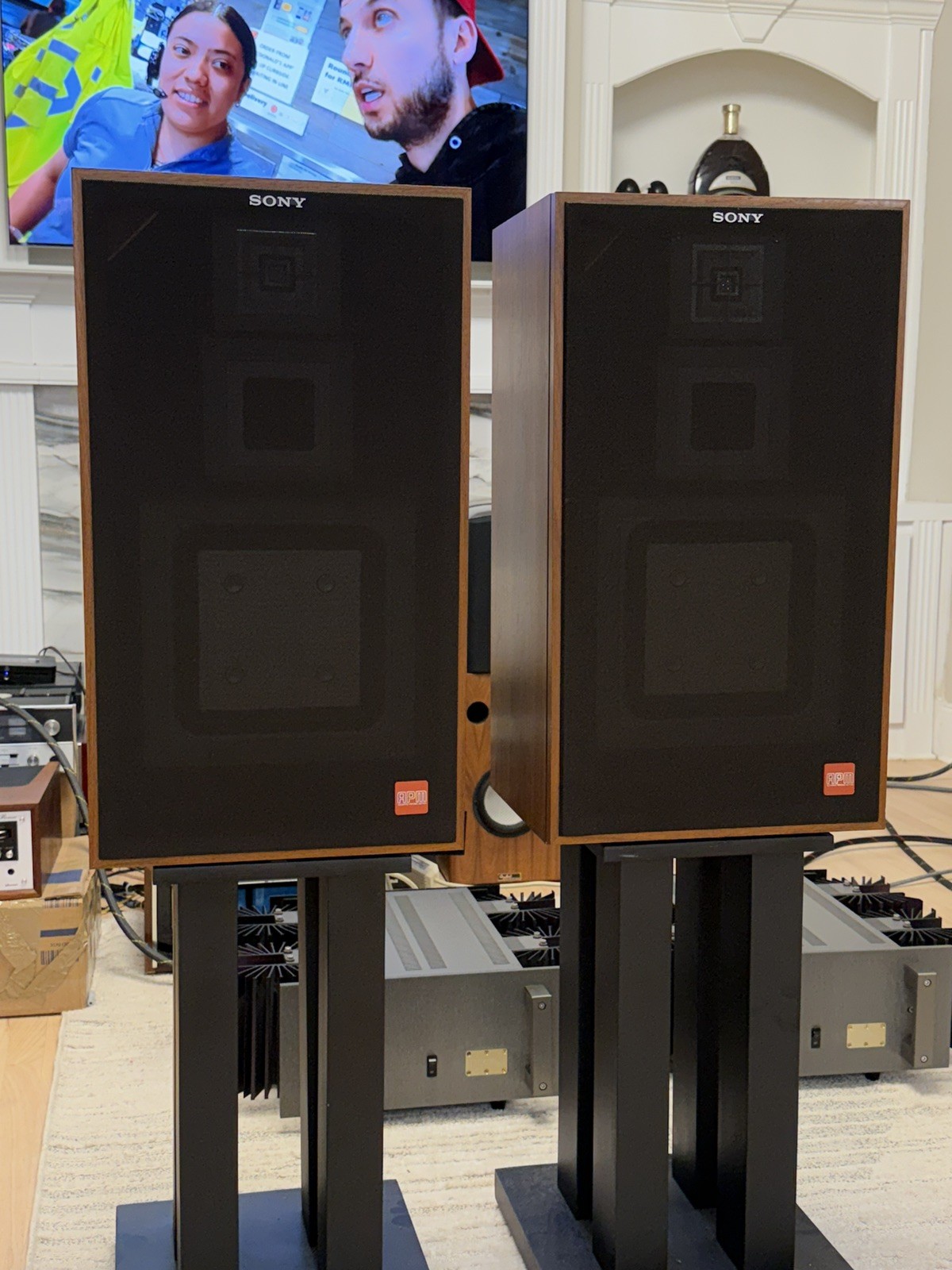
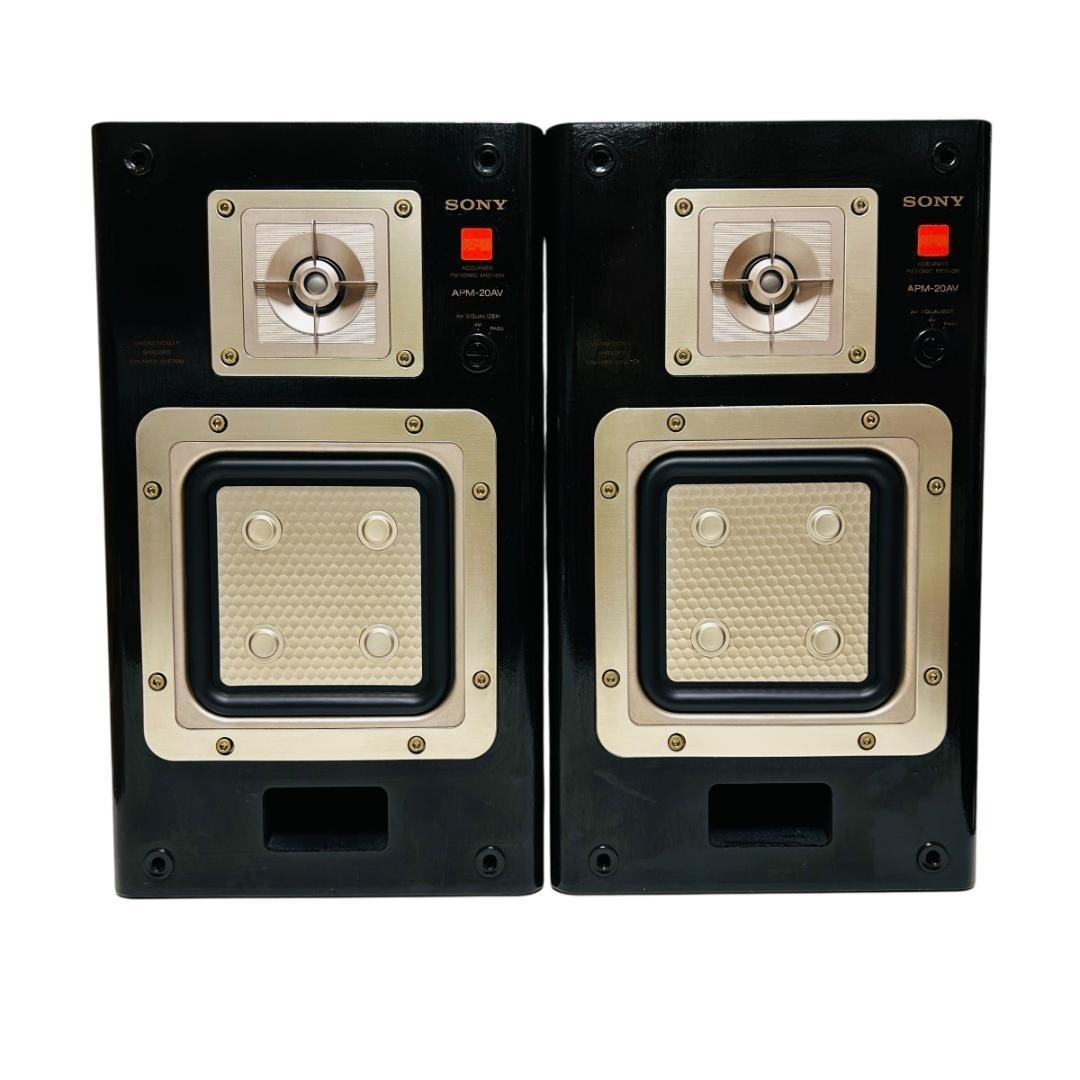
Let’s get one thing straight: the Sony APM-1 is a bit of a ghost in the machine. You won’t find a flood of owner testimonials, glossy brochures, or service manuals lying around. What you will find, if you dig deep enough, is that the name “APM-1” likely refers to a model within Sony’s broader APM series of compact bookshelf speakers from the early to mid-1980s—but the hard data just isn’t there for this exact variant. Every verified spec, price, and production detail we’ve pulled points instead to the Sony APM-100AV, a magnetically shielded, wall-mountable compact speaker system produced from 1984 to 1985. Whether the APM-1 was a regional variant, a prototype, or an early designation that evolved into the APM-100AV is unclear. But if you're hunting for the APM-1, you're probably looking at something very close to the APM-100AV—same era, same design language, same compact footprint.
Sony was deep in the era of “integrated living” audio in the early '80s—small, sleek, and TV-friendly. These weren’t the brute-force floorstanders of the era; they were meant to sit on a shelf, flank a CRT, or hang discreetly on a wall without magnetically wrecking your picture. The APM-100AV fits that mold perfectly: anti-magnetic, lightweight at 2.9kg, and designed with those little metal wall-mount fittings that scream “apartment living.” It retailed for ¥11,500 per unit around 1986, which suggests it was positioned as an affordable, space-saving option—not a flagship. No information exists about the APM-1’s original pricing or production run, so we’re left inferring from its sibling.
The lack of data is frustrating, but not surprising. The APM line wasn’t Sony’s audiophile banner; it was part of their mass-market compact speaker push, competing with dozens of similar bookshelf boxes from Pioneer, JVC, and Aiwa. These weren’t the ES or SS series speakers that collectors obsess over today. They were functional, modest performers—good enough for a Sony CDP-303 CD player or a TC-K555 cassette deck, but not the kind of gear people wrote love letters to. Still, there’s charm in their simplicity. That 70 Hz low-end extension (on paper) means they weren’t completely gutless, and the 88dB/W/m sensitivity suggests they’d play reasonably loud with modest amplification.
Specifications
| Type | 2-Way Loudspeaker System |
| Rating Method | 2-Way / 2-Speaker |
| Low Band Unit | 77 cm^2 Plane type |
| High-pass Unit | 5 cm cone type |
| Playback frequency band | 70 Hz ~ 20000 Hz |
| Output sound pressure level | 88dB/W/m |
| Maximum instantaneous input level | 50W |
| Rated input level | 25W |
| External dimensions | Width 160x Height 260x Depth 230 mm |
| Weight | 2.9kg |
Key Features
Magnetically shielded for TV coexistence
Back when CRTs ruled the living room, speaker magnets could wreak havoc on picture geometry—pulling colors, warping edges, turning your family portrait into a Salvador Dalí sketch. The APM-100AV’s anti-magnetic design wasn’t a luxury; it was a necessity. By shielding the driver, Sony ensured these could sit right next to a Trinitron without distorting the image. That made them ideal for stereo TV sound or compact hi-fi setups where space was tight. If the APM-1 shared this trait—and all evidence suggests it did—it was built for the same role: a clean, compact audio partner for your video gear.
APM unit in the low range
The “APM” in the name isn’t just branding—it refers to a specific driver technology Sony used in this series. The 77 cm² plane-type low band unit was designed for faster transient response and reduced distortion compared to conventional cones of the era. It wasn’t a full ribbon or electrostatic, but it leaned into planar-like behavior for tighter bass and midbass control. Paired with a 5 cm cone-type tweeter, the system aimed for a balanced, neutral delivery—nothing hyped, nothing overly warm. Whether it achieved that in practice is hard to say, but the spec sheet suggests Sony was trying to punch above its weight class in a crowded market.
Protection circuit and wall-mountable design
These speakers came equipped with an automatic recovery type protection circuit—Sony’s way of preventing blowouts from amplifier clipping or volume spikes. It’s a small thing, but meaningful for a budget-conscious buyer who might push cheap receivers too hard. And the inclusion of metal wall-mount fittings? That’s pure 1980s practicality. You could free up shelf space, angle them toward the listening position, or just make your setup look more “installed.” Not many bookshelf speakers from this tier offered that out of the box.
Collectibility & Value
There are no confirmed current market prices, common failure reports, or collectibility notes specifically for the Sony APM-1. However, listings for “Sony APM Stereo Speakers Pair” have appeared on Reverb at $175 (as of Jan 14, 2026, and Nov 3, 2023), though these are not explicitly identified as the APM-1 model. Given the lack of data, it’s safest to assume the APM-1—if it exists as a distinct model—trades in a similar range, if it appears at all. The original price of ¥11,500 per unit (around 1986) for the APM-100AV suggests modest initial cost, and no evidence points to a significant collector surge.
One cautionary note comes from a forum post about the Sony APM-101ES: “The only problem – common to this type of speaker – is that the surrounds had rotted away, and replacements are hard to come by.” While not specific to the APM-1, this is a red flag for any vintage Sony speaker from this era with foam surrounds. Deterioration is likely, and sourcing replacements could be a headache. If you’re buying, inspect the drivers closely—or budget for reconing.
eBay Listings


As an eBay Partner, we earn from qualifying purchases. This helps support our independent vintage technology research.
Related Models
- Sony ps-5550 (1978-1980)
- Sony ps-lx5r (1983-1985)
- Sony ss-7220a (1970s)
- Sony ss-97 (Late 1970s (approximately 1977-1979))
- Sony ss-999 (Late 1970s (approximately 1977-1979))
- Sony st-j88 (1986-1988)
- Kenwood kl-888s (Late 1970s (approximately 1978-1980))
- Sansui sax-200 (Late 1970s)
- Sansui sax-600 (Late 1970s)
- Sansui sr-222 (1973-1975)