Pioneer CS-301 (1973–1975)
At 28.5 kg and with a 30 cm woofer, these floorstanders deliver deep, unforced bass from a design that’s both simple and revealing.
Overview
The Pioneer CS-301 is a two-way, bass reflex loudspeaker system built during a pivotal moment in Japanese hi-fi, when companies like Pioneer were refining their engineering to compete with both domestic enthusiasm and Western expectations. Introduced around 1973 and reportedly in production until 1975, the CS-301 was part of a broader family that included the CS-501, CS-701, and CS-901, as shown in period brochure extracts. While not positioned as the flagship, it occupied a serious mid-tier space—offering real bass extension and solid sensitivity in a floorstanding cabinet finished in walnut grain. Owners report it was designed for real rooms and real amplifiers of the era, with an 8-ohm impedance and 40W power handling that made it compatible with most solid-state and tube gear of the time.
Despite its relative obscurity today compared to the legendary HPM series, the CS-301 has quietly gathered a following among those who value coherence over flash. It's not the most efficient speaker in the Pioneer lineup—owners note it falls short of the HPM series in both sparkle and output—but it trades that for a smoother, more relaxed presentation. One user described the sound as “very clear, not harsh at all,” with bass that’s “very good,” suggesting a design that prioritized musical balance rather than peak excitement. Another noted it’s “a bit more efficient” than the CS-99a, which may explain why some have paired them successfully with modestly powered vintage receivers or integrated amps.
Specifications
| Manufacturer | Pioneer Corporation |
| Type | 2-way, 2-speaker bass reflex system |
| Woofer | 30 cm (12") cone type |
| Tweeter | Horn type |
| Impedance | 8 ohms |
| Power handling capacity | 40W |
| Frequency response | 30Hz - 20,000Hz |
| Crossover frequency | 2,500Hz |
| Output sound pressure level | 94dB/W (1m) |
| Dimensions (W x H x D) | 500 x 890 x 365 mm |
| Weight | 28.5 kg |
Key Features
30 cm Cone Woofer with Bass Reflex Tuning
The 30 cm (12-inch) cone woofer is the anchor of the CS-301’s performance, enabling a rated low-frequency response down to 30 Hz—an ambitious figure for a mass-market speaker of the early 1970s. Paired with a bass reflex cabinet, it delivers deep, articulate bass without the bloat that sometimes plagued larger enclosures of the era. The tuning appears optimized for room integration rather than sheer slam, and owners report the low end remains controlled even at moderate volumes. The size and mass of the driver contribute significantly to the speaker’s 28.5 kg weight, suggesting a robust motor structure and basket design.
Horn-Type Tweeter with Inductor-Modified Slope
The horn-type tweeter gives the CS-301 a directional high-frequency character, focusing energy toward the listening position. While not as airy or extended as the exotic ring radiators found in the HPM series, it avoids harshness, contributing to the “very clear, not harsh at all” quality noted by users. According to one owner, the tweeter circuit includes an inductor that alters the crossover slope, likely smoothing the transition between drivers. However, the trade-off is apparent: users note the CS-301 “doesn’t have the ‘sparkle’ of the HPM tweeter,” positioning it as a more relaxed, less aggressive alternative.
94dB Sensitivity and 8-Ohm Load
With a sensitivity of 94dB/W (1m), the CS-301 is a relatively efficient speaker, capable of producing meaningful volume from modest amplifiers. The 8-ohm nominal impedance simplifies amplifier matching, making it a practical choice for the era’s receivers and integrated amps. This combination of high sensitivity and benign load likely contributed to its reputation as a “very good speaker” that “sounds great” in real-world setups, even if it lacks the ultimate resolution of Pioneer’s more exotic models.
Historical Context
The CS-301 was part of a family-oriented lineup, appearing in promotional materials alongside the CS-501, CS-701, and CS-901. It shared a service manual with the CS-701, CS-801, and CS-901, suggesting common design elements or manufacturing practices across these models. While not marketed as a reference product, it offered performance that exceeded typical bookshelf speakers of the time. Its efficiency and bass response placed it above entry-level models, yet it lacked the exotic materials and marketing of the HPM series, which owners confirm were more efficient and sonically “sparked” in comparison.
Collectibility & Value
The CS-301 is not considered as collectible as the HPM series, and current market data remains sparse. Listings on platforms like Etsy offer “Vintage Pioneer CS-301 – Stereo Speaker Set of 2” in used condition, but specific pricing trends are undocumented. Replacement parts, including original speaker grills, are available from third-party vendors, indicating some ongoing support. Common issues include aging capacitors in the crossover network—a known failure point in vintage Pioneer speakers—and potential driver degradation after prolonged high-volume use, as one owner reported a speaker failing after several hours of loud playback. While not prone to immediate failure, they benefit from inspection and component refresh before extended use.
eBay Listings


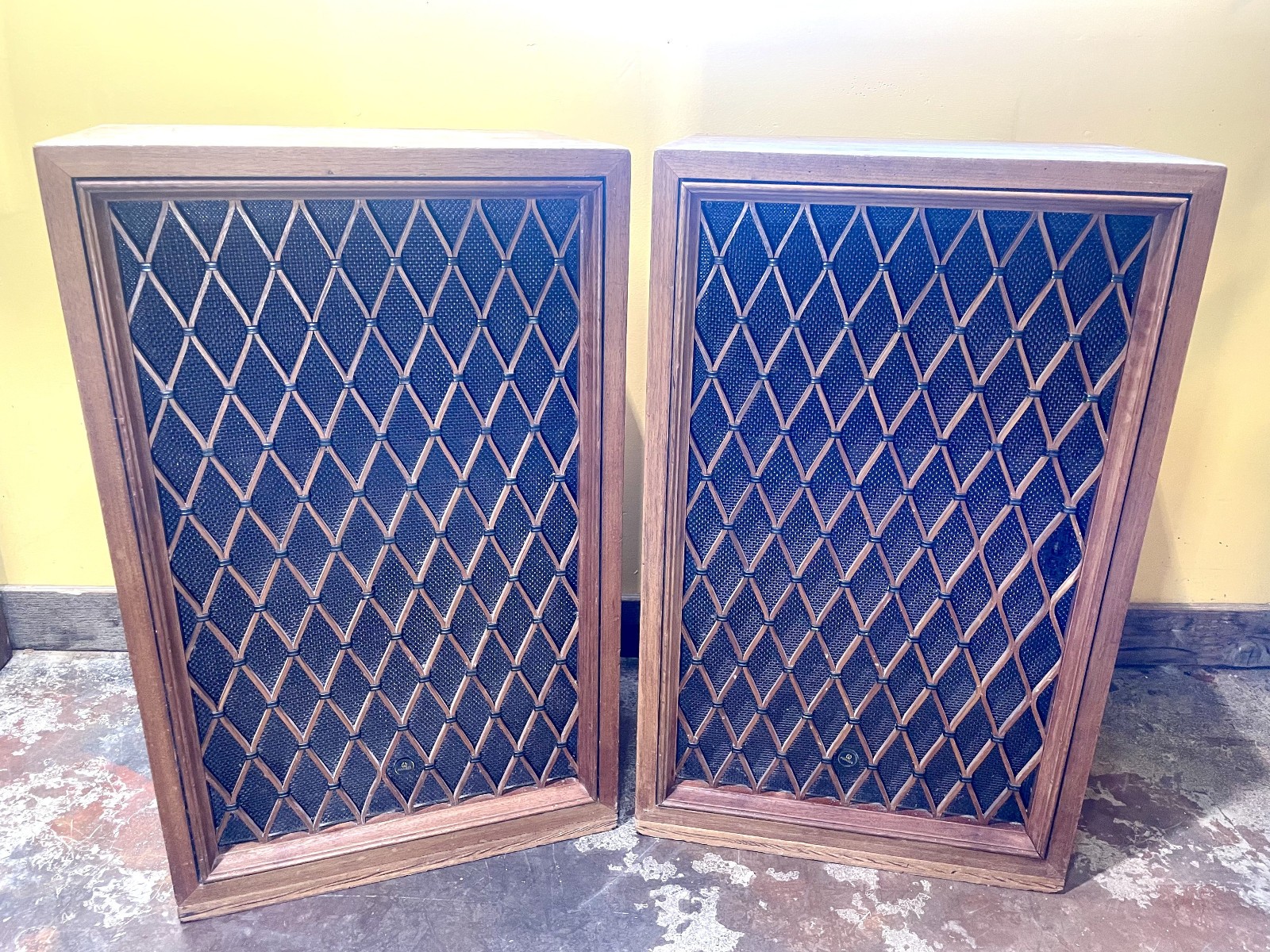
As an eBay Partner, we earn from qualifying purchases. This helps support our independent vintage technology research.
Related Models
- Pioneer cs-700 (1970-1972)
- Pioneer hpm-100 (1976-1979)
- Pioneer hpm-40 (1977-1979)
- Pioneer hpm-60 (1977-1979)
- Pioneer pl-5-(pl-420) (1979-1981)
- Sony ps-5550 (1978-1980)
- Sony ps-lx5r (1983-1985)
- Sony ss-7220a (1970s)
- Sony ss-97 (Late 1970s (approximately 1977-1979))
- Sony ss-999 (Late 1970s (approximately 1977-1979))