Marantz 5420 (1983)
The Marantz 5420 is a high-fidelity cassette deck produced in the early 1980s, representing the peak of analog tape technology before the digital revolution. Released in 1983, the 5420 was designed for audiophiles who demanded precision, reliability, and superior sound reproduction from their cassette-based systems. Though not as widely documented as some of Marantz’s receivers or turntables, the 5420 stands out as a sophisticated and technically advanced machine that exemplifies the brand’s commitment to quality engineering and sonic excellence.
Design and Build Quality
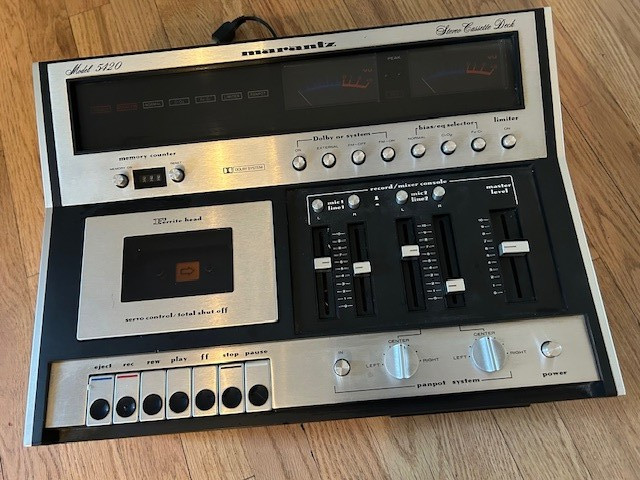
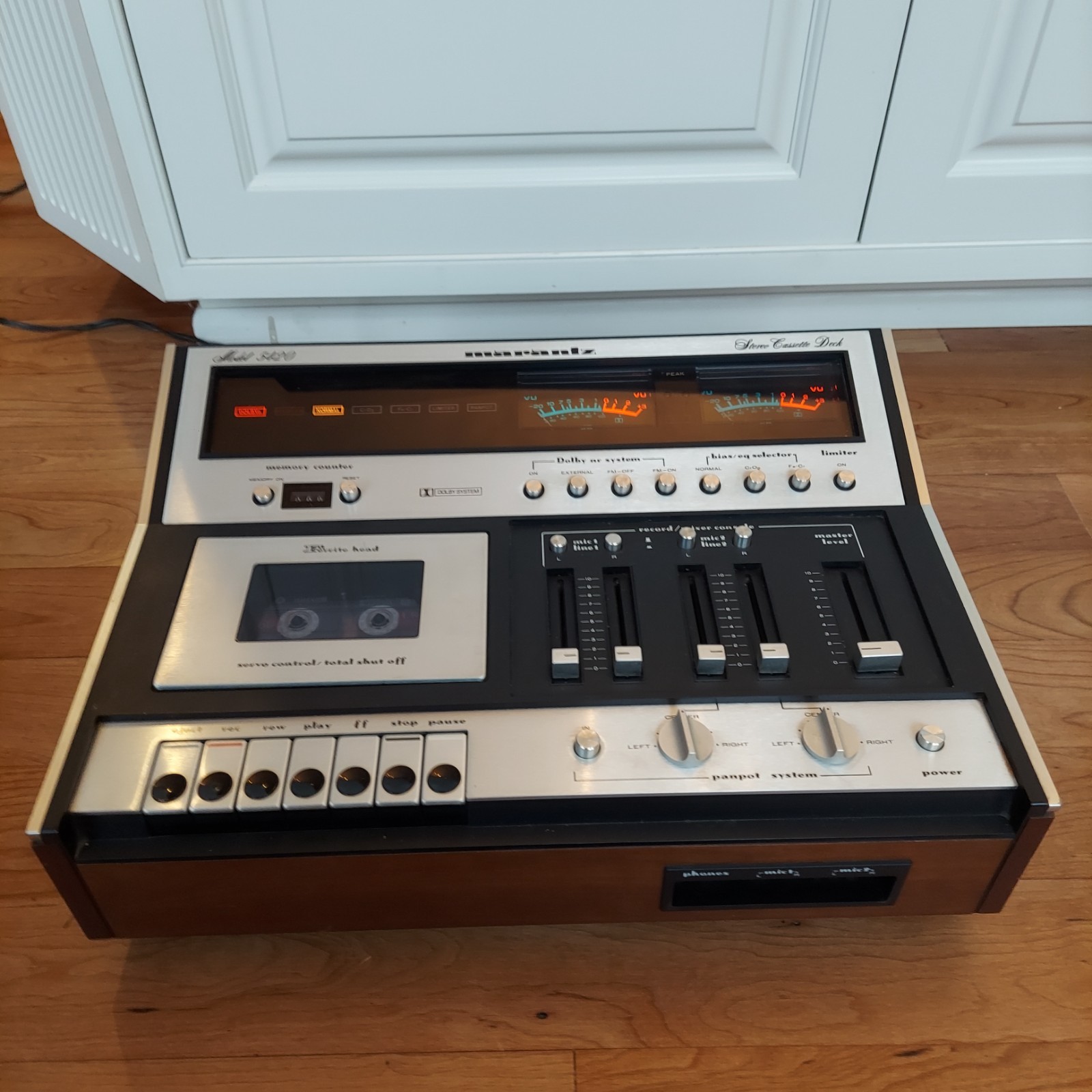
The Marantz 5420 features a sleek, minimalist front panel typical of Marantz’s design language in the early '80s. Constructed with a rigid metal chassis, the deck is built to minimize vibration and mechanical noise, both of which can degrade tape playback quality. The transport mechanism is a dual-capstan, three-head design — a hallmark of high-end cassette decks of the era — which ensures precise tape-to-head contact and stable tape speed.
The front panel includes a large VU meter for level monitoring during recording, a necessity for achieving optimal recording levels without distortion. Control buttons are logically laid out and tactile, providing clear feedback. The cassette compartment is top-loading with a motorized door, a design choice that not only looks elegant but also helps protect the tape path from dust when closed.
Technical Specifications
The Marantz 5420 is equipped with three dedicated heads: one for playback, one for recording, and a separate erase head. This configuration allows for precise control over each stage of the tape process and eliminates the compromise of combined record/playback heads found in lower-tier models.
- Tape Speed: 1⅞ inches per second (ips)
- Heads: Three-head system (record, playback, erase) by TDK
- Transport Mechanism: Dual capstan with direct-drive motor
- Wow and Flutter: 0.065% (measured at 3.15 ips, RMS)
- Frequency Response:
- Type I (Normal) tape: 40 Hz – 14,000 Hz
- Type IV (Metal) tape: 30 Hz – 18,000 Hz
- Signal-to-Noise Ratio:
- 56 dB (Dolby B)
- 68 dB (Dolby C)
- 72 dB (with Metal tape and Dolby C)
- Total Harmonic Distortion: <0.7% at 400 Hz, 3% harmonic
- Input/Output:
- Line In: 150 mV nominal
- Line Out: 150 mV nominal
- Input Impedance: 50 kΩ
- Output Impedance: 10 kΩ
- Bias and Equalization: Manually adjustable for Type I, II, and IV tapes
The inclusion of manual bias and equalization controls is a standout feature, placing the 5420 in the upper echelon of cassette decks. This level of control allows users to fine-tune the deck for specific tape formulations, maximizing fidelity and minimizing distortion. It’s a feature typically found on professional or semi-professional machines, underscoring Marantz’s intent to deliver studio-grade performance to the home audiophile.
Dolby Noise Reduction
The 5420 supports both Dolby B and Dolby C noise reduction systems. Dolby B, introduced earlier, reduces high-frequency noise during playback and was common on most mid-to-high-end decks. Dolby C, a more advanced system introduced in the early '80s, offers significantly greater noise reduction — especially in the mid and high frequencies — making it ideal for metal tapes.
The deck allows independent selection of Dolby modes for recording and playback, which is useful when dubbing tapes or working with pre-recorded material. However, care must be taken to match settings correctly to avoid tonal imbalances.
Tape Compatibility
The Marantz 5420 is compatible with all standard cassette tape types:
- Type I (Ferric)
- Type II (Chrome)
- Type IV (Metal)
Thanks to its adjustable bias and equalization, users can optimize the deck for each tape type. This flexibility was crucial at a time when tape formulations varied widely between manufacturers, and not all decks could extract the best performance from each type.
Metal tapes, in particular, benefit from the 5420’s high bias settings and extended frequency response. When paired with high-quality metal tapes like Sony’s SMF or TDK’s MA-X, the deck can produce results that rival early digital recordings in terms of clarity and dynamic range.
Performance and Sound Characteristics
Owners and reviewers consistently praise the Marantz 5420 for its warm, detailed, and well-balanced sound. The three-head design contributes to excellent channel separation and precise stereo imaging. The dual capstan system ensures consistent tape speed, minimizing wow and flutter — critical for maintaining pitch stability, especially during sustained notes or orchestral passages.
The VU meters are not only functional but also add to the aesthetic appeal, glowing softly during operation and providing real-time feedback on recording levels. Their accuracy helps prevent overmodulation, which can cause distortion and tape saturation.
In practical use, the 5420 excels at both playback and recording. It can extract nuanced detail from pre-recorded tapes, and when used for home dubbing, it preserves the integrity of the source material. Paired with a high-quality tuner or turntable, it becomes a powerful tool for building a personal music library.
Market Position and Legacy
Released in 1983, the 5420 entered the market at a transitional time. Compact cassettes were still widely used for portable music and home recording, but the introduction of the CD in 1982 signaled the beginning of the digital era. Despite this, high-end cassette decks like the 5420 remained relevant through the mid-to-late 1980s, as CDs were initially expensive and had a limited catalog.
The 5420 was positioned as a premium product, competing with models from Nakamichi, TEAC, and Denon. While it may not have had the same level of fame as the Nakamichi Dragon, it offered a compelling combination of performance, build quality, and user control at a more accessible price point.
Today, the Marantz 5420 is sought after by analog enthusiasts and vintage audio collectors. Its combination of advanced features, solid construction, and excellent sound makes it a valuable addition to any classic hi-fi setup. Though parts and service support are increasingly rare, many units still function reliably when properly maintained.
Maintenance and Considerations
Like all vintage tape decks, the Marantz 5420 requires regular maintenance to perform at its best. Over time, rubber drive belts and idler tires can dry out and crack, leading to speed instability or transport failure. The capstan and pinch roller should be cleaned regularly to prevent tape drag and head clogging.
Demagnetization is another essential maintenance task. Tape heads and metal components can become magnetized over time, degrading high-frequency response and increasing noise. Using a quality tape head demagnetizer every 50–100 hours of use is recommended.
Additionally, head alignment should be checked periodically, especially if the deck is moved frequently or used with tapes that may have been recorded on misaligned machines.
Conclusion
The Marantz 5420 Cassette Deck is a testament to the engineering prowess of Marantz during the analog era. With its three-head design, dual capstan transport, manual bias controls, and support for metal tapes and Dolby C, it delivers performance that remains impressive by today’s standards. While cassette technology has long been superseded, the 5420 continues to appeal to those who appreciate the warmth and character of analog tape.
For collectors and audiophiles alike, the 5420 represents more than just a relic — it’s a functional piece of audio history that bridges the gap between convenience and high fidelity. In an age of digital perfection, the Marantz 5420 reminds us of the tactile joy and sonic richness of analog recording.
eBay Listings


As an eBay Partner, we earn from qualifying purchases. This helps support our independent vintage technology research.
Service Manuals & Schematics
- Service Manual — archive.org
Related Models
- Sony TC-2050SD (1978)
- Aiwa AD-F990 (1993)
- Kenwood KX-3060 (1982)
- Sony TC-2130A (1974)
- Sony TC-2220 (1972)
- Sony TC-FX6 (1982)
- Sony TC-K96R (1986)
- Stromberg-Carlson RS-404 (1975)
- Akai CS-F33R (1985)
- Akai DX-59 (1983)