Luxman R-3045: The Pinnacle of Analog Tuning Excellence
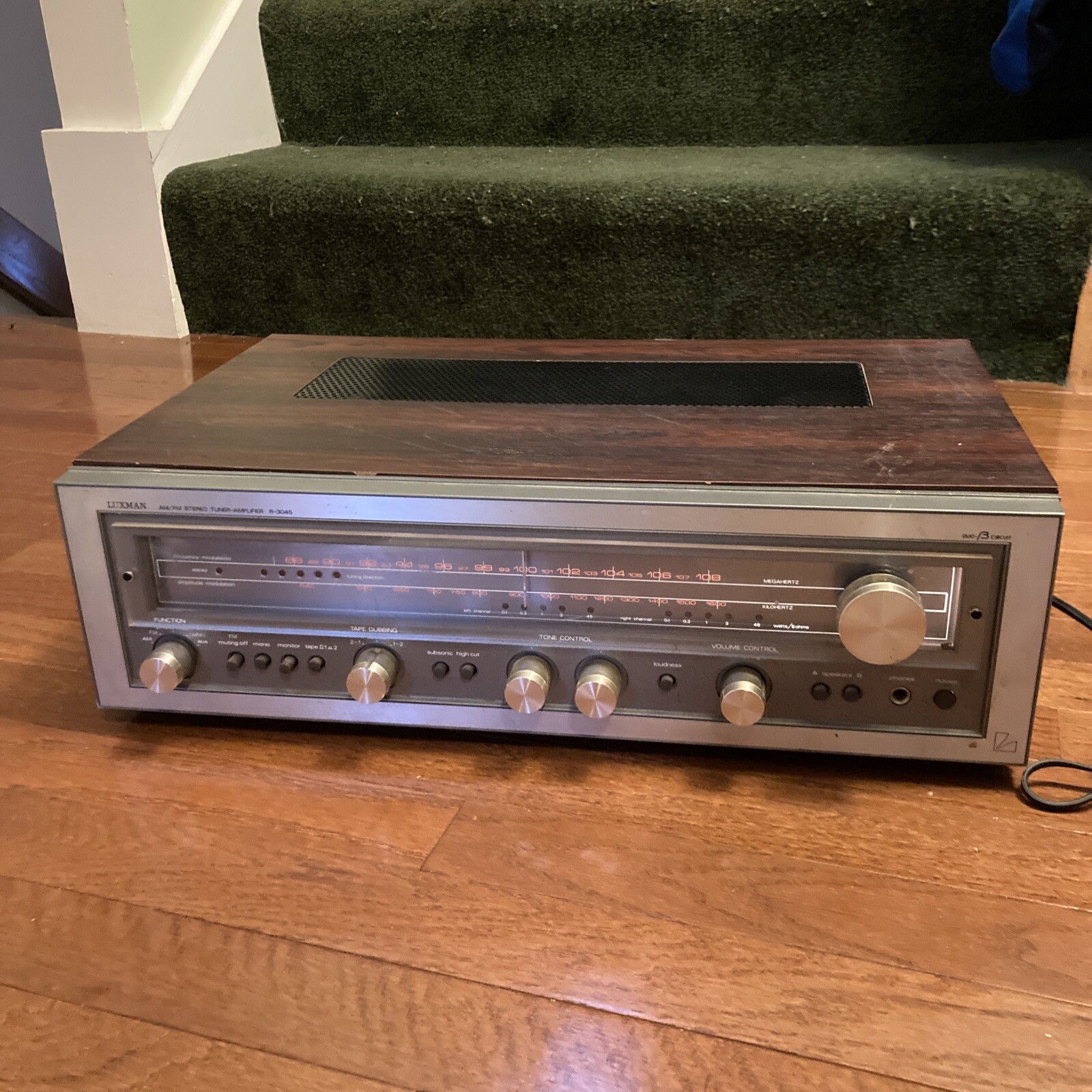
In the mid-1970s, Japanese high-fidelity audio engineering reached a golden age. Brands like Accuphase, Sansui, and Yamaha were pushing the boundaries of sonic performance, but few matched the refined craftsmanship and meticulous attention to detail found in Luxman products. Among their most respected offerings from this era is the Luxman R-3045, a high-performance FM/AM stereo tuner that exemplifies the art of analog radio reception. Though not as widely discussed as some of Luxman’s legendary amplifiers, the R-3045 remains a prized component among vintage audio enthusiasts for its exceptional build quality, musicality, and engineering sophistication.
Historical Context: Luxman in the 1970s
Luxman, founded in 1925, has long been synonymous with high-end audio in Japan. By the 1970s, the company had firmly established itself as a leader in vacuum tube and solid-state design, producing receivers, amplifiers, and source components that balanced technical precision with musical warmth. The R-3045 was introduced in 1975, a time when FM broadcasting was flourishing and audiophiles were increasingly seeking tuners capable of extracting every nuance from high-quality radio transmissions.
The R-3045 was positioned as a premium standalone tuner, designed to complement Luxman’s high-end preamplifiers and power amplifiers. It arrived during a period when stereo FM was becoming the preferred medium for music lovers—offering everything from classical broadcasts to progressive rock—making a high-performance tuner an essential part of any serious audio system.
Technical Specifications
The Luxman R-3045 was engineered with audiophile-grade components and a signal path optimized for clarity and low distortion. While it lacks the power output of amplifiers or receivers, its technical prowess lies in its RF (radio frequency) performance, selectivity, and audio fidelity.
| Specification | Detail |
| Model | R-3045 |
| Year of Release | 1975 |
| Manufacturer | Luxman Corporation, Japan |
| Tuner Type | FM/AM Stereo |
| Frequency Range (FM) | 87.5–108 MHz |
| Frequency Range (AM) | 525–1605 kHz |
| Tuning Method | Analog dial with mechanical counter |
| IF Frequency (FM) | 10.7 MHz |
| IF Frequency (AM) | 450 kHz |
| Sensitivity (FM) | 1.8 µV for 26 dB SNR |
| Selectivity (FM) | ±400 kHz: 60 dB |
| Signal-to-Noise Ratio | Better than 70 dB (A-weighted) |
| Harmonic Distortion | <0.5% (1 kHz, full output) |
| Audio Output | 0.5 V (RCA, line-level) |
| Input Impedance | 47 kΩ |
| Power Supply | AC 100V / 50-60 Hz (Japan domestic) |
| Dimensions (W×H×D) | 430 × 140 × 328 mm |
| Weight | 10.5 kg (approx.) |
| Finish | Black or silver faceplate, brushed aluminum |
The R-3045 features a dual-gate MOSFET front-end for improved RF isolation and reduced noise—a forward-thinking design choice for its time. It also includes a highly accurate mechanical tuning dial with a large, easy-to-read frequency counter, allowing precise station selection. The tuner employs a quasi-complementary push-pull output stage in its audio section, contributing to its warm, natural sound signature.
Sound Characteristics and Performance
The Luxman R-3045 is not merely a technical instrument—it’s a musical one. Its sound is often described as smooth, detailed, and richly textured, with a midrange presence that brings vocal and instrumental broadcasts to life. Unlike some tuners of the era that sounded clinical or overly bright, the R-3045 delivers a slightly warm tonal balance, characteristic of Luxman’s design philosophy.
FM reception is exceptionally stable, with excellent image rejection and stereo separation. The tuner handles weak signals gracefully, minimizing hiss and distortion thanks to its high signal-to-noise ratio and effective AGC (Automatic Gain Control) circuitry. AM performance is also impressive for its time, with good selectivity and reduced interference, making it suitable for listening to talk radio or vintage broadcasts with surprising clarity.
When paired with a high-quality antenna—such as a folded dipole or outdoor FM antenna—the R-3045 reveals its full potential, pulling in distant stations with remarkable fidelity. Its line-level output integrates seamlessly with vintage preamplifiers, making it a natural fit in a full Luxman stack or any classic hi-fi system.
Notable Features and Innovations
What sets the R-3045 apart from other tuners of the 1970s is its combination of precision engineering and user-centric design:
- Mechanical Digital Counter: Unlike simple analog dials, the R-3045 features a rotating mechanical counter that displays the exact frequency, allowing for repeatable tuning and easy station recall.
- Dual-Band Stereo Decoding: The tuner includes a high-quality stereo demodulator that ensures stable stereo separation and minimal crosstalk.
- High-Quality Internal Construction: Point-to-point wiring, shielded RF compartments, and premium capacitors reflect Luxman’s commitment to durability and performance.
- Front-Panel Metering: A large VU-style meter displays signal strength, tuning accuracy, and stereo pilot tone, providing both functional feedback and visual appeal.
- Muting Circuit: Automatically mutes audio during tuning to prevent loud pops or bursts of noise—a small but thoughtful touch.
The build quality is exceptional, with a heavy steel chassis, solid knobs, and a satisfying tactile response. The front panel, available in black or silver, features Luxman’s classic minimalist aesthetic—elegant without being ostentatious.
Common Issues and Maintenance
As with any 50-year-old electronic device, the Luxman R-3045 may require some maintenance to perform at its best:
- Capacitor Aging: Electrolytic capacitors in the power supply and audio stage may dry out over time, leading to hum, reduced output, or power issues. A full recapping by a qualified technician is recommended for units that haven’t been serviced.
- Tuning Dial Lubrication: The mechanical counter and tuning mechanism can stiffen with age. Cleaning and relubrication with appropriate grease can restore smooth operation.
- Antenna Terminal Corrosion: The 75Ω and 300Ω antenna terminals may corrode, especially if exposed to humidity. Cleaning with contact spray improves signal reception.
- Rubber Drive Belts (if applicable): Some variants use rubber belts in the tuning mechanism, which can degrade. Replacement with modern equivalents is advised.
- Alignment: Over decades, the IF and RF stages may drift out of alignment, reducing sensitivity. A professional alignment ensures optimal performance.
Despite its age, the R-3045 is generally reliable, thanks to its conservative design and high-quality components. With proper care, it can continue to deliver outstanding performance for years to come.
Current Market Value and Collectibility
The Luxman R-3045 is not as common on the vintage market as some of the brand’s more famous amplifiers, but it is highly sought after by Luxman collectors and analog enthusiasts. Units in excellent cosmetic and working condition typically sell for $400–$700 USD, with fully restored or mint-condition models commanding higher prices.
Its value is driven by several factors:
- Luxman’s reputation for quality and musicality
- Growing interest in vintage tuners as part of complete analog systems
- The resurgence of FM listening and interest in broadcast archives
- Compatibility with modern setups via line-level inputs
While not a “mainstream” collectible like the Marantz 2270 or Pioneer SX-1980, the R-3045 occupies a niche but respected place in the vintage audio world.
Conclusion: A Timeless Tuner
The Luxman R-3045 is more than just a relic of 1970s radio culture—it’s a masterfully engineered component that continues to deliver beautiful sound in the modern era. It represents a time when tuning into a favorite station was an experience in itself: adjusting the dial, watching the meter respond, and being rewarded with rich, full-bodied audio.
For the vintage audiophile, the R-3045 offers a rare combination of precision, warmth, and craftsmanship. Whether you’re building a period-correct system or simply appreciate the art of analog reception, the Luxman R-3045 stands as a quiet masterpiece—a tuner that listens as beautifully as it was built.
eBay Listings



As an eBay Partner, we earn from qualifying purchases. This helps support our independent vintage technology research.
Service Manuals & Schematics
- Manual — archive.org
Related Models
- Luxman R-1030 (1979)
- Luxman R-1050 (1975)
- Luxman R-117 (1975)
- Luxman R-104 (1975)
- Luxman R-105 (1975)
- Aiwa CS-250 (1978)
- Denon TU-1500RD (1995)
- Denon TU-280 (1976)
- Denon TU-501 (1977)
- Denon TU-550 (1978)