Luxman R-1050: The Pinnacle of Vintage FM Tuner Craftsmanship
In the golden age of high-fidelity audio during the 1970s, Japanese manufacturers like Luxman, Accuphase, and Sansui were pushing the boundaries of analog performance. Among the many exceptional components produced during this era, the Luxman R-1050 stands out as a masterclass in FM/AM tuner design. Released in 1977, the R-1050 was engineered not just to receive radio broadcasts, but to do so with the fidelity and refinement expected of a high-end audio system. For vintage audio enthusiasts and collectors today, the R-1050 remains a sought-after example of Japanese precision engineering and sonic purity.
While amplifiers and receivers often steal the spotlight in vintage audio circles, tuners like the R-1050 played a crucial role in the complete listening experience of the time. Before digital streaming and satellite radio, FM broadcasting was the primary source of high-quality music in the home. Luxman recognized this and built the R-1050 to extract every nuance from the airwaves, combining advanced circuitry with a user-centric design that emphasized both performance and usability.
Technical Specifications
The Luxman R-1050 was designed with a focus on signal clarity, selectivity, and stability—key attributes for a high-performance tuner. It features dual conversion superheterodyne circuitry, a hallmark of premium tuners from this period, which helps minimize interference and improves reception accuracy. The unit covers both FM (87.5–108 MHz) and AM (MW/LW) bands, making it versatile for international broadcasting and local stations alike.
| Specification | Detail |
| Model | Luxman R-1050 |
| Year of Release | 1977 |
| Tuner Type | FM/AM (MW/LW) |
| FM Frequency Range | 87.5 – 108 MHz |
| AM Frequency Range | MW: 530 – 1600 kHz, LW: 150 – 285 kHz |
| Tuning System | Analog dial with mechanical counter |
| IF Frequencies (FM) | 1st: 10.7 MHz, 2nd: 450 kHz |
| Sensitivity (FM) | 1.8 µV for 26 dB SNR |
| Selectivity (FM) | ±400 kHz: 60 dB |
| Harmonic Distortion | 0.05% |
| Output Level (FM) | 150 mV (1.8 µV input) |
| Audio Output Impedance | 10 kΩ |
| Power Supply | AC 100V / 50-60 Hz |
| Dimensions (W×H×D) | 490 × 180 × 355 mm |
| Weight | 13.5 kg |
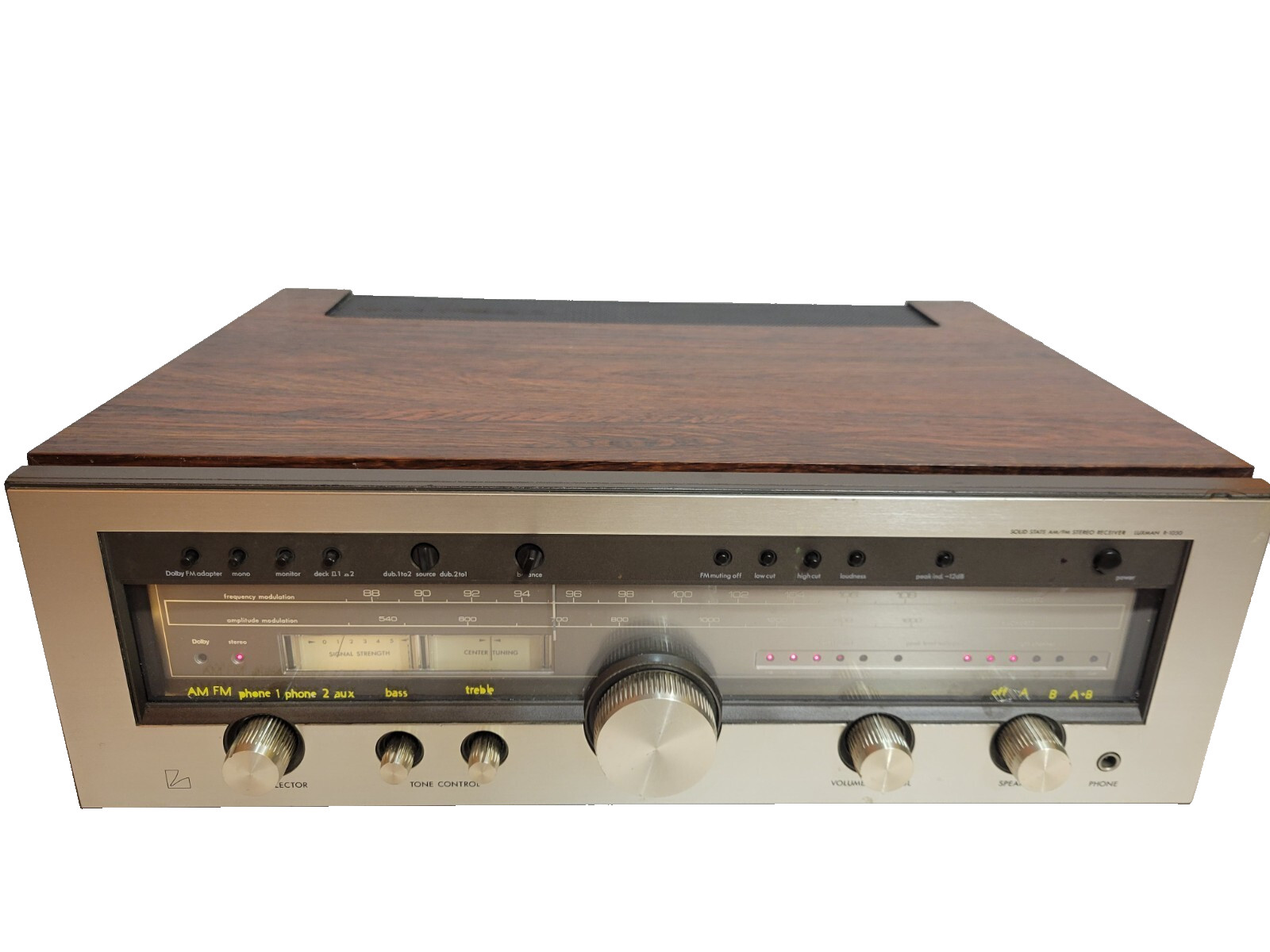
| Finish | Silver faceplate with black accents |
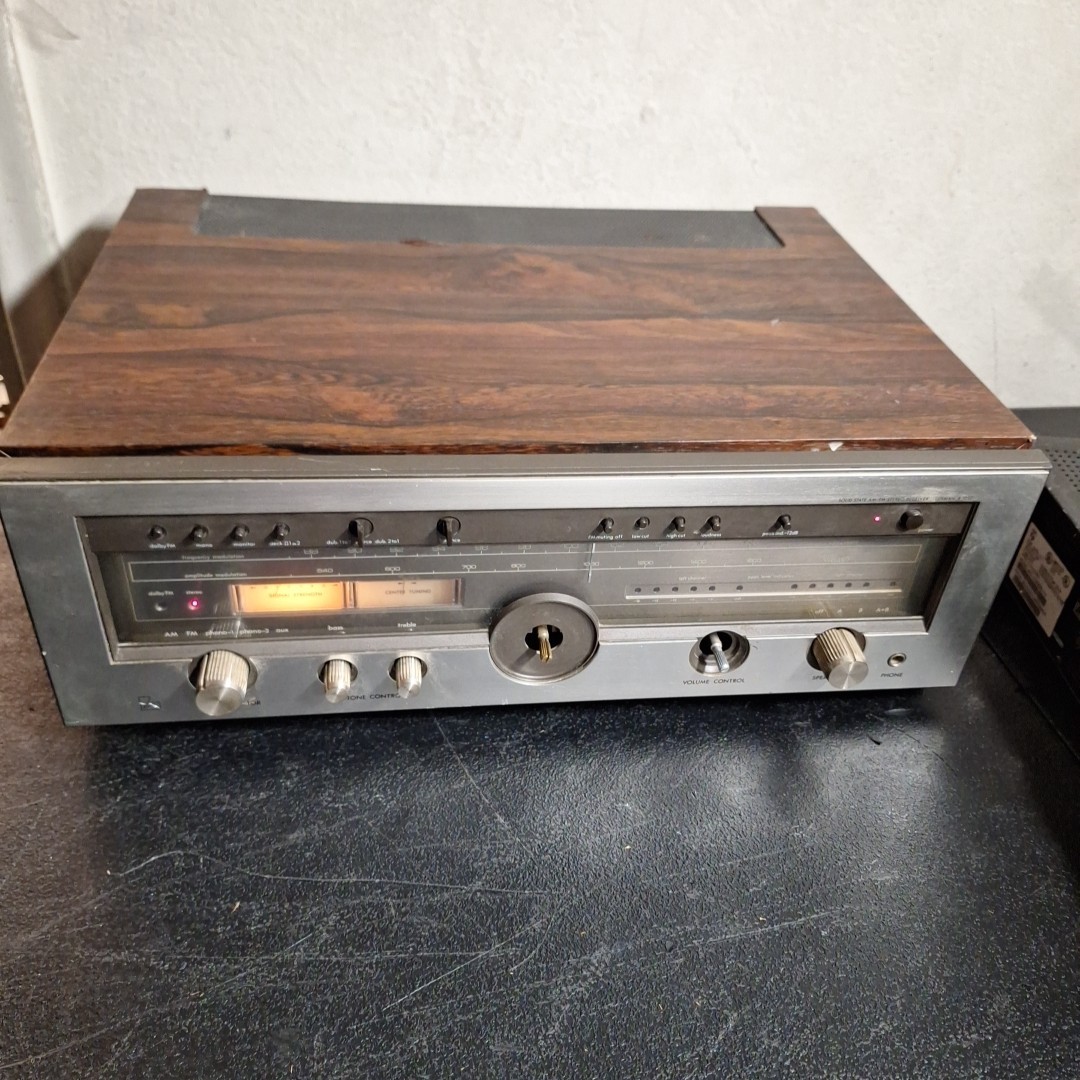
The R-1050 features a large, easy-to-read analog tuning dial with a mechanical digital frequency counter—a sophisticated solution for precise station identification before the era of digital displays. The illuminated dial and smooth tuning knob provide a tactile experience that modern digital tuners simply can't replicate.
Sound Characteristics and Performance
The Luxman R-1050 is celebrated for its natural, warm, and detailed sound signature—a hallmark of Luxman’s design philosophy. Unlike many tuners of the era that prioritized technical specs over musicality, the R-1050 delivers a listening experience that feels organic and engaging. FM broadcasts, especially from high-quality stations, are rendered with excellent stereo separation, low noise, and a wide soundstage.
Its dual-conversion design effectively suppresses image and intermediate frequency interference, resulting in cleaner reception even in urban environments with high signal congestion. The R-1050’s low distortion and flat frequency response ensure that music is reproduced faithfully, without coloration. Whether listening to classical broadcasts from NHK or jazz from a local FM station, the R-1050 brings a sense of presence and realism that elevates the entire system.
On the AM band, the tuner performs admirably for its time, with good sensitivity and reduced noise thanks to well-shielded circuitry and a high-quality ferrite bar antenna (typically connected externally). While AM will never match FM in fidelity, the R-1050 extracts impressive clarity from medium and long-wave signals, making it a favorite among shortwave and international radio enthusiasts.
Notable Features and Innovations
What sets the R-1050 apart from its contemporaries is its combination of precision engineering and user-focused design:
- Mechanical Digital Counter: Unlike simple analog pointers, the R-1050 uses a rotating drum counter that displays the exact frequency, allowing for repeatable tuning and fine adjustments.
- High-Quality RF and IF Stages: The use of discrete components and carefully selected transistors ensures minimal signal degradation.
- Dual Gang Variable Capacitor: Provides smooth, accurate tuning with excellent channel separation.
- Stereo Indicator and Pilot Tone Detection: Ensures reliable stereo decoding with visual feedback.
- Front-Panel Headphone Output: A rare and welcome feature on a tuner, allowing private listening without external amplification.
- Robust Chassis and Damping: The heavy steel chassis reduces microphonics and external vibration, contributing to signal purity.
Luxman also paid close attention to grounding and shielding, minimizing hum and RF interference—common issues in vintage tuners. The circuit layout reflects a meticulous approach to signal path optimization, with short, direct traces and high-quality solder joints.
Common Issues and Maintenance
As with any 1970s-era electronic equipment, the Luxman R-1050 may require some maintenance to perform at its best today. Common issues include:
- Deteriorated Electrolytic Capacitors: The power supply and audio coupling capacitors may need replacement after 40+ years. This is a standard restoration step for vintage gear.
- Tuning Gang Lubrication: The dual-gang capacitor can become stiff or noisy over time. Cleaning and relubrication with dielectric grease can restore smooth operation.
- Worn Belts (if applicable): Some variants use rubber belts for the tuning dial mechanism, which can dry out and crack.
- Fader or Potentiometer Noise: The volume and balance controls (if present in integrated versions) may develop crackle and require cleaning or replacement.
- Antenna Connection Corrosion: Ensure the 75Ω and 300Ω antenna terminals are clean and properly connected.
Despite its age, the R-1050 is generally reliable when properly serviced. Its modular design makes repairs accessible to experienced technicians, and replacement parts—while not always easy to find—are available through specialty vintage audio suppliers.
Current Market Value and Collectibility
The Luxman R-1050 has gained a strong following among vintage audio collectors, particularly in Japan, Europe, and North America. Well-maintained units in good cosmetic and working condition typically sell for $400–$700, with exceptional examples commanding higher prices. Units with original packaging, manuals, or rare finishes may fetch even more at auction.
Its collectibility stems from several factors:
- Luxman’s reputation for high-end, hand-built components
- The R-1050’s status as a flagship tuner in its day
- Growing interest in analog radio and vintage broadcast listening
- Compatibility with modern systems via line-level outputs
Unlike mass-market tuners, the R-1050 was built in limited numbers and with exceptional attention to detail, making it a true connoisseur’s piece.
Conclusion and Legacy
The Luxman R-1050 is more than just a tuner—it’s a testament to an era when radio was a primary source of high-fidelity music, and manufacturers treated every component as a critical link in the audio chain. Its combination of technical excellence, warm sound, and elegant design makes it a standout even among Luxman’s impressive lineup.
Today, the R-1050 appeals not only to purists restoring vintage systems but also to modern audiophiles seeking the unique charm of analog radio. In a world of digital silence and compressed audio, the R-1050 reminds us of the beauty of live, over-the-air broadcasts—delivered with grace, precision, and soul.
For those who appreciate the craftsmanship of 1970s Japanese audio engineering, the Luxman R-1050 is not just a tuner—it’s a time machine to the golden age of hi-fi.
eBay Listings


As an eBay Partner, we earn from qualifying purchases. This helps support our independent vintage technology research.
Related Models
- Luxman R-1030 (1979)
- Luxman R-117 (1975)
- Luxman R-104 (1975)
- Luxman R-105 (1975)
- Luxman R-107 (1975)
- Aiwa CS-250 (1978)
- Denon TU-1500RD (1995)
- Denon TU-280 (1976)
- Denon TU-501 (1977)
- Denon TU-550 (1978)