Klipsch KP-600
A 520-pound three-cabinet stack that Klipsch sold as the answer to backbreaking load-ins, and then apparently tried to forget.
Overview
The KP-600 is the Klipsch that most Klipsch people have never heard of. It was a professional modular flyable loudspeaker system, built for concert sound reinforcement. It was a real departure from the company's domestic horn-loaded roots into the touring and installation market. The documented era runs through the late 1980s and early 1990s, and the paper trail is almost entirely trade-press advertising rather than catalog material.
The system was a three-cabinet stack: a mid/high section, a low-frequency section, and a subwoofer cabinet. The sub cabinet held two 18-inch cone drivers in a vented enclosure, working as direct radiators. Klipsch's own period advertising put the full three-cabinet assembly at 520 lbs (235 kg). The company clearly considered that a selling point, and Sound-and-Communication (May 1989, p.102) reported it alongside the system's modular breakdown. The sensitivity figure that circulated with the system was 109 dB SPL at 1 watt at 1 meter. That is horn-loading territory, the kind of efficiency that lets a modest amplifier produce painful levels.
That is roughly where the documented record stops. Original pricing is undocumented. Production years are undocumented. Production numbers are undocumented. This is a professional product from a company with an unusually well-preserved heritage archive, and yet the KP-600 is a hole in the record. Klipsch itself reportedly has no information on the model at all.
Key Features
Three-Cabinet Modular Stack
The system broke into a mid/high box, a low-frequency box, and a subwoofer cabinet, and the modularity was the whole point. Period coverage identifies the component boxes as the KP 650 high and low-mid enclosures paired with KP 680 subwoofers, described in trade reporting as "lightweight, high-power" enclosures. Breaking the stack into three pieces meant a crew could move it one cabinet at a time rather than wrestling a single 520-pound block. Owners and crews who worked with the system describe it as easy to fly, which for a rig of this mass is not a small claim.
Dual 18-Inch Vented Subwoofer
The bottom cabinet carried two 18-inch cone drivers in a vented enclosure, working as direct radiators rather than horn-loaded. Klipsch built its reputation on folded horns and corner loading, so a direct-radiating dual-18 sub was a deliberate concession to pro sound. It gave predictable behavior, deep output, and a cabinet that could be flown and arrayed without needing a room corner to work.
109 dB Sensitivity
Klipsch's advertising claimed 109 dB SPL with 1 watt at 1 meter. Sound-and-Communication (May 1989, p.102) picked up the figure and also pitched the system as cost-effective for its output. For working sound reinforcement this is the spec that matters most, because amplifier headroom goes further and the system plays loud without the thermal strain that kills less efficient boxes. It is the one performance number that survived into the record.
Composite Cabinets on an Aluminum Skeleton
Klipsch's period advertising made much of the construction: a super-light composite material molded around a rigid aluminum skeleton, giving a cabinet that was stronger and lighter and stayed free of unwanted resonances. Enthusiasts who have examined the enclosures describe hand-laid fiberglass with aluminum reinforcement and balsa used in spots on the long panels. That reads as expensive and labor-intensive construction, and it explains why the system was light for its size and why so few seem to have survived intact.
Flyable Rigging and Modular Coverage
The system was designed to be flown, and its modular design reportedly allowed the horns to be rotated or interchanged for the best polar coverage in a given room. Klipsch's advertising also pointed to a wheel tray and rigid assembly hardware that let a crew move the assembled stack without excessive strain. A dedicated KP-600-EC electronic crossover/processor was offered alongside it, with mute and phase reversal switches and user-selectable crossover parameters.
Historical Context
Klipsch's own advertising led with weight: "No longer does breathtaking sound translate to backbreaking weight." The line ran in Recording-Engineer (August 1990, p.31) and in several other trade placements around the same period. The pitch was that a full-range, fully-featured three-cabinet stack ready to fly came in under 520 lbs, and that the composite-over-aluminum construction was the reason. The system was marketed as lighter than comparable systems of the era and as cost-effective for its output.
It found real work. Ram Sound, a Florida reinforcement company, ran a 20-box KP-600 Series front-of-house system covering up to 10,000 people and cited the enclosures' wear-and-tear resistance alongside their sound. The New Orleans Convention Center reportedly took 36 KP-600 systems for its expansion, and the system turned up at Manhattan's Lone Star Roadhouse and at an AES demo. By the early 1990s the trail goes cold, and Klipsch's own institutional memory went with it. Collectors report that the company holds no information on the KP-600, as though it never existed, despite its evident popularity in pro audio circles.
Collectibility & Value
The KP-600 is close to unobtainable. Enthusiasts who know the model call it "pretty much unobtanium," and the practical advice going around is that two would do nicely indoors and four would be absurd. Complete systems do occasionally surface. A turnkey KP-600 package was listed in July 2017 at $36,500 (down from $47,500), and a separate PA package listing offered six stacks with subs, crossovers, flybars, rigging, and eight dollies. One European listing described a KP-600/KP-650/KP-680 system simply as "rare." A price range of $5.24 to $3,000 appears attached to a page covering the KP-600 family, but it is not clear what that range represents, and it should not be treated as a per-cabinet market value.
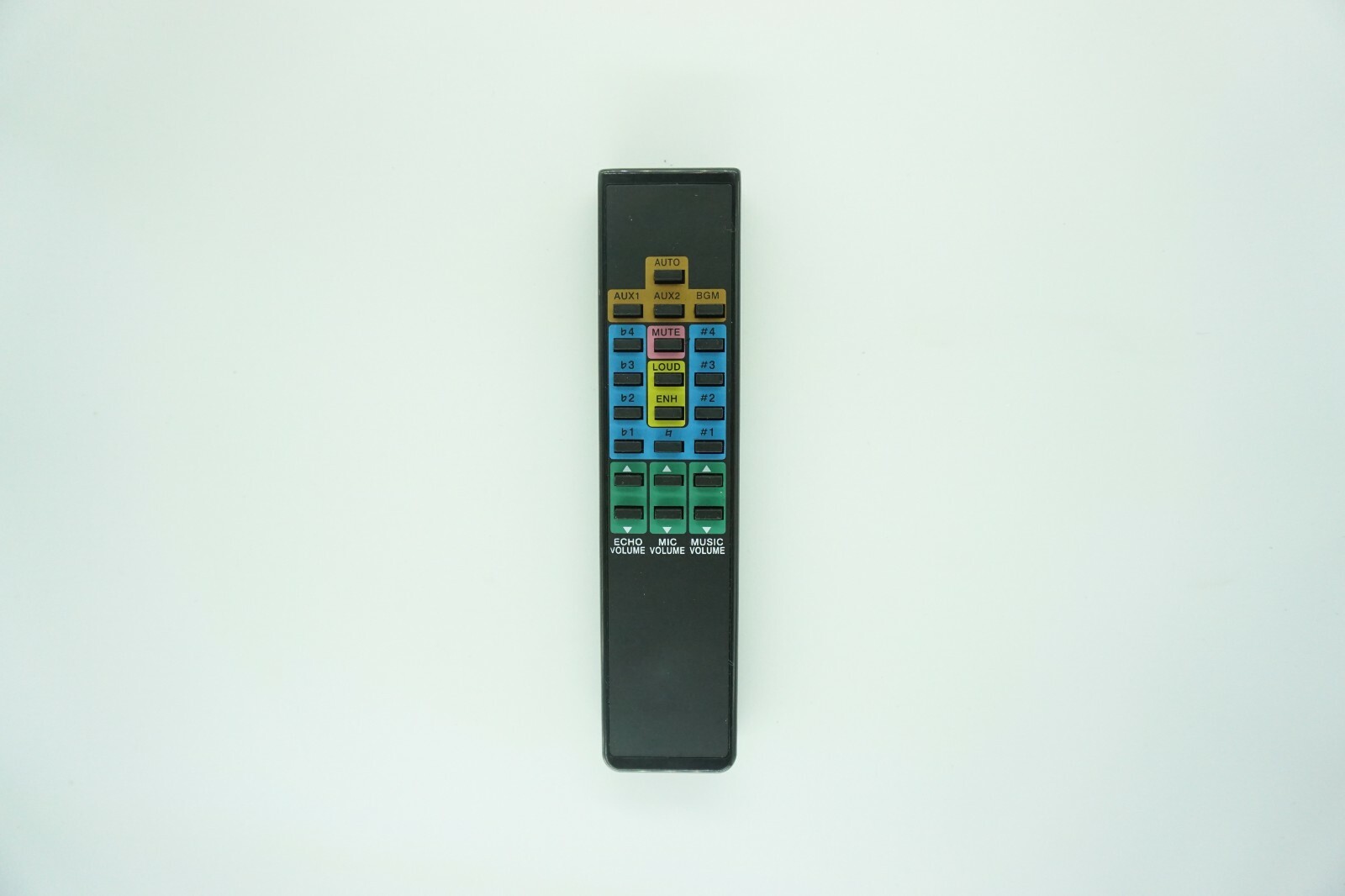
Searching "KP-600" on the used market returns almost entirely unrelated products. AAXA projector power adapters and Nissindo remote controls share the string, and no verified Klipsch KP-600 loudspeaker sale listings were found in available research. There is no documented failure pattern, no parts availability information, and no service literature to fall back on.
eBay Listings


As an eBay Partner, we earn from qualifying purchases. This helps support our independent vintage technology research.
Related Models
- Klipsch Belle (1985)
- Klipsch CF-3
- Klipsch CHORUS
- Klipsch Cornwall III (2006-)
- Klipsch Cornwall IV
- Braun AUDIO-1 (1965)
- Braun AUDIO-250 (1965)
- Magnavox Component Systems (1972)
- Acoustic Research AR (1967-1976)
- Acoustic Research 11