Denon TU-900: The Audiophile’s FM Tuner from the Golden Age of Hi-Fi
In the mid-1970s, Japanese audio manufacturers were locked in a quiet arms race to produce the most precise, sonically transparent, and technically advanced components for the burgeoning high-fidelity market. Denon, already renowned for its professional recording equipment and high-end turntables, entered this arena with a series of reference-grade components that showcased their engineering prowess. Among these was the Denon TU-900, a top-tier FM stereo tuner released in 1976 that quickly earned a reputation among audiophiles for its exceptional reception capabilities, low noise floor, and musical fidelity.
While tuners may seem like relics in today’s streaming-dominated world, during the 1970s and early 1980s, FM radio was a primary source of high-quality stereo audio. Classical stations, jazz broadcasts, and live concert transmissions offered listeners a chance to experience music in stereo with dynamic range and clarity that often rivaled vinyl pressings. For serious audiophiles, owning a high-performance tuner was not optional—it was essential. The Denon TU-900 was designed for this discerning audience: those who demanded the utmost from their listening experience, even when the source was the airwaves.
Technical Specifications
The TU-900 was engineered with a no-compromise approach, featuring a double-conversion superheterodyne circuit, quartz-locked tuning, and advanced IF filtering to ensure maximum selectivity and sensitivity. Its build quality reflected Denon’s professional audio heritage, with a heavy steel chassis, precision-machined aluminum front panel, and high-grade internal components.
| Specification | Detail |
| Model | TU-900 |
| Manufacturer | Denon (Japan) |
| Year of Release | 1976 |
| Tuner Type | FM Stereo |
| Tuning System | Quartz-locked digital synthesis |
| Frequency Range | 87.5–108 MHz |
| Tuning Steps | 100 kHz |
| IF Frequency | 1st: 10.7 MHz, 2nd: 450 kHz |
| Sensitivity (26 dBf) | 1.4 µV |
| Signal-to-Noise Ratio | 70 dB (stereo), 76 dB (mono) |
| Stereo Separation | 45 dB at 1 kHz |
| Total Harmonic Distortion | <0.5% |
| Output Level | 0.5 V RMS (50 kΩ load) |
| Output Impedance | 1 kΩ |
| Power Requirement | 110–120V AC, 60 Hz |
| Power Consumption | 25 watts |
| Dimensions (W×H×D) | 430 × 146 × 342 mm |
| Weight | 12.5 kg (27.5 lbs) |
Sound Characteristics and Performance
The Denon TU-900 was not just a technical marvel—it was a musical one. Its sound signature is best described as transparent, neutral, and highly detailed, with a natural midrange and extended high frequencies that preserved the timbre of instruments and the ambience of live broadcasts. Bass response was tight and well-controlled, avoiding the wooliness that plagued lesser tuners.
One of the TU-900’s standout qualities was its exceptional stereo imaging. Thanks to its high stereo separation and low crosstalk, the tuner could create a wide, stable soundstage that made listeners feel as though they were in the broadcast studio or concert hall. This was particularly noticeable with classical and jazz programming, where spatial cues are critical.
The tuner’s low noise floor meant that even weak stations came through with remarkable clarity. Its double-conversion design minimized interference from adjacent channels and image frequencies, while the quartz-locked tuning ensured rock-solid stability—no drift, no hunting, just precise station retention.
Notable Features and Innovations
The TU-900 was packed with features that set it apart from its contemporaries:
- Quartz-Locked Digital Tuning: At a time when many tuners still used analog dials or basic digital counters, the TU-900 employed a quartz-locked system that offered unmatched tuning accuracy and station memory. This was a precursor to the synthesized tuners that would dominate the 1980s.
- Dual IF Filters: The use of a two-stage intermediate frequency system (10.7 MHz followed by 450 kHz) allowed for superior selectivity and rejection of unwanted signals, especially in urban environments with heavy RF congestion.
- High-Quality Ladder Filter: Denon used a precision 9-pole ladder filter in the IF stage to ensure flat frequency response and excellent channel separation.
- Professional-Grade Construction: The heavy chassis reduced microphonics and vibration, while gold-plated RCA jacks and high-quality internal wiring minimized signal loss.
- Large Fluorescent Tuning Display: The bright, easy-to-read display showed frequency, tuning mode, and stereo/mono status, enhancing usability in dimly lit environments.
- Defeatable De-emphasis: A switchable 50/75 µs de-emphasis network allowed users to match the tuner to the broadcast standard, preserving tonal accuracy.
Common Issues and Maintenance
Like any vintage electronic component, the Denon TU-900 requires attention after nearly 50 years. While generally robust, a few issues are known to affect surviving units:
- Capacitor Aging: Electrolytic capacitors in the power supply and audio path may have dried out, leading to hum, reduced performance, or complete failure. A full recapping by a qualified technician is recommended before extended use.
- Tuning Knob Wear: The mechanical tuning knob and associated potentiometer can wear over time, causing erratic tuning or loss of control. Cleaning or replacement may be necessary.
- Display Fading: The fluorescent display can dim or fail entirely. While replacements are rare, some technicians have successfully restored them or sourced NOS (New Old Stock) units.
- RF Connector Corrosion: The 75-ohm FM antenna input can suffer from oxidation, especially if exposed to humidity. Cleaning with contact spray can restore optimal reception.
Regular cleaning of controls and connectors, along with proper ventilation, will help preserve the TU-900’s performance. Given its build quality, a well-maintained unit can still outperform many modern budget tuners.
Current Market Value and Collectibility
The Denon TU-900 is not as widely known as some of its contemporaries (like the Yamaha TU-3000 or Sony STR series tuners), but it has a loyal following among vintage audio enthusiasts. Its rarity, build quality, and sonic performance make it a sought-after piece for collectors and restorers.
As of 2024, a fully functional TU-900 in good cosmetic condition typically sells for $400–$700, depending on region and market demand. Units that have been professionally refurbished—especially with recapped power supplies and cleaned internals—can command higher prices. Original packaging, manuals, and accessories add further value.
While not yet a “blue-chip” vintage item like certain Marantz or Sansui receivers, the TU-900 is increasingly recognized as a hidden gem from Denon’s golden era. Its appeal lies in its understated elegance, technical sophistication, and the sheer pleasure of hearing FM radio as it was meant to be heard.
Conclusion and Legacy
The Denon TU-900 stands as a testament to a time when audio engineering was both a science and an art. It was built for listeners who valued precision, durability, and sonic truth—qualities that remain relevant today. While FM radio may no longer be the dominant medium, the TU-900 reminds us that high-fidelity can come from the airwaves as much as from vinyl or digital files.
For the vintage audio collector, the TU-900 offers more than nostalgia—it offers a genuine high-end listening experience. Paired with a quality antenna and a good preamp, it can still deliver broadcast audio with a clarity and presence that surprises modern listeners. In an age of compressed streams and lossy codecs, the TU-900 is a refreshing return to analog purity.
If you’re lucky enough to find one in working order—or willing to invest in a restoration—the Denon TU-900 is more than a tuner. It’s a window into the golden age of hi-fi, and a reminder that great engineering never truly goes out of style.
eBay Listings
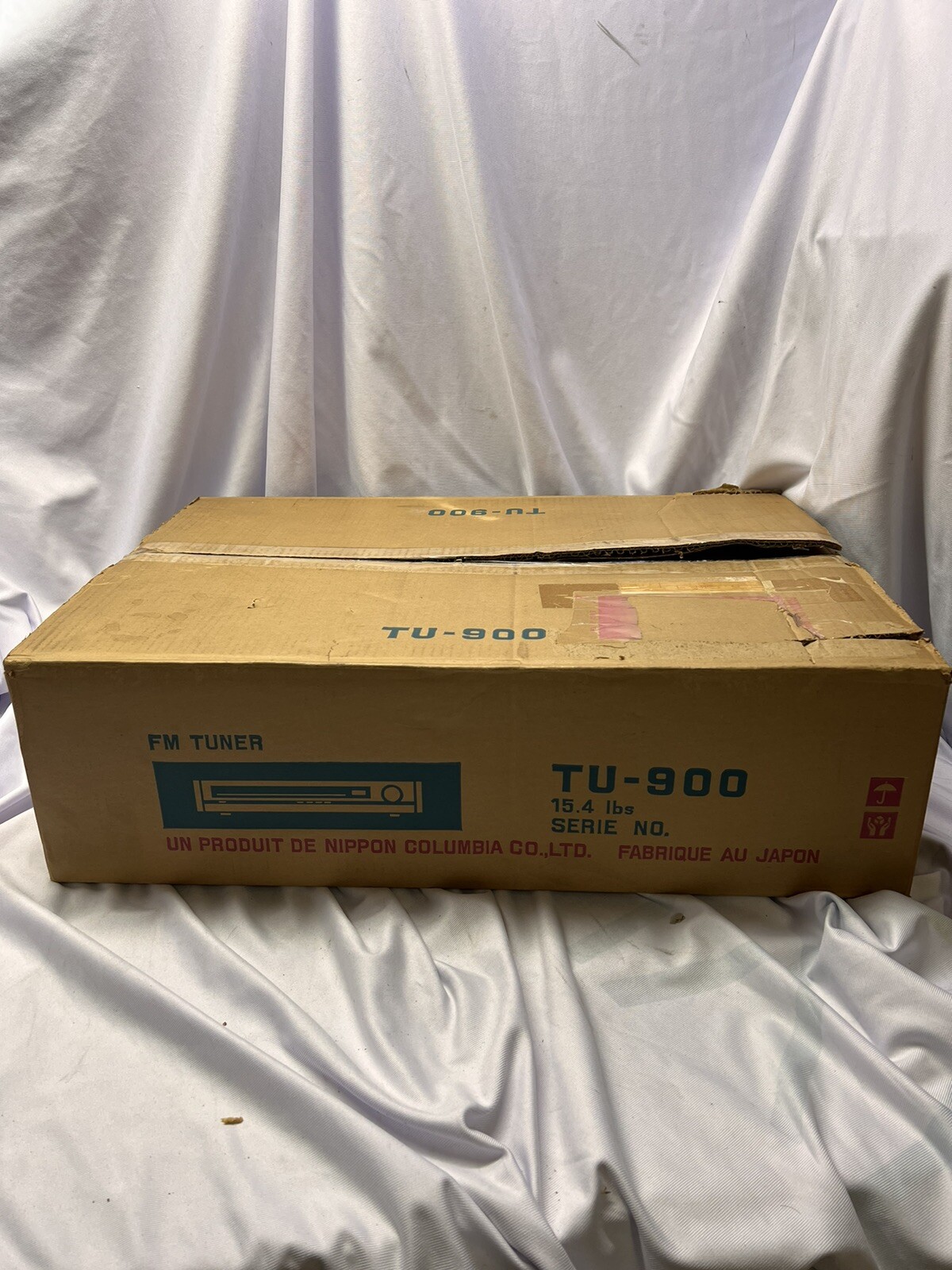


As an eBay Partner, we earn from qualifying purchases. This helps support our independent vintage technology research.
Related Models
- Denon TU-1500RD (1995)
- Denon TU-280 (1976)
- Denon TU-501 (1977)
- Denon TU-550 (1978)
- Denon TU-750S (1975)
- Aiwa CS-250 (1978)
- Luxman R-1030 (1979)
- Luxman R-1050 (1975)
- Luxman R-117 (1975)
- Denon TU-400 (1976)