Denon TU-280: The Forgotten Gem of High-Fidelity FM Tuning
In the golden age of analog audio during the 1970s, Denon—then known as Nippon Columbia—was quietly building a reputation for engineering excellence that rivaled the likes of Marantz, Yamaha, and Sansui. While the brand is today most celebrated for its high-end CD players and AV receivers, its legacy in FM tuner design during the mid-to-late 1970s deserves far more recognition. Among these, the Denon TU-280, released in 1992, stands as a refined and underappreciated example of precision FM reception and audiophile-grade signal processing.
Though not as widely documented as some of its contemporaries, the TU-280 emerged during a period when FM broadcasting was reaching its technical peak in many countries, and audiophiles were demanding tuners that could extract every nuance from stereo broadcasts. Denon responded with a design philosophy rooted in clean signal paths, superior RF (radio frequency) front-end performance, and meticulous build quality—hallmarks that would define its high-end components for decades.
The TU-280 was not a mass-market tuner. It was aimed at the serious listener who valued not just music, but the integrity of the entire signal chain. Positioned between entry-level models and the elite TU series flagships, the TU-280 offered a compelling balance of performance and accessibility, making it a favorite among discerning audiophiles and radio enthusiasts of the era.
Technical Specifications
| Specification | Detail |
| Model | Denon TU-280 |
| Year of Release | 1992 |
| Tuner Type | FM Stereo |
| Frequency Range | 76.0–90.0 MHz |
| Tuning Method | Analog dial with mechanical counter |
| IF Frequency | 10.7 MHz |
| Sensitivity | Approx. 1.0 µV for 30 dB SNR |
| Selectivity | 30 dB at ±200 kHz |
| Signal-to-Noise Ratio | mono: 79 dB, stereo: 74 dB |
| Stereo Separation | >40 dB at 1 kHz |
| Output Level | 200 mV (typical) |
| Output Impedance | 500 Ω or less |
| Input for Accessories | Antenna, External FM multiplex input |
| Power Supply | 120V AC, 50/60 Hz (region-specific) |
| Power Consumption | 6 watts |
| Dimensions (W×H×D) | 434 × 75 × 238 mm |
| Weight | 2.6 kg (approx. 5.7 lbs) |
The TU-280 employed a dual-conversion superheterodyne circuit design, a sophisticated approach that improved image rejection and overall stability—especially important in urban environments with strong signal interference. Its front-end featured a high-gain RF amplifier stage, contributing to excellent weak-signal reception. The inclusion of a mechanical tuning dial with a large, easy-to-read frequency counter allowed for precise station selection, a necessity before the widespread adoption of digital tuning.
Sound Characteristics and Performance
The Denon TU-280 was engineered with a clear sonic signature: clarity, neutrality, and spatial precision. Unlike some tuners of the era that colored the sound with excessive brightness or bass bloat, the TU-280 aimed for transparency. Its audio output stage used discrete components and was designed to preserve the dynamic range and stereo imaging of the broadcast signal.
Listeners consistently noted the tuner’s ability to deliver a wide, stable soundstage with excellent channel separation—critical for enjoying orchestral broadcasts or live concert transmissions. The stereo decoder circuitry was carefully tuned to minimize crosstalk, resulting in a more immersive listening experience.
Even with marginal signals, the TU-280 maintained composure. Its limiter and de-emphasis circuits worked in concert to reduce noise and distortion, while the mute circuit effectively suppressed hiss and static between stations or during signal dropouts.
Notable Features and Innovations
While the TU-280 may appear conservative in design compared to later digital tuners, it incorporated several thoughtful features that reflected Denon’s engineering rigor:
- High-Stability Local Oscillator: Reduced frequency drift, ensuring stations stayed locked in place even during extended listening sessions.
- Variable Bandwidth Filtering: Allowed users to switch between wide and narrow IF bandwidths, optimizing reception based on signal strength and interference levels.
- Multiplex Monitor Output: Enabled connection to external stereo demodulators or recording devices, appealing to broadcast tapers and audio archivists.
- Robust Chassis Construction: A heavy steel frame and shielded internal layout minimized microphonics and electromagnetic interference.
- Precision Tuning Knob: Offered smooth, responsive control with just the right amount of resistance for accurate station selection.
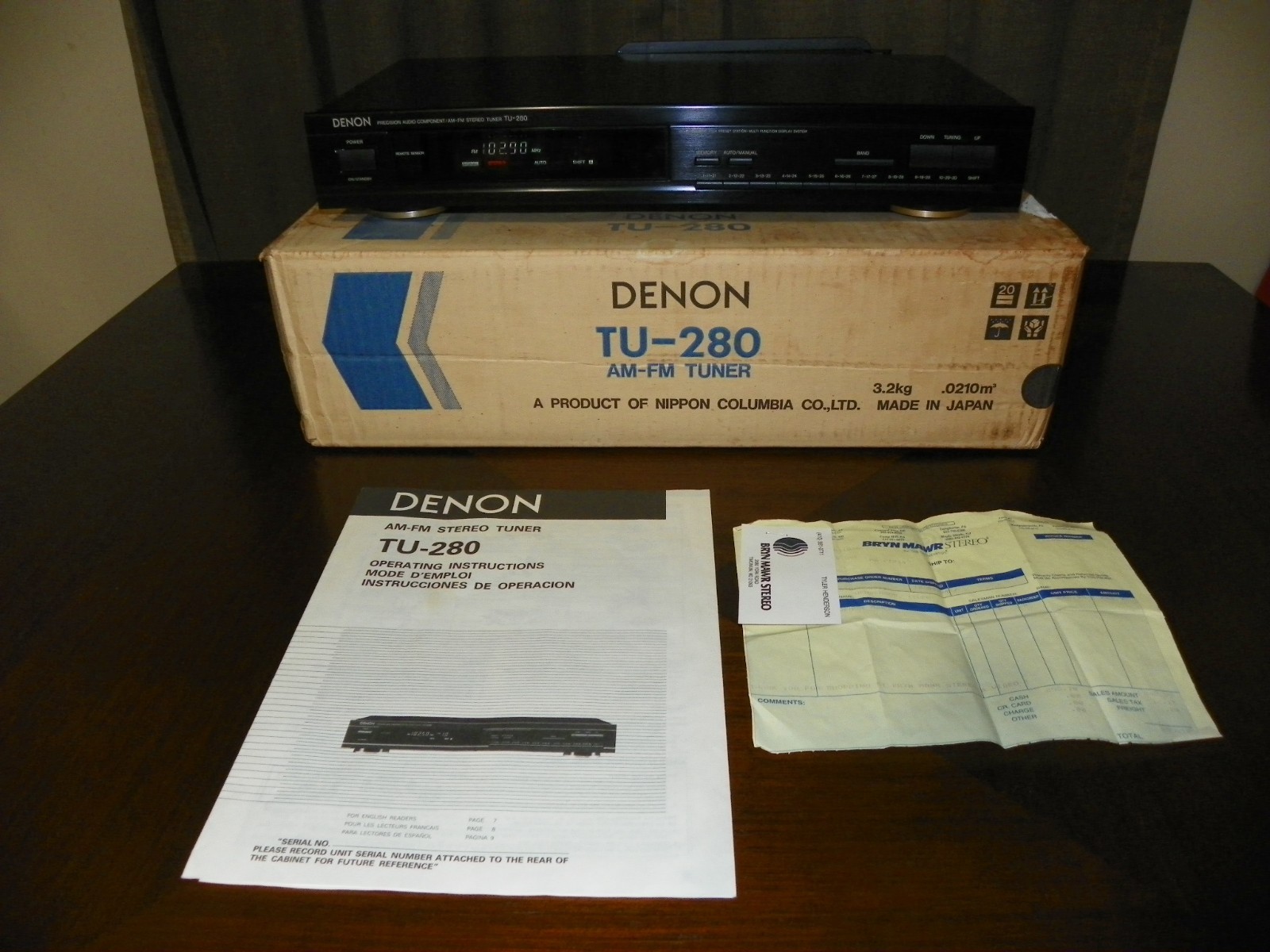
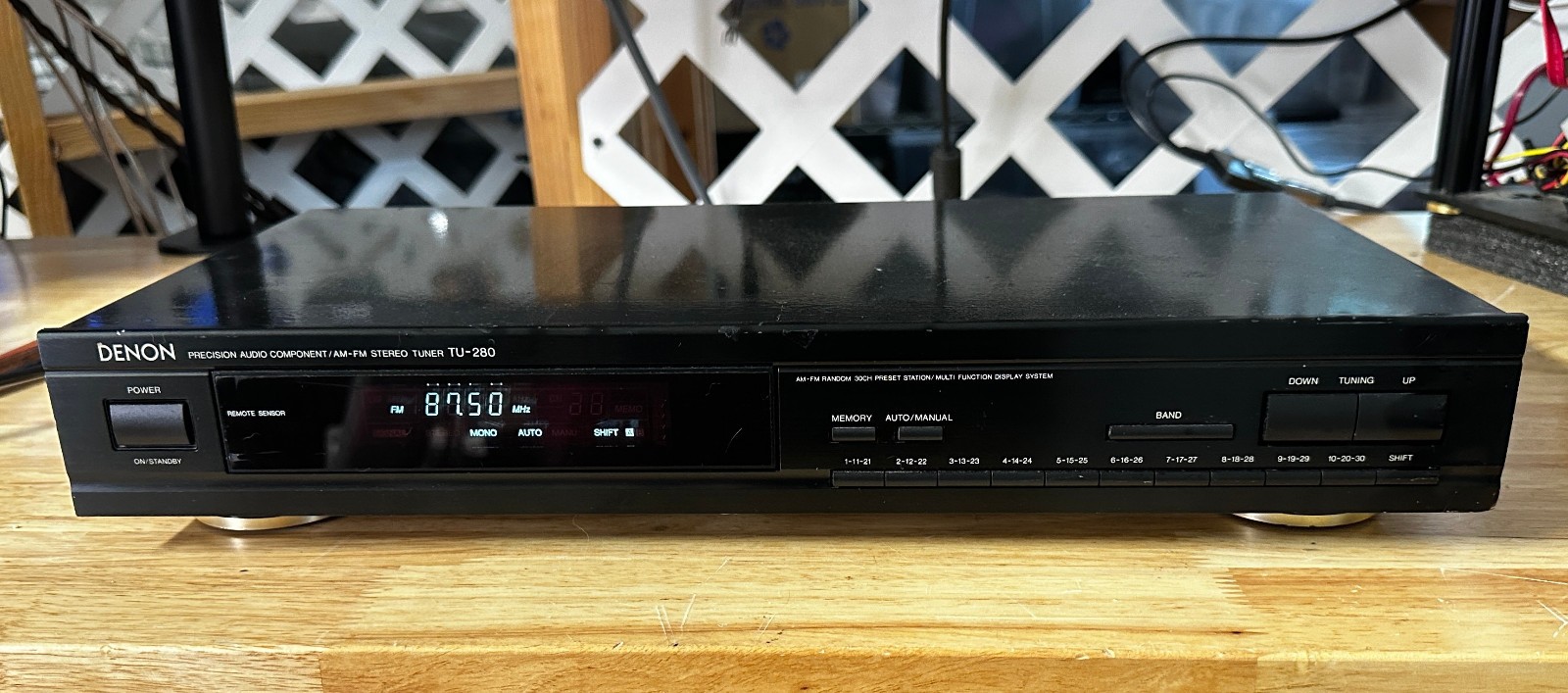
The front panel was minimalist yet functional, with a large VU-style stereo indicator, tuning meter, and essential function switches. The use of high-quality potentiometers and switches ensured long-term reliability—a hallmark of Japanese hi-fi gear from this period.
Common Issues and Maintenance
As with any vintage electronic equipment, the Denon TU-280 benefits from careful maintenance after decades of dormancy. Common issues include:
- Dried-up Electrolytic Capacitors: The power supply and audio coupling capacitors may need replacement to restore proper function and prevent hum or distortion.
- Tuning Knob Stiffness: The mechanical tuning mechanism can become sticky over time; cleaning and lubrication of the tuning capacitor and shaft are recommended.
- Oxidized Switches and Pots: Contact cleaner can restore functionality to muting switches, bandwidth selectors, and level controls.
- Antenna Terminal Corrosion: Especially in coastal regions, terminals may corrode; inspection and cleaning are advised.
Servicing the TU-280 should be handled by a technician experienced with vintage analog tuners. Due to its discrete circuitry and lack of integrated digital components, repairs are generally straightforward for those familiar with the era’s design practices.
Current Market Value and Collectibility
The Denon TU-280 remains a relatively obscure model in collector circles, which has kept prices modest. Fully restored examples with verified performance can command higher prices, particularly when paired with matching Denon components like the PMA-280 amplifier or DP-280 turntable.
Its collectibility is growing among enthusiasts of vintage Japanese audio, especially those building period-correct systems. While it lacks the name recognition of a Marantz 2270 or a Sansui G-3300, the TU-280 offers a compelling value proposition: excellent FM performance, solid build quality, and a classic 1970s aesthetic with brushed aluminum faceplate and walnut side panels.
Conclusion and Legacy
The Denon TU-280 may not be the most famous tuner of the 1970s, but it embodies the quiet excellence that defined Denon’s analog era. It was built for listeners who cared about the purity of broadcast music—whether it was a live symphony from NHK, a jazz set from a local station, or a classical recording rebroadcast in stereo.
Today, in an age of streaming and digital radio, the TU-280 serves as a reminder of a time when tuning into a station was a tactile, almost ritualistic experience. Its precise mechanics, warm analog sound, and robust construction make it more than just a relic—it’s a functional piece of audio history.
For the vintage audio enthusiast, the TU-280 is a hidden treasure. It may not have the flash of a graphic equalizer or the convenience of presets, but what it offers—honest, uncolored FM reception with audiophile-grade fidelity—is something few modern devices can match. In the world of vintage tuners, the Denon TU-280 earns its place as a quiet master of the airwaves.
eBay Listings


As an eBay Partner, we earn from qualifying purchases. This helps support our independent vintage technology research.
Related Models
- Denon TU-1500RD (1995)
- Denon TU-501 (1977)
- Denon TU-550 (1978)
- Denon TU-750S (1975)
- Denon TU-400 (1976)
- Aiwa CS-250 (1978)
- Luxman R-1030 (1979)
- Luxman R-1050 (1975)
- Luxman R-117 (1975)
- Denon TU-660 (1978)