Bose 901 Series V Direct/Reflecting Loudspeaker System (c. 1982–1991?)
At 17.2 kg, each tower carries the weight of a design philosophy that split audiophiles for decades.
Overview
The Bose 901 Series V Direct/Reflecting Loudspeaker System isn’t a speaker you casually place in a room—it’s a statement about how sound should behave in space. With nine 4.5-inch full-range drivers per cabinet—eight firing backward into the room and just one facing forward—it leans entirely into Bose’s controversial Direct/Reflecting® principle. This isn’t about pinpoint imaging or tight bass; it’s about immersion. The idea, as laid out in the owner’s guide, is to flood the room with reflected sound (roughly 89% of the output) so the listener feels surrounded, as if seated in the middle of a concert hall rather than in front of a stage. That concept, radical in 1968 when the original 901 debuted, carried through to the Series V with little fundamental change. What evolved were refinements: internal bracing, precision-wound voice coils, and a more robust Acoustic Matrix Enclosure (A.M.E.) that divides the cabinet into nine isolated chambers to minimize interference between drivers.
But none of it works without the active equalizer. The 901 Series V doesn’t just benefit from EQ—it demands it. The included 901WB-EQ box applies a dramatic tonal correction to compensate for the physics of rear-firing drivers and heavy room interaction. Without it, the speakers sound unnaturally thin and unbalanced. With it, they open up into a diffuse, three-dimensional soundfield that some describe as magical and others as vague. The equalizer itself is no afterthought: it features a 3 kHz bass switch with a -6dB/octave slope, mid-bass (225 Hz) and mid-treble (3 kHz) room compensators adjustable by ±6 dB, and impressively low distortion (≤ 0.09% THD at 1 kHz). It draws just 3W of power and connects via standard RCA and speaker-level inputs, acting as a passive crossover and tone-shaping hub between amplifier and speakers.
Owners report that setup is as critical as the gear itself. The speakers must be placed at least 18 inches from side walls (2–4 feet recommended) and 8–16 inches from the rear wall to ensure proper reflection patterns. Treat them like acoustic instruments, not furniture. The result, when properly positioned, is a sound that doesn’t seem to come from the speakers at all—more like it’s hanging in the air. But that comes at a cost: transient punch and stereo precision are sacrificed. Bass, while extended down to 30 Hz on paper, relies on room gain and the active port system (four rear-facing air columns in three positions) to build presence. It’s not fast, but it can be deep, especially when driven with sufficient power.
Specifications
| Manufacturer | Bose |
| Product type | Loudspeaker system |
| Driver configuration | Nine 4.5-inch (11.5 cm) full-range drivers; one front-facing, eight rear-facing |
| Acoustic energy distribution | 89% reflected, 11% direct |
| Power handling | 270W RMS (IEC268-5), 700W peak |
| Impedance | 8 Ω |
| Frequency response | 30 Hz to 18 kHz |
| External dimensions | 538 mm (W) x 322 mm (H) x 344 mm (D) |
| Weight | 17.2 kg |
| Ports | 4 port tubes |
| Speaker terminals | Gold-plated screw terminal type |
| Enclosure type | Acoustic Matrix Enclosure (A.M.E.), with interior precisely divided into nine chambers |
| Equalizer input impedance | 47k Ω |
| Equalizer output impedance | 1k Ω |
| Equalizer dynamic range | 106dB (at 35Hz) |
| Equalizer distortion factor | ≤ 0.09% THD (1 kHz, 1 V Input) |
| Equalizer room acoustic controls | Mid-Bass (225 Hz, ±6 dB) and Mid-Treble (3 kHz, ±6 dB) compensators |
| Equalizer bass switch | 3 kHz, -6dB/octave |
| Equalizer rated power consumption | 3W |
| Equalizer external dimensions | 330 mm (W) x 70 mm (H) x 125 mm (D) |
| Equalizer weight | 1.5 kg |
Key Features
Nine-Chamber Acoustic Matrix Enclosure (A.M.E.)
The internal structure of the 901 Series V is one of its defining engineering choices. The cabinet is not a single void but a carefully partitioned maze of nine separate chambers, each housing one driver. This design minimizes acoustic coupling between drivers, reducing distortion and resonance that could muddy the reflected sound field. The braced construction adds rigidity, though the outer casing remains a relatively thin MDF-like material finished in a textured vinyl wrap. There’s no exotic damping material specified, but the compartmentalization itself acts as a mechanical filter, ensuring each driver behaves predictably when firing into the room.
Rear-Firing Driver Array with 89% Reflected Energy
Eight of the nine 4.5-inch drivers face backward, aimed at the rear and side walls. This isn’t a gimmick—it’s the core of Bose’s spatial audio philosophy. By directing most of the sound off reflective surfaces, the system avoids the “in-your-face” presentation of conventional direct-radiating speakers. Instead, it creates a diffuse field that mimics the natural reverberation of live music. The single front-facing driver provides a touch of direct arrival, helping anchor timing without dominating the experience. The result is a sound that feels large and ambient, but which can blur fine detail and stereo separation. Critics argue it’s more theater than truth; supporters say it’s the closest thing to being enveloped by music.
Active Equalizer with Room Compensation Controls
The 901WB-EQ isn’t optional—it’s integral. The speaker system’s frequency response is intentionally uneven, with a massive dip in the midrange and upper bass that the equalizer aggressively corrects. This EQ applies substantial boost, particularly in the lower mids and bass, to restore balance when the reflected energy integrates in-room. The front panel includes two slide controls: one for mid-bass (225 Hz) and another for mid-treble (3 kHz), each offering ±6 dB of adjustment to tailor response based on room acoustics. There’s also a bass switch that applies a -6dB/octave roll-off above 3 kHz, presumably to prevent harshness on bright recordings. The unit’s 106dB dynamic range and sub-0.1% THD performance ensure it doesn’t degrade the signal, even under heavy correction.
Computer-Controlled Voice Coil Winding
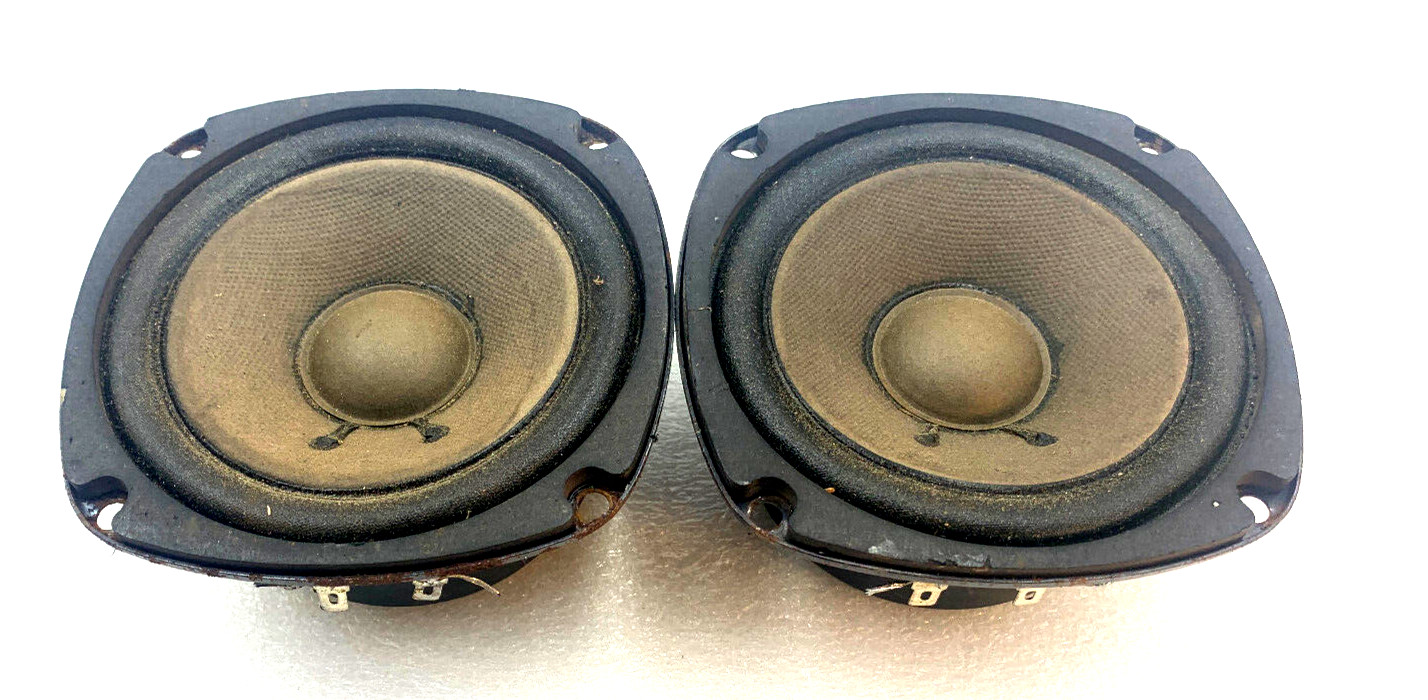
While the drivers appear simple—paper cones, rubber surrounds, modest size—their construction includes a notable precision element: computer-controlled winding of the voice coils. This process ensures consistent magnetic gap performance across all nine drivers per speaker, which is critical when relying on phase coherence in a multi-driver, multi-directional array. Even minor variations in coil alignment could disrupt the carefully calculated balance between direct and reflected energy. Bose emphasized this manufacturing control in documentation, suggesting it was key to maintaining the system’s intended dispersion pattern over time.
Historical Context
The Bose 901 Direct/Reflecting speaker system was introduced in 1968, a time when high-fidelity was dominated by direct-radiating designs from companies like AR, KLH, and JBL. The 901’s radical approach—flooding the room with reflected sound—was met with skepticism by traditionalists but gained a loyal following among listeners who prioritized ambiance over accuracy. The Series V, manufactured approximately between 1982 and 1991 (sources conflict), represented more of an evolution than a revolution. It shared core architecture with the Series IV, differing mainly in cosmetic updates like grille cloth and terminal design. The Series VI followed as the final iteration, but the fundamental concept remained unchanged for over three decades.
Collectibility & Value
Collectors note that the 901 Series V remains a polarizing piece—prized by some for its unique sonic signature, overlooked by others who dismiss it as audiophile heresy. A complete system, including the equalizer and often paired with tulip-shaped stands, recently listed for $650 in a vintage audio marketplace. The most common failure point is foam rot: the rubber surrounds on the 4.5-inch drivers degrade over time, leading to flapping cones and loss of bass. Re-foaming is a standard restoration step, and kits are widely available. Because the system relies so heavily on the equalizer, missing or damaged EQ units significantly reduce value. Complete, functional sets in good cosmetic condition hold steady demand among those seeking a vintage “sound in the room” experience rather than analytical precision.
eBay Listings
As an eBay Partner, we earn from qualifying purchases. This helps support our independent vintage technology research.