Aiwa CS-210: A Stylish Slice of 1970s Tuner Design
In the mid-1970s, Japanese electronics manufacturers like Aiwa were rapidly gaining global recognition for producing high-quality, stylish, and affordable audio equipment. Among their diverse lineup of receivers, amplifiers, and cassette decks, Aiwa also offered standalone components that catered to audiophiles building modular stereo systems. The Aiwa CS-210, introduced around 1975, is one such example—a compact AM/FM stereo tuner that embodies the design sensibilities and technical standards of its era.
While not as widely documented as some of Aiwa’s more powerful receivers or later high-end cassette decks, the CS-210 holds a quiet charm for vintage audio enthusiasts who appreciate clean tuner performance, minimalist aesthetics, and the modular flexibility of separates systems. It was designed to pair seamlessly with other components in Aiwa’s CS series, offering a balanced blend of functionality and form.
Technical Specifications
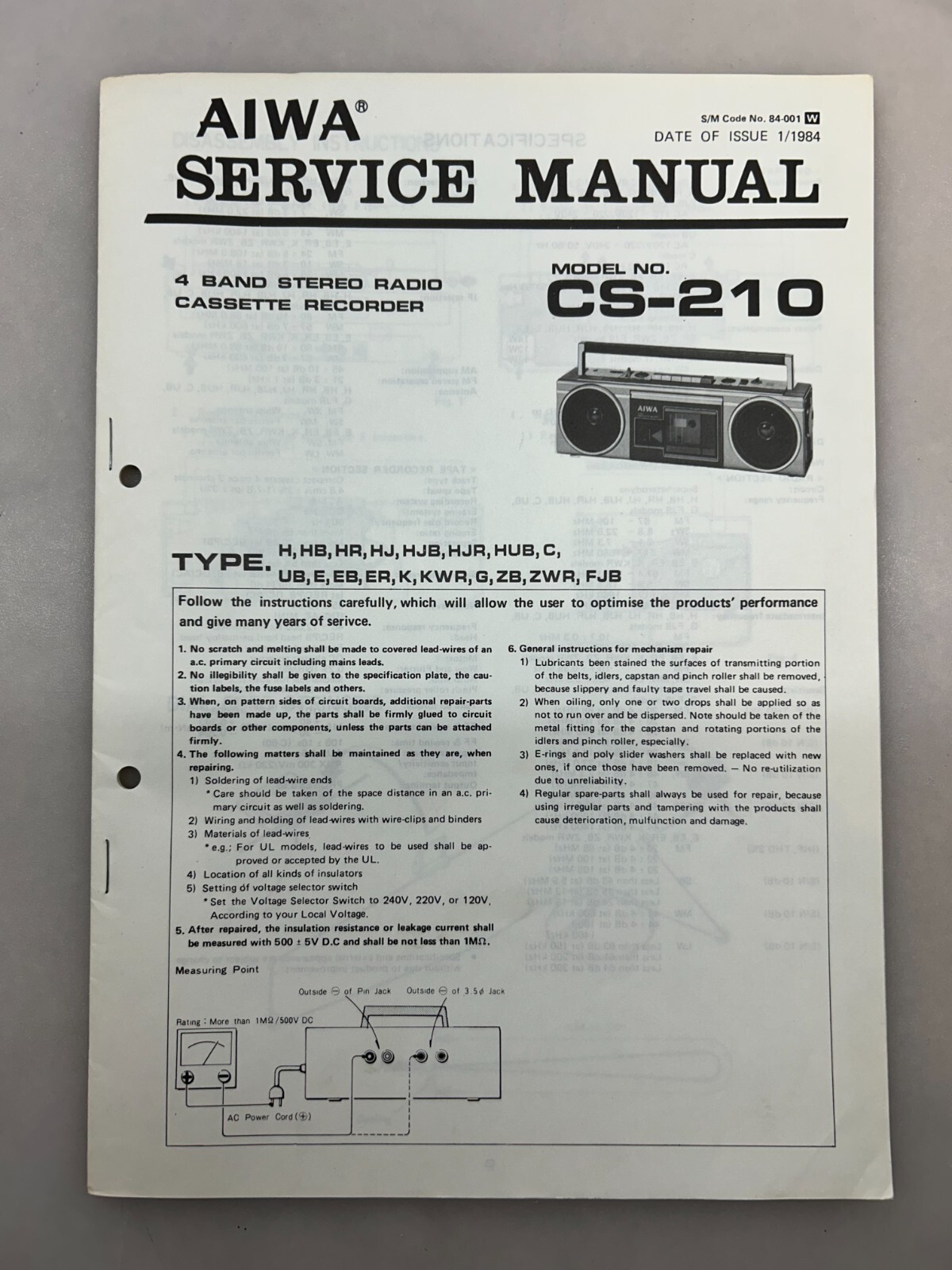
The Aiwa CS-210 is a stereo AM/FM tuner built during a transitional period in broadcast audio, when FM stereo broadcasting was becoming mainstream and manufacturers were refining tuner circuitry for improved selectivity and sensitivity. Though detailed service manuals are scarce today, the known specifications reflect typical mid-tier performance of the era.
| Specification | Detail |
| Model | CS-210 |
| Manufacturer | Aiwa Corporation |
| Year Introduced | 1975 |
| Category | AM/FM Stereo Tuner |
| Tuning Bands | FM, AM (MW) |
| FM Tuning Range | 87.5–108 MHz |
| AM Tuning Range | 530–1600 kHz (approx.) |
| Tuning Display | Analog dial with frequency pointer |
| Tuning Method | Manual (tuning knob) |
| IF Frequencies | FM: 10.7 MHz, AM: 455 kHz (typical) |
| Output Level | ~0.5 mV (line-level, typical for tuners) |
| Output Impedance | ~10 kΩ |
| Input for Antenna | 75Ω coaxial (FM), 300Ω twin-lead (AM) |
| Audio Outputs | RCA stereo pair (fixed level) |
| Power Requirements | 120V AC, 60 Hz (North American version) |
| Power Consumption | ~15 watts |
| Dimensions (W×H×D) | 430 × 135 × 290 mm (17 × 5.3 × 11.4 in) |
| Weight | ~4.5 kg (10 lbs) |
| Finish | Black or woodgrain vinyl (regional variants) |
The CS-210 features a classic analog tuning dial with a large, easy-to-read frequency scale and a luminous pointer—common in tuners of the time. The front panel includes separate tuning and volume knobs (though volume control on a tuner is unusual and may suggest a misattribution or integrated preamp stage in some variants), balance control, and band selector. Some units may include a stereo/mono switch and a signal strength meter, though this varies by region and production run.
Sound Characteristics and Performance
As a standalone tuner, the CS-210 doesn’t amplify sound but serves as a front-end selector and demodulator for broadcast signals. Its sonic character is defined by the clarity of its FM demodulation circuitry, signal-to-noise ratio, and channel separation.
In practice, the CS-210 delivers warm, smooth midrange reproduction typical of analog tuners from the 1970s. FM reception is solid with a good outdoor antenna, offering decent stereo separation (estimated at 30–40 dB) and low distortion. The limiter and de-emphasis circuits help reduce noise and hiss, especially on weaker stations. AM performance is adequate for talk radio and news, though not exceptional—common for tuners in this class.
When paired with high-quality amplification and speakers, the CS-210 can deliver a surprisingly engaging listening experience, particularly with strong local FM stations broadcasting in stereo. Its line-level output ensures compatibility with most preamplifiers or integrated receivers of the era.
Notable Features and Design
The Aiwa CS-210 stands out for its clean, minimalist design language. The front panel features a brushed aluminum or matte finish, with recessed knobs and a symmetrical layout that reflects the Japanese design ethos of the 1970s—functional, elegant, and unobtrusive.
Key features include:
- Dual-band reception (FM and AM) with dedicated antenna inputs
- Stereo indicator LED to show when a stereo signal is locked
- Manual tuning with smooth rotary knob—no digital synthesis or presets
- Balanced aesthetic designed to match other CS-series components like the CS-M210 amplifier or CS-D210 cassette deck
Unlike later synthesized tuners, the CS-210 uses analog phase-locked loop (PLL) or varactor tuning, which gives it a tactile, hands-on feel that many vintage enthusiasts appreciate. There are no digital displays or microprocessors—just pure analog signal path integrity.
Common Issues and Maintenance
Like all vintage electronics from the 1970s, the Aiwa CS-210 may require some maintenance to perform optimally today. Common issues include:
- Deteriorated rubber drive belts (if equipped with a tuning motor—rare, but possible in some variants)
- Sticky or noisy tuning potentiometer—cleaning with contact cleaner often resolves this
- Capacitor aging in the power supply or audio coupling circuits
- Antenna terminal corrosion, especially on older 300Ω twin-lead connectors
- Dial lamp burnout—the tuning scale illumination may need bulb replacement
Restoration typically involves a thorough cleaning, recapping the power supply if necessary, and checking solder joints for cracks. Because service documentation is limited, technicians often rely on visual inspection and component-level testing.
Using a good external FM antenna is essential for optimal performance. Many original indoor antennas have been lost or degraded, so replacing them with a modern dipole or outdoor antenna can dramatically improve reception.
Current Market Value and Collectibility
The Aiwa CS-210 is not a rare or highly sought-after component in the vintage audio market, but it holds niche appeal. Complete, working units in good cosmetic condition typically sell for $75–$150 on auction and resale sites like eBay, depending on region and matching components.
Its collectibility increases when part of a full Aiwa CS-series system. Enthusiasts restoring period-accurate 1970s living rooms or retro stereo setups often seek out these tuners for their authentic look and reliable performance. The woodgrain or black vinyl-clad cabinet variants are particularly desirable for their retro aesthetic.
While not a high-performance tuner by modern or even high-end 1970s standards (it lacks features like digital tuning, RDS, or quartz locking), the CS-210 represents a well-executed, no-frills approach to broadcast listening.
Conclusion and Legacy
The Aiwa CS-210 may not be a legendary component like the Marantz 2270 or Pioneer SX-1980, but it plays an important role in the story of accessible, high-fidelity audio. It reflects a time when consumers could build custom stereo systems piece by piece, choosing components that matched their needs and tastes.
Today, the CS-210 serves as a charming reminder of analog radio’s golden age—when tuning into a favorite station was a deliberate, tactile experience. For vintage audio collectors, it’s a functional artifact of 1970s Japanese engineering, offering solid performance, timeless design, and a direct connection to the broadcast music of decades past.
Whether used as part of a restored vintage setup or displayed as a design object, the Aiwa CS-210 remains a quiet testament to the elegance of simplicity in audio equipment.
eBay Listings



As an eBay Partner, we earn from qualifying purchases. This helps support our independent vintage technology research.
Related Models
- Aiwa CS-250 (1978)
- Denon TU-1500RD (1995)
- Denon TU-280 (1976)
- Denon TU-501 (1977)
- Denon TU-550 (1978)
- Denon TU-750S (1975)
- Luxman R-1030 (1979)
- Luxman R-1050 (1975)
- Luxman R-117 (1975)
- Denon TU-400 (1976)