Oberheim Matrix-12 (1985–1988): The Analog Behemoth with a Brain
A 12-voice titan of programmable analog synthesis, the Matrix-12 married Oberheim’s warm, SEM-derived sound with a modulation matrix so deep it still intimidates synth designers today.
Overview
If the OB-Xa was Oberheim’s flamboyant rock star, then the Matrix-12 was its reclusive, hyper-intelligent cousin who showed up at the party with a custom-built modular system in a suitcase. Introduced in 1985 at a staggering $5,995—over $16,000 in today’s money—the Matrix-12 wasn’t just a synthesizer; it was a statement. At a time when digital synths like the Yamaha DX7 were flooding studios with cold, metallic FM tones, Oberheim doubled down on analog warmth and complexity, wrapping it in a digital control system that made programmability not just possible, but powerful.
With 12 fully analog voices, each packing two digitally controlled oscillators (DCOs), four ADSR envelopes, two LFOs, and a filter that sang with the legendary SEM character, the Matrix-12 was overkill in the best possible way. But its real magic lay in its 16-slot modulation matrix—a feature so advanced for its time that even modern synths often don’t match its flexibility. This wasn’t just a keyboard for playing chords; it was a laboratory for sonic alchemy. Artists like Vince Clarke (Erasure), Howard Jones, and film composers such as Brad Fiedel (who used it on the Terminator score) gravitated toward its ability to create evolving, textured pads, searing leads, and percussive stabs that felt alive. It was the synth you bought not because you needed it, but because you dreamed in analog and refused to settle.
Specifications
| Voice Count | 12 voices (polyphonic) |
| Oscillators per Voice | 2 DCOs |
| Oscillator Waveforms | Sine, Triangle, Sawtooth, Square/Pulse, Noise |
| Filter Type | 12dB/oct resonant low-pass (SEM-style), switchable to 24dB/oct |
| Filter Frequency Range | 10Hz to 20kHz |
| Envelope Generators | 4 per voice (ADSR) |
| LFO Count | 2 per voice |
| LFO Waveforms | Sine, Triangle, Square, Sawtooth, Sample & Hold |
| Keyboard | 76 keys with velocity and aftertouch |
| Patch Memory | 100 user-programmable patches |
| Modulation Matrix | 16-slot, real-time assignable |
| Audio Outputs | 1x 1/4" balanced (XLR available on some units) |
| Audio Input | 1x 1/4" unbalanced (for external signal processing) |
| Dimensions | 38.5" x 13.25" x 4.5" (97.8 x 33.7 x 11.4 cm) |
| Weight | 45 lbs (20.4 kg) |
| Power Requirement | 100–120V AC, 60Hz (220–240V with transformer) |
| Country of Manufacture | United States |
| Original MSRP (1985) | $5,995 |
Key Features
- 16-Slot Modulation Matrix: This wasn’t just “modulation routing”—it was a full-on patch bay disguised as a menu. You could route any of 32 sources (LFOs, envelopes, velocity, aftertouch, etc.) to any of 64 destinations (pitch, filter, pulse width, pan, etc.) with adjustable scaling. Want aftertouch to modulate filter resonance and LFO rate and oscillator sync depth simultaneously? Done. This level of control was unheard of in 1985 and remains deeply inspiring.
- Dual DCOs with Advanced Sync and Modulation: Each voice had two DCOs capable of hard sync, soft sync, and cross-modulation. The pulse width could be modulated by LFOs, envelopes, or even other oscillators—giving the Matrix-12 a chameleon-like ability to shift timbre mid-note. The oscillators were rock-stable, thanks to digital control, but retained the warmth and slight imperfection that made analog desirable.
- SEM-Style Filter with Switchable Slope: The heart of the Oberheim sound. The 12dB/oct low-pass filter delivered that creamy, singing resonance Oberheim was known for, but the ability to switch to a steeper 24dB/oct mode gave it the authority to cut through dense mixes. It could growl, purr, or scream on command—especially when driven by the audio input for processing external signals.
- Four Envelopes and Two LFOs per Voice: While most synths offered one or two envelopes, the Matrix-12 gave you four—perfect for shaping amplitude, filter, pitch, and modulation depth independently. Combined with two fully routable LFOs (including sample & hold), this allowed for staggeringly complex modulation sequences that evolved over time.
- 76-Key Keyboard with Full Aftertouch: Not just velocity-sensitive, but channel aftertouch across all keys. This wasn’t a gimmick—it was integral to the synth’s expressive potential. Press harder after striking a key, and you could trigger filter sweeps, vibrato, or even morph between two patches in real time.
Historical Context
The Matrix-12 arrived in 1985, a year when analog synthesis was being declared dead by many. The Yamaha DX7 had taken the world by storm with its digital FM synthesis, offering pristine electric pianos and metallic textures at a fraction of the cost. Meanwhile, polyphonic analog synths like the Sequential Prophet-600 were struggling to compete on price and reliability. Oberheim, however, wasn’t interested in playing defense. Instead, they doubled down on analog excellence, building on the legacy of the OB-Xa and the experimental Xpander—a nearly identical engine in a rack format released a year earlier.
The Matrix-12 was, in many ways, the culmination of Oberheim’s analog philosophy. It combined the hands-on control of vintage synths with the memory and precision of digital architecture. While competitors were simplifying to make synths “easier,” Oberheim made one that demanded engagement. It wasn’t user-friendly in the modern sense—programming required patience, a manual, and a willingness to get lost in menus—but the payoff was sonic depth that felt almost orchestral. Its influence can be heard in later synths like the Access Virus and Waldorf Microwave, which borrowed its modulation matrix concept. Even today, software synths like Arturia’s Matrix-12 V exist solely to capture its spirit.
Collectibility & Value
The Matrix-12 is rare—fewer than 1,000 units were reportedly produced during its 1985–1988 run—and highly sought after by collectors and working musicians alike. In 2025, a fully functional unit in good condition commands between $4,000 and $7,000, with mint examples sometimes exceeding $8,000. The rackmount Matrix-12R (1987) is slightly less common and trades in a similar range, though it lacks the keyboard’s expressiveness.
When buying, beware of two common issues: capacitor leakage and power supply failures, both typical of aging electronics from this era. Many units have been or need to be recapped. The keyboard, while robust, can suffer from contact wear—especially in heavily used units—so test every key for velocity and aftertouch response. A functioning Matrix-12 should feel like a precision instrument: buttons click crisply, the display is clear, and patches recall reliably. If it powers on, holds tuning, and lets you dive into that glorious modulation matrix, you’re holding a piece of synth history that still outshines most modern analogs in sheer sonic potential.
eBay Listings

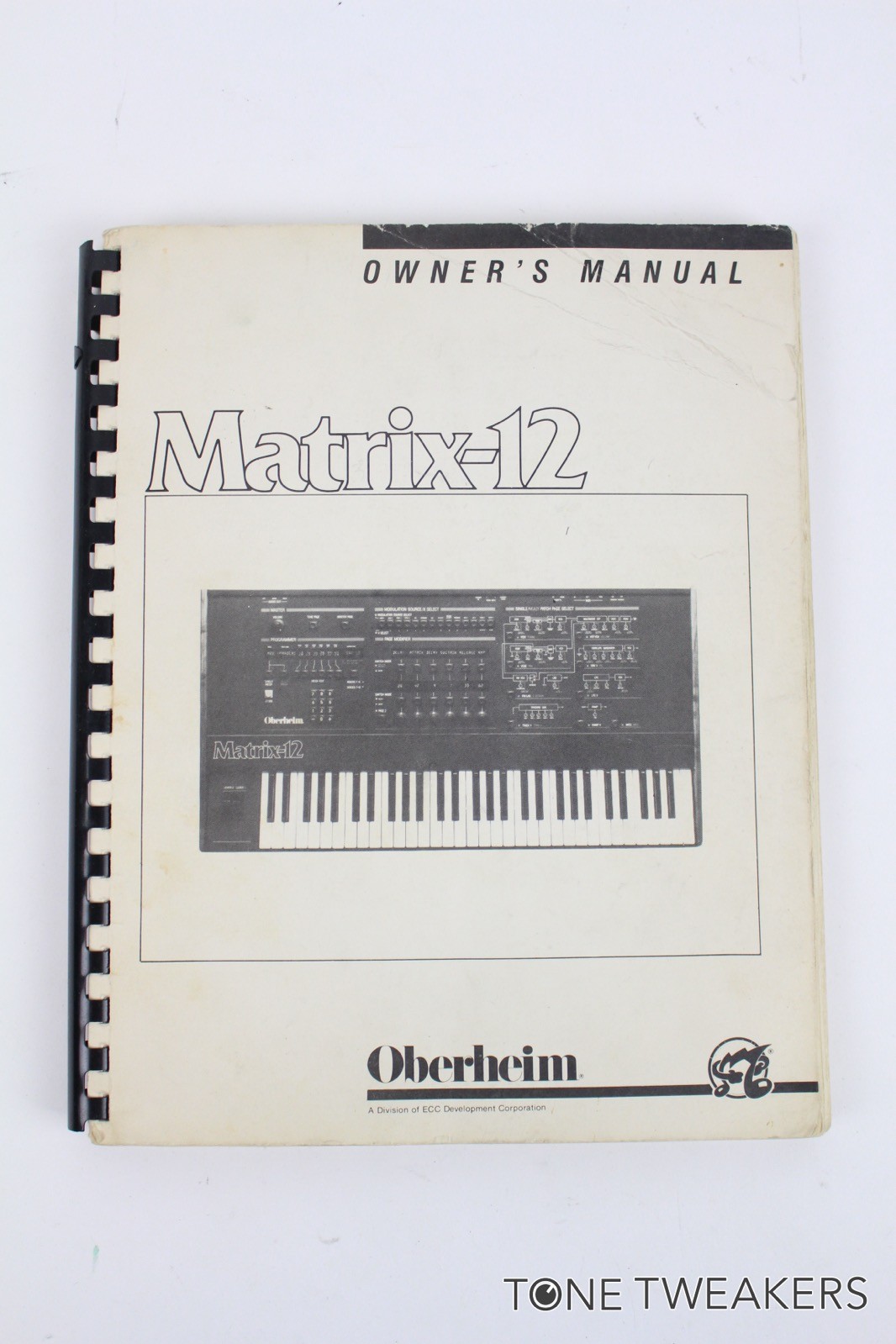

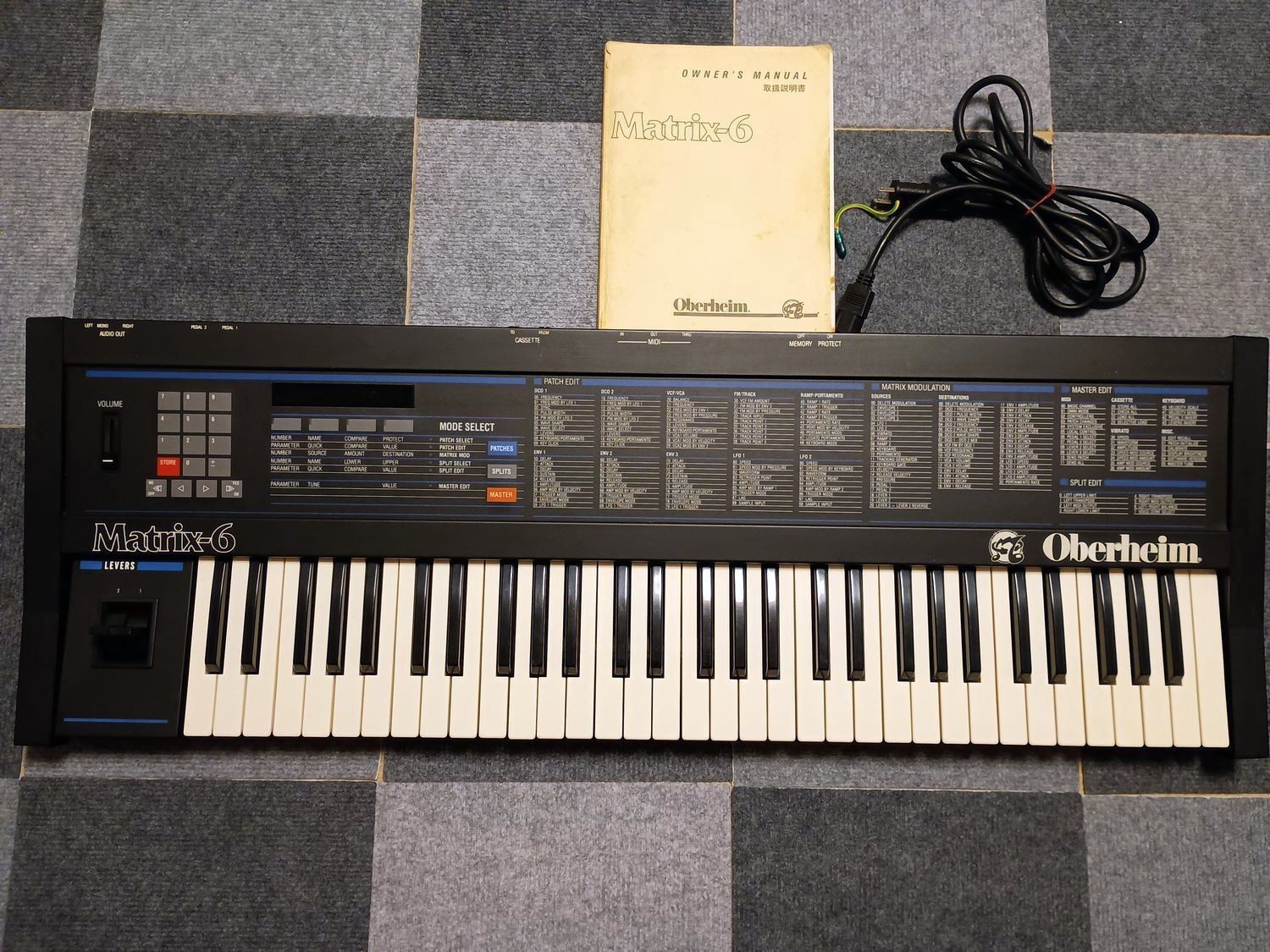
As an eBay Partner, we earn from qualifying purchases. This helps support our independent vintage technology research.
Service Manuals & Schematics
- Service Manual — archive.org
Related Models
- Oberheim OB-8 (1983-1985)
- Oberheim OB-X (1979-1981)
- Oberheim OB-Xa (1981-1984)
- Yamaha CS-80 (1977-1980)
- ARP 2600C (1978-1981)
- ARP 2600P (1975-1978)
- ARP Avatar (1979-1981)
- ARP Pro Soloist (1972-1977)
- ARP Solus (1975-1976)
- Korg Mono/Poly (1981-1984)