Kawai K1m (1988)
A desktop module with no filters and no effects that still sounds better than its spec sheet suggests.
Overview
The K1m is the desktop version of Kawai's K1 keyboard and K1r rack module - a small box with a slider, a vector joystick, and an LCD that owners describe as bright and easy to read. It was sold as a digital synth module, and it dates to 1988 according to contemporary listings and enthusiast documentation. To understand the K1m, you have to understand the K1 architecture: 256 digital samples of waveforms, 50 of which come from acoustic instruments, mixed four at a time into a Single preset. That 4-waveform layering is the whole point. You're not scrolling through a rompler's preset list, you're stacking eight-bit waveforms - a breathy choir behind a bell, a bowed texture under a plucked attack - and the results have a grain and a haze that later, cleaner machines sanded off.
What the K1m doesn't have matters as much as what it does. There are no resonant filters and no built-in effects. For a lot of players in 1988 that was a dealbreaker, and it's still the first thing anyone mentions when the K1 series comes up. But the character had to live in the samples themselves, and it does. Enthusiasts describe a "distinctive late-80s character" that makes the module more interesting than its spec sheet suggests. You buy it for how it sounds doing the little it does.
There's a DC-8 card expansion slot for external patch storage. The front panel has a slider and a vector joystick — the joystick is the one thing every used listing seems to mention. A working joystick is the difference between a usable K1m and a doorstop.
Key Features
Four-Waveform Layering with 256 Samples
Each Single preset on the K1m is built from four waveforms drawn from a pool of 256 digital samples, half a hundred of which are acoustic instrument recordings. The waveforms are eight-bit. Layered four deep, they produce a specific kind of grit and air that owners consistently describe as "breathy." That quality keeps the K1m in use decades after machines with far better numbers on paper were forgotten. A Single preset can be a stack of four unrelated sources, which is how players get pads and strings out of a machine with no filters: you build the timbre from the waveforms themselves rather than sculpting it after the fact.
No Resonant Filters and No Built-In Effects
This is the K1m's defining constraint. There is no resonant filter section. There are no onboard effects. What you hear from the oscillators is what comes out the back. For players used to subtractive synthesis, that's disorienting - there's no sweep to reach for, no resonance to push into self-oscillation. The K1m asks you to commit at the sample level instead, choosing and stacking waveforms that already have the character you want. The upside is immediacy: no menu-diving for filter envelopes, no effects tails muddying the mix.
Vector Joystick and Slider Control
The K1m's front panel carries a slider and a vector joystick, and both show up repeatedly in used listings as the things buyers ask about first. The joystick provides real-time, two-axis modulation that's rare on a desktop module of this era - it's the performance control. Gumtree and Craigslist listings from the used market consistently note "joystick intact and working" as a selling point, which says plenty about how often they aren't. The slider handles parameter editing alongside the LCD.
LCD Display and the Plug-and-Play Replacement
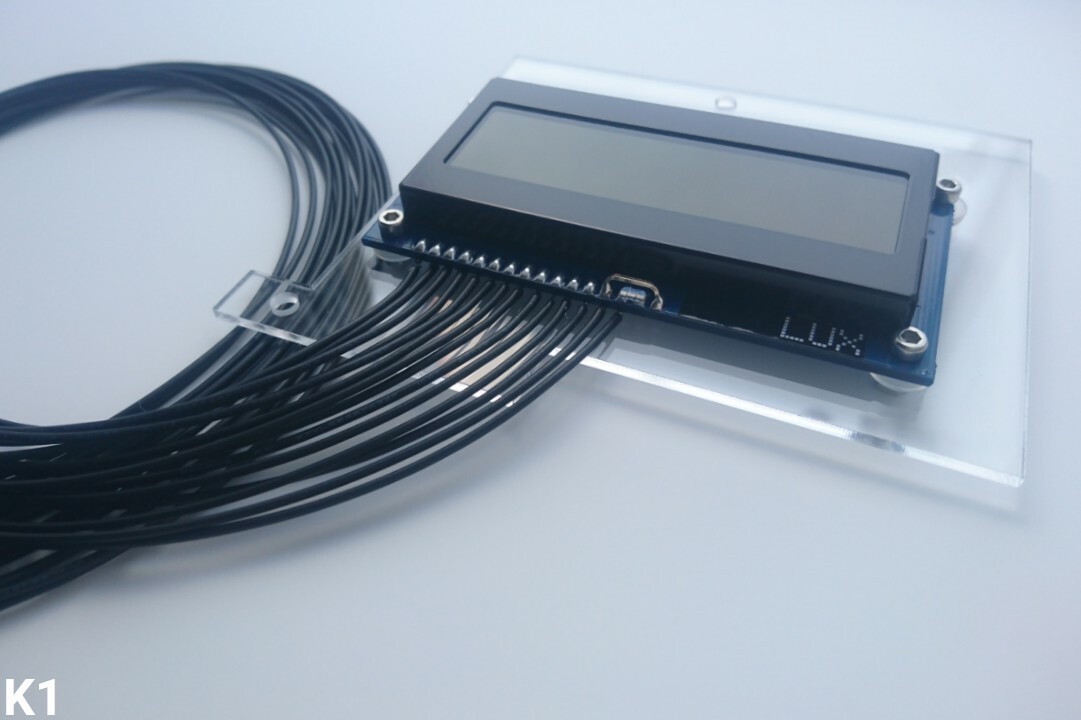
The K1m's LCD is described by owners as lighting up bright and clear with easy-to-read text. That helps on a module where you're navigating 96 patches and editing four-source presets through a small screen. The original displays are now decades old, and a drop-in replacement exists: a 14-pin, plug-and-play LCD with a blue background and white characters that requires no soldering and no modification. The vendor notes it may be compatible with other Kawai K-series models, though buyers are advised to confirm before purchasing.
Historical Context
The K1m sits in Kawai's K-series as the desktop member of the K1 family, alongside the K1 keyboard and the K1r rack module. The K1 itself was one of Kawai's most economical digital synthesizers in the line, which is a polite way of saying it was the budget option - and the K1m inherits that positioning. An updated K1 II followed, identical to the K1 but with reverb effects and new drum samples added. The K1m does not get those additions.
Contemporary review coverage of the K1m specifically is essentially absent from the sources indexed here. Period coverage is thin, and the mid-1990s Sound on Sound classifieds that show K1-series gear moving through the UK used market are dealer listings rather than reviews - none of them describe the K1m. Sound on Sound (1995, p.48) listed a Yamaha TG77 module at £499 and an Alesis Quadrasynth at £799. Those aren't K1m prices and shouldn't be read as such, but they give a sense of where the module sat in the secondhand hierarchy: well below the machines that had the filters and effects it lacked.
Collectibility & Value
The K1m is cheap, and owners are blunt about it. Forum discussion describes the K1m, along with the rest of Kawai's synths, as "a steal," and the same thread notes the module is "very limited" but has a "distinct breathy grittiness that excels at stings and pads." The K1m isn't going to appreciate like a Jupiter or a Prophet, but it's also not going to cost you much to own, and the sound it makes is not one you can get from a modern plugin without effort.
What to look for on the used market: a working vector joystick, first and foremost. Original power supply and a copy of the manual show up in listings and are worth having. Original box is a nice-to-have. DC-8 memory cards are worth paying extra for if they're included. And check the LCD - if it's dim or dead, a plug-and-play replacement exists, but factor the cost in. The K1m also has a modest following in the vaporwave community, where its hazy, eight-bit textures fit the aesthetic. That means there's an active user base and programming resources available, including step-by-step front-panel programming guides that require no software.
eBay Listings


As an eBay Partner, we earn from qualifying purchases. This helps support our independent vintage technology research.