ARP 2500 (1970-1981)
A cable-less modular fortress where signal routing happens via silent switches instead of tangled wires
Overview
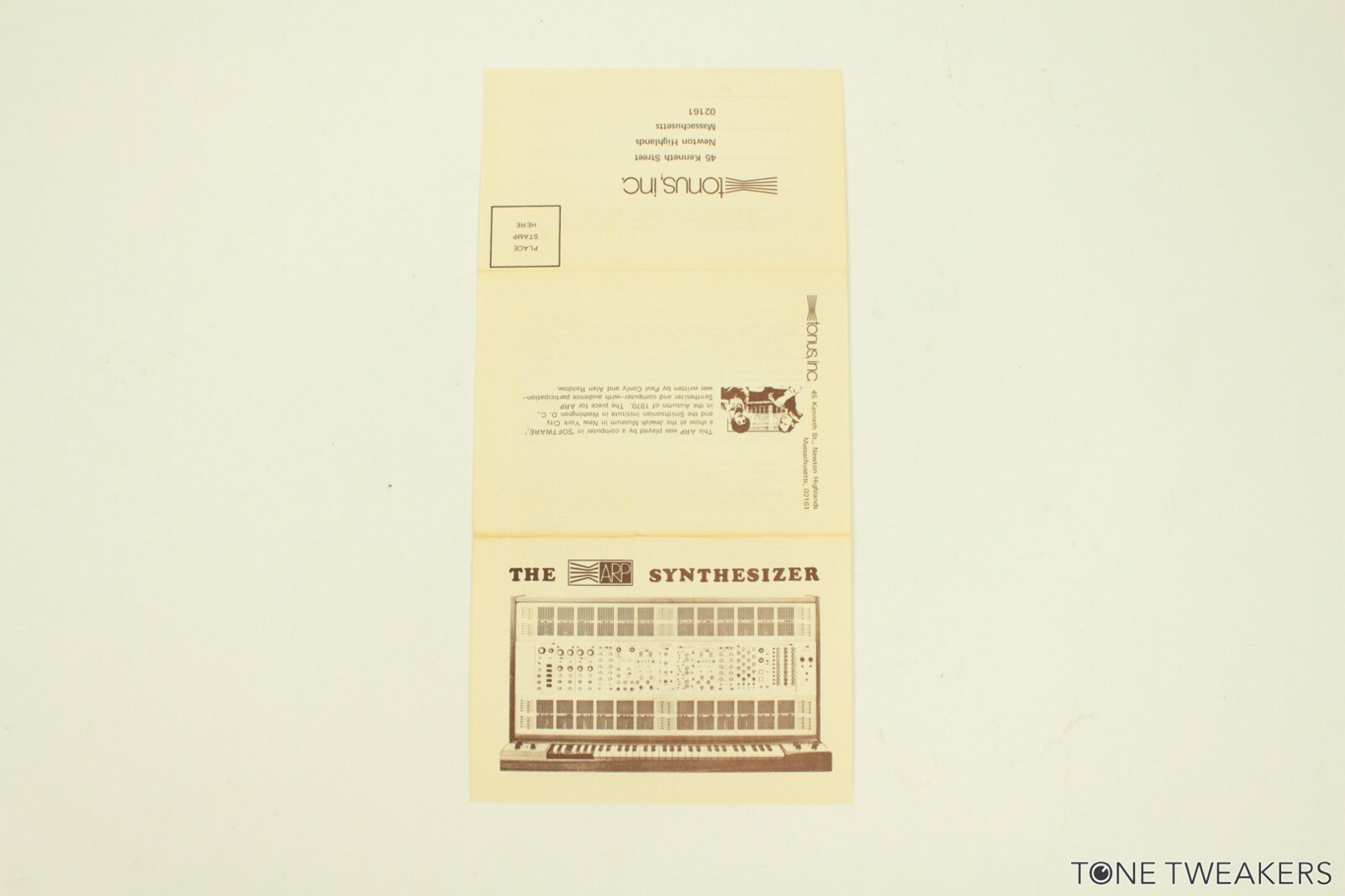
Turning the knobs on this machine feels like operating a telephone switchboard from the 1950s, where every connection is made by pressing a solid button rather than plugging a fragile cable. The ARP 2500 stands apart from its contemporaries not just because of its rarity, but because it eliminated the physical patch cords that defined the modular era. Owners describe the experience as tactile and deliberate; signal paths are selected through a 10x10 matrix of switches located above and below the central module row. This design choice removed the noise and connection failures inherent in worn patch cables, though it imposed a rigid structure on how signals could flow. Documentation shows the system was built as a complete instrument rather than a collection of separate boxes, housing power supplies, oscillators, and filters within a single wooden cabinet framework.
Sound technicians characterize the output as precise and stable, often contrasting it with the warmer, drifting oscillators found in Moog systems of the same period. The 1000-series modules inside the chassis were engineered for consistency, making the 2500 a preferred choice for studio work where tuning stability mattered more than organic drift. While only about 100 units were constructed during its eleven-year production window, the machine secured a legendary status through its appearance in major film scores. Collectors note that surviving units are rarely seen in public hands, with estimates suggesting roughly 50 functional instruments remain in existence. The architecture supports monophonic and duophonic operation, allowing two distinct voices to be processed simultaneously through the shared matrix routing system.
Positioning within the ARP family places this model as the flagship debut, the foundation upon which the company built its reputation before moving to integrated synthesizers like the Odyssey. It sat above the later budget-oriented models in terms of complexity and price, functioning as a custom-ordered system rather than a mass-produced consumer product. Competition at the time included the Moog Modular and Buchla systems, but the 2500 offered a different workflow that appealed to engineers and composers who valued reliability over traditional modular flexibility. The absence of external cabling meant the setup looked cleaner on stage, but service technicians observe that internal wiring complexity made repairs more daunting than standard modular systems.
Specifications
| Manufacturer | ARP Instruments, Inc. |
| Production Years | 1970-1981 |
| Original Price | Custom configuration (Six-figure area today) |
| Architecture | Monophonic / Duophonic Analog Modular |
| Routing System | 10x10 Matrix Switch (No patch cables) |
| Module Series | ARP 1000-Series |
| Typical VCO Modules | 1004P, 1004T |
| Filter Module | 1047 Multimode Filter/Resonator |
| Amplifier Module | 1006 Filt-Amp, 1005 Mod-Amp |
| Envelope Generators | 1046 Quad Envelope (ADSR) |
| Noise/Random | 1016 Dual Noise/Random Generator |
| Logic/Control | 1036 Sample & Hold, 1027 Clocked Sequential Control |
| Mixing | 1050 Mix Sequencer |
| Power Supply | 1002 Power Module |
| Keyboard Option | Model 3222 (61-note, 5-octave) |
| Total Units Produced | Approximately 100 |
| Estimated Survivors | Approximately 50 functional units |
| Signal Routing | Matrix switches above and below modules |
| Enclosure | Wooden cabinet with integrated rack |
Key Features
Matrix Switching Architecture
The defining characteristic of the 2500 is the elimination of patch cables. Service technicians observe that this reduced contact resistance issues common in vintage modular systems, where oxidized jack plugs often cause signal loss. The matrix allows users to connect inputs to outputs by pressing switches corresponding to a grid coordinate. Documentation shows this method forces a linear workflow; users cannot easily create feedback loops or complex cross-modulation without navigating the fixed grid. While this limits some experimental sound design possibilities found in cable-based systems, it ensures that once a patch is set, the connection remains solid. Owners report that learning the matrix logic requires a shift in thinking, treating signal flow as a coordinate map rather than a physical wire.
1000-Series Module Stability
Inside the cabinet, the 1000-series modules were designed with industrial reliability in mind. The oscillators, specifically the 1004P and 1004T, are noted for their tracking stability compared to the temperature-sensitive circuits found in competing Moog modules. Collectors note that the filter section, often the 1047 Multimode, provides a clean resonance without the aggressive self-oscillation behavior typical of other brands. This made the 2500 a tool for composers who needed predictable timbres rather than volatile texture. The envelope generators, labeled as ADSR with the release stage termed "final decay," offer precise control over dynamics. Power distribution via the 1002 module was integrated into the chassis, removing the need for external power bricks that cluttered other setups.
Integrated Keyboard Control
While the modular core could function independently, ARP offered dedicated keyboard controllers like the Model 3222. These 61-note, 5-octave units were designed to match the cabinetry aesthetic of the 2500. Sound on Sound magazine records that full complement setups often included two keyboards to facilitate duophonic playing. The integration allowed for voltage control of pitch and trigger signals without external interfacing hardware. Unlike later integrated synthesizers, the keyboard remained a separate module within the system logic, allowing it to be bypassed or routed through different processing chains via the matrix. This flexibility meant the keyboard could act as a controller for external gear or simply trigger internal envelopes.
Historical Context
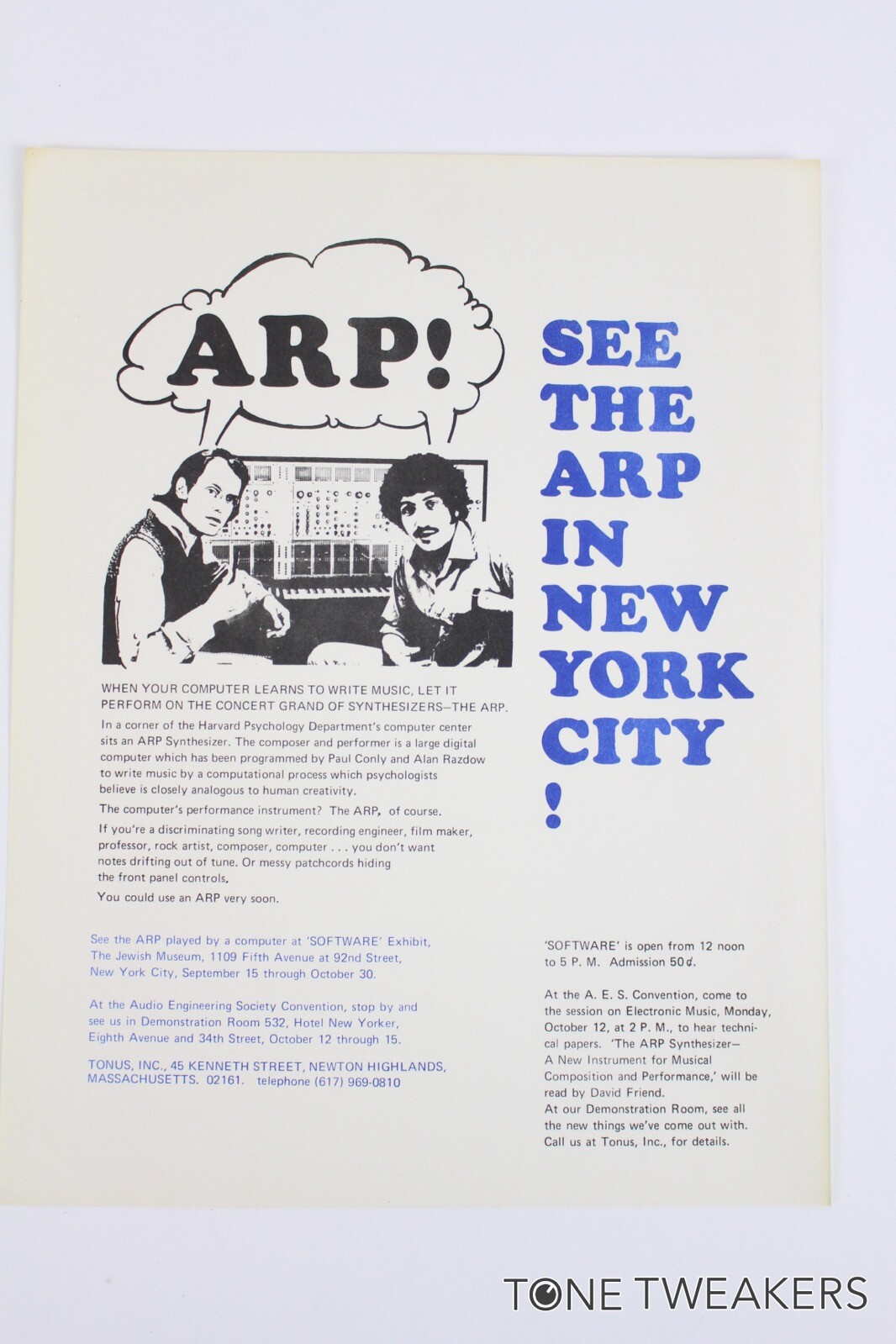
ARP Instruments, Inc. launched this model as their first product, entering a market dominated by Moog and Buchla. The industry moment was the transition from custom laboratory instruments to commercially available electronic music tools. The 2500 was built to appeal to institutions and professional studios that viewed modular synthesizers as complex investments requiring maintenance. By removing cables, ARP marketed the machine as a more reliable, road-worthy option for touring or film work. Competitors offered deeper modulation possibilities via open wiring, but ARP prioritized signal integrity and tuning stability. The machine gained iconic status through its use in the film "Close Encounters of the Third Kind," where the synthesized communication sounds were performed by an ARP technician rather than an actor due to the interface complexity.
Production spanned from 1970 to 1981, covering the peak of the analog modular era before the shift to integrated minisynths. During this period, the 2500 represented the high-end custom option, while ARP later introduced the Odyssey and Pro Soloist for mass markets. The rarity of the 2500 stems from its custom configuration nature; each unit was built with a specific selection of modules determined by the buyer's synthesis needs. This bespoke approach limited production volume compared to standardized models. As the industry moved toward MIDI and digital control in the early 1980s, the 2500 remained a static analog platform, eventually becoming a museum piece rather than a evolving tool.
Collectibility & Value
Acquiring a functional ARP 2500 is comparable to purchasing a vintage classic car rather than a standard instrument. Prices currently trade in the six-figure area, with listings occasionally reaching near $250,000 for verified historical units. Collectors emphasize that value is dictated by module configuration; a system with rare modules like the 1050 Mix Sequencer or complete quad envelopes commands higher premiums than basic oscillator setups. Condition is critical; the matrix switches are mechanical components that can wear or corrode over fifty years. Service technicians observe that contact cleaning is mandatory before powering up, as dirty switches can send incorrect voltages to sensitive modules.
Common failures include capacitor aging in the power supply and oscillator drift due to temperature component degradation. Maintenance costs are significant, as few technicians specialize in 1000-series module repair. Owners report that finding replacement parts for the specific ARP connectors and switches is difficult, often requiring custom fabrication. Before buying, verification of all matrix paths is essential; a single dead row in the switch grid can render certain modules unusable. The weight and cabinetry make transport difficult, requiring professional shipping rather than standard gear cases. Investment potential is high due to the fixed supply of approximately 50 surviving units, but liquidity is low; selling such a piece often takes years to find a qualified buyer.
For those unable to secure the original hardware, software emulations and modern clone modules exist to replicate the matrix workflow. However, these lack the electrical character of the discrete 1000-series circuits. The buying advice remains strict: inspect the power supply voltages before connecting modules, as incorrect rails can destroy vintage silicon instantly. Documentation shows that original manuals are scarce, so understanding the matrix logic often requires community knowledge or archived schematics. Despite the cost, the 2500 remains a benchmark for analog stability, representing a specific moment in engineering where reliability was prioritized over unlimited flexibility.
eBay Listings


As an eBay Partner, we earn from qualifying purchases. This helps support our independent vintage technology research.
Service Manuals & Schematics
- Catalog — archive.org
Related Models
- Buchla 200 Series (1970-1978)
- Buchla Music Easel (1973-present)
- Moog Modular 55 (1970-1981)
- Moog Moog Modular System 55 (1964-1981)