ADDAC 207 Intuitive Quantizer (2013–2023)
A four-voice brain for your Eurorack that thinks in chords, microtones, and keyboard modes—but only if you speak its firmware-fluent language.
Overview
You don’t so much plug into the ADDAC 207 Intuitive Quantizer as you negotiate with it. It’s not the kind of module that just obediently snaps random voltages to a C major scale and calls it a day. This thing wants to collaborate—to generate chords on the fly, transpose entire scales via CV, or act as a full four-voice keyboard with gate outs and assignable note intervals. It’s ambitious, a little fussy, and capable of sounding like a conservatory-trained accompanist or a xenharmonic alien choir, depending on how deep you’re willing to dive into its menu system. And yes, you will dive. There’s no avoiding it. But once you’ve wrestled the 207 into alignment, it becomes less of a utility and more of a creative partner—one that can turn a single LFO sweep into a cascading arpeggio in Bohlen-Pierce tuning, if that’s your thing.
Released in the early 2010s, when Eurorack was shifting from DIY curiosity to full-blown modular renaissance, the 207 landed at a moment when musicians were hungry for intelligent, musical processing—not just raw sound generation. ADDAC, a Portuguese boutique known for elegant design and idiosyncratic functionality, didn’t just build a quantizer. They built a music theory engine. Four independent CV inputs, each quantized across a user-definable scale with up to 10 octaves of range, let you harmonize multiple oscillators in real time. Need a minor seventh chord that shifts up a tritone when you press a button? Done. Want to map a random voltage source to a Balinese slendro scale? Also done. The 207 doesn’t just constrain chaos; it orchestrates it.
But—and this is a big but—it demands respect. Early firmware versions were notoriously twitchy, with quantization “flutter” when used without gate triggers and tracking issues on certain VCOs, especially high-impedance inputs like the Cwejman VCO-6. Some users reported needing buffered mults just to get clean pitch tracking, a workaround that shouldn’t exist in a module this expensive. And the firmware update process? Let’s just say it’s not plug-and-play. You need a custom serial-to-USB adapter, jumper wires, and the patience of a monk. ADDAC stopped supporting units below serial number 600, meaning older modules can’t run the latest firmware at all. If you buy used, you’re not just buying hardware—you’re buying a potential restoration project.
Specifications
| Manufacturer | ADDAC System |
| Production Years | 2013–2023 |
| Original Price | €365 |
| Format | Eurorack |
| Width | 10 HP |
| Depth | 52 mm |
| Power Consumption | +140mA / -70mA |
| Bus Board Connector | 8×2 IDC (Doepfer style) |
| CV Input Range | ±5V |
| CV Output Range | +10V |
| Quantization Voices | 4 |
| Octave Range | 10 octaves |
| Scale Types | User-definable, up to 12+ notes per octave |
| Microtonal Support | Yes (including Bohlen-Pierce) |
| Gate Output | Yes, definable length |
| Gate Input | Yes, for triggering quantization |
| Transpose CV Input | Yes |
| Assignable CV Input | Yes (for menu functions) |
| Presets | 11 user-storable |
| Keyboard Mode | Yes (4-button interface) |
Key Features
Four-Voice Harmony Engine
The 207 isn’t just a quantizer—it’s a harmony generator. Each of its four channels can be tuned independently, with octave offsets and fine-tuning adjustments, letting you stack chords directly in the module. Unlike simpler quantizers that just clean up one CV line, the 207 lets you feed four different sources—say, a sequencer, an LFO, a random generator, and a keyboard—and have them all conform to the same scale, or different ones. You can set intervals between voices (perfect fifth, minor third, etc.), and in keyboard mode, pressing a button triggers all four outputs at once in your chosen chord shape. It’s like having a tiny AI band member who only plays in tune.
Microtonal Fluency and Scale Freedom
While most quantizers are stuck in 12-tone equal temperament, the 207 laughs at Western conventions. It supports user-defined scales with any number of notes per octave, making it a rare Eurorack tool for serious microtonal work. Bohlen-Pierce? Check. 19-TET? Check. A scale based on the Fibonacci sequence? If you can map the voltages, the 207 can play it. This isn’t just academic—musicians exploring non-Western tunings or experimental composition find the 207 indispensable. The ability to save 11 presets means you can switch between tuning systems mid-performance, a feature that still feels advanced even by 2020s standards.
Keyboard Mode and Real-Time Playability
Flip the 207 into keyboard mode, and those four buttons become playable keys, each sending out quantized CV and gate signals. It’s not a full keyboard, obviously, but it’s enough to sketch melodies, trigger chords, or jam live without needing an external controller. The gate output length is adjustable, so you can set staccato blips or long, legato swells. And because each button can trigger a full four-voice chord, it’s surprisingly expressive for such a compact interface. Paired with a good envelope and filter, you can go from ambient pads to stabbing leads with just a few button presses.
Historical Context
The ADDAC 207 arrived in 2013, a time when Eurorack was shedding its niche status and attracting composers, producers, and experimentalists who wanted more than oscillators and noise. The market was flooded with utility modules, but few tackled the challenge of musical intelligence. While Mutable Instruments’ scales module offered elegant quantization, it was single-voice and lacked chord generation. The 207 stepped into that gap with a bold, if flawed, vision: a module that could think like a musician. It competed with the likes of the Toppobrillo Quantimator and the Intellijel uScale, but where the uScale focused on deep single-voice control and the Quantimator on step-quantizing sequences, the 207 aimed higher—four voices, real-time chord logic, and microtonal flexibility.
Its Portuguese design ethos—clean front panels, minimal labeling, menu-driven interaction—was both a strength and a weakness. It looked sleek, but the lack of immediate visual feedback frustrated users accustomed to knobs and switches. And while ADDAC’s firmware updates eventually improved tracking and added features like CV-based transposition of incoming notes, the update process remained a barrier. By the time the 207 reached firmware M3 (2021), it was a vastly better module—but only if you had the hardware and nerve to update it.
Collectibility & Value
Today, the ADDAC 207 trades in a tight range: $340–$460, depending on condition and firmware capability. Units with serial numbers below 600 are red flags—they can’t be updated to the latest firmware, which means you’re stuck with glitchy quantization and no CV transposition of incoming signals. That’s a dealbreaker for many, so collectors actively avoid them. A working, updated 207 in good condition commands $400+, especially in Europe, where ADDAC has a loyal following. Mint-condition units with custom-colored panels (blue, bronze, or silver-gray) can fetch $450 or more.
The real cost isn’t the purchase price—it’s the maintenance. If you buy an older unit, budget $50–$100 for a technician to source the update kit and flash the firmware. Some boutique repair shops now offer this as a service, but it’s not universal. And while the module is solidly built, the lack of buffered outputs can still cause issues with certain VCOs, so a buffered mult is practically a required companion.
Buying advice? Only go for units with serial numbers 600 or above, and confirm firmware version M3 or later. Ask the seller if they’ve used it with live tracking—if they report no flutter or tuning drift, it’s likely in good shape. Avoid “untested” listings; this isn’t a module you want to troubleshoot blind. And if you’re not comfortable with firmware updates, stick to new-old-stock from reputable dealers.
eBay Listings

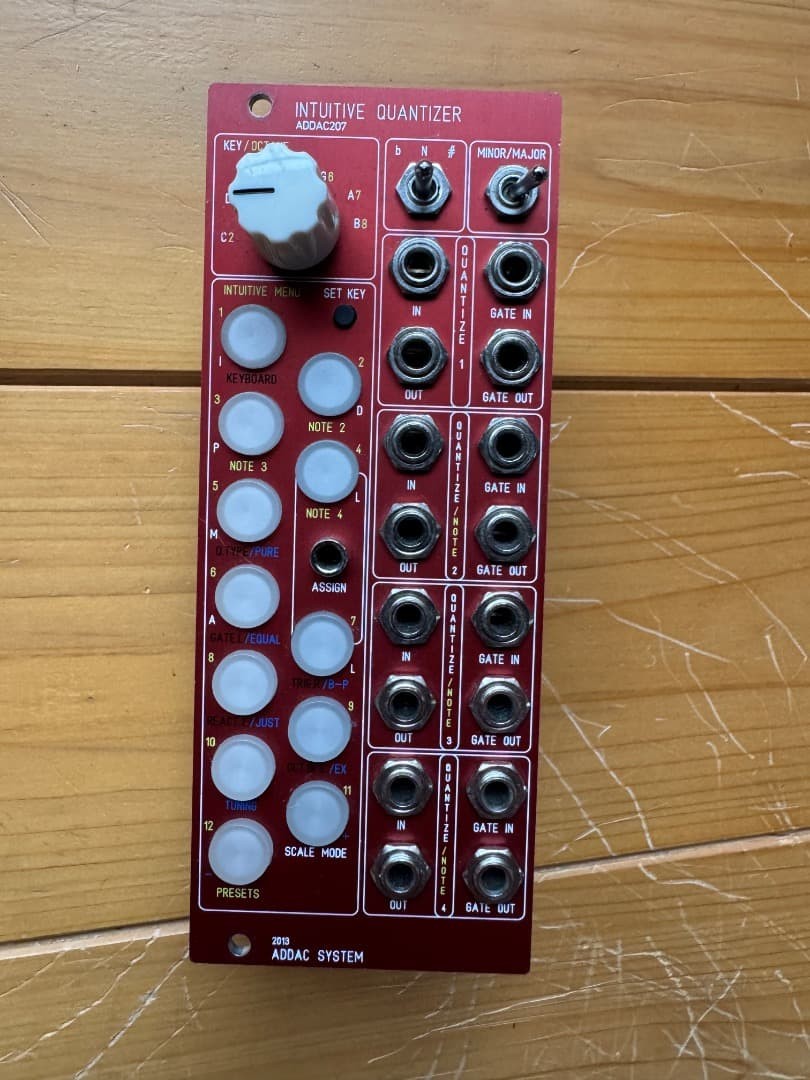
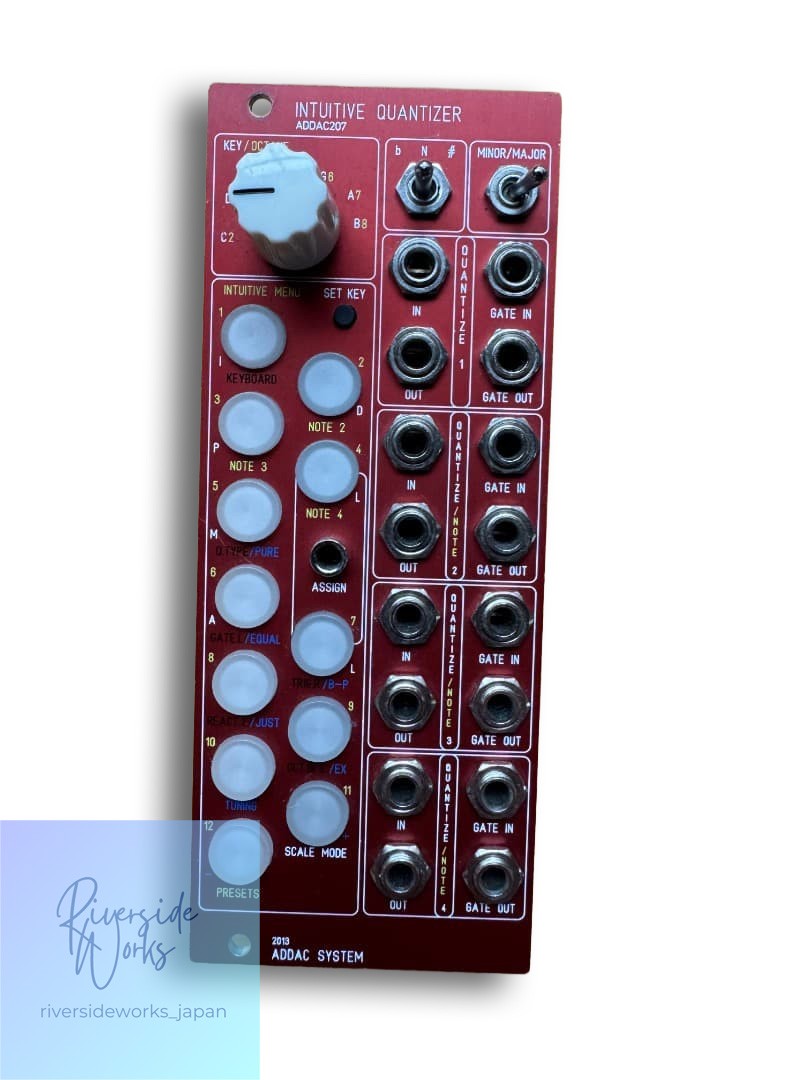
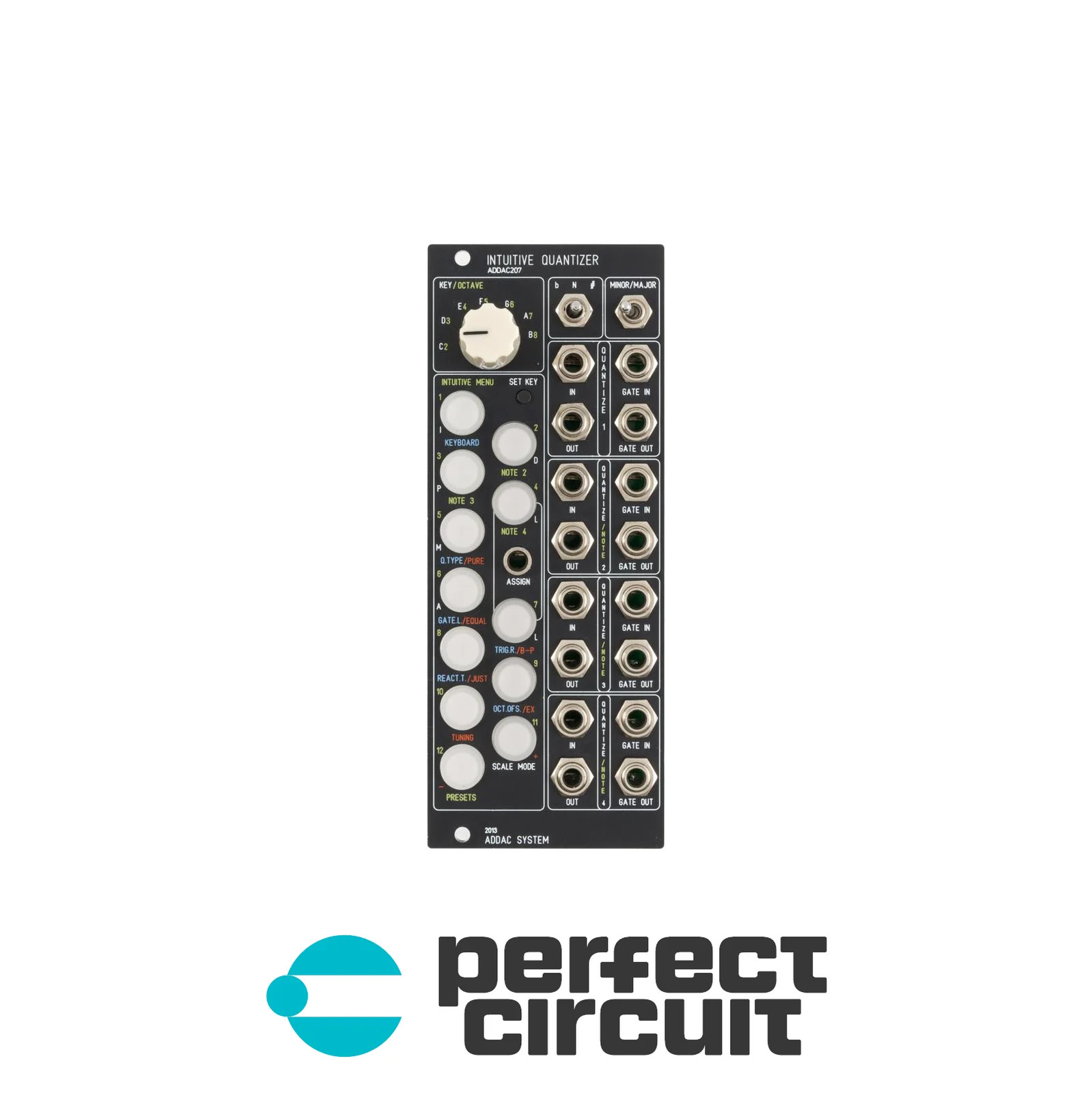
As an eBay Partner, we earn from qualifying purchases. This helps support our independent vintage technology research.