ZEISS IKON CONTAREX SPECIAL
The Zeiss Ikon Contarex Special is a professional 35mm single-lens reflex (SLR) camera introduced in 1960. It is a precision, meterless variant of the original Contarex line. It was built for photographers who wanted mechanical reliability and good optics without built-in metering, and it suited studio and photojournalistic work where external metering was standard practice.
Overview
The Contarex Special was part of Zeiss Ikon's Contarex series, nicknamed the "Cyclops" for the prominent central light meter housing on metered models. The Special leaves that housing off. It was made between 1960 and 1963 and positioned as a no-compromise professional instrument for photographers who cared about durability, precision engineering, and compatibility with Zeiss's lens lineup. The Contarex I (also known as the "Bullseye") has a built-in selenium meter. The Special dropped all metering electronics, which made the body simpler, lighter, and tougher for technical and studio use.
The camera shares the core mechanical design of its siblings: a vertically traveling, metal-bladed focal-plane shutter, a rigid die-cast aluminum chassis, and a bayonet lens mount designed exclusively for high-speed Zeiss Planar and Distagon lenses. With no meter, the prism housing could be flatter, and there were no aging selenium cells to fail, a common issue in other Contarex models. The Special became a favorite among cinematographers, scientific photographers, and purists who valued mechanical integrity over automation.
The Contarex Special was produced in relatively low numbers compared to its metered counterparts. It was offered with a range of Zeiss lenses, including the f/2 Planar, f/2.8 Distagon, and f/4 Tele-Tessar, all mounted via the proprietary Contarex bayonet. Zeiss Ikon ceased Contarex production in 1967, and the Special was discontinued earlier.
Specifications
| Specification | Value |
| Type | 35mm Single-Lens Reflex (SLR) |
| Film Format | 35mm (135) |
| Years Produced | 1960–1963 |
| Lens Mount | Contarex Bayonet (proprietary) |
| Shutter | Vertical-travel metal focal-plane shutter; speeds from 1 sec to 1/1000 sec, plus B |
| Metering | None (meterless) |
| Exposure Modes | Manual only |
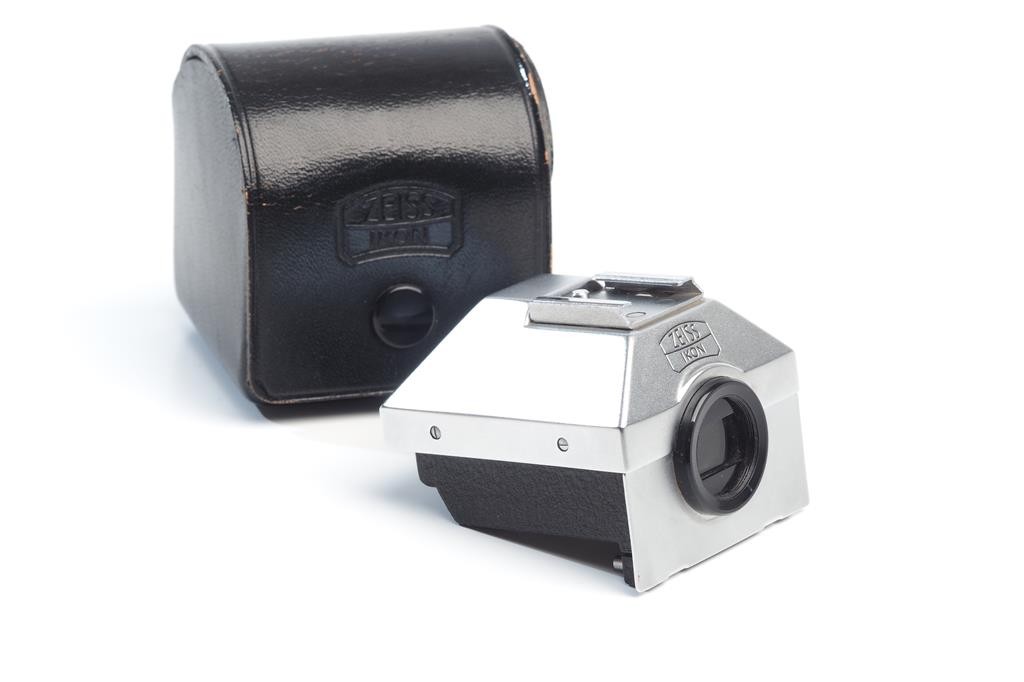
| Viewfinder | Interchangeable pentaprism with ground-glass focusing screen; no built-in meter coupling |
| Dimensions | Approx. 150 mm (W) × 95 mm (H) × 55 mm (D); weight approx. 800 g (body only, without lens) |
Key Features
- Meterless design eliminates selenium cell degradation issues, enhancing long-term reliability.
- Precision vertical-travel metal shutter with flash synchronization at all speeds via PC terminal.
- Interchangeable viewfinder prisms and focusing screens, allowing customization for different shooting needs.
- Robust die-cast aluminum chassis with chrome or black paint finish, built for professional durability.
- Proprietary Contarex bayonet mount ensuring optimal alignment and fast, secure lens attachment for Zeiss optics.
Historical Context
The Contarex Special arrived when 35mm SLRs were gaining favor among professionals and challenging medium format and rangefinder dominance. It competed directly with the Nikon F (introduced in 1959), and the Contarex line was West Germany's answer to Japan's rising influence in professional photography. The Nikon F emphasized modularity and ruggedness. The Contarex series, engineered by Zeiss Ikon in Stuttgart, put its weight on optical integration and mechanical refinement, drawing on the company's history in lens design.
The Contarex system had trouble in the marketplace. Its proprietary lens mount limited third-party support, and the high cost of camera and lenses restricted adoption outside Europe. The selenium meter in early Contarex models was prone to failure, which hurt the line's reputation. The Special, being meterless, avoided that flaw entirely. It was marketed as a precision instrument rather than a consumer product, and was often sold without a lens to technical and industrial users who already owned Zeiss optics.
Collectibility & Value
Today the Contarex Special is a sought-after collector's item, prized for its mechanical purity, historical significance, and association with Zeiss optics. Because of its limited production and niche appeal, surviving examples in working condition are relatively rare, particularly those with original lenses and accessories. On the secondary market, a fully functional Contarex Special body can command $800-$1,500 USD, with higher prices for sets including rare lenses like the Planar 50mm f/2 or Biogon 35mm f/2.8.
Collectors should check shutter accuracy. The complex vertical metal shutter can suffer from uneven speeds or sticking if it isn't serviced regularly. The Contarex bayonet mount is sturdy but sensitive to misalignment, and lens mounting should be smooth without resistance. Light seals degrade over time and should be replaced during restoration. The camera has no electronics, so it needs no batteries and can't suffer circuit failure, which makes it a reliable candidate for long-term preservation. Spare parts are limited, and specialized repair knowledge is essential.
Similar Cameras
- Nikon F (1959) – The benchmark professional SLR of the era, offering extensive system compatibility and rugged build.
- Canonflex R2000 (1960) – Canon’s early professional SLR with high-speed shutter and interchangeable viewfinders.
- Topcon RE Super (1963) – Japanese-built SLR with through-the-lens metering and excellent optics.
- Praktina FX (late 1950s) – German SLR with modular design and M42 mount, aimed at professional users.
- Alpa-Reflex (Swiss) – Precision-engineered modular SLR favored by technical and architectural photographers.
Repair & Maintenance
The Contarex Special requires no batteries, as it is entirely mechanical. The vertical focal-plane shutter is complex and should only be serviced by technicians experienced with Contarex mechanisms. Common issues include sluggish shutter speeds at slower settings (1-1/30 sec), often due to dried lubricants, and wear in the film advance linkage. The mirror mechanism is sturdy but can develop bounce if damping fails. Regular CLA (Clean, Lubricate, Adjust) by a specialist is recommended every 10-15 years for active use. The film transport system is generally reliable, but the rewind crank and latch should be checked for wear. Replacement light seals and cleaned viewfinders are essential for good usability. Because the system is proprietary, sourcing spare parts may require donor cameras or specialist suppliers.
eBay Listings


As an eBay Partner, we earn from qualifying purchases. This helps support our independent vintage technology research.
Related Models
- Zeiss Contax
- Zeiss Ikonta
- Zeiss Contaflex Alpha (1957-1959)
- Zeiss Contaflex Beta (1957-1959)
- Zeiss Contaflex I (1953-1958)
- Alpa Alnea 7 (1952)
- Alpa Prisma Reflex
- Agfa 254
- Agfa ActionCam (1995)
- Agfa Agfaflex