Nikon D7200 (2015)
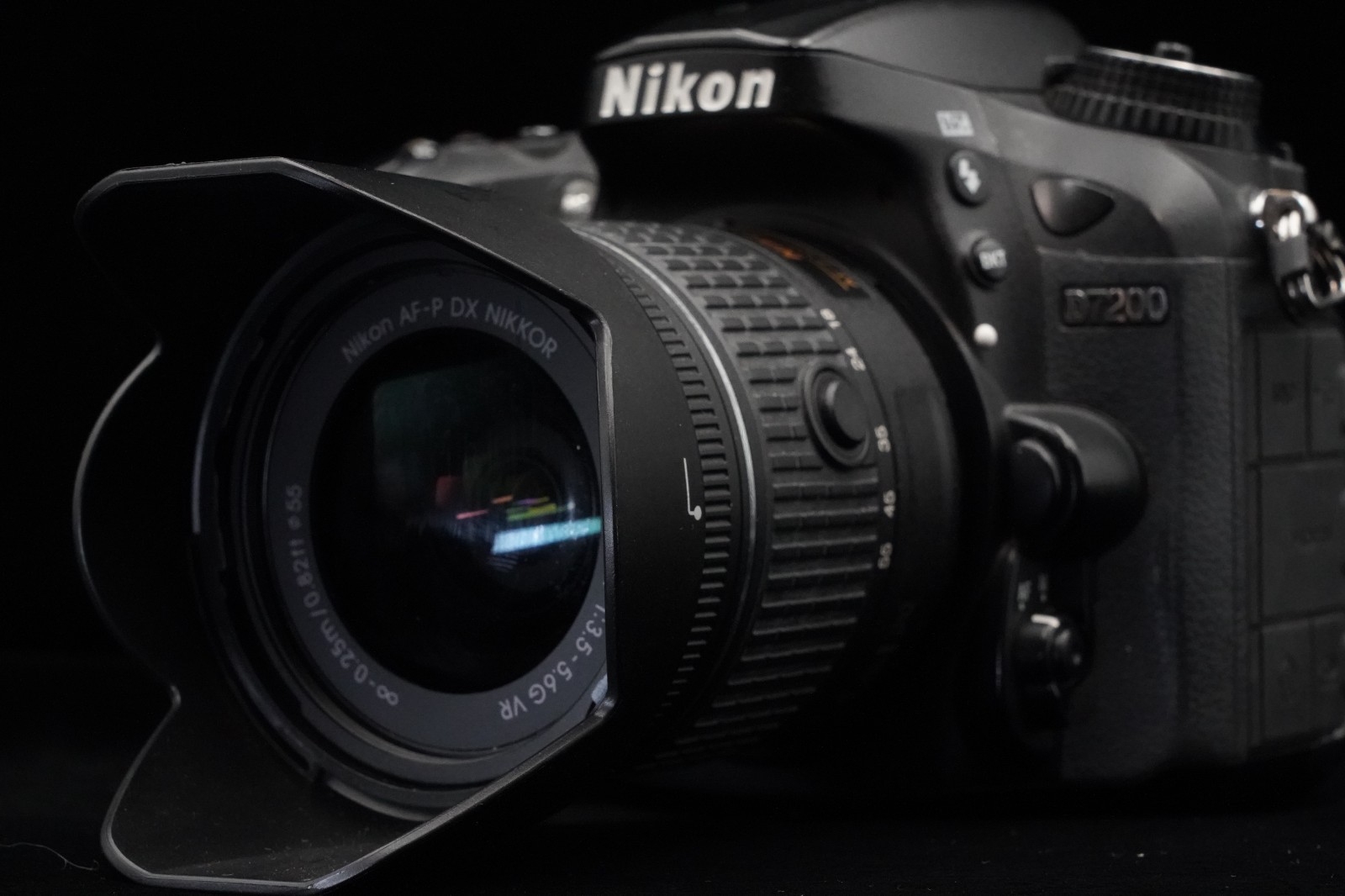
At 765 grams, it rests in the hands like a tool built to last—dense, deliberate, and humming with unfiltered detail.
Overview
The Nikon D7200 Digital Camera arrived in March 2015 as Nikon’s top-of-the-line DX-format DSLR, stepping into the lineage of the well-regarded D7100 and D7000 before it. Announced on March 2, 2015, and shipping by March 19, this camera was positioned not as a revolution, but as a refinement—Nikon’s best DX camera at the time, built for enthusiasts who demanded reliability, speed, and image quality without stepping into the full-frame realm. It shares its core DNA with the D7100, but with incremental upgrades that matter in practice: improved ISO performance, enhanced connectivity, and a slightly more refined interface.
What sets the D7200 apart from many of its peers is the absence of an anti-alias filter over its 24 MP CMOS DX (23.5 x 15.6 mm) image sensor. This design choice, carried over from the D7100, allows for sharper images straight out of the camera, maximizing the resolving power of Nikon’s DX glass. The sensor captures native resolution at 6,000 x 4,000 pixels, delivering 24.2 megapixels of data with impressive dynamic range and color depth, especially when shooting in 14-bit NEF raw. Owners report that all ISOs—from 100 up to 25,600—look usable, with noise well-controlled and retaining texture rather than collapsing into mush.
Despite its consumer-tier branding, the D7200 behaves like a pro tool. It features a built-in focus motor, meaning it autofocuses with every AF Nikkor lens made since 1986, not just newer AF-S or AF-P types. Even more valuable to collectors and film-era holdouts: it includes an aperture-ring feeler, allowing accurate metering with all AI and newer manual-focus lenses from 1977 onward. This compatibility makes it a favorite among users with vintage glass, who praise its extraordinarily precise manual focus experience when using older Nikkors on a tripod or for street work.
The camera’s physical design leans into utility. The top LCD panel is large, legible, and illuminated with a green LED backlight—ideal for quick settings checks in low light. The rear 3.2-inch TFT-LCD monitor offers 1,228,800 dots of resolution, providing a sharp preview and playback experience, though it lacks touch functionality and articulation. Connectivity includes built-in NFC and Wi-Fi, a notable upgrade from its predecessor, allowing for wireless image transfer and remote control via smartphone. The HDMI output uses a full-sized jack, a small but appreciated detail for videographers routing to external recorders.
Weighing in at 765 grams (27.0 oz) with battery and memory card, the D7200 has heft without being cumbersome. It fills the hand like a serious instrument, its magnesium alloy chassis suggesting durability even if official weather sealing specs aren’t detailed in the documentation. The shutter mechanism supports speeds from 30 seconds to 1/8000 second, giving ample range for creative exposure control. With a 51-point autofocus system—confirmed by multiple sources including DPReview and MPB—it tracks moving subjects effectively, with reviewers noting it as class-leading at the time, particularly in continuous shooting scenarios.
Specifications
| Manufacturer | Nikon |
| Type | Single-lens reflex |
| Sensor | 24 MP CMOS DX (23.5 x 15.6 mm) image sensor |
| Resolution | 6,000 x 4,000 pixels native |
| Anti-alias filter | NO ANTI-ALIAS FILTER |
| ISO | Auto, 100-25,600 in half or third stops |
| Shutter Speed | Maximum shutter speed, 1/8000 sec; Minimum shutter speed, 30 sec |
| Viewfinder | Viewfinder coverage, 100%; Viewfinder magnification, 0.94× |
| LCD Screen | 3.2-inch rear LCD display, 1,228,800 dots, no touch screen |
| Autofocus Points | 51 autofocus points |
| Frame rate | 6 frames per second |
| Buffer (JPG) | 100 frames, JPG |
| Buffer (NEF) | 8 or 9 frames, compressed NEF at 14 or 12 bits; 6 or 7 frames, lossless compressed NEF at 14 or 12 bits |
| Video | 1,920 x 1,080 at 29.97p, 25p and 23.976p; (59.94p and 50p with 1.3x cropped sensor); 1,280 x 720 at 50p or 59.94p |
| Video max time | Maximum Recording Time: 30 minutes, or 20 minutes at highest quality setting |
| Video format | .MOV files holding H.264/MPEG-4 data |
| Audio | Stereo mic, built-in; Stereo input jack for external microphones (3.5mm) |
| Connectivity | NFC Wi-Fi |
| HDMI | The HDMI jack is now full-sized |
| Battery | EN-EL15 |
| Weight | 27.0 oz./765g with battery and card |
| Picture Controls | Standard, Neutral, Vivid, Monochrome, Portrait, Landscape, Flat |
Key Features
No Anti-Alias Filter for Maximum Sharpness
The D7200 omits an optical low-pass (anti-alias) filter over its sensor, a feature shared with the D7100. This allows for maximum spatial resolution, particularly noticeable when using sharp prime lenses. The trade-off—potential for moiré in fine repeating patterns—is considered acceptable by most users given the increase in perceived detail. For landscape, portrait, and street photographers, the benefit outweighs the risk, especially since moiré can be corrected in post-processing.
Full Compatibility with AF and AI Lenses
Unlike many modern DSLRs that dropped support for older lens types, the D7200 retains a focus motor and aperture-ring feeler. This means it autofocuses with all AF Nikkor lenses, not just those with internal motors, and meters accurately with manual-focus AI, AI-S, and later lenses. This backward compatibility is a major draw for collectors and users with legacy glass, turning the D7200 into a modern body that respects Nikon’s 50-year lens ecosystem.
14-Bit ADC and High Bit-Depth Raw Files
The camera processes image data through a 14-bit analog-to-digital converter, capturing raw files with finer tonal gradations than 12-bit systems. This contributes to the D7200’s strong dynamic range and clean shadow recovery. Users can choose between lossless compressed, efficiently compressed, or uncompressed NEF raw files at either 12 or 14 bits, offering flexibility in storage and workflow.
1.3x Crop Mode for Reach
Beyond its native DX format, the D7200 offers a 1.3x crop mode that uses only the central 18 x 12mm of the sensor, producing 4,800 x 3,200 pixel images. While this reduces resolution, it effectively extends the focal length of attached lenses by 1.3x—useful for wildlife or sports shooters using telephotos. Video at 1080p/59.94p or 50p is also limited to this cropped area, a limitation some videographers note as a drawback.
Top LCD with Green LED Backlight
The top-mounted monochrome LCD is larger and more legible than on earlier models. Its green LED backlight is easy on the eyes in dark environments and stays visible without draining the battery excessively. The simplified layout displays essential shooting data—shutter speed, aperture, ISO, exposure compensation, battery level, and frame count—without requiring the user to power on the rear screen.
Historical Context
The Nikon D7200 was released in March 2015 as the successor to the D7100, continuing a line of high-end APS-C DSLRs that began with the D7000 in 2010. It was marketed as one of Nikon’s best consumer cameras at the time, bridging the gap between entry-level DSLRs and the more expensive full-frame D600 and D750 models. While it introduced few groundbreaking changes, its refinements in connectivity, battery life (via the EN-EL15), and ISO performance solidified its reputation as a dependable, no-nonsense camera for advanced amateurs and semi-professionals.
Collectibility & Value
At launch, the D7200 carried a price point of $1,200 for the body, with kit versions priced around $1,297. By April 2017, market prices had dropped to about $997, reflecting typical depreciation for DSLRs of that era. Today, it is no longer in production, and its value on the secondary market reflects its status as a capable but aging model. Notable omissions include GPS (requiring the external GPS-1A accessory, which retailed for $250) and auto LCD brightness control, which was removed from the interface. These absences are minor for most users but noted by reviewers as cost-cutting measures. No widespread reports of common failures or maintenance issues appear in the documentation, though long-term reliability often depends on usage and care.
eBay Listings


As an eBay Partner, we earn from qualifying purchases. This helps support our independent vintage technology research.