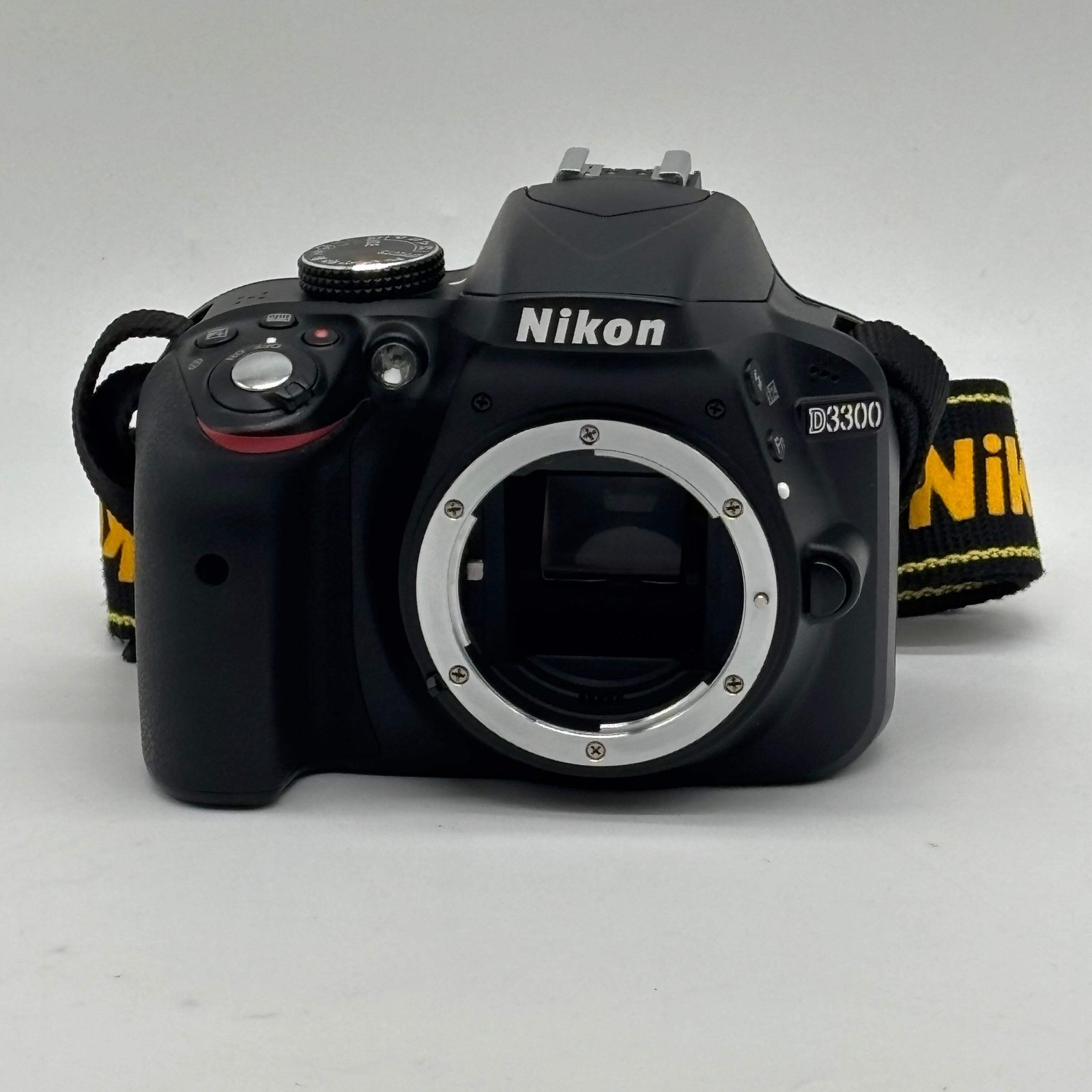
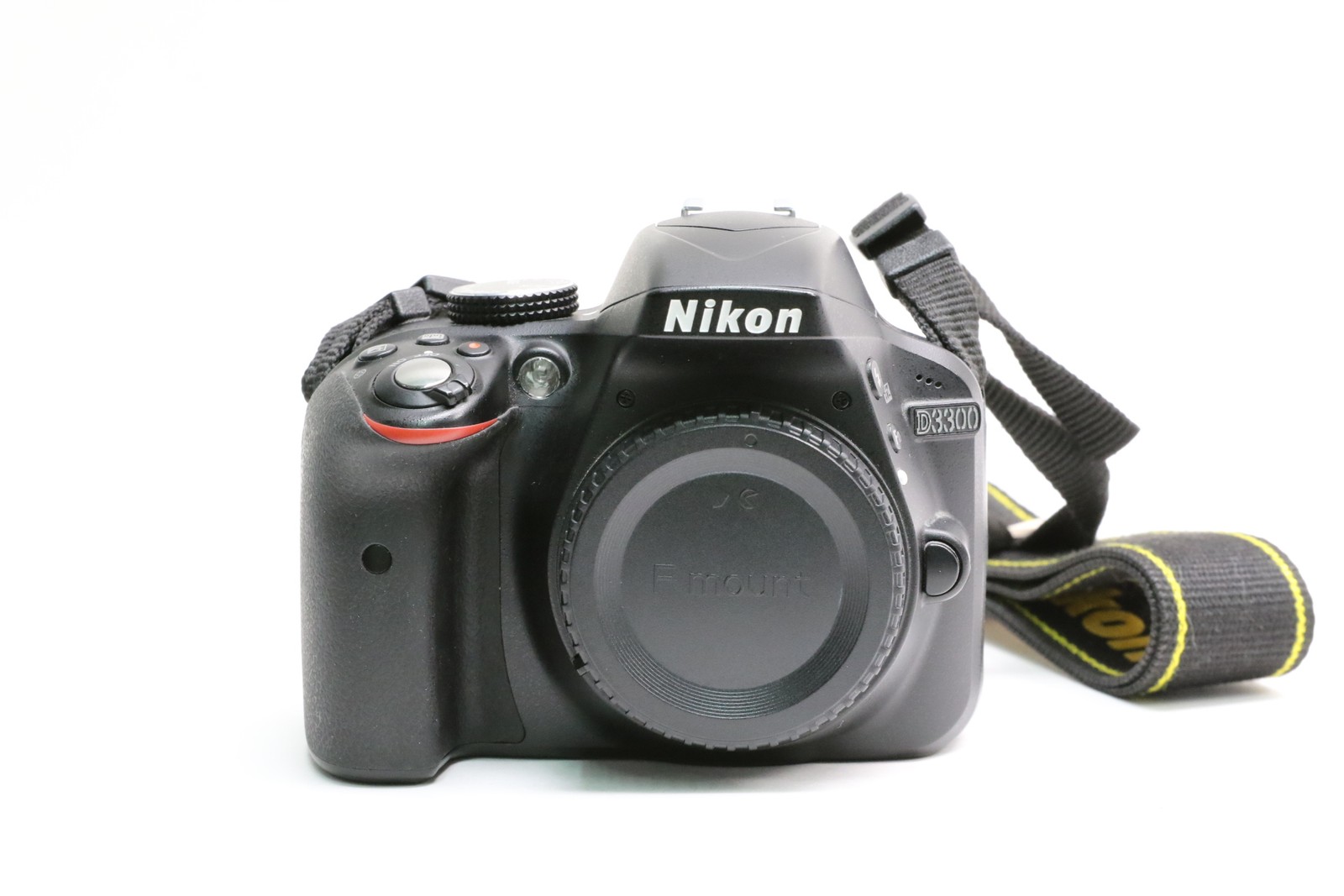
Nikon D3300 (2014)
At 460 grams, it slips into a coat pocket like a paperback—yet delivers image quality that still holds up a decade later.
Overview
The Nikon D3300 isn’t a camera built to impress in a boardroom or weigh down a camera bag. It’s a tool for getting out and shooting, and it does that job with quiet competence. Marketed as an entry-level DSLR, it was Nikon’s most accessible model at launch in 2014, designed to pull beginners into the world of interchangeable lenses without overwhelming them. What set it apart wasn’t a long list of pro features, but its balance: a 24.2-megapixel sensor in a body light enough to forget you’re carrying it. Owners report it delivers ultra-high image quality for its class, with enough resolution for large prints and digital sharing alike.
Performance is straightforward. The EXPEED 4 image processor handles the 24.2MP output efficiently, and the 5 FPS continuous shooting speed is sufficient for kids, pets, or casual sports. The 11-area autofocus system, based on the Nikon Multi-CAM 1000 module, locks on quickly in good light, though low-light AF can be hesitant. TTL 3D Color Matrix Metering II, using a 420-pixel RGB sensor, generally nails exposure in varied lighting, and the 3-inch LCD with 921,000 dots offers a sharp preview—though it’s fixed, not articulating. One quirk noted by users: in Live View mode, shutter speeds can’t go below 1/50 sec unless manual video settings are disabled, a limitation that catches some newcomers off guard.
Despite its simplicity, the D3300 has strengths that outlast its price tag. Its ISO range of 100–12800 (expandable to 25600 as Hi 1) performs surprisingly well in low light, with noise levels manageable up to ISO 3200. The shutter speed range spans 30 seconds to 1/4000 sec, giving flexibility for both nightscapes and action shots in daylight. The camera’s quiet operation, compared to Nikon’s pro DSLRs, makes it a favorite for candid shooting. According to available documentation, it was built to be carried everywhere—not as a status symbol, but as a reliable companion for everyday photography.
Specifications
| Manufacturer | Nikon |
| Model | D3300 |
| Type | DSLR |
| Sensor | 24.2-megapixel Nikon DX-format CMOS sensor |
| Sensor Dimensions | 23.5 mm × 15.6 mm |
| Image Processor | EXPEED 4 |
| ISO Range | 100–12800 (expandable to 25600 as Hi 1) |
| Continuous Shooting Speed | 5 FPS |
| Shutter Speed Range | 30 sec to 1/4000 sec |
| Autofocus System | 11-area AF system, Nikon Multi-CAM 1000 autofocus sensor module |
| Metering | TTL 3D Color Matrix Metering II with 420-pixel RGB sensor |
| LCD | 3 inch with 921,000 dots |
| Weight | 460 g (with battery and SD card) |
| Dimensions | 124 x 98 x 76 mm |
| Kit Lens | AF-S DX NIKKOR 18-55mm f/3.5-5.6G VR II |
Historical Context
Officially launched on 7 January 2014, the D3300 replaced the D3200 of 2012, marking Nikon’s push to make entry-level DSLRs lighter and more approachable. At launch, it was the lightest Nikon SLR or DSLR in history, weighing just 460 grams with battery and SD card—a title it held until the D3400 arrived. Positioned as Nikon’s most advanced inexpensive super-compact DSLR, it targeted first-time DSLR buyers who wanted serious image quality without bulk. The D3300 was part of Nikon’s DX DSLR lineup, emphasizing portability and affordability within the APS-C format ecosystem.
eBay Listings


As an eBay Partner, we earn from qualifying purchases. This helps support our independent vintage technology research.