Minolta XG-E (1976/1978)
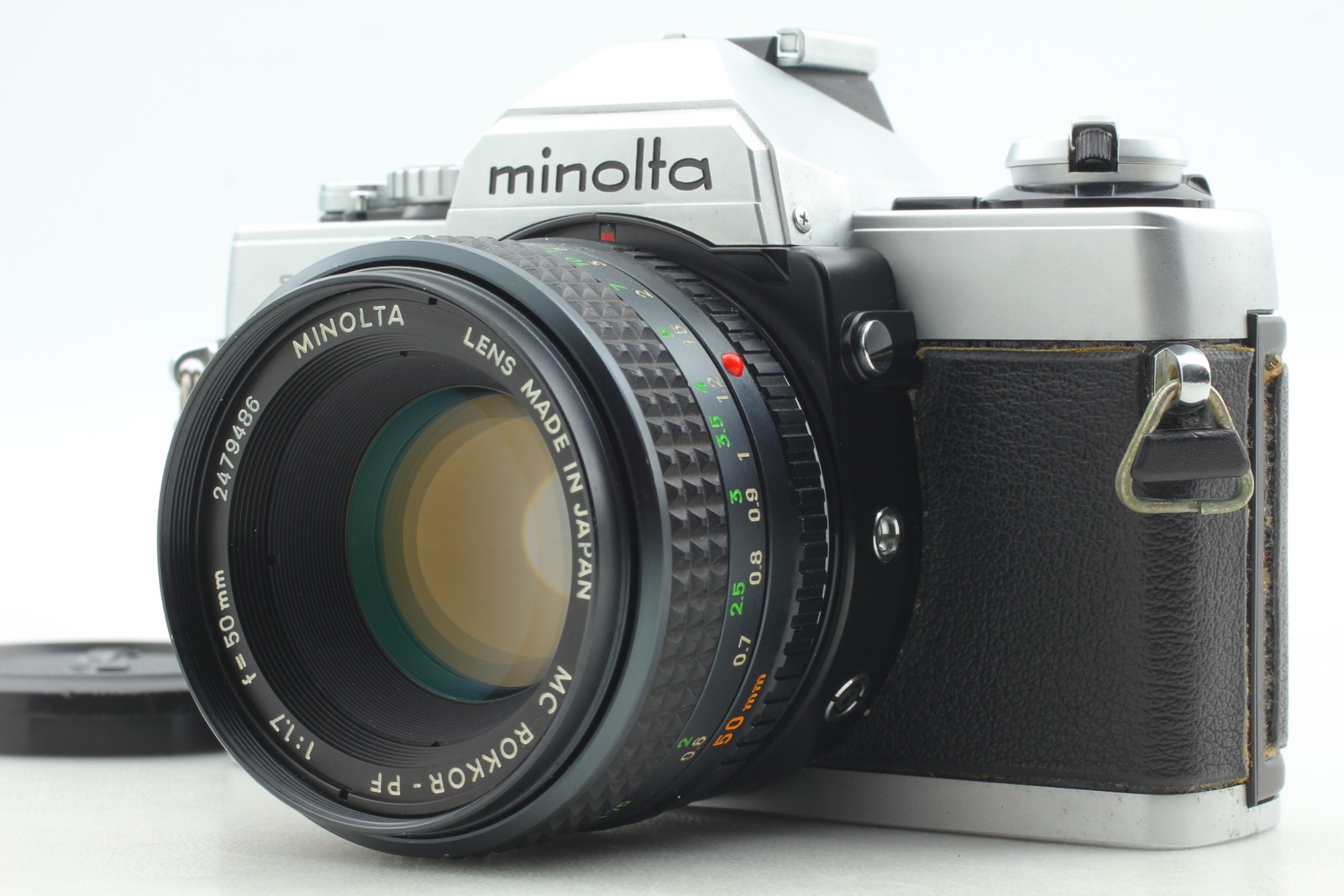
The Minolta XG-E is a 35mm SLR that carries one of the most misleading labels in camera history: printed on the front of the body, in plain sight, are the words “Autofocus XG-E.” It is not an autofocus camera. There is no autofocus motor inside, no AF system of any kind — it is a fully manual-focus, aperture-priority electronic-shutter SLR. The “Autofocus” marking was a marketing flourish that has confused modern buyers for decades; owners regularly report buying one thinking they’d found an early AF body. The camera relies entirely on the photographer to focus.
What the XG-E genuinely offers is straightforward, competent aperture-priority automation. The shutter is electronically controlled — a vertical-travel metal focal-plane type running steplessly from 1 to 1/1000 second in auto mode, with the same 1s–1/1000s range plus bulb available manually. Flash sync is 1/60. Metering is TTL center-weighted, and the viewfinder shows the selected shutter speed on an LED scale — a readout owners consistently describe as bright and easy to read in low light. A ±2 EV exposure compensation dial sits on top. Power comes from two S76 silver-oxide batteries (LR44 or SR44 work as modern equivalents), and the camera is dead without them: no battery, no shutter, no mechanical fallback. There is also an electronic self-timer with an LED countdown lamp, and the battery check is an LED as well.
It uses the Minolta MD mount, accepting Rokkor MD lenses natively; MC lenses work but require manual metering. The XG-E was part of Minolta’s XG series, positioned below the higher-end XD line as a simpler, cheaper electronic-shutter alternative. It is generally understood to be the same camera as the XG7 sold in other markets — the XG-E name being the North American designation — though documentation explicitly confirming that identity is thin. Later XG models (the XG-1, XG-7, XG-9, and XG-M) were built on the XG-E’s design.
Release dating is conflicted in the record: sources cite both 1976 and 1978. No original MSRP survives. What is clear from the current market is that the XG-E is inexpensive and plentiful — $20 to $60 buys a body with lens, and it’s often described as a good cheap entry into vintage film photography. Common failure points are the usual age-related ones: dried-up light seals and mirror foam, corroded battery terminals from old leakage, and a shutter that can get sluggish in extreme cold. No repair centers service these bodies anymore; many are sold as-is or for parts.
One bit of period reception comes from HI-FI-Stereo (June 1991, p.102), which listed Minolta among brands deserving serious service — a slim thread, but it places the XG-E’s parent company in the landscape of respected Japanese electronics names well into the 1990s.
- Type: 35mm SLR, manual focus (despite “Autofocus” front marking)
- Lens mount: Minolta MD (MC lenses usable with manual metering)
- Shutter: Electronically controlled vertical metal focal-plane, 1s–1/1000s + B; stepless in auto
- Flash sync: 1/60s
- Metering: TTL center-weighted; LED shutter-speed readout in viewfinder
- Exposure modes: Aperture-priority auto, full manual
- Exposure compensation: ±2 EV
- Film speed: ISO 25–1600
- Power: Two S76 silver-oxide batteries (or LR44/SR44 equivalents)
- Self-timer: Electronic, with LED countdown lamp
eBay Listings



As an eBay Partner, we earn from qualifying purchases. This helps support our independent vintage technology research.