Konica C35 AF (1977)
The world's first mass-produced autofocus 35mm camera, introduced in November 1977.
Overview
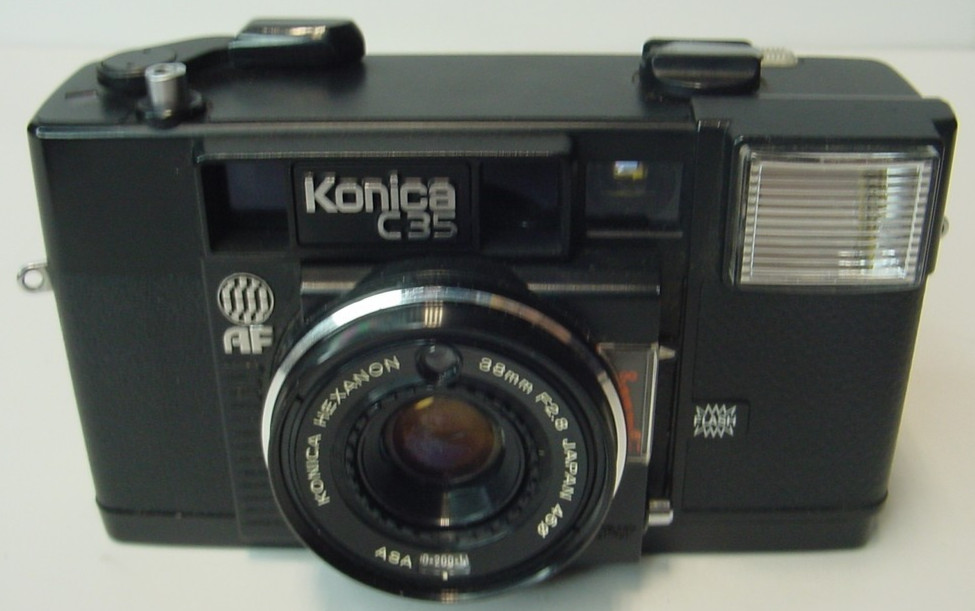
The Konica C35 AF, also known as the "Jasupin," is a 35mm viewfinder camera. Konishiroku of Tokyo, Japan, released it in November 1977. It was the first mass-produced consumer camera with automatic focusing. It belongs to Konica's C35 series of compact cameras and adds autofocus to what the earlier models did. The focusing system is the Honeywell Visitronic, licensed and integrated by Konica. It became the standard among early autofocus cameras before Canon's CAF system came along.
Specifications
| Lens | Hexanon 38mm f/2.8, 4 elements in 3 groups |
| Shutter | Lens leaf shutter with speeds at 1/60, 1/25, and 1/250 seconds |
| Film speed | Accepts film speeds from ISO 25 to 400 |
| Autofocus system | Visitronic AF system |
| Features | Shutter locked when battery is dead, underexposure warning lamp |
Design
The Konica C35 AF uses the Honeywell Visitronic autofocus system. Honeywell designed it and Konica licensed it for production. Early adopters in the camera industry preferred it until Canon's competing technology arrived.
Context
The Konica C35 AF was the world's first mass-produced autofocus camera. It extended Konica's compact C35 line into automated focusing and kept the compact, user-friendly design of the earlier cameras.
Market
The Konica C35 AF was priced at $283 at launch. Collectors have shown interest in it since. A near-mint example was listed for $69.99 on eBay, and another was priced at $150 on Instagram.
eBay Listings



As an eBay Partner, we earn from qualifying purchases. This helps support our independent vintage technology research.