Kodak Signet 40 (1956–1959)
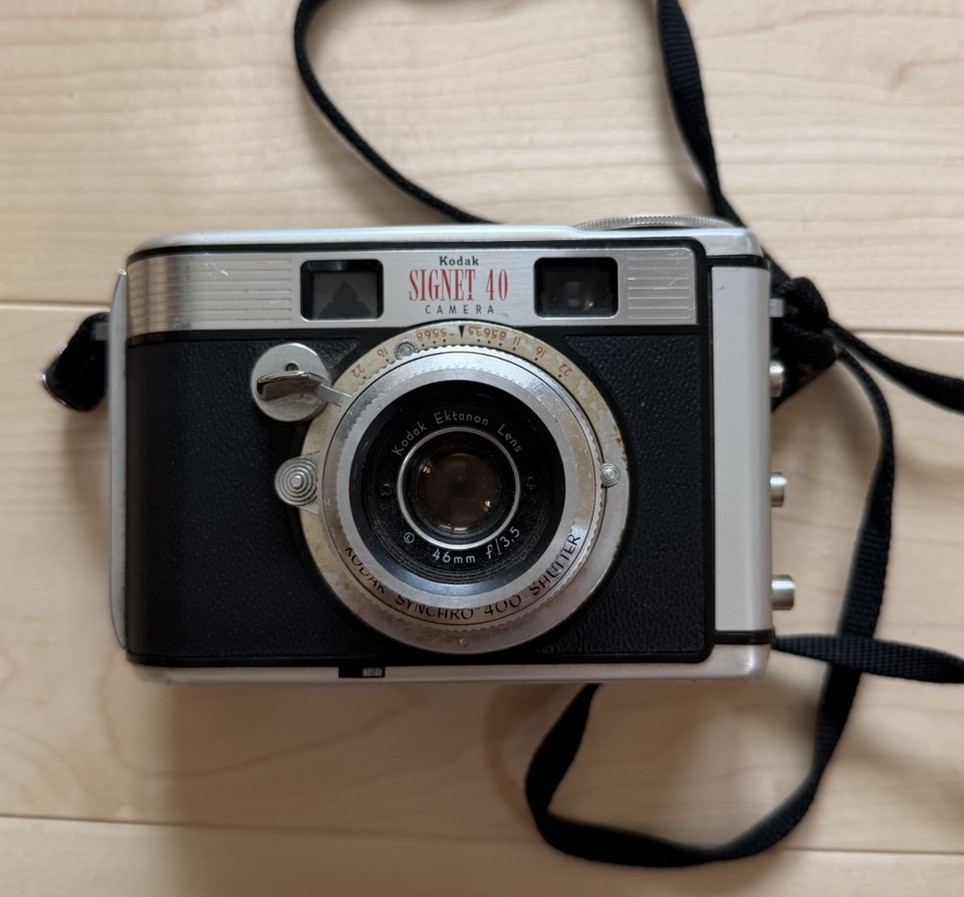
A 35mm rangefinder camera Kodak made for three years in the late 1950s. It has a durable build and a design that can be serviced.
Overview
The Kodak Signet 40 is a 35mm rangefinder camera made by Kodak from 1956 to 1959. Kodak positioned it as a compact, high-quality camera for amateurs who wanted reliable performance from a mechanical body. It uses 135 film, either 20 or 36 exposures per magazine, with a standard negative size of 24 x 36mm. Period materials call it "ruggedly built." It was meant to take regular use, and it could be repaired locally or sent back to Kodak. It belonged to a short-lived Signet series with the Signet 50 and Signet 80, each one higher in price and likely capability.
Specifications
| Film Format | 135 (35mm) |
| Film Capacity | 20 or 36 exposures |
| Negative Size | 24 x 36mm |
| Original Price | $65.00 |
Design
Period materials describe the Signet 40 as "ruggedly built," which points to construction meant for everyday use. Repairs could be done locally or through Kodak service centers, which suggests an internal layout that was modular and easy to maintain. Kodak officially produced a service manual and an instruction book, and collectors still catalog original copies.
Context
The Signet 40 came out alongside other models in the Signet line, including the Signet 50 (1957-1960, $82.50) and the Signet 80 (1958-1962, $129.50). Each rangefinder in the progression cost more and likely offered more features. That makes the Signet 40 the entry-level model of a short-lived but distinct series in Kodak's 35mm offerings of the late 1950s.
Market
Original promotional literature for the Signet 40 is a 12-panel foldout measuring 3.5 x 6 inches. One dealer offered it for $8.00, which reflects current collector interest in period documentation. A Kodak Parts and Service manual exists for the Signet 40 and its compatible Signet 400 flash. Collector catalogs list original service manuals for $12.00.
eBay Listings


As an eBay Partner, we earn from qualifying purchases. This helps support our independent vintage technology research.