Kodak Fling (1987–1989)
A compact, single-use camera using 110 film with fixed-focus simplicity and front-mounted film advance
Overview
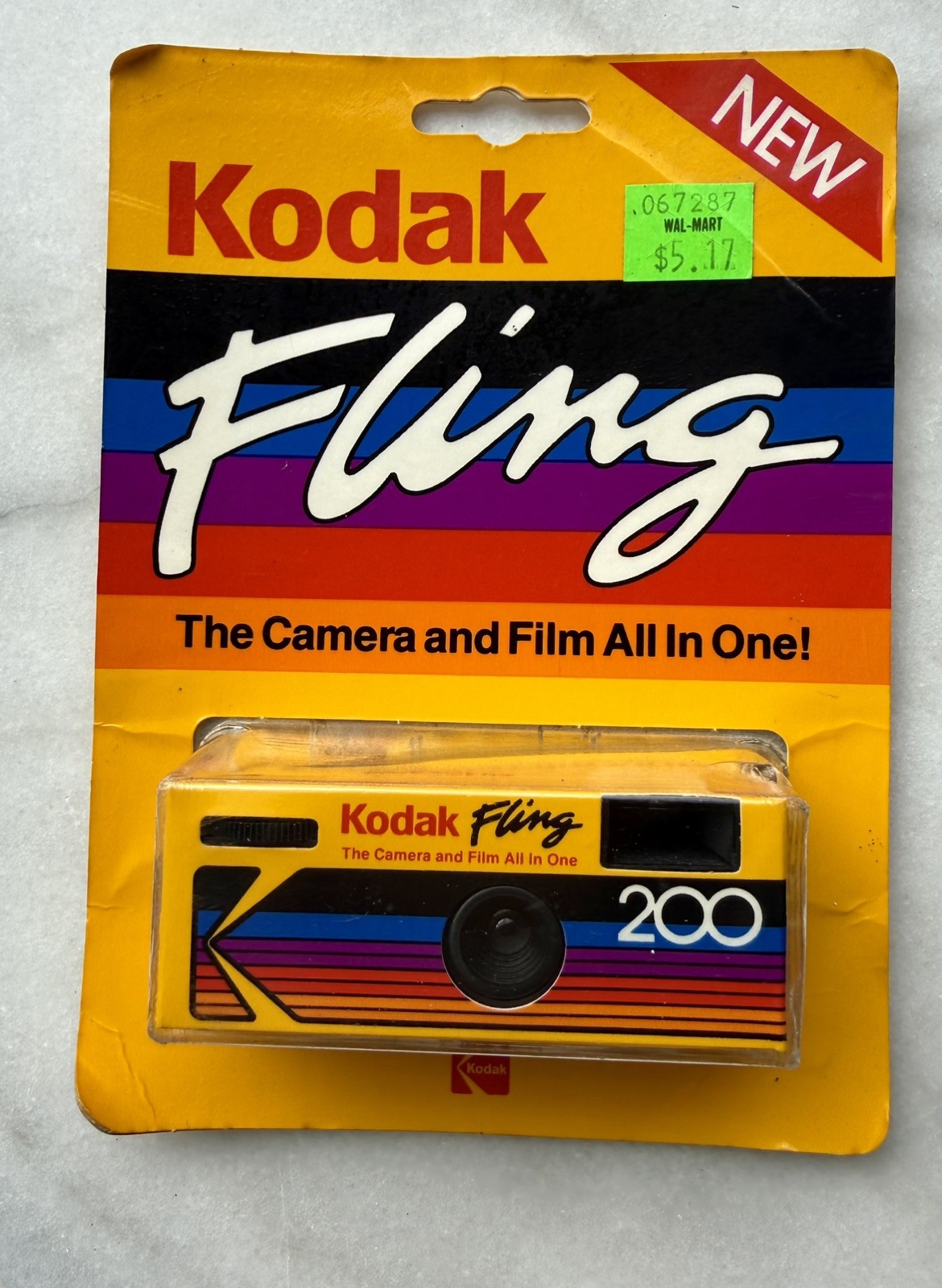
The Kodak Fling, also known as the KODAK FLING 200, was Kodak's first signature single-use camera. It came out in 1987 and was discontinued by 1989. Kodak sold it as a disposable point-and-shoot for casual photographers who wanted something light and ready to use. It was manufactured in Taiwan and packaged in the USA with 24 exposures of ISO 200 film. It measures 33 mm x 84 mm x 33 mm - about the size of a box of 110 film - and is built from cardboard and plastic. The film-advance wheel sits on the front, which was an unusual choice for disposable cameras of the era.
Specifications
| Film Format | 110 film |
| Film Speed | ISO 200 |
| Number of Exposures | 24 |
| Aperture | f/8 |
| Shutter Speed | 1/120s |
| Picture Size | 13 x 17 mm |
| Dimensions (Camera) | 33 mm x 84 mm x 33 mm |
| Dimensions (Packaging) | 176 mm x 130 mm x 35 mm |
| Materials | Cardboard and plastic (unidentified) |
| Versions | Two slightly different versions produced |
Design
The Fling has a fixed aperture of f/8 and a single shutter speed of 1/120 second. Film advance is fully manual, by a wheel on the front of the camera. That placement is rare and sets it apart from most of its contemporaries. The lens is fixed-focus, which fits a point-and-shoot, and the whole design is small and simple. It was available only with 200-speed film, which is why the box is marked "KODAK FLING 200."
Context
Launched in 1987, the Fling was Kodak's entry into the single-use camera market. It competed with early offerings from Fuji, including the Quicksnap. Launch price was $6.95 according to some sources, though others report $9.95 - less than Fuji's $9.95 Quicksnap. The Fling was short-lived. It pushed simplified, pocketable formats on the 110 film platform.
eBay Listings



As an eBay Partner, we earn from qualifying purchases. This helps support our independent vintage technology research.