CONTAX S2
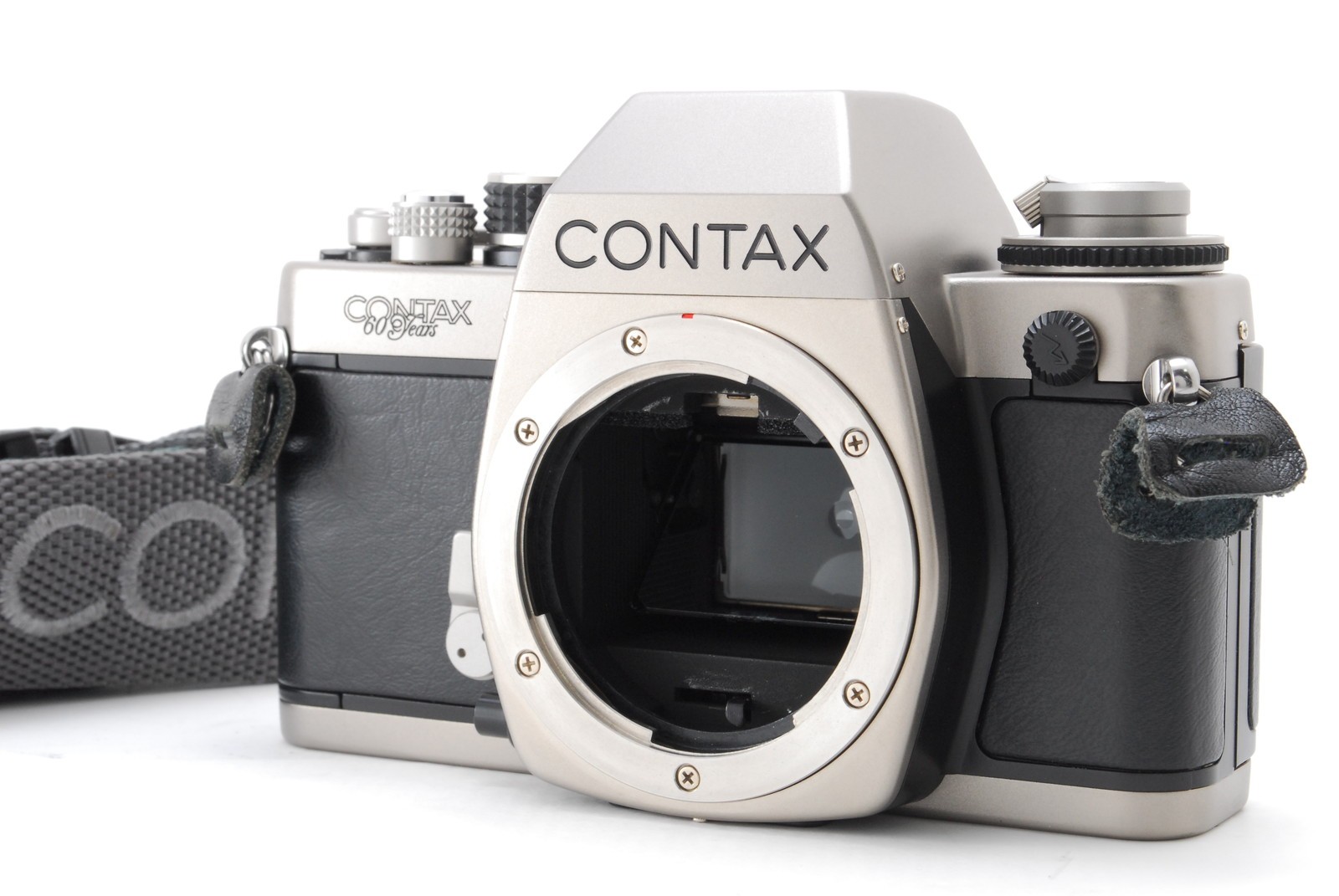
The Contax S2 is a 35mm film single-lens reflex (SLR) camera produced by Kyocera under the Contax brand from 1992 to 1998. A mechanically operated, aperture-priority electronic SLR with a titanium-clad chassis, the S2 was designed as a compact, durable, and precise tool for photographers seeking a blend of retro aesthetics and modern reliability.
Overview
Introduced in 1992, the Contax S2 emerged during a transitional period in the photographic industry, when electronic automation was becoming standard, yet a niche market still valued mechanical simplicity and tactile control. Positioned as a spiritual successor to the classic Contax S-series of the 1950s—renowned for pioneering the modern pentaprism SLR—the S2 paid homage to that legacy with its clean lines, manual focus design, and mechanical shutter. However, unlike its fully mechanical ancestors, the S2 incorporated electronic aperture-priority automation, making it a hybrid of old-world craftsmanship and late-20th-century technology.
The S2 was part of Contax’s effort to maintain a foothold in the professional and advanced amateur segment, complementing its more advanced, electronically complex models like the Contax RTS III and the AX. It was marketed as a compact, lightweight alternative for photojournalists, travel photographers, and purists who valued reliability in adverse conditions. Its titanium top and bottom plates contributed to a rugged yet refined build, while the camera retained full compatibility with the Contax/Yashica (C/Y) lens mount, giving users access to a wide range of high-quality manual focus lenses.
Despite its relatively short production run (1992–1998), the S2 earned a cult following for its understated elegance, precise engineering, and mechanical dependability. It was manufactured in Japan by Kyocera, which had acquired the Contax brand from Zeiss Ikon and was responsible for all Contax camera production during this era. The S2 was succeeded by the S2n in 1998, which featured minor refinements but retained the core design and functionality.
Specifications
| Specification | Value |
| Type | 35mm SLR |
| Film Format | 35mm (135) |
| Years Produced | 1992–1998 |
| Lens Mount | Contax/Yashica (C/Y) bayonet |
| Shutter | Vertical-travel, focal-plane, mechanical metal blades; speeds 1–1/2000 sec, B, X-sync at 1/125 sec |
| Metering | TTL open-aperture center-weighted average metering |
| Exposure Modes | Aperture-priority AE, manual (with stop-down metering), bulb |
| Viewfinder | Fixed pentaprism with 0.85x magnification, 94% coverage, split-image rangefinder spot with microprism collar |
| Dimensions | 140 × 87 × 57 mm (5.5 × 3.4 × 2.2 in); ~650 g (body only, with battery) |
Key Features
- Titanium body construction: Top and bottom plates made of titanium for reduced weight and increased durability.
- Mechanical shutter with electronic control: Full mechanical operation at all speeds; no battery required for shutter function (battery needed for metering and aperture control).
- Aperture-priority automation: Allows precise exposure control while maintaining compatibility with C/Y manual focus lenses.
- Compact and ergonomic design: One of the smallest and lightest professional-grade 35mm SLRs of its time.
- Full manual override: Supports stop-down metering and manual exposure via depth-of-field preview button.
Historical Context
The Contax S2 was released at a time when autofocus SLRs from Canon, Nikon, and Minolta were rapidly dominating the market. In contrast, the S2 stood out as a deliberate anachronism—a modern mechanical camera in an increasingly digital and automated world. Its design philosophy echoed that of the original Contax S (1949), the first SLR with a pentaprism, positioning the S2 as both a tribute and a functional evolution.
Targeted at experienced photographers who preferred manual focus and precise mechanical control, the S2 competed indirectly with cameras like the Nikon FM3A (though released later) and the Olympus OM-4T. While not as widely distributed as Nikon or Canon models, the S2 found favor among European and Japanese photographers who appreciated its build quality and understated design. It was never intended as a mass-market product; rather, it served as a statement of Contax’s commitment to high-end, precision engineering.
Collectibility & Value
Today, the Contax S2 is considered a sought-after collector’s item, particularly in fully functional condition with original accessories. Due to its limited production numbers and niche appeal, well-maintained examples can command prices between $600 and $1,000 on the secondary market, with mint-condition units occasionally exceeding $1,200. The use of titanium contributes to its desirability, as does its reputation for reliability.
When purchasing an S2, collectors should verify the shutter operation across all speeds, check for light seals (which often degrade and require replacement), and ensure the meter is responsive. The camera uses a single 6V 4SR44 or PX28 battery to power the light meter and aperture control circuitry; while the shutter operates mechanically, the meter will not function without power. Common issues include worn leatherette, sticky shutters due to dried lubricants, and aging of internal foam light seals, which can lead to light leaks if not replaced.
Similar Cameras
- Nikon FM3A (2001–2006): Hybrid mechanical/electronic SLR with manual focus and aperture-priority mode.
- Olympus OM-4T (1986–2002): Titanium-bodied manual focus SLR with advanced metering and durability.
- Pentax MX (1976–1985): Compact mechanical SLR with full manual control and high build quality.
- Canon F-1 (New) (1981–1994): Professional-grade manual focus SLR with modular design and mechanical reliability.
- Yashica FR-I (1982–1986): C/Y-mount SLR with similar lens compatibility and mechanical shutter.
Repair & Maintenance
The Contax S2 uses a 6V 4SR44 or PX28 battery for its metering system and aperture control electronics. While the shutter functions mechanically without power, proper exposure requires a functional battery. Common maintenance tasks include replacing deteriorated light seals, cleaning the mirror and focusing screen, and servicing the shutter mechanism if speeds become inaccurate. Due to the precision engineering and use of specialized materials (including titanium), repairs should be performed by technicians experienced with Contax systems. Shutter lubrication is critical—over time, dried grease can cause sluggish operation, particularly at high speeds. The camera’s mechanical simplicity makes it more serviceable than fully electronic SLRs, but availability of spare parts has diminished since production ended. Regular use and proper storage in a dry environment are recommended to preserve functionality.
eBay Listings


As an eBay Partner, we earn from qualifying purchases. This helps support our independent vintage technology research.
Related Models
- Contax 137 MA (1981-1984)
- Contax 137 MD (1980-1984)
- Contax 139 Quartz (1979-1985)
- Contax AX (1996-2005)
- Contax RTS II (1982–1990)
- Alpa 6 (1948-1953)
- Agfa Agfaflex
- Agfa Ambiflex
- Agfa Easy
- Agfa Futura Af zoom