Contax RTS III (1990)
At 1150 grams, it feels like a vault in your hands. Dense and deliberate.
Overview
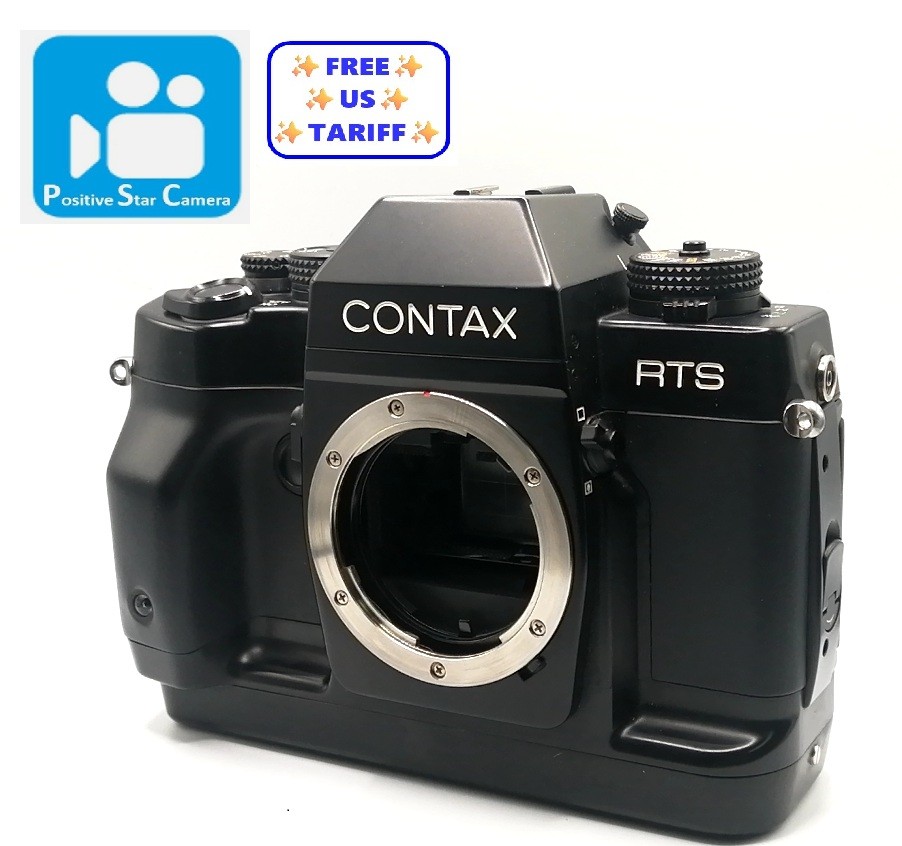
The Contax RTS III came out in 1990 and was the last of the Real Time System line, which started in 1974. It is a 35mm metal focal plane shutter SLR with both auto and manual exposure. Kyocera of Japan built it, and they knew ceramics and high-tolerance manufacturing. Porsche Industrial Design worked on the styling. The integrated grip shifts the balance forward, so the camera is surprisingly well balanced for its weight. It doesn't whisper.
While its controls maintain familiar placement from earlier RTS models — a nod to muscle memory — the RTS III is a clear departure from its predecessors in both capability and complexity. It was built not just to compete, but to lead, packing technologies that, at the time, bordered on the extravagant. Owners report it as a massively large and technology-filled camera, one that, even decades later, feels like a milestone in 35mm SLR history. It was and still is a very impressive camera for a 30-year-old design, though its sophistication comes with trade-offs.
Specifications
| Manufacturer | CONTAX (made by Kyocera) |
| Type | 35mm metal focal plane shutter auto/manual exposure SLR camera |
| Lens mount | Contax/Yashica mount |
| Shutter | Vertical titanium shutter |
| Shutter speed | Maximum speed of 1/8000 |
| Motor drive | Integrated motor drive capable of 5 frames per second |
| Metering modes | Spot-Pre-flash TTL function, multi-metering modes. "true 3mm spot meter" |
| Viewfinder | 100% viewfinder with interchangeable focusing screens. Built-in dioptric adjustment. Eyepiece has an internal curtain to close it. |
| Exposure bracketing | +1 EV or +0.5 EV bracketed exposure |
| Film back | vacuum ceramic back with an RTV vacuum system that sucks the film flat |
| Data back | data back that will imprint date and time between frames |
| Film handling | Automatically winds film back into the canister leaving the leader out |
| Dimensions | 156 x 121 x 66mm |
| Weight | 1150g (no lens, with batteries) |
| Power | Powered either by six AA batteries or a single 2CR5 lithium cell |
| Display | Aperture and shutter speed displayed via a light blue and white LED |
Key Features
Vertical Titanium Shutter with 1/8000 Speed
The vertical titanium shutter was a significant upgrade over earlier metal shutters, with extreme rigidity and durability. Sources suggest it was part of a new high-speed shutter unit designed for precision and long life. The top speed is 1/8000 second, which matched or exceeded contemporary professional SLRs and lets you freeze motion in bright daylight with wide apertures. The shutter adds to the camera's weight, and to its reputation for robustness.
Integrated 5 fps Motor Drive
Unlike the add-on motor drives of the era, the RTS III has a fully integrated motor drive capable of 5 frames per second. It is built into the body, so you get rapid sequence shooting without the bulk or imbalance of external units. For a semi-professional to professional SLR, that mattered to photojournalists and sports shooters who needed speed. The integration also means consistent performance and quieter operation compared to belt-driven accessories.
True 3mm Spot Meter with Pre-Flash TTL
The metering system is one of the RTS III's standout features. It has a "true 3mm spot meter," so the spot coverage is very narrow and reads exposure from small areas of a scene. Add Spot-Pre-flash TTL and Direct TTL flash metering, and flash photographers got a level of control rare at the time. The pre-flash system measures flash output before the actual exposure, which gives accurate exposure even with complex lighting setups. Studio shooters who demanded precision favored it.
100% Viewfinder with Interchangeable Screens
The viewfinder gives 100% frame coverage, as you'd expect from a professional-grade SLR. What you see is what gets captured. Built-in dioptric adjustment allows sharp focusing without corrective eyepieces. The focusing screens are interchangeable, so users can set up the viewfinder for critical manual focus, fast action, or macro work. The eyepiece has an internal curtain, useful for preventing light leaks during long exposures or when the camera hangs around the neck.
RTV Vacuum Ceramic Film Back
Possibly the most talked-about feature is the vacuum ceramic back. It uses an RTV vacuum system to suck the film flat against the pressure plate. The idea was to reduce film curvature and improve sharpness, especially with high-resolution films and long lenses. The pressure plate itself is ultra-smooth ceramic, which fits Kyocera's expertise. Reviewers note it's "cool and I like it," but there's skepticism about the real-world impact. One owner admits they're "not convinced it makes much difference." The engineering is still novel.
Light Blue and White LED Display
Aperture and shutter speed show on a light blue and white LED system in the viewfinder and on the top plate. The color contrast was chosen for clarity. Owners report a critical flaw, though: in bright sunlight the LED becomes nearly invisible. That limits outdoor use, a surprising oversight on a camera built for professional work. The display's failure in high ambient light is a well-documented pain point, often cited in user circles as a design misstep.
Leader-Out Film Rewind with Data Back
The RTS III automatically rewinds film into the canister while leaving the leader out, which is handy for mid-roll changes. It helps photographers switching between film types or preserving partially exposed rolls. The data back imprints date and time between frames, which adds a layer of metadata uncommon in film cameras. It isn't as precise as digital EXIF, but it was a forward-thinking addition in 1990, and it appealed to documentarians and travel photographers.
Historical Context
The Contax RTS III succeeded the Contax RTS II and was the last in the Real Time System line, ending CONTAX's SLR development. The original RTS was designed to stand out from the mid-70s crowd, and the III continued that with a clear departure from its predecessors in both technology and design language. The Contax name was licensed to Yashica in 1973, and Kyocera, which acquired Yashica, carried the engineering forward with a focus on materials science and precision manufacturing. The RTS III was the peak of that collaboration, coming just before the shift toward autofocus and digital.
Collectibility & Value
Current market listings show the Contax RTS III selling for around €415, which owners report as a reasonable price for such a technology-filled camera. Reliability is a concern. Display failure is a known issue, and forum reports suggest many RTS III units no longer work because of their complex electronics. The "highly technological" nature that made it impressive in 1990 now makes it fragile. Spare parts and repair expertise are limited, so working condition is a key factor in value. Collectors seeking a fully operational example should expect to pay a premium, and hope the LED still lights up.
Market Value
┌──────────────────────────────────────────────────────────────────────────┐
│ CONTAX RTS III                                                  Nov 2026 │
├──────────────────────────────────────────────────────────────────────────┤
│ High      $1,180                                  Latest            $345 │
│ Median    $390                                    Trend                — │
│ Low       $171                                    Volume          ~10/mo │
├──────────────────────────────────────────────────────────────────────────┤
│ $2,000 ┤                                                                 │
│        │                                                                 │
│        │                                                                 │
│ $1,186 ┤                                                                 │
│        │                 .                      .                        │
│        │                    .     .             .                        │
│        │     ..         .       . ...           .            .  .        │
│   $100 ┤. .      . ..   ..              .       .        .           .  .│
│        ├─────────────────────────────────────────────────────────────────│
│    vol │▁ ▃  ▃▁  ▁ ▁▁   ▃▃  ▁   ▁ ▃▁▁   ▁       █        ▁   ▁  ▁    ▁  ▁│
│        └─────────────────────────────────────────────────────────────────│
│         2026-05                      2026-06                      2026-08│
└──────────────────────────────────────────────────────────────────────────┘
eBay completed sales. Excludes accessories, parts, and non-working units. Hover points for details.
eBay Listings
Recently sold on eBay: $202–$720 (median $390, based on 30 completed sales, past 12 months)



As an eBay Partner, we earn from qualifying purchases. This helps support our independent vintage technology research.