CONTAX RTS II
The CONTAX RTS II is a 35mm single-lens reflex (SLR) camera introduced in 1982 as an enhanced successor to the original RTS (Real Time System). Designed for professional and advanced amateur photographers, it combines precision engineering with electronic automation, maintaining the high optical standards associated with the Contax brand and Zeiss lens collaboration.
Overview
Released in 1982, the CONTAX RTS II represented a significant refinement of the original RTS model, which had debuted in 1975 as Contax’s first SLR in over two decades. Manufactured by Yashica under the Contax brand, the RTS II was part of a strategic effort to reestablish Contax as a leader in the professional 35mm SLR market. The camera targeted serious photographers who demanded reliability, accurate metering, and seamless integration with high-performance Carl Zeiss lenses. Positioned between the manual-focus RTS and the later fully automated RTS III, the RTS II offered a balanced blend of mechanical robustness and electronic sophistication.
One of the key improvements in the RTS II was its upgraded electronic system, which enhanced reliability and responsiveness compared to its predecessor. The camera featured a built-in motor drive capable of 3.5 frames per second, eliminating the need for external motor units and streamlining operation. It retained the fully mechanical shutter at 1/60 sec and B, ensuring functionality even without batteries—a critical feature for photojournalists and field photographers. The RTS II also introduced a redesigned shutter release mechanism with reduced travel and improved tactile feedback, contributing to faster, more precise shooting.
The camera’s design emphasized durability and precision, with a die-cast aluminum chassis and extensive use of metal components throughout. It maintained compatibility with the Contax/Yashica (C/Y) lens mount, supporting a wide range of Carl Zeiss T* lenses known for their optical excellence. The RTS II’s TTL (through-the-lens) center-weighted metering system was refined for greater accuracy, particularly in low-light conditions, and it featured a split-image rangefinder focusing aid in the standard focusing screen. Despite its professional orientation, the RTS II remained a manual-focus camera, relying on user input for focusing while automating exposure functions such as aperture-priority autoexposure and shutter speed selection.
Specifications
| Specification | Value |
| Type | 35mm Single-Lens Reflex (SLR) |
| Film Format | 35mm (135) |
| Years Produced | 1982–1990 |
| Lens Mount | Contax/Yashica (C/Y) Bayonet |
| Shutter | Vertical-travel, metal-bladed focal-plane shutter; speeds from 1 sec to 1/1000 sec, plus B and mechanical 1/60 sec |
| Metering | TTL, center-weighted, silicon photodiode |
| Exposure Modes | Aperture-priority autoexposure, manual mode (with stop-down metering) |
| Viewfinder | Fixed pentaprism, 0.85x magnification, 94% coverage |
| Dimensions | 142 × 92 × 52 mm (5.6 × 3.6 × 2.0 in); ~680 g (24 oz) body only |
Key Features
- Built-in motor drive enabling continuous shooting at 3.5 fps with full aperture-priority AE functionality.
- Hybrid shutter system: electronic shutter from 1 sec to 1/1000 sec, plus a mechanical 1/60 sec backup and Bulb mode for reliable operation without batteries.
- Refined electronics with improved circuitry for greater stability and reduced power consumption compared to the RTS.
- TTL center-weighted metering with LED readout in the viewfinder (match-needle system) for precise exposure control.
- Contax/Yashica (C/Y) lens mount with full support for Carl Zeiss T* lenses, including automatic aperture indexing and stop-down metering.
Historical Context
The RTS II was launched at a time of rapid technological transition in the SLR market. The early 1980s saw the rise of electronic automation, with competitors like Nikon, Canon, and Minolta introducing increasingly sophisticated aperture-priority and program-exposure models. The original RTS had been well-received for its build quality and Zeiss lens compatibility, but its electronics were prone to aging issues and limited responsiveness. The RTS II addressed these concerns with a redesigned circuit board and more robust power management, enhancing reliability and extending the camera’s operational lifespan.
Contax positioned the RTS II as a premium alternative to the Nikon F3 and Canon New F-1, emphasizing its superior lens quality and compact, integrated motor drive. Unlike many contemporaries that required bulky external motor units, the RTS II offered a sleek, self-contained solution. However, it faced stiff competition from Minolta’s X-700 and later Canon EOS models, which embraced more aggressive automation and faster autofocus systems. Despite its excellence in optics and build, the RTS II remained a niche product due to its manual-focus design and limited marketing reach outside Japan and Europe. Production continued until 1990, when it was succeeded by the RTS III, which further refined the electronics and added a faster 5 fps motor drive.
Collectibility & Value
Today, the CONTAX RTS II is regarded as a classic among film photography enthusiasts, particularly those who appreciate high-quality manual-focus systems and Zeiss optics. Its collectibility stems from its role as a bridge between the mechanical precision of the original RTS and the digital-era advancements of later Contax models. In good working condition, the RTS II typically sells for $250–$400 on the used market, with higher prices for units accompanied by rare or mint-condition Zeiss lenses.
When purchasing an RTS II, collectors should verify the functionality of the motor drive, shutter speeds, and light meter. Common issues include degraded capacitors in the electronic circuitry, sticky shutter curtains, and worn motor gears—especially if the camera has been stored improperly. The camera uses two 6V 4SR44 or PX28 batteries (or modern equivalents like WeinCells) to power the meter and electronics, though the mechanical 1/60 sec and B settings remain functional without power. Due to its age, a thorough CLA (clean, lubricate, adjust) by a technician experienced with Contax/Yashica systems is recommended before extended use.
Similar Cameras
- Nikon F3HP – Professional-grade 35mm SLR with motor drive options and exceptional durability.
- Canon New F-1 – Fully mechanical professional SLR with interchangeable viewfinders and metering modules.
- Minolta X-700 – Popular aperture-priority SLR with TTL metering and flash automation.
- Pentax LX – Precision-engineered manual-focus SLR with interchangeable viewfinders and exceptional build quality.
- Olympus OM-4 – Compact professional SLR with advanced metering and titanium shutter.
Repair & Maintenance
The CONTAX RTS II uses two 6V 4SR44 or PX28 batteries (or modern 4LR44 alkaline with reduced voltage compatibility) to power its metering system and electronic shutter. While the mechanical 1/60 sec and B settings function without batteries, full aperture-priority operation requires power. Common repair issues include capacitor leakage on the main circuit board, which can damage surrounding components, and motor drive wear after extensive use. The shutter mechanism is generally reliable but may require cleaning or replacement of foam light seals and curtain lubrication after decades of storage. Due to the complexity of its electronics and mechanical integration, repair should be performed by technicians familiar with Yashica/Contax systems. Regular maintenance includes checking battery contacts, ensuring smooth film advance, and verifying meter accuracy with a calibrated light source.
eBay Listings
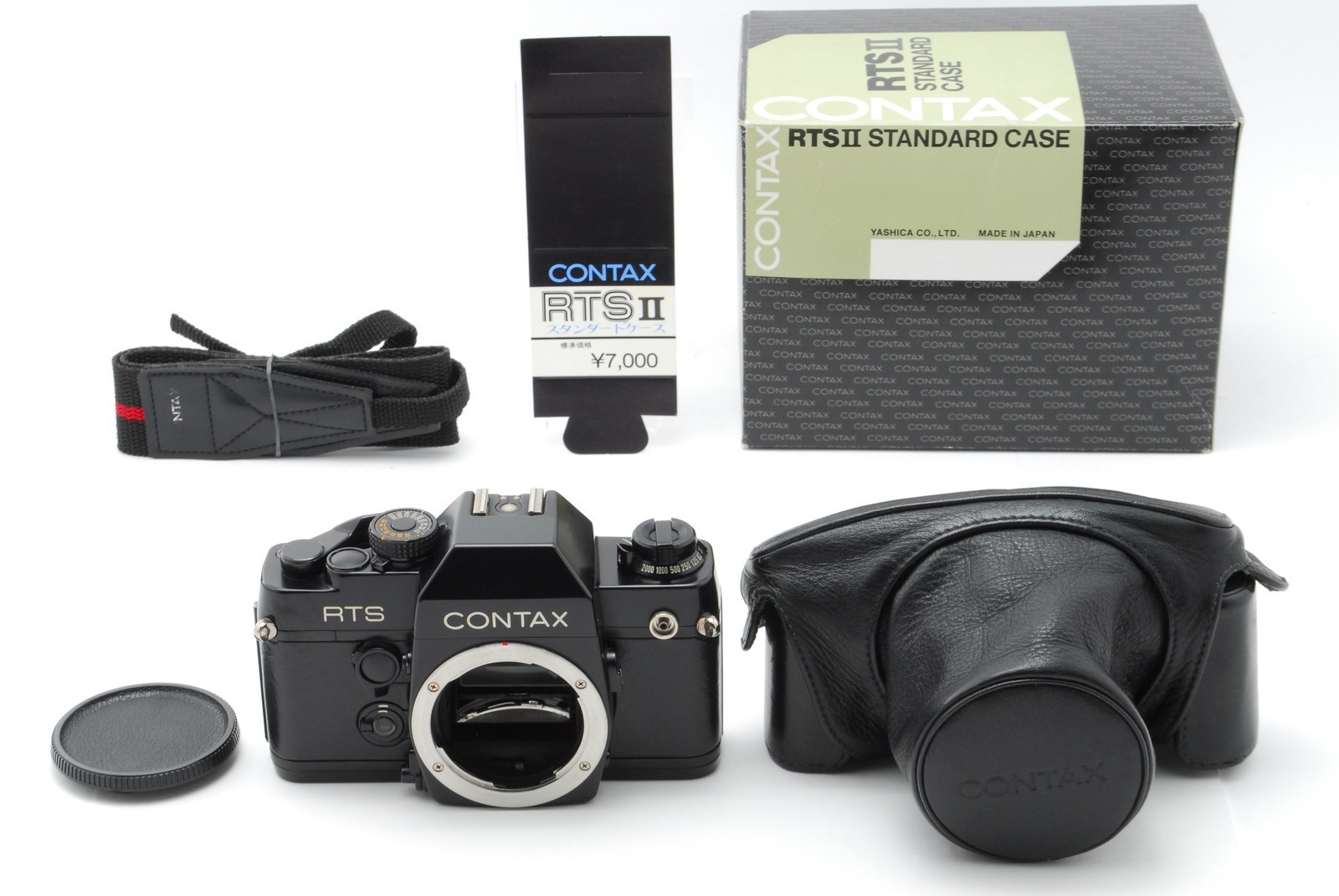


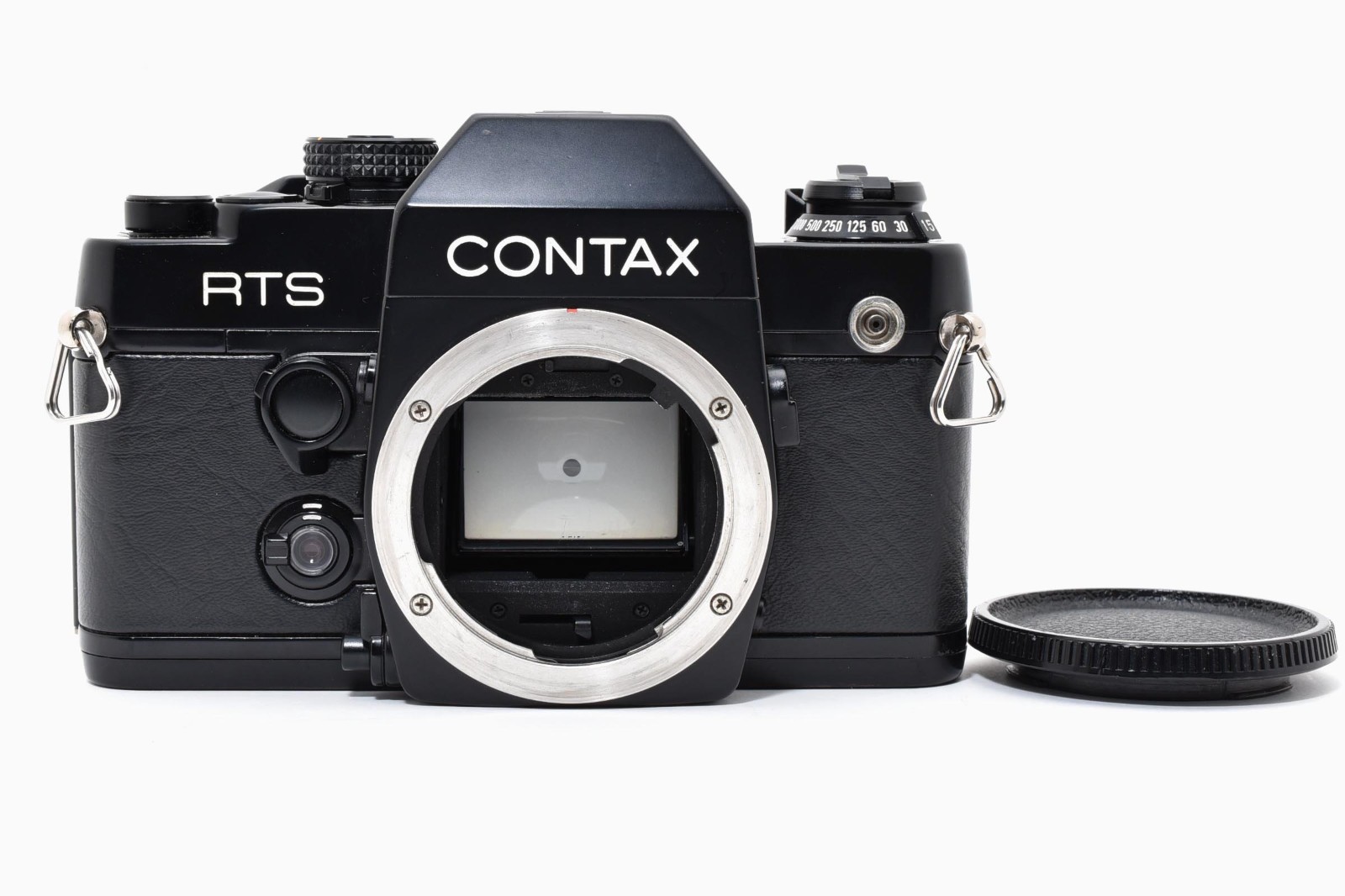
As an eBay Partner, we earn from qualifying purchases. This helps support our independent vintage technology research.
Related Models
- Contax 137 MA (1981-1984)
- Contax 137 MD (1980-1984)
- Contax 139 Quartz (1979-1985)
- Contax AX (1996-2005)
- Contax RTS (1975-1982)
- Alpa 6 (1948-1953)
- Agfa Agfaflex
- Agfa Ambiflex
- Agfa Easy
- Agfa Futura Af zoom