Canon Snappy S (1985)
A pocketable 35mm point-and-shoot that brought automatic exposure and motorized film advance to budget-conscious shooters—right out of the box, no settings to tweak.
Overview
The Canon Snappy S wasn’t built to impress technicians or win design awards. It was built to work—simply, reliably, and without fuss. Introduced in July of 1985, it landed during the early wave of fully automatic 35mm lens-shutter cameras aimed at casual photographers who wanted sharp snapshots without mastering aperture or shutter speed. As the third member of Canon’s Snappy line, the Snappy S carved its niche as a compact camera for budget-conscious users, offering a fixed-focus design and motorized film advance in a body small enough to slip into a jacket pocket. Owners report it delivered on that promise: point, press the shutter, and move on. There’s no manual override, no focus ring, no exposure compensation—just a straightforward act of capturing a moment. The camera’s simplicity extends to its operation: after loading film, the electromagnetic programmed shutter handles exposure automatically, and the motorized advance pulls the next frame into place with a soft whir. For many, that’s the appeal: a machine stripped down to its essential function.
Specifications
| Manufacturer | Canon |
| Product type | Fully automatic 35mm Lens-Shutter camera |
| Lens | 35mm f/4.5 lens |
| Lens construction | 3 elements in three groups |
| Shutter | auto, 1/40 to 1/250 speeds, electromagnetic programmed |
| Film format | 35 mm, 24 × 36 |
| Film advance | motorized film advance |
| Focus | fixed-focus |
| Flash | built-in flash |
| Minimum focus distance | Everything from 1.5 feet is in focus |
Key Features
35mm f/4.5 Lens with 3-Element Construction
The Snappy S relies on a modest 35mm f/4.5 lens, constructed from three elements in three groups—a simple optical formula typical of entry-level compact cameras of the era. While not designed for edge-to-edge sharpness or low-light performance, it delivers acceptable clarity across the frame under daylight conditions. The lens is fixed in place, non-interchangeable, and optimized for general snapshots. Its f/4.5 maximum aperture limits use in dim settings, but paired with ISO 100 or 400 film, it performs adequately in most outdoor and well-lit indoor environments.
Electromagnetic Programmed Shutter
Exposure is managed entirely by an electromagnetic programmed shutter, which automatically selects both aperture and shutter speed within a range of 1/40 to 1/250 second. There are no manual controls; the camera’s metering system evaluates the scene and sets exposure accordingly. This system prioritizes shutter speed to reduce blur from camera shake, a practical choice for a fixed-focus camera aimed at casual use. The electromagnetic mechanism ensures quiet, reliable operation, though it depends entirely on battery power—unlike mechanical shutters that can function without batteries at a base speed.
Motorized Film Advance
One of the Snappy S’s defining conveniences is its motorized film advance. After each exposure, the camera automatically winds the film to the next frame with a brief motorized hum. This eliminates the need for manual winding and allows for a faster shooting rhythm. However, this convenience comes with a trade-off: if the batteries fail or the motor develops issues—such as broken gears, as reported in some Snappy series models—the camera becomes unusable until repaired. The system is powered internally, though the exact battery type for the Snappy S model is not confirmed in available documentation.
Built-in Flash for Low-Light Use
The integrated flash unit provides fill light in dim environments or backlit scenes, expanding the camera’s usability beyond daylight. It automatically fires when needed, based on ambient light levels. However, owners of similar Snappy models report frequent failures: flash units have been found dangling from their mounts, plastic covers missing, or capacitors emitting loud pops during charging. These issues suggest the flash mechanism, while convenient, may be a long-term reliability weak point, especially in units that have sat unused for years.
Fixed-Focus System with 1.5-Foot Minimum Distance
Focus is preset to a hyperfocal distance, ensuring everything from 1.5 feet to infinity appears acceptably sharp when using the camera’s depth of field. This eliminates focusing errors and speeds up shooting, but it also means close-ups tighter than 1.5 feet are impossible. The fixed-focus design reflects the camera’s intent: quick snapshots of people, places, and events at typical social distances. There is no macro mode or focus override, reinforcing the “point and shoot” philosophy.
Historical Context
The Canon Snappy S arrived in July 1985 as part of a growing trend toward automation in consumer photography. It was among the earliest basic 35mm point-and-shoots, following models like the Konica C35 AF and preceding the flood of autofocus compacts that would dominate the late 1980s. Positioned as an affordable option, it offered automatic exposure and motorized film advance at a time when many budget cameras still required manual winding and manual exposure settings. As the third member of the Snappy line, it built on earlier models’ simplicity while refining the user experience with fully integrated automation.
Collectibility & Value
Originally priced at 23,000 Japanese Yen, the Snappy S was an accessible option in its time. In the US market, street prices were reportedly between $50 and $60—equivalent to $120–150 today. While not a premium product upon release, it has since become a sought-after piece for collectors interested in the evolution of point-and-shoot design. However, common issues affect its collectible condition: disintegration of the plastic grip on the right side, broken flash units, and potential motor gear failures that prevent film advance. These mechanical and material weaknesses mean fully functional, cosmetically clean examples are increasingly rare. No current market prices are documented, but operational units in good condition are likely to command a premium among niche collectors.
eBay Listings

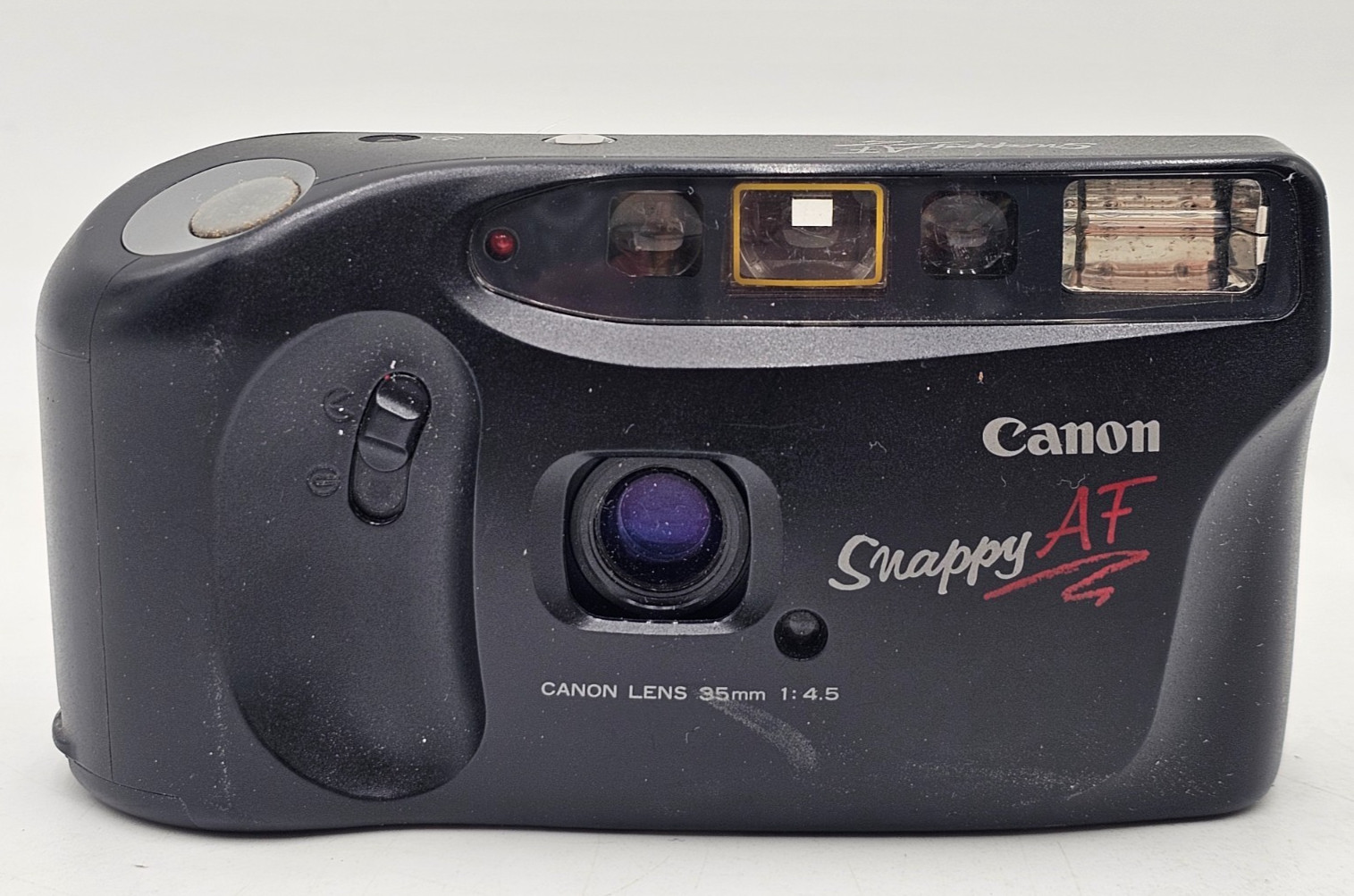

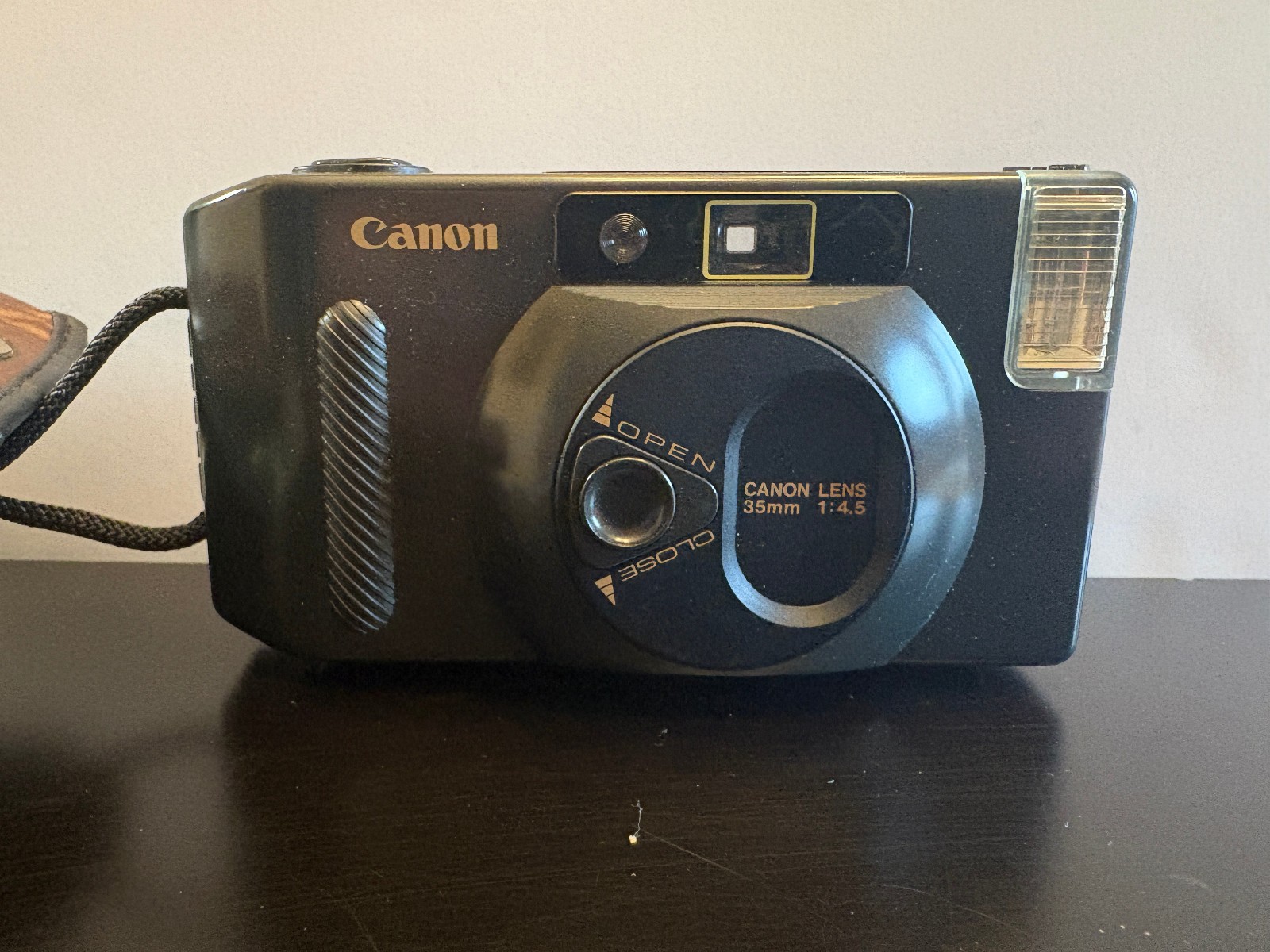
As an eBay Partner, we earn from qualifying purchases. This helps support our independent vintage technology research.