Canon RC-701 (1986)
At 900 grams, it sits in the hand like a prototype that never stopped being experimental—because it was.
Overview
The Canon RC-701 isn’t just a camera. It’s a declaration. Released in July 1986, it claimed the title of the world’s first commercially-marketed still video (SV) camera—a professional electronic SLR that bridged film and digital long before either term settled. Marketed as an SVF-SLR (Still Video-Floppy Single Lens Reflex), it carried the DNA of Canon’s 1984 D413 prototype, refined into a form that could be sold, not just demonstrated. This wasn’t consumer gear; it was aimed at press photographers and broadcast technicians who needed instant image playback in an era when “instant” meant analog video signals and magnetic floppy disks.
Despite its advanced role, the RC-701 leaned on familiar mechanics. It used a flip-up mirror system nearly identical to traditional film SLRs, giving users a true optical view through the lens—no LCDs, no electronic viewfinders, just glass and precision engineering. The body housed a 2/3” CCD sensor (8.8 x 6.6mm), a tiny chip by today’s standards but a milestone then, with a crop factor of approximately 3.93. It offered both color and monochrome versions, likely targeting different broadcast or surveillance applications where signal purity mattered more than hue.
Canon positioned the RC-701 as the vanguard of a new imaging category. At launch, it cost 390,000 yen—about $2,458 in 1986 dollars—a price that placed it firmly in professional hands. Its shutter could fire at 10 frames per second in high-speed shutter-priority mode, a feature clearly designed for action capture, though the analog storage medium limited how quickly those frames could be reviewed or transmitted. The camera featured interchangeable lenses, a rarity among early electronic still cameras, reinforcing its SLR identity.
Specifications
| Manufacturer | Canon |
| Product Name | Canon RC-701 |
| Product Type | still video (SV) camera |
| Release Year | 1986 |
| Sensor | 2/3” CCD (8.8 x 6.6mm, crop factor = 3.93) |
| Weight | 900 gr |
| Shutter Speed | 10 fps (frames per second) high-speed shutter-priority |
| Versions | Color and Monochrome version marketed |
| Original Price | $2,458 (1986 US dollars) |
Key Features
Flip-Up Mirror System
The RC-701 borrowed heavily from film SLR ergonomics, using a flip-up mirror to direct light from the lens to an optical viewfinder. This design choice gave photographers immediate visual feedback and accurate framing—critical for press work—while maintaining compatibility with existing lens thinking. Unlike later electronic viewfinders, the optical path remained unmediated by lag or resolution limits, making it feel familiar despite the radical backend.
Analog Electronic Storage
Images were recorded not as digital files but as analog video signals, stored on specialized magnetic floppy disks. This SV (Still Video) technology was the core innovation—and limitation—of the system. While it allowed near-instant playback on compatible monitors, the analog nature meant generational degradation with copying and no direct compatibility with digital workflows. The format was a transitional solution, born from video engineering rather than computing.
Interchangeable Lens Design
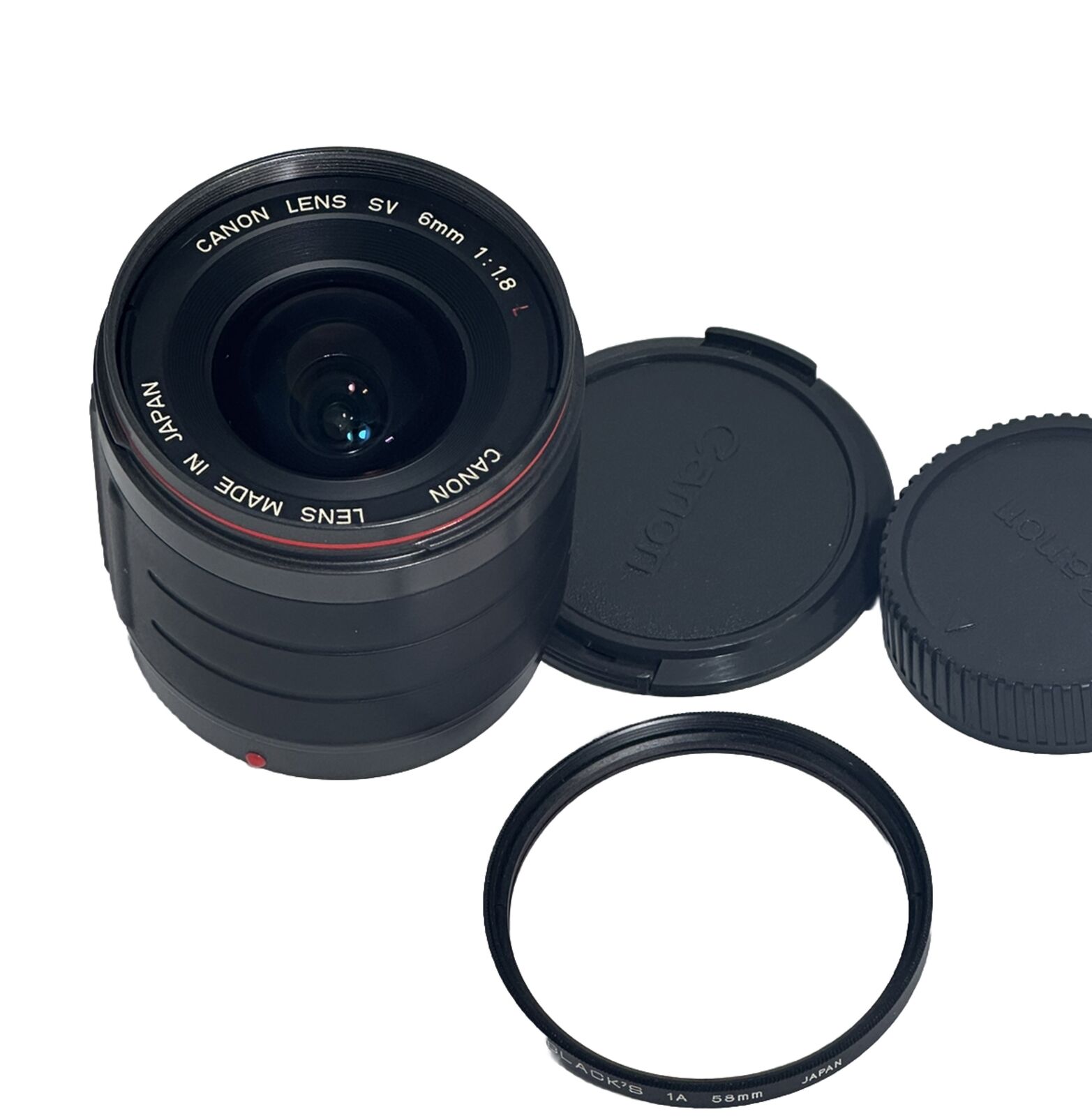
Few early electronic still cameras offered lens interchangeability, but the RC-701 did. This flexibility made it adaptable to different shooting scenarios, from tight studio work to field reporting. It signaled Canon’s intent to position the camera as a serious tool, not a novelty. The lens mount system, while not detailed in available documentation, supported at least two lenses in documented configurations, suggesting a nascent ecosystem.
High-Speed Shutter-Priority Mode
Capable of capturing 10 frames per second, the RC-701’s high-speed shutter-priority mode was unusually fast for its time. This feature likely targeted sports or news photographers who needed rapid burst capture, even if the storage medium couldn’t keep up indefinitely. The mechanical shutter worked in tandem with the electronic sensor readout, balancing speed with the constraints of analog signal processing.
Historical Context
The RC-701 emerged from a period of intense developmental activity in both movie video and still video cameras. Canon had been refining the concept since at least 1984, when the D413 prototype laid the groundwork. By 1986, the company beat competitors to market with a fully commercialized product, marking the first time analog electronic still cameras reached professional users. The RC-701 was soon followed by the RC-250, and it shared core architecture with the RC-760, which owners report functioned as essentially the same camera under a different name. Its arrival signaled the beginning of the end for purely chemical photography in fast-turnaround fields.
Collectibility & Value
Original pricing at $2,458 placed the RC-701 among the most expensive photographic tools of its day. Today, complete systems occasionally surface on the collector market. One unit sold on eBay for $1,009, while another auction listing at Bonhams included the body, two lenses, flash, batteries, storage disks, strap, and the original hardshell case—suggesting that full kits retain value when intact. Due to the lack of documented common failures or service manuals, maintenance remains a challenge. Spare parts are not reported in available documentation, and the analog storage media may degrade or become unreadable over time.
eBay Listings
As an eBay Partner, we earn from qualifying purchases. This helps support our independent vintage technology research.