Canon PowerShot V10
At 211 grams, it fits in a jeans pocket like a phone—but shoots 4K video with a one-inch sensor and a fixed 19mm f/2.8 lens built for vertical framing.
Overview
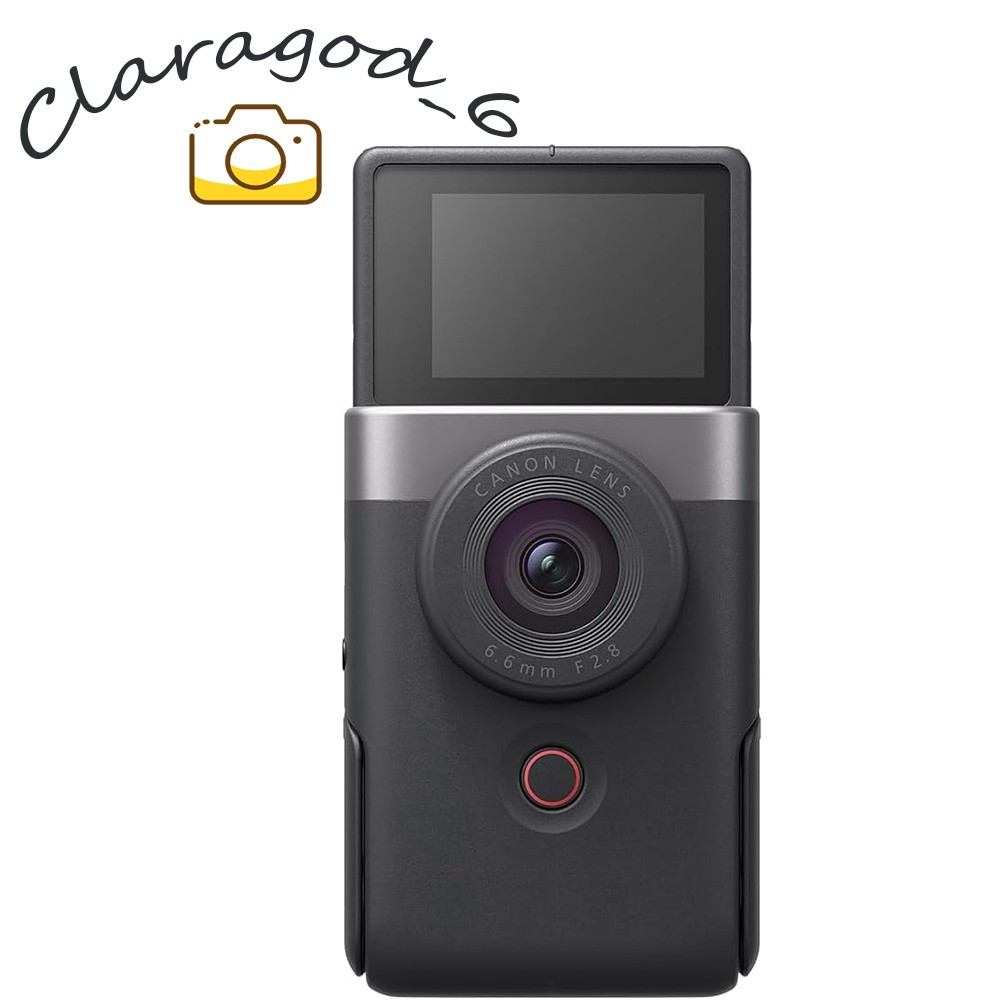
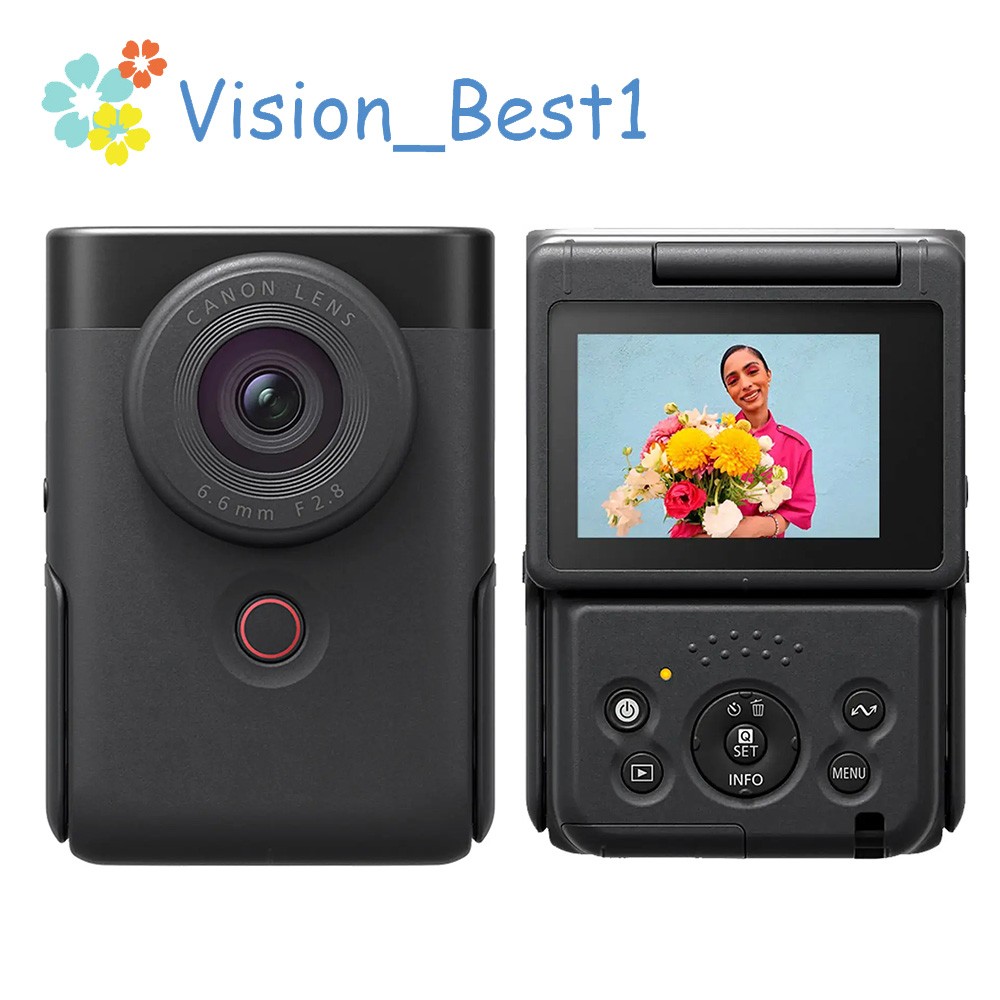
The Canon PowerShot V10 isn't chasing DSLR versatility or mirrorless complexity. It’s a single-minded tool: a compact, vertical-first camera engineered specifically for vloggers who want better image quality than a smartphone but without the bulk of traditional gear. Announced in May 2023, it slots into the PowerShot lineup as Canon’s answer to the rise of mobile-first content creation, where framing, ease of use, and portability outweigh manual control depth. The design reflects this—its 63.4 x 90.0 x 34.3 mm body is contoured for one-handed grip in portrait orientation, and the flip-up 2.0-inch touchscreen (approx. 460,000 dots) faces forward for self-monitoring. It’s not a hybrid; it’s a purpose-built pocket video camera that leans into its limits.
Under the hood, it packs a 1.0-type CMOS sensor (13.2mm x 8.8mm), often referred to as a "large one-inch sensor" in reviews, which gives it a notable edge in dynamic range and low-light performance over smaller-sensor rivals. Paired with the DIGIC X processor, it captures 4K UHD video at 30fps and Full HD at 60fps in MP4 format, with a contrast-detect autofocus system handling subject tracking. Stills come in at approximately 15.2 megapixels in JPEG, suitable for social sharing but not large prints. The lens is fixed at a 19mm equivalent (35mm) with an f/2.8 aperture—deliberately wide-angle to fit more into the frame during self-recording, and wide enough to perform decently in dim environments. The angle of view reaches 100.2° during still shooting and 97.5° during Full HD video, reinforcing its vlog-centric field of capture.
While it supports manual ISO control in video (125–12800 range), shutter speed is limited to 1/4000 to 1/8 sec during movie recording, and the sensor uses a rolling shutter—common in CMOS sensors of this class, but one that can introduce skew during fast motion. Owners report the Combined IS (Image Stabilization) helps smooth handheld footage, though it’s not a substitute for a gimbal in high-motion scenarios. The Auto Movie mode simplifies operation for beginners, while features like smooth skin tone and 14 color filters cater to creators prioritizing flattering, on-brand aesthetics over raw neutrality.
Specifications
| Manufacturer | Canon |
| Model | PowerShot V10 |
| Type | Vlog Camera |
| Sensor | 1.0-type CMOS sensor (13.2mm x 8.8mm) |
| Processor | DIGIC X |
| Video | 4K UHD at 30fps, Full HD at 60fps |
| Photo | Approximately 15.2 megapixels |
| Video format | MP4 |
| Photo format | JPEG |
| Lens | Fixed focal length, 19mm (35mm equivalent), f/2.8 aperture |
| Angle of View | 97.5° (During Full HD, 16:9 Movie recording) 100.2° (During Still photo shooting) |
| Screen | 2.0-inch flip-up touchscreen LCD (approx. 460,000 dots) |
| Microphone | Stereo microphone |
| Connectivity | USB Type-C (USB 3.2 Gen 1) for charging, data transfer, and webcam use; Micro-HDMI output |
| Features | Built-in retractable stand, Combined IS (Image Stabilization), Auto Movie mode, smooth skin tone, 14 color filters |
| Dimensions (W x H x D) | Approx. 63.4 x 90.0 x 34.3 mm |
| Weight | Approx. 211g (including battery and memory card) |
| Battery | NB-13L rechargeable lithium-ion |
| Storage | SD, SDHC, SDXC memory card (UHS-I compatible) |
| ISO Auto range (Still) | Auto (ISO 125–12800) (in 1/3-stop increments) |
| ISO Speed (Movie) | Manual or Automatic ISO Speed Settings |
| Shutter Speed (Movies) | 1/4000 to 1/8 sec. (in 1/3-stop increments) |
| Shutter Type | Rolling shutter |
| Autofocus system | Contrast-Detect AF system |
Key Features
1.0-type CMOS Sensor with DIGIC X Processing
The 1.0-type CMOS sensor is the heart of the PowerShot V10’s appeal. At 13.2mm x 8.8mm, it’s significantly larger than the sensors in most smartphones and compact action cameras, allowing for better light gathering and shallower depth of field in context. Paired with Canon’s DIGIC X processor—shared with higher-end EOS models—it enables clean 4K video output and responsive operation. The combination delivers color science that leans warm and natural, with skin tones rendered softly thanks to the dedicated smoothing mode. While not a cinema-grade sensor, it strikes a balance between quality and efficiency that makes it viable for daily vlogging under mixed lighting.
Fixed 19mm f/2.8 Ultra-Wide Lens
The lens is non-interchangeable and fixed at 19mm (35mm equivalent), a deliberate choice for self-framing. At f/2.8, it’s not the fastest lens available, but it’s sufficient for indoor or shaded outdoor use. The wide angle ensures the creator remains centered even when holding the camera at arm’s length, and the 100.2° diagonal field of view during stills captures a generous scene. Reviews note it performs well for its class, though corner sharpness can soften slightly when shooting at close range. There’s no optical zoom—just digital—so composition relies on positioning, not focal flexibility.
Vertical-First Ergonomic Design
From the grip to the flip-up screen, every element of the PowerShot V10 assumes vertical use. The 63.4 mm width fits comfortably in one hand when held upright, and the 90.0 mm height aligns with smartphone proportions. The built-in retractable stand is a clever touch—owners report it works reliably on flat surfaces for hands-free recording, though it’s not adjustable for angle. The body lacks physical dials or extensive buttons, favoring touchscreen control, which keeps the interface simple but limits tactile feedback during filming.
Combined IS for Handheld Stability
Canon’s Combined IS uses both optical and digital methods to reduce shake during movement. In practice, it smooths out walking shots and minor hand tremors, though it can’t eliminate motion blur in fast pans or low light. The stabilization is most effective in Full HD mode, where the sensor has more room to crop and compensate. In 4K, the benefit is noticeable but less pronounced. It’s a pragmatic solution for casual vloggers, not a replacement for external stabilization.
Auto Movie Mode and Creator-Centric Filters
Auto Movie mode simplifies operation: power on, press record, and the camera handles exposure, focus, and white balance. It’s ideal for quick takes or users unfamiliar with manual settings. Complementing this are 14 color filters and a dedicated smooth skin tone mode—features aimed squarely at social media aesthetics. While purists may dismiss them as gimmicky, creators aiming for consistent branding find them useful for maintaining a recognizable visual tone across content.
Historical Context
The PowerShot V10 emerged in May 2023 as part of Canon’s strategy to reclaim relevance in the personal content creation space, where smartphones dominate. Positioned within the long-running PowerShot series, it diverges from traditional point-and-shoots by embracing vertical video as a primary format. It’s described in official materials and reviews as a camera “built for the job” of vlogging, acknowledging that dedicated tools still have a place even in a phone-saturated market. Unlike earlier PowerShot models that mimicked DSLR form factors, the V10’s design language is entirely modern, compact, and mobile-native.
eBay Listings


As an eBay Partner, we earn from qualifying purchases. This helps support our independent vintage technology research.