Canon PowerShot SX400 IS (2014)
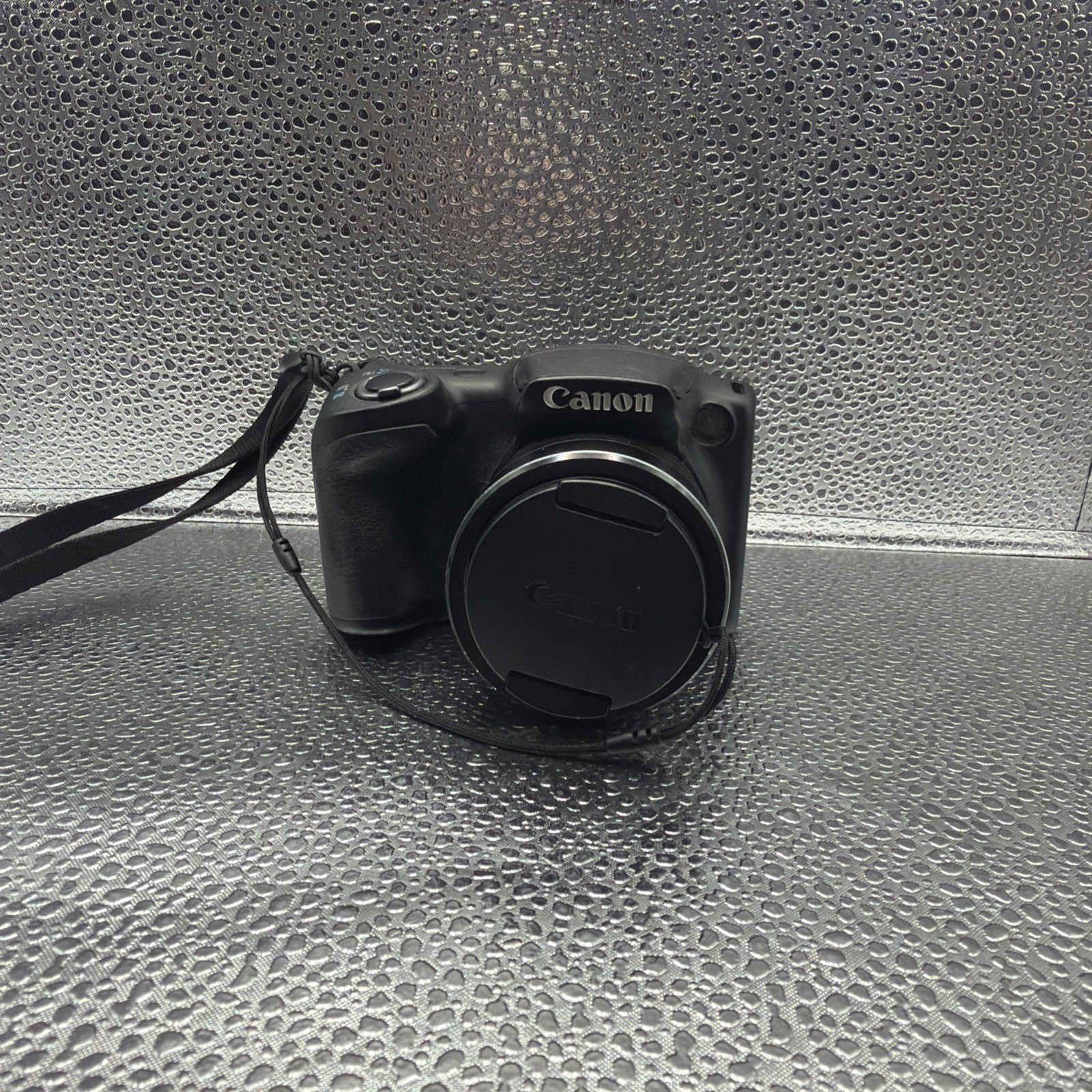
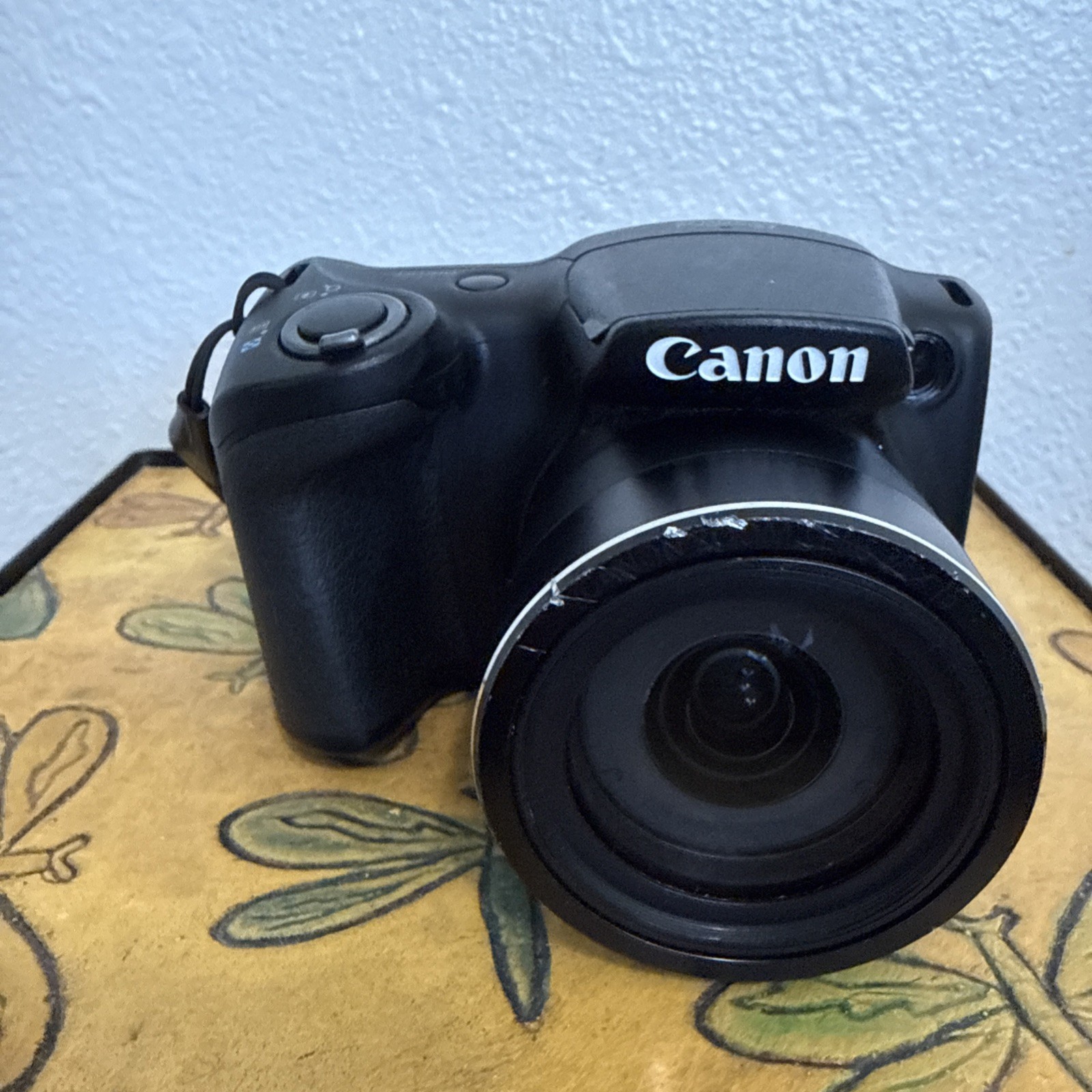
At 313 grams, it sits in the hand like a promise: 1008mm of optical reach, pocketable.
Overview
The Canon PowerShot SX400 IS isn't chasing accolades for image refinement or tactile elegance. It's a compact super-zoom camera built for one job: getting you closer, optically, without breaking the bank. Launched in July 2014, it arrived as an inexpensive option in Canon’s sprawling PowerShot lineup, targeting users who prioritized reach and simplicity over raw image quality or manual control depth. At its core is a 1/2.3-inch CCD sensor with approximately 16.0 megapixels, a technology choice that by 2014 already signaled budget constraints—CCD lagged behind CMOS in low-light performance and power efficiency, but retained a niche in predictable color and lower noise at base ISO. Paired with the DIGIC 4+ image processor, the system delivers functional, if unremarkable, JPEG output straight out of the camera.
Where the SX400 IS commands attention is in its lens: a 30x optical zoom spanning 24mm wide-angle to a staggering 1008mm telephoto in 35mm equivalent terms. That reach is mechanical, not digital trickery, achieved through a 12-element, 10-group design featuring a double-sided aspherical lens to help manage aberrations across the zoom range. The maximum aperture starts at a modest f/3.4 at wide-angle but narrows to f/5.8 at full telephoto, a common compromise in superzooms that demands steady hands or stabilization in lower light. To that end, Canon equipped it with a lens-shift type image stabilizer—critical when operating at the extreme end of the zoom range, where even breath can blur the frame.
The 3.0-inch TFT color LCD, with approximately 230,000 dots of resolution, feels dated even by 2014 standards, but it covers approximately 100% of the frame and serves as the primary interface. There’s no electronic viewfinder, but an optical real-image zoom viewfinder is tucked into the top plate—a rarity in this class, offering a battery-free framing option, albeit with limited magnification and no exposure preview. Autofocus relies on a TTL system with Face AiAF, Tracking AF, and center-point selection, functional for static subjects but unlikely to keep pace with fast motion. Continuous shooting clocks in at approximately 0.8 frames per second until the memory card fills, or a burst mode of approximately 2.2 shots per second for about six frames at a reduced 2.2MP resolution.
Specifications
| Manufacturer | Canon |
| Product type | Digital camera |
| Image Sensor Type | 1/2.3-inch CCD |
| Effective Pixels | Approx. 16.0M |
| Lens Focal Length | 4.3 (W) – 180.6 (T) mm (35mm film equivalent: 24 (W) – 1008 (T) mm) |
| Maximum F-stop | f/3.4 (W) – f/5.8 (T) |
| Lens Construction | 12 elements in 10 groups (1 double-sided aspherical lens) |
| Optical Zoom | 30x |
| Image Stabilizer Type | Lens-shift type |
| Auto Focus Type | TTL |
| AF System/Points | Face AiAF, Tracking AF, Center |
| Focusing Range (Normal) | 5 cm – infinity (W), 2.0 m – infinity (T) |
| Focusing Range (Macro) | 0 – 50 cm (W) |
| Viewfinder Type | Optical Real-image zoom viewfinder |
| LCD Monitor Type | TFT colour |
| LCD Monitor Coverage | Approx. 100% |
| LCD Monitor Size | 3.0-inch |
| LCD Monitor Pixels | Approx. 230,000 dots |
| Shutter Speed | 1 – 1/1600 sec. |
| Slow Shutter Speed | Yes (max. 15 sec.) |
| ISO Speed | AUTO, 100, 200, 400, 800, 1600 |
| Metering Modes | Evaluative, Centre-weighted average, Spot |
| Exposure Compensation | +/- 2 EV in 1/3 stop increments |
| Shooting Modes | M, Av, Tv, P, Auto, Hybrid Auto, Creative Shot, Portrait, Smooth Skin, Smart Shutter (Smile, Wink Self-timer, Face Self-timer), High-speed Burst (2.2 MP), Handheld Night Scene, Low Light (2.2 MP), Fish-eye Effect, Miniature Effect, Toy Camera Effect, Monochrome, Super Vivid, Poster Effect, Snow, Fireworks, Long Shutter (Canon Europe specifications page) |
| Continuous Shooting | Approx. 0.8 shots/sec. (until memory card becomes full) |
| High-speed Burst HQ | Approx. 2.2 shots/sec. (for approx. 6 shots) |
| Flash Range | 50 cm – 4.0 m (W), 2.0 m – 2.0 m (T) |
| Flash Recycling Time | Approx. 10 sec. |
| Recording Media | SD, SDHC, SDXC memory card |
| Still Image File Format | JPEG (Exif 2.3) |
| Movie File Format | MOV (Image data: H.264; Audio data: Linear PCM (monaural)) |
| Movies | Full HD: 1920 x 1080, 25 fps; HD: 1280 x 720, 30 fps; Miniature Effect: 1280 x 720, 6 fps, 3 fps, 1.5 fps; iFrame Movie: 1280 x 720, 25 fps |
| Other Features | Red-eye Correction, My Colors, Histogram, Playback Zoom (Approx. 2x – 10x) |
| Interface | Hi-Speed USB (MTP, PTP) dedicated connector, HDMI output (HDMI Mini Connector), A/V output (PAL/NTSC) |
| Power Source | Battery Pack NB-11LH, AC Adapter Kit ACK-DC90 |
| Dimensions (W x H x D) | 104.0 x 69.1 x 80.1 mm |
| Weight | Approx. 313 g (including battery and memory card), Approx. 290 g (camera body only) |
| Image Processor | DIGIC 4+ |
| Original MSRP | $249.99 |
Key Features
30x Optical Zoom with 1008mm Telephoto Reach
The defining trait of the PowerShot SX400 IS is its 30x optical zoom lens, which mechanically extends from 24mm wide-angle to an extreme 1008mm telephoto in 35mm equivalent terms. This range allows users to capture distant subjects—wildlife, sports, architecture—from a practical distance without digital cropping. The lens construction includes 12 elements in 10 groups, with one double-sided aspherical lens element to help control distortion and spherical aberration, particularly at wide angles. While the variable aperture (f/3.4–f/5.8) limits low-light performance at full zoom, the optical reach remains a compelling feature for casual photographers who value versatility over speed.
Lens-shift Image Stabilization
Given the extreme magnification, even minor hand movement can result in blurred images. Canon addressed this with a lens-shift type image stabilizer, which physically moves lens elements to counteract camera shake. This system is effective across the entire zoom range and operates silently, making it suitable for both stills and video. Owners report noticeable improvement when shooting handheld at telephoto distances, though stabilization cannot compensate for subject motion or extremely slow shutter speeds in dim conditions.
3.0-inch TFT LCD with 100% Coverage
The rear 3.0-inch TFT color LCD offers approximately 100% frame coverage, meaning what is seen on screen matches the final image boundaries. While the resolution—approximately 230,000 dots—is low compared to contemporary smartphones or higher-end cameras, it provides a functional interface for composition and playback. The screen lacks touch capability and does not articulate, limiting use in high- or low-angle shooting. Still, its inclusion of full coverage was a small but meaningful detail in a budget-oriented model.
DIGIC 4+ Image Processor
Powering the SX400 IS is Canon’s DIGIC 4+ image processor, an evolution of the older DIGIC 4 platform. It enables features like Hybrid Auto, which captures a 4-second video clip before each still shot, and Creative Shot, which automatically applies filters and compositions to a single image. The processor also handles in-camera editing functions such as red-eye correction and My Colors presets (Vivid, Sepia, Black & White, etc.). While not fast by modern standards, it provides adequate performance for basic operations and Full HD video recording at 25 fps.
Handheld Night Scene and Digital Filter Modes
One of the more practical shooting modes is Handheld Night Scene, which captures a burst of images at faster shutter speeds and combines them in-camera to reduce blur while brightening the overall exposure. This allows for usable night shots without a tripod. Complementing this are a suite of digital filter effects—Miniature, Fish-eye, Toy Camera, Poster Effect—applied in real-time to the LCD and saved directly to the memory card. These modes cater to casual users looking for creative effects without post-processing.
Historical Context
The PowerShot SX400 IS launched in July 2014 as an affordable compact super-zoom camera, positioned for consumers who wanted maximum reach in a portable form. At a time when smartphones were rapidly eroding the lower end of the digital camera market, Canon and other manufacturers doubled down on optical zoom as a key differentiator. The SX400 IS offered a no-frills experience focused on accessibility and reach, avoiding the complexity of DSLRs or mirrorless systems. It entered a market where dedicated cameras were increasingly niche, relying on features impossible for phones to replicate—like 1000mm-equivalent optics.
Collectibility & Value
There is no notable collectibility for the Canon PowerShot SX400 IS. It was never positioned as a premium or limited-edition model, and its technology was mainstream at launch. Current market listings show used units selling for around $69.00, with untested models offered for $50.00 or best offer. Common issues reported include memory card errors, color rendering problems, and instances of the camera producing "weird photos"—symptoms often linked to aging CCD sensors or firmware glitches. The user manual includes a troubleshooting section, suggesting these issues were frequent enough to warrant official guidance. Repairs are typically limited to basic diagnostics or component replacement, with no significant service ecosystem supporting long-term maintenance.
eBay Listings


As an eBay Partner, we earn from qualifying purchases. This helps support our independent vintage technology research.