Balda 120 (1950–1951)
A short-lived folding camera that needs a manual step for nearly everything
Overview
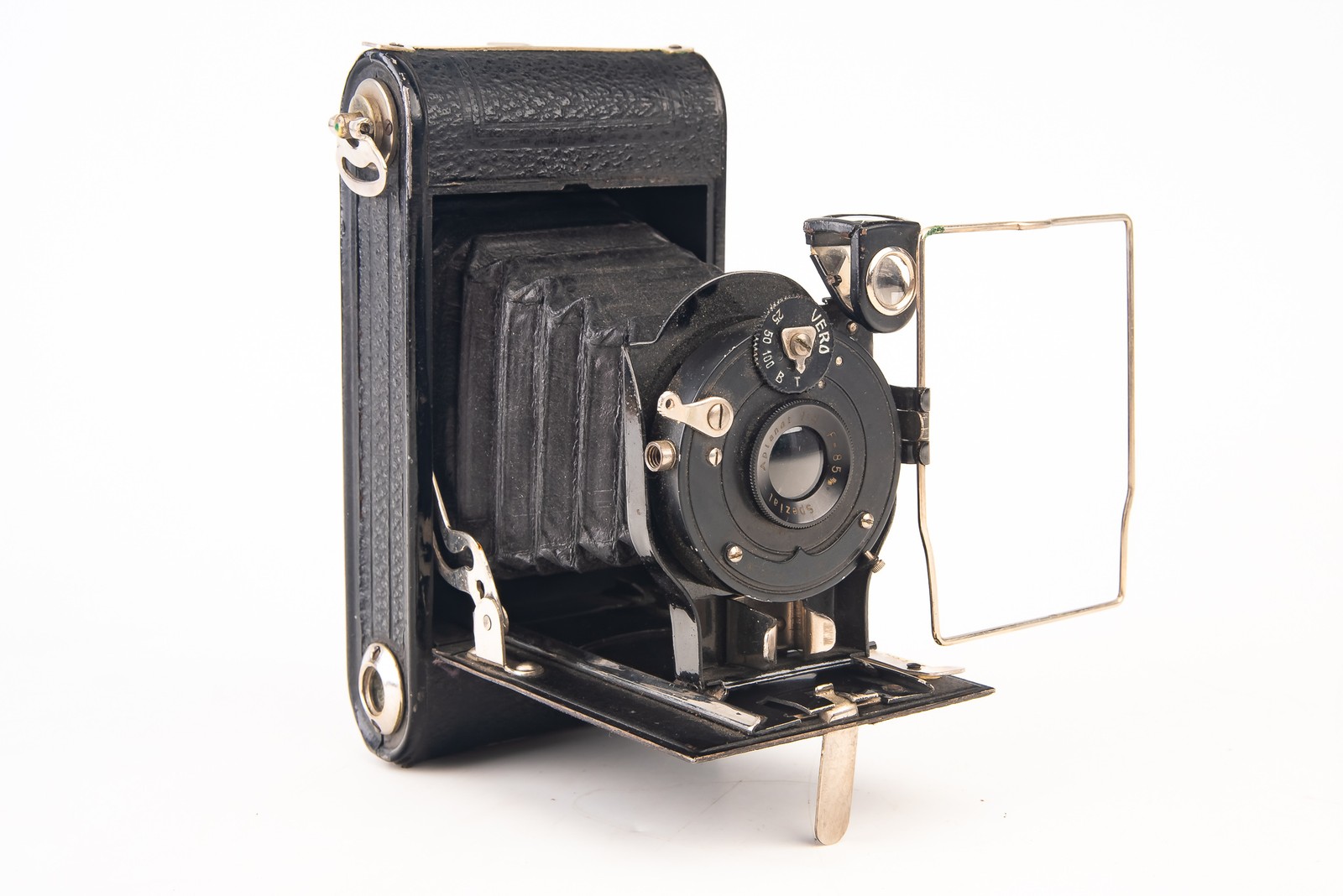
The Balda 120 is a folding camera, produced only in 1950 and 1951 according to available documentation. Owners report a hands-on camera with a lot of mechanical precision and a certain stubbornness. It is not a point-and-shoot. It runs on 120 roll film and gives 4.5x6cm negatives, a balance between image size and frame count on a standard roll. The design follows the classic medium format folder layout. No detailed technical drawings or construction notes have surfaced in the available records.
The operational rhythm is what users notice most. The shutter is a combination mechanical type, and it must be manually cocked before each exposure. That slows things down and demands focus. Some describe the experience as "fiddly," a word collectors use for both criticism and affection. Film winding takes adjustment too. It doesn't glide smoothly like later models. It needs a deliberate turn and careful alignment to avoid overlapping frames or misregistration.
While specific standard lens configurations aren't documented in official sources, examples listed in the secondary market have appeared with notable optics, including the Steinheil Cassar 2.9/7.5cm and the Zeiss Jena Tessar 3.5/7cm. These suggest that at least some units were equipped with high-quality glass, though whether these were factory defaults or user upgrades remains unclear. The absence of confirmed dimensions, weight, or shutter speed range in authoritative sources leaves gaps in the full technical profile, but the core identity is clear: a brief-lived, hand-wound, manually cocked folder for 120 film, built during a narrow window at the start of the 1950s.
Specifications
| Manufacturer | Balda |
| Model | Balda 120 |
| Production years | 1950–1951 |
| Film format | 120 roll film |
| Image format | 4.5x6cm |
| Shutter | Combination mechanical shutter |
| Operation | Requires manual shutter cocking |
eBay Listings



As an eBay Partner, we earn from qualifying purchases. This helps support our independent vintage technology research.