Arriflex 16ST (1952)
At 260mm long, it’s compact by 1950s standards—but what it packed into that space changed 16mm filmmaking forever.
Overview
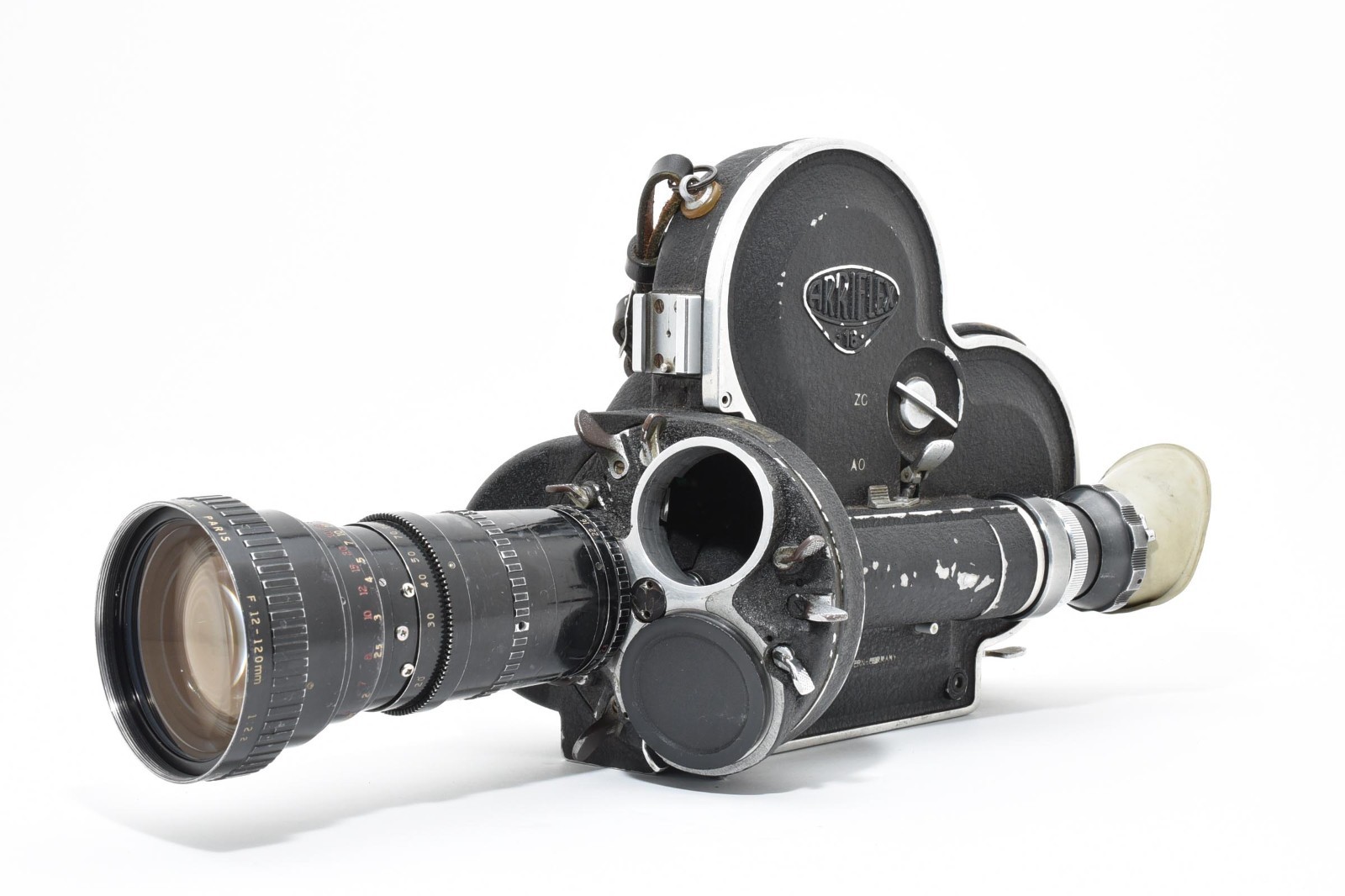
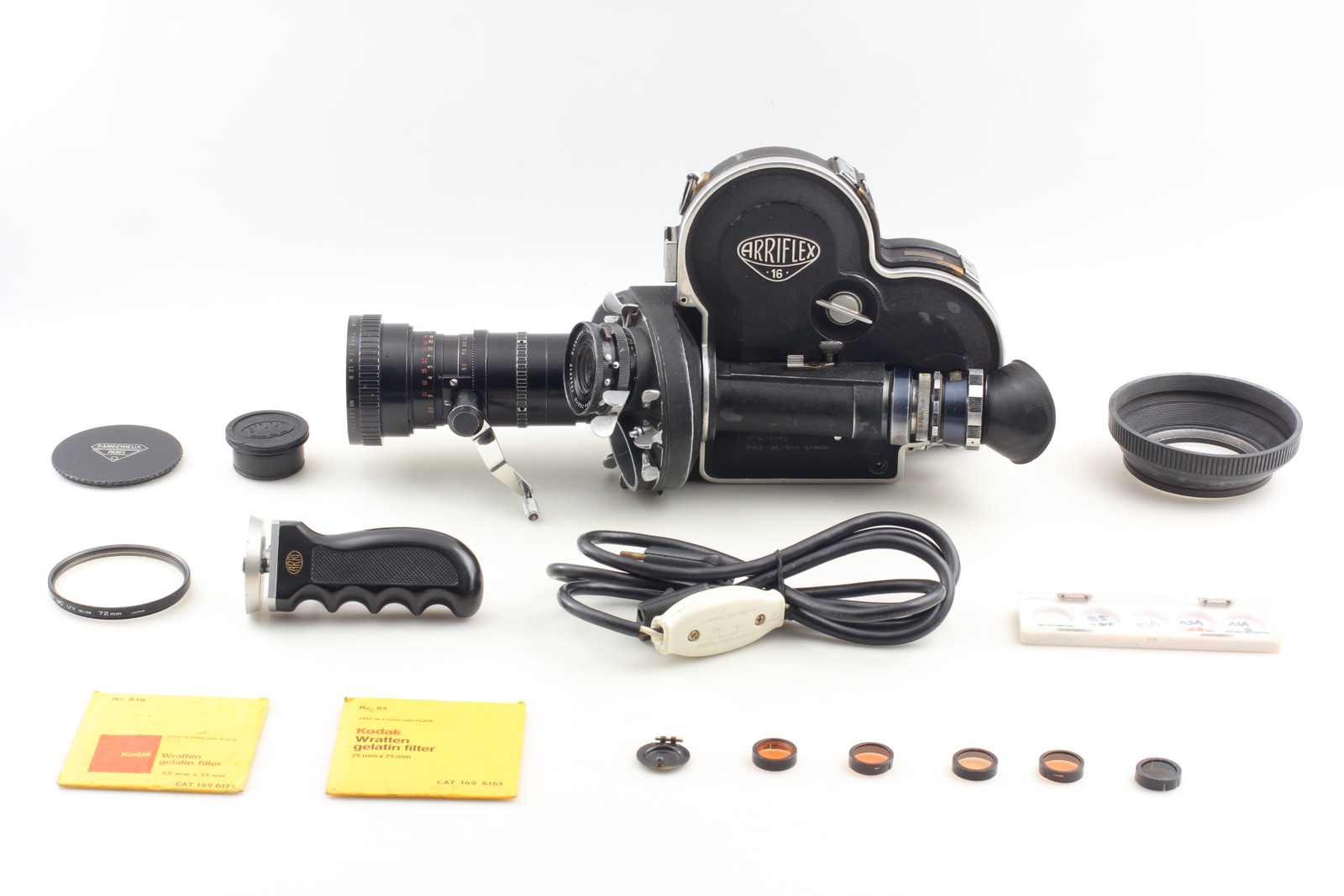
The Arriflex 16ST, also known as the Arriflex 16S, was a professional 16mm MOS production motion picture camera introduced in 1952 by ARRI (Arnold and Richter). It wasn’t just another step in the evolution of portable film gear—it was a leap. For the first time in the professional 16mm world, cinematographers could compose and focus through a reflex viewing system, seeing exactly what the lens saw, thanks to a spinning mirror shutter. That innovation alone redefined on-the-fly precision in documentary, news, and indie production. Prior to this, most 16mm cameras relied on separate viewfinders, introducing parallax errors and guesswork. The 16ST eliminated that. Built with a single shaft movement and a robust internal layout, it carried over engineering principles from the larger Arriflex 35 II, adapting the reflex mirror concept into a smaller, more agile form. Owners report it felt solid in the field, engineered for reliability under pressure—something that would become a hallmark of ARRI’s reputation.
Specifications
| Manufacturer | ARRI (Arnold and Richter) |
| Product type | 16mm professional motion picture camera |
| Film format | 16mm |
| Voltage | 8.4 volts DC |
| Film capacity | Capable of loading 100ft internal daylight spools or 400ft magazines |
| Mount | 3-lens turret with ARRI standard mounts |
| Viewing system | Reflex viewing system |
| Item Length | 260mm |
Key Features
Spinning Mirror Shutter with Reflex Viewing
The defining feature of the Arriflex 16ST was its reflex mirror shutter—a spinning mirror placed at a 45-degree angle behind the lens mount that allowed light to reach both the film and the viewfinder during exposure. This meant the operator saw a near-real-time image through the same optical path as the lens, eliminating parallax and enabling accurate focus, especially critical when shooting handheld or in tight spaces. It was the first professional 16mm camera to offer this, a breakthrough that made it a favorite among documentary crews who needed precision without setup time.
Single Shaft Movement and Pull-Down Claw
Mechanically, the 16ST used a single shaft movement system, where one rotating shaft synchronized the shutter, film transport, and registration pin. This design reduced complexity and improved timing accuracy. The pull-down claw engaged directly with the film perforations, advancing each frame with precision. This system, inherited from ARRI’s 35mm designs, contributed to the camera’s reputation for reliability in rugged conditions.
ARRI Standard Mount Turret
Equipped with a three-lens turret using ARRI standard mounts, the 16ST allowed quick lens changes in the field. The turret rotated smoothly, letting operators switch between focal lengths without removing lenses or breaking stride during a shoot. This flexibility was essential for news and documentary work, where lighting and framing changed rapidly.
Integrated Lubrication System
Inside the camera’s metal housing, fibre gears drove various mechanisms, and to keep them running smoothly, ARRI included an oiling well with tubes feeding lubricant to critical bearings. This thoughtful detail extended service life and reduced wear—especially important in an era when field repairs were common and spare parts scarce.
Historical Context
When the Arriflex 16ST launched in 1952, television news and documentary production were shifting toward 16mm film for its balance of portability and image quality. The 16ST arrived at the perfect moment, offering a level of optical accuracy previously unavailable in its format. By enabling true through-the-lens viewing, it gave cinematographers control that had been reserved for larger 35mm setups. Its design philosophy—robust, precise, and operator-focused—set a template for decades of ARRI engineering to come.
Collectibility & Value
The Arriflex 16ST is described in listings as a "希少品" (rare item), and surviving examples often surface as “barn finds” requiring full refurbishment. Common issues include seized mechanisms, rust, and oxidized components, especially in cameras stored long-term without maintenance. While no original pricing or current market values are documented, the need for professional servicing before operation is well understood among collectors. Its status as a pioneering reflex 16mm camera ensures strong interest, but functionality remains a major determinant of value.
eBay Listings


As an eBay Partner, we earn from qualifying purchases. This helps support our independent vintage technology research.