Yamaha TC-320B: A Refined Cassette Deck from Yamaha’s Analog Heyday
In the late 1970s and early 1980s, cassette decks evolved from simple portable recorders into serious high-fidelity audio components. Yamaha, already renowned for its musical instruments and growing reputation in home audio, entered this competitive field with a series of well-engineered tape decks. Among them, the Yamaha TC-320B stands out as a thoughtful, mid-tier cassette deck that balanced performance, reliability, and value—making it a favorite among audiophiles and casual listeners alike during its time.
Though not as widely celebrated as some of Yamaha’s higher-end models like the TC-855 or TC-860, the TC-320B carved out a niche as a dependable, sonically pleasing deck ideal for home stereo systems and music enthusiasts who appreciated clean tape playback and solid mechanical design. Released in 1979, the TC-320B arrived during a golden period for analog audio, when cassette technology was rapidly improving thanks to advancements in tape formulation, head design, and electronic circuitry.
Technical Specifications
The TC-320B was engineered with Yamaha’s signature attention to detail, featuring a dual-capstan transport system, three-head configuration, and support for multiple tape types. While it didn’t reach the level of fully professional decks, it offered many features typically found in higher-end consumer models.
| Specification | Detail |
| Model | Yamaha TC-320B |
| Year of Release | 1979 |
| Type | 3-Head Stereo Cassette Deck |
| Tape Speed | 1⅞ ips (4.76 cm/s) |
| Head Configuration | Playback, Record, Erase (separate heads) |
| Transport System | Dual Capstan with Rubber Pinch Roller |
| Motor Type | Direct Drive (DD) for capstan |
| Tape Compatibility | Type I (Normal), Type II (Chrome), Type IV (Metal) |
| Bias & EQ Settings | Manual switch for Normal, Chrome, Metal |
| Frequency Response | 40Hz – 14kHz (Normal), up to 18kHz (Metal) |
| Signal-to-Noise Ratio | 56dB (Dolby B), 68dB (Dolby C) |
| Wow and Flutter | < 0.075% (WRMS) |
| Output Level | 120mV (1kHz, 0dB) |
| Input Level | 100mV (for recording) |
| Headroom | +3dB |
| Dimensions (W×H×D) | 435 × 146 × 320 mm (17.1 × 5.7 × 12.6 in) |
| Weight | 8.5 kg (18.7 lbs) |
| Power Supply | 120V AC, 60Hz (North American version) |
| Features | Dolby B & C NR, Level Meters, Auto Reverse (in some variants) |
Note: Some regional variants (e.g., European models) may differ slightly in voltage and labeling.
Sound Characteristics and Performance
The Yamaha TC-320B delivers a warm, smooth, and balanced sound signature—typical of Yamaha’s analog-era audio philosophy. Its three-head design allows for independent optimization of record and playback functions, resulting in accurate monitoring during recording sessions. The separate erase head ensures minimal crosstalk and clean signal capture.
With support for Type I (ferric), Type II (chrome), and Type IV (metal) tapes, the TC-320B could adapt to the evolving tape market of the early 1980s. By manually selecting the correct bias and equalization (via front-panel switches), users could maximize fidelity and dynamic range across different tape formulations.
Dolby B and Dolby C noise reduction systems helped reduce tape hiss, especially noticeable on chrome and metal tapes. Dolby C, in particular, offered improved high-frequency noise reduction over Dolby B, making it a valuable inclusion for serious listeners. When paired with a high-quality preamp or receiver, the TC-320B could extract impressive detail from well-recorded tapes.
The dual-capstan transport system—featuring a direct-drive motor—ensured stable tape speed and minimized speed fluctuations. This contributed to low wow and flutter, enhancing pitch stability and overall clarity. The result was a deck that could deliver near-reel-to-reel levels of consistency in a compact cassette format.
Notable Features and Innovations
While the TC-320B wasn’t a flagship model, it incorporated several thoughtful design elements:
- Three-Head Configuration: Enabled real-time monitoring during recording, a feature usually reserved for higher-end decks.
- Manual Tape Type Selection: Gave users control over bias and EQ settings for optimal performance with different tapes.
- Dolby B and C Compatibility: Offered two levels of noise reduction, increasing flexibility and fidelity.
- Large VU Meters: Provided clear visual feedback on recording levels, helping prevent distortion.
- Direct-Drive Capstan: Reduced mechanical wear and improved speed accuracy over belt-driven systems.
- Solid Chassis Construction: Minimized vibration and resonance, contributing to cleaner playback.
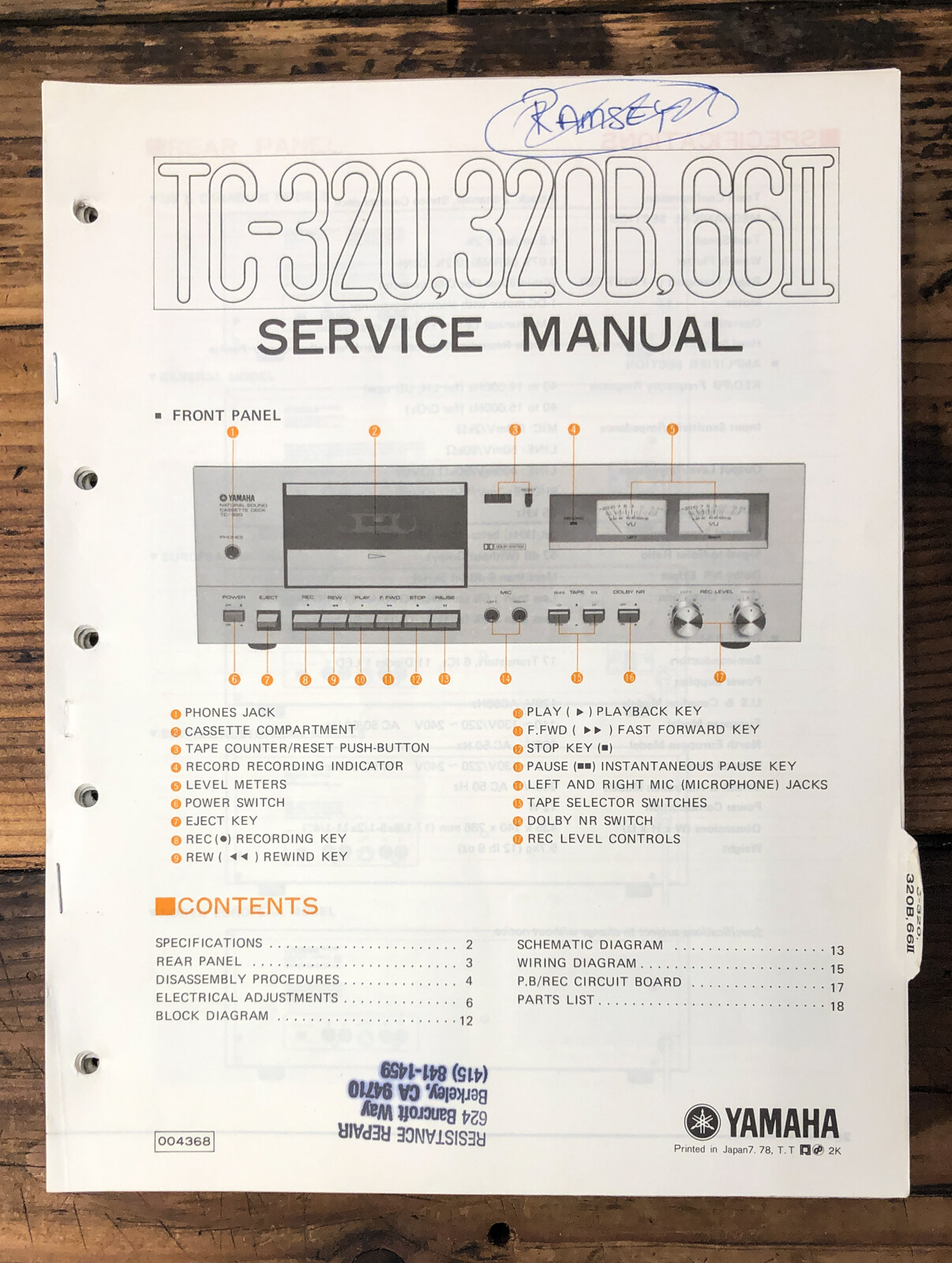
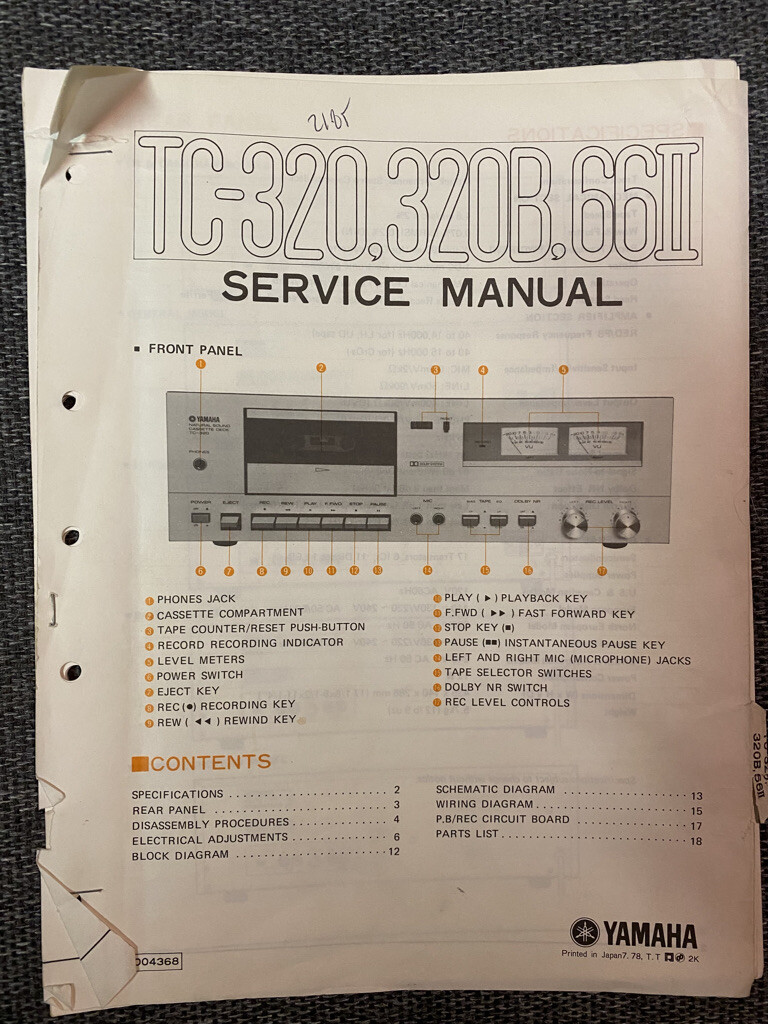
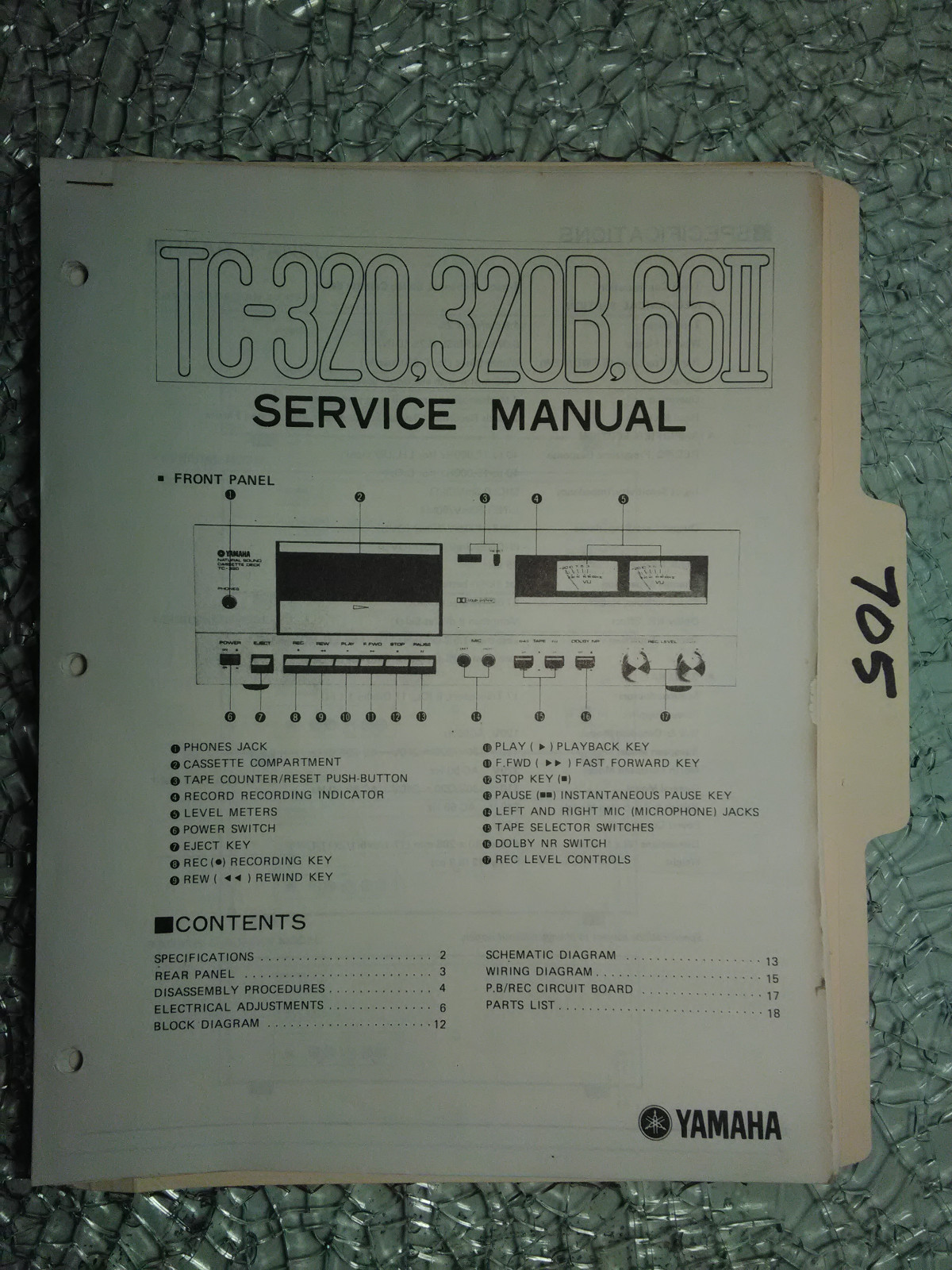
Some later variants of the TC-320 series included auto-reverse functionality, though the standard TC-320B typically required manual flipping. Its front panel featured a clean, functional layout with tactile buttons and a large cassette well, reflecting Yamaha’s user-centric design ethos.
Common Issues and Maintenance
Like all vintage cassette decks, the Yamaha TC-320B requires periodic maintenance to perform at its best. Common issues include:
- Worn pinch rollers: These rubber components can harden or become sticky over time, affecting tape contact and speed stability. Replacement is recommended during servicing.
- Deteriorated belts (if applicable): While the capstan is direct-drive, some internal mechanisms may use small belts that degrade.
- Dirty or oxidized tape heads: Regular cleaning with isopropyl alcohol and a cotton swab is essential. Demagnetizing the heads every few months helps maintain clarity.
- Capacitor aging: Electrolytic capacitors in the power supply and signal path may dry out, leading to noise or channel imbalance.
- Mechanical sluggishness: Dust and dried lubricant can cause transport mechanisms to stick or respond slowly.
For optimal performance, a full service by a qualified technician—including head alignment, capstan cleaning, and lubrication—is recommended for units that have been in storage.
Current Market Value and Collectibility
The Yamaha TC-320B is not a rare or highly sought-after collector’s item like some Nakamichi or Revox decks, but it holds steady appeal among vintage audio enthusiasts who appreciate well-built, musical-sounding cassette decks at a reasonable price.
In today’s market (2024), a fully functional TC-320B in good cosmetic condition typically sells for $100–$180, depending on region and included accessories. Units with original packaging, manuals, or proven service history may command slightly higher prices.
Its value lies more in usability than rarity—it’s a deck you can actually use daily, not just display. For those building a period-correct 1970s/80s Yamaha system (e.g., paired with a Yamaha CR-840 receiver or YP-2000 turntable), the TC-320B offers both aesthetic and sonic coherence.
Conclusion and Legacy
The Yamaha TC-320B may not have the fame of a Nakamichi Dragon or the cult status of a Tandberg TD-20A, but it represents the quiet excellence of Yamaha’s engineering during the analog era. It’s a deck that prioritized musicality, reliability, and user-friendliness over flashy specs or excessive automation.
In an age where cassette decks are once again gaining popularity—thanks to the analog revival and renewed interest in tape’s warm, compressed sound—the TC-320B stands as a capable and rewarding machine. Whether you're archiving vinyl, creating mixtapes, or simply enjoying pre-recorded cassettes, the TC-320B delivers a listening experience that feels both nostalgic and genuinely engaging.
For vintage audio lovers, the TC-320B is a reminder that great sound doesn’t always come from the most expensive gear—it comes from thoughtful design, solid construction, and a passion for music. And in that regard, Yamaha hit the right note.
eBay Listings

As an eBay Partner, we earn from qualifying purchases. This helps support our independent vintage technology research.
Related Models
- Yamaha CT-610 (1978)
- Yamaha CT-7000 (1978)
- Yamaha CT-710 (1976)
- Yamaha CT-810 (1978)
- Yamaha TC-1000 (1978)
- Sony TC-2050SD (1978)
- Aiwa AD-F990 (1993)
- Kenwood KX-3060 (1982)
- Sony TC-2130A (1974)
- Sony TC-2220 (1972)