Yamaha CR-800 (1974)
That rare receiver that feels like it was engineered, not assembled—every knob click, every watt, every frequency slice built to last.
Overview
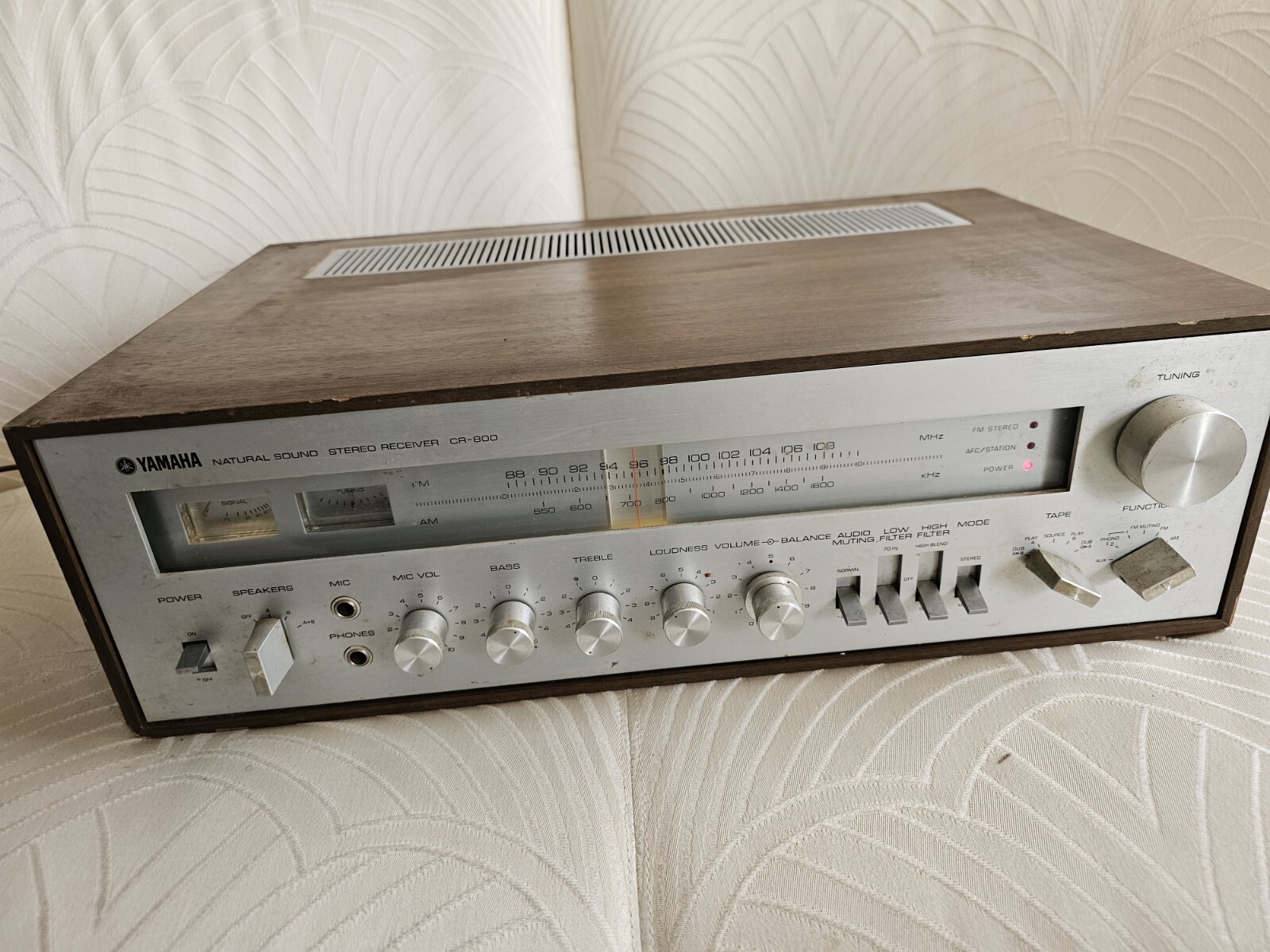
The Yamaha CR-800 Natural Sound Series 2 Channel AM-FM Receiver isn’t just another box from the golden age of receivers—it’s a statement. Released in 1974, it arrived when the FTC was cracking down on inflated power ratings, and Yamaha responded not with hype, but with honesty and engineering rigor. Priced at $580 in its day—serious money back then—it wasn’t for the casual listener. This was for the audiophile who wanted transparency, build quality, and a tuner section that could outperform standalone units.
It slots into Yamaha’s CR series as the second-tier model, just below the legendary CR-1000, but don’t let that fool you. The CR-800 doesn’t feel like a compromise. It feels like a distillation. Owners report a sound that’s clean, open, and detailed—some call it “lifelike,” others say it lacks the romantic warmth of tube gear, but almost no one disputes its precision. It’s the kind of receiver that makes you notice things in records you’ve played a hundred times: the breath behind a vocal, the decay of a cymbal, the subtle stereo placement that gets lost in murkier systems.
And it’s built like a tank. The metal chassis, wood side panels, brushed aluminum faceplate, and smooth-operating controls give it a presence few receivers of the era match. Every switch and dial moves with that “smooth as glass” precision one owner raved about. It’s not flashy, but it’s undeniably substantial—like a Swiss watch with volume knobs.
Specifications
| Manufacturer | Yamaha |
| Year Introduced | 1974 |
| Power Output | 45 watts per channel into 8Ω (stereo) |
| Frequency Response | 10Hz to 50kHz |
| Total Harmonic Distortion | 0.1% |
| Damping Factor | 70 |
| Input Sensitivity | 3mV (mic), 3mV (MM), 150mV (line) |
| Signal to Noise Ratio | 70dB (mic), 75dB (MM), 90dB (line) |
| Channel Separation | 50dB (MM), 50dB (line) |
| Output | 150mV (line), 0.775V (Pre out) |
| Speaker Load Impedance | 4Ω to 16Ω |
| Dimensions (W×H×D) | 474 × 158 × 300mm |
| Weight | 14kg |
| FM Tuner Distortion | 0.15% mono, 0.3% stereo |
| FM Tuner Selectivity | over 80dB |
| Low Filter Settings | two-position (20 Hz, 70 Hz) |
| High Filter Setting | two-position (8 kHz, blend) |
| Muting Switch | drops level 20dB |
| FM Tuner Separation | 45 dB |
| MPX Distortion | 0.05% |
| Tape Monitor Selector | five-position |
| Indicators | LED's for critical indications |
| Inputs | Phono (MM), Tuner, Aux, Tape 1, Tape 2 |
| Outputs | Speaker A/B, Headphone, Tape Out |
| Tone Controls | Bass and Treble |
| Loudness Control | Yes |
Key Features
Natural Sound Circuitry and Fully Discrete Design
Yamaha’s “Natural Sound” philosophy wasn’t marketing fluff—it was a design mandate. The CR-800 employs a fully discrete, direct-coupled complementary amplifier design, meaning no output capacitors muddy the signal path. This contributes to its wide frequency response (10Hz–50kHz) and ultra-low distortion (0.1%). One audio magazine test in 1975 found that Yamaha’s published specs were actually conservative—the measured THD was often below 0.035% across the audible range. That kind of over-engineering is why owners still praise its clarity decades later.
Precision Tuner Section
The FM tuner is where the CR-800 really flexes. It borrows heavily from Yamaha’s high-end CT-7000 tuner, using two low-noise dual-gated MOSFETs in the RF and mixer stages for exceptional sensitivity. The IF amplifier uses a mix of discrete and integrated differential amplifiers, plus three ceramic filters for tight selectivity—over 80dB, which means it can pull in weak stations without crosstalk. It was also the first Yamaha tuner to use negative feedback around the multiplex demodulator, reducing distortion. Yamaha Auto Touch tuning helps fine-tune stations for minimum interference, and owners consistently report it “nails” stations with “the best signal” and “least interference.”
Thoughtful Front-Panel Layout and Controls
Everything on the front panel feels deliberate. The brushed aluminum faceplate and matching dial give it a sleek, professional look. The 11 detented steps on the tone and loudness controls allow for precise adjustments—Stereo Review called the loudness compensation “one of the best we have used,” and one owner said it delivers “the best audio response I have ever heard at lower volumes.” The blend mode on the high filter is a smart touch, reducing tape hiss without killing high-end detail.
Modular Design and Expandability
The CR-800 was built for serious systems. It has separable preamp and power amp sections, so you can bypass the internal preamp or use it as a standalone preamp. The IF output allows connection to a 4-channel decoder for quadraphonic sound—a big deal in the mid-70s. It also includes two phono input circuits, four AC outlets (two switched, two un-switched), and one-touch spring-clip speaker terminals that make A/B switching easy. The headphone jack and mic input (with its own preamp and volume control) add versatility, though the mic signal doesn’t route to tape outputs—a quirk, not a flaw.
Historical Context
The CR-800 debuted in 1974 as part of Yamaha’s Natural Sound receiver series, a line that became legendary for its clean, powerful sound and bulletproof build. It arrived just after the FTC’s 1974 power labeling rules, which forced manufacturers to stop inflating wattage claims—Yamaha’s honest 45 watts per channel was a badge of integrity. Positioned just below the flagship CR-1000, it shared much of the same DNA but at a slightly more accessible price. The CR series competed with high-end offerings from Pioneer and Marantz, and while it may not have had the brand mystique of a Mcintosh, it earned respect for its engineering and value.
Collectibility & Value
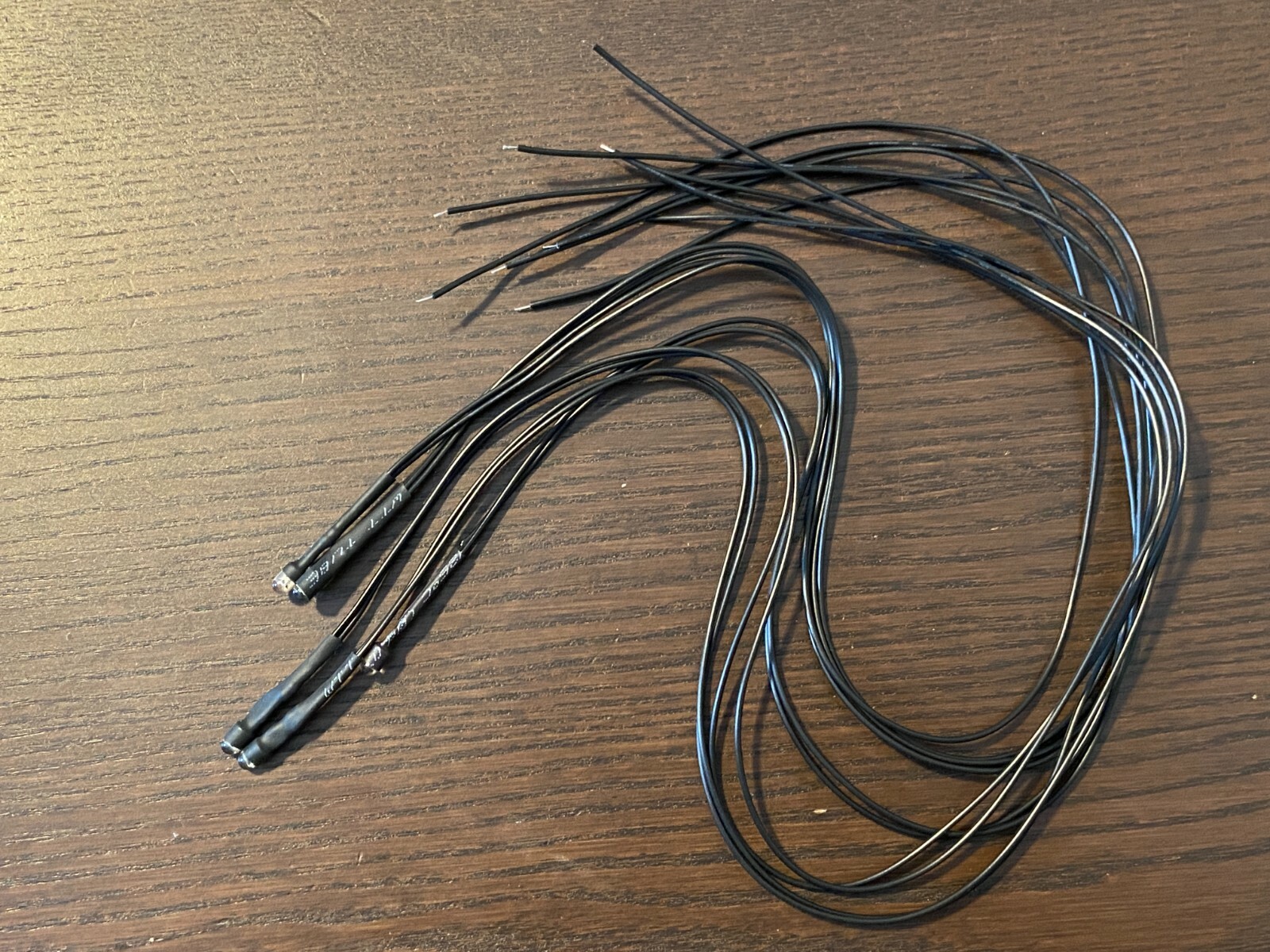
The CR-800 trades today in the $200–$400 range, depending on condition. One owner estimated $250 “as is,” and barely over $400 if fully recapped and professionally adjusted. Refurbishment kits are available on eBay for around $175, though some users note they contain lower-tier components and require supplementation. It’s a “typical recap candidate”—meaning all electrolytic capacitors should be replaced during restoration, along with checking for failing lamps and cleaning controls with Deoxit.
Common issues include right-channel dropouts that come and go with volume adjustments—a symptom often traced to failing capacitors or dirty potentiometers. The sheer number of discrete components, while a hallmark of its quality, also means servicing can be time-consuming. But when it’s working, owners describe it as “sheer delight,” with a sound that remains satisfying even at low levels. It’s not rare, but well-maintained examples are increasingly prized, especially by those building period-correct 70s systems.
eBay Listings


As an eBay Partner, we earn from qualifying purchases. This helps support our independent vintage technology research.
Related Models
- Yamaha R-100 (1973)
- Yamaha CA-2010 (1972)
- Yamaha CR-400 (1975)
- Yamaha UC-1 (1979)
- Pioneer QX-949A (1978)
- Pioneer SX-2000 (1978)
- Pioneer SX-2500 (1978)
- Marantz SR-2000 (1999–2001)
- Onkyo TX-1500MKII (1975)
- Pioneer QX-646 (1978)