Teac X-300: The Quiet Master of Analog Tape
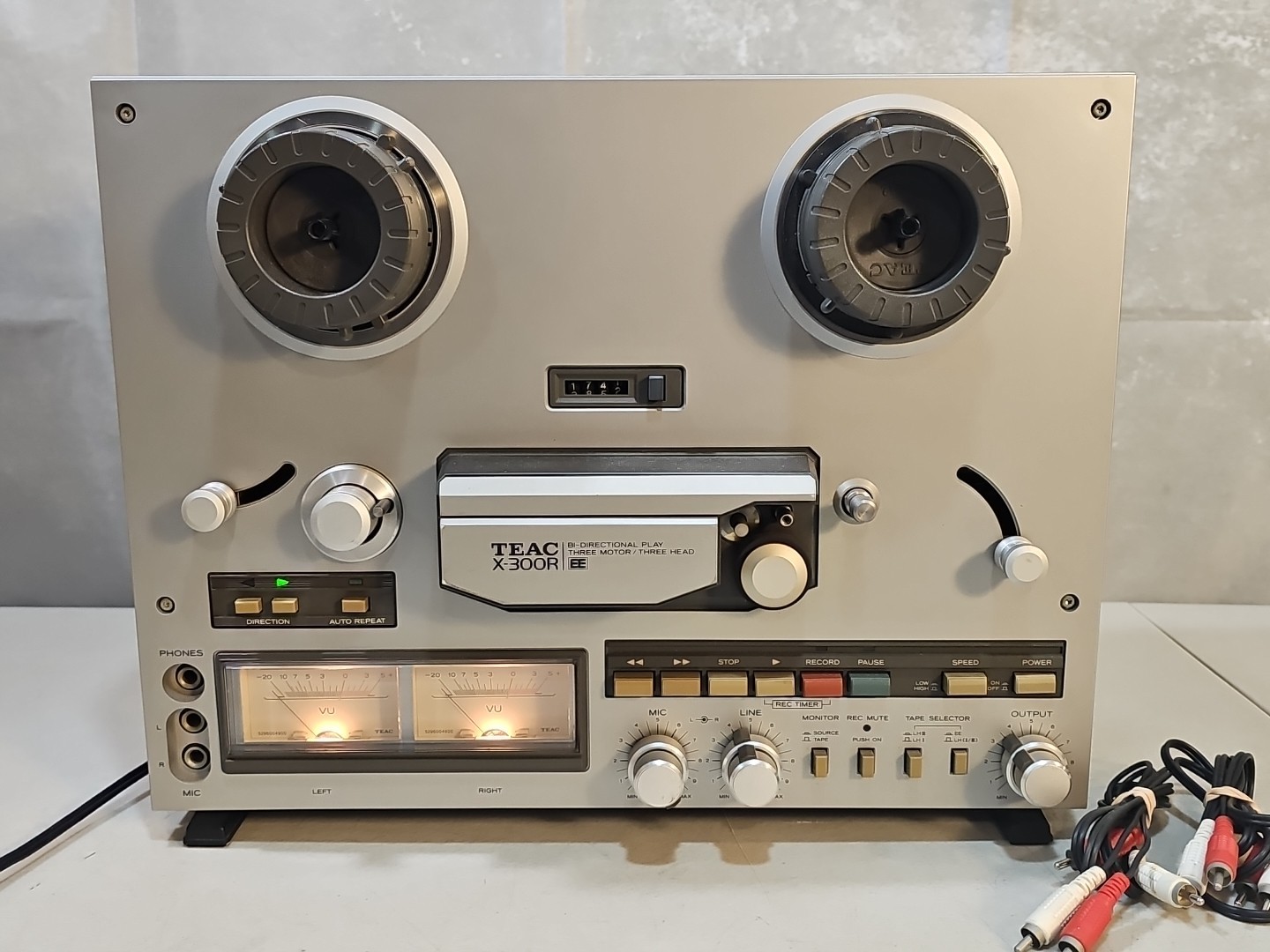
In the late 1970s, when high-fidelity audio was undergoing a golden renaissance, Teac Corporation stood at the forefront of analog tape innovation. Among their most respected and enduring open-reel recorders is the Teac X-300, a 1/4-inch 2-track stereo reel-to-reel tape deck that exemplified the Japanese manufacturer’s commitment to precision, reliability, and audiophile-grade performance. Though not as widely celebrated as some of its contemporaries from Nakamichi or Revox, the X-300 carved out a loyal following among home tapers, recording enthusiasts, and studio engineers looking for a no-nonsense, high-performance machine that delivered professional results without the professional price tag.
Released in 1979, the X-300 arrived during a pivotal moment in audio history. Compact cassettes were gaining popularity for portability, but serious listeners still regarded open-reel tape as the gold standard for dynamic range, frequency response, and sonic transparency. Teac, already known for its robust engineering and user-friendly designs, positioned the X-300 as a premium yet accessible recorder for the discerning audiophile.
Technical Specifications
The Teac X-300 was engineered for accuracy and consistency, with a focus on minimizing wow, flutter, and distortion—hallmarks of a well-designed tape transport. It supported 7.5 ips and 15 ips tape speeds, allowing users to balance recording time and fidelity. At 15 ips, the X-300 delivered near-reference-quality playback, making it ideal for critical listening and master duplication.
| Specification | Detail |
| Format | 1/4-inch 2-track stereo |
| Tape Speeds | 7.5 ips, 15 ips |
| Wow and Flutter | < 0.15% (WRMS) |
| Frequency Response | 30Hz – 20kHz (+/-3dB) at 15 ips |
| Signal-to-Noise Ratio | > 60dB (Dolby B) |
| Total Harmonic Distortion | < 1.5% |
| Head Configuration | 3-head (record, playback, erase) |
| Motor System | Dual capstan direct-drive with quartz-locked servo control |
| Input/Output | Line in/out (RCA), mic in (1/4"), headphone out |
| Equalization | 120µs (15 ips), 180µs (7.5 ips) |
| Power Requirement | 120V AC, 60Hz |
| Dimensions | 440mm (W) × 145mm (H) × 330mm (D) |
| Weight | 12.5 kg (27.5 lbs) |
The X-300 featured a 3-head configuration, a hallmark of high-end decks, allowing for separate record, playback, and erase heads. This design enabled real-time monitoring of the recorded signal, a critical feature for ensuring accurate levels and tonal balance during recording sessions. The heads themselves were made from high-permeability permalloy, known for their excellent high-frequency response and durability.
Teac implemented a quartz-locked servo system to maintain precise tape speed, minimizing speed variations that could degrade sound quality. This technology, borrowed from more expensive professional machines, gave the X-300 exceptional speed stability—critical for maintaining pitch accuracy and reducing modulation noise.
Sound Characteristics and Performance
The Teac X-300 is widely praised for its clean, transparent sound with a slightly warm tonal balance that flatters most musical genres. Unlike some tape decks that color the sound with excessive brightness or bass bloat, the X-300 remains remarkably neutral, making it an excellent tool for archival transfers and critical listening.
At 15 ips, the frequency response extends smoothly to 20kHz, capturing the air and detail of cymbals, strings, and vocals with impressive clarity. The low end is tight and well-controlled, avoiding the flabbiness that sometimes plagues lesser decks. The 3-head design ensures that what you record is what you hear—there’s no guessing whether your levels are peaking or if your EQ settings are optimal.
With Dolby B noise reduction (switchable), the X-300 achieves a signal-to-noise ratio exceeding 60dB, which was excellent for a consumer-grade open-reel deck. While not as quiet as later digital formats, the gentle hiss of tape at 7.5 ips adds a subtle analog character that many listeners find pleasing—especially with jazz, classical, and acoustic recordings.
Notable Features and Innovations
The X-300 was packed with thoughtful features that elevated it above basic consumer models:
- Dual capstan drive system: Reduced tape slippage and improved speed consistency.
- Front-panel level meters: Large VU meters provided clear visual feedback for input and output levels.
- Separate record and playback amplifiers: Allowed for precise calibration and reduced crosstalk.
- Auto-reverse playback (on some variants): Though not universal, certain regional versions included this convenience feature.
- Direct-drive motors: Minimized mechanical noise and improved long-term reliability.
- Professional-grade connectors: Gold-plated RCA jacks and heavy-duty tape guides ensured signal integrity.
One of the X-300’s most appreciated features was its ease of maintenance. Teac designed the deck with serviceability in mind—head alignment, capstan cleaning, and pinch roller replacement could be performed with basic tools and minimal technical expertise. This has contributed significantly to the deck’s longevity and survival rate today.
Common Issues and Maintenance
Like all vintage tape equipment, the Teac X-300 requires regular maintenance to perform at its best. The most common issues include:
- Deteriorated rubber parts: Pinch rollers and idler tires can harden or crack over time. Replacement with modern equivalents is strongly recommended.
- Dirty or oxidized heads: Regular cleaning with isopropyl alcohol and demagnetizing every few months will preserve sound quality.
- Capstan wear: Though durable, the capstan shaft can develop grooves over decades of use. Inspect for smoothness and replace if necessary.
- Lubrication drying: The internal gears and transport mechanism may need relubrication with synthetic grease designed for audio equipment.
Owners should also check the condition of the tape path guides—bent or misaligned guides can cause tape skewing and head wear. A full service, including head resurfacing and alignment, can restore a neglected X-300 to like-new performance.
Current Market Value and Collectibility
The Teac X-300 is not as widely collected as some flashier or rarer decks, but it has developed a steady following among reel-to-reel enthusiasts. In good working condition, prices typically range from $400 to $700, depending on completeness, cosmetic condition, and whether it has been recently serviced.
Fully restored units with new belts, cleaned heads, and calibrated electronics command the higher end of the market. Because the X-300 was built to last and many were stored carefully, well-preserved examples are still relatively available—especially in Japan and North America.
Its value lies not in rarity, but in reliability and sonic performance. For someone building a vintage analog setup or digitizing old tapes, the X-300 offers a compelling balance of fidelity, usability, and durability.
Conclusion and Legacy
The Teac X-300 may not have the celebrity status of a Nakamichi Dragon, but it represents something equally important: thoughtful engineering in service of musical enjoyment. It was a tool for those who valued accuracy, consistency, and the tactile joy of analog recording.
Today, as vinyl and tape experience a resurgence, the X-300 stands as a testament to Teac’s golden era—a time when Japanese manufacturers led the world in high-fidelity audio innovation. Whether you're transferring rare recordings, creating your own master tapes, or simply savoring the warmth of analog sound, the Teac X-300 remains a worthy companion.
For the audiophile who appreciates understated excellence, the X-300 isn’t just a relic—it’s a quiet master of the magnetic medium.
eBay Listings


As an eBay Partner, we earn from qualifying purchases. This helps support our independent vintage technology research.
Service Manuals & Schematics
- Owner's Manual — archive.org
Related Models
- Teac A-2340R (1975)
- Teac V-30 (1975)
- Teac W-416 (1975)
- Teac A-108-SYNC (1978)
- Teac A-110 (1978)
- Akai AM-2850 (1975)
- Akai AP-206 (1975)
- Nakamichi BX-1 (1985)
- Acoustic Research research-ar-17 (1978)
- Acoustic Research AR-19 (1994)