Teac V-850-X: The Audiophile’s Reel-to-Reel Masterpiece
In the late 1970s, when cassette tapes were gaining popularity for their convenience and portability, Teac stood apart by doubling down on the fidelity and craftsmanship of reel-to-reel audio. The Teac V-850-X, introduced in 1978, was one of the company’s most ambitious and technically refined open-reel tape decks. Designed for serious home audiophiles and semi-professional users, the V-850-X represented the pinnacle of analog tape reproduction technology from a Japanese manufacturer renowned for precision engineering and musical transparency.
Part of Teac’s elite “V-series” lineup—alongside models like the V-7000 and V-9000—the V-850-X was built not just to play tapes, but to reproduce music with startling realism. At a time when even high-end audio gear was beginning to prioritize compactness and automation, the V-850-X remained proudly analog, mechanical, and hands-on. It was a statement piece: a machine for those who believed that the best sound still came on ¼-inch tape, spun at 7.5 or 15 inches per second.
Technical Specifications
The V-850-X was engineered with audiophile-grade components and meticulous attention to mechanical stability. Its dual-capstan, three-motor transport system ensured exceptional tape speed accuracy and minimal wow and flutter—critical for high-fidelity playback. The deck supported both 7.5 and 15 ips (inches per second) speeds and was compatible with standard ¼-inch reel-to-reel tapes, making it ideal for playing and recording master-quality analog recordings.
| Specification | Detail |
| Model | Teac V-850-X |
| Year Introduced | 1978 |
| Type | ¼-inch Reel-to-Reel Tape Deck |
| Tape Speeds | 7.5 ips, 15 ips |
| Track Configuration | 4-track, 2-channel stereo (full-track mono also supported) |
| Heads | Separate record, playback, and erase heads (ferrite) |
| Motor System | Three-motor, dual-capstan direct drive |
| Wow and Flutter | < 0.15% (15 ips, WRMS) |
| Frequency Response | 30Hz – 20kHz (15 ips, ±3dB) 40Hz – 18kHz (7.5 ips, ±3dB) |
| Signal-to-Noise Ratio | > 60 dB (Dolby B optional) |
| Input/Output | Line In/Out (RCA), Mic In (RCA), ¼" headphone jack |
| Recording Equalization | 120 µs (15 ips), 180 µs (7.5 ips) |
| Power Requirement | 120V AC, 60Hz (North American model) |
| Dimensions | 440 mm (W) × 145 mm (H) × 355 mm (D) |
| Weight | 14.5 kg (32 lbs) |
| Special Features | Auto-reverse playback (rare for reel-to-reel), VU meters, pitch control, remote control capability |
Sound Characteristics and Performance
The sonic signature of the Teac V-850-X is best described as warm, detailed, and dynamically expressive. Unlike many tape decks of the era that leaned toward clinical precision, the V-850-X delivered a rich, analog warmth that flattered acoustic instruments and vocals. Its three-head configuration allowed for true monitoring of the recorded signal, enabling users to fine-tune levels and EQ in real time.
At 15 ips, the frequency response extended cleanly to 20 kHz, capturing high-frequency detail with minimal harshness. Bass response was tight and well-controlled, thanks to the stable tape transport and precise head alignment. When paired with high-quality tape (such as Ampex 456 or BASF SM468), the V-850-X could rival the performance of professional studio recorders costing twice as much.
The inclusion of Dolby B noise reduction (switchable) helped reduce tape hiss on prerecorded or home-dubbed tapes, though purists often preferred to run the deck in “flat” mode for a more natural sound. The large, centrally mounted VU meters provided accurate level monitoring and added to the deck’s luxurious, studio-grade aesthetic.
Notable Features and Innovations
What truly set the V-850-X apart from its contemporaries was its blend of professional engineering and user-focused design:
- Dual Capstan Transport: Reduced tape slippage and improved speed stability, minimizing distortion and enhancing clarity.
- Separate Playback and Record Heads: Allowed for optimal head design and real-time monitoring—essential for critical listening and recording.
- Auto-Reverse Functionality: A rare and advanced feature for a reel-to-reel deck, allowing continuous playback of both sides of a tape without manual rewinding or reel swapping.
- Precision Mechanical Controls: Large, tactile knobs and switches gave the user direct, satisfying control over transport functions.
- Remote Control Support: An optional remote (RM-850) enabled basic transport control from a distance—a luxury in the late 1970s.
- Pitch Control: Adjustable ±6%, useful for tuning recordings or matching tape speed to live instruments.
The chassis was constructed from heavy-gauge steel with extensive internal damping to minimize vibration. Rubber-isolated feet and a rigid faceplate further contributed to mechanical stability—critical for maintaining head-to-tape contact and minimizing wow.
Common Issues and Maintenance
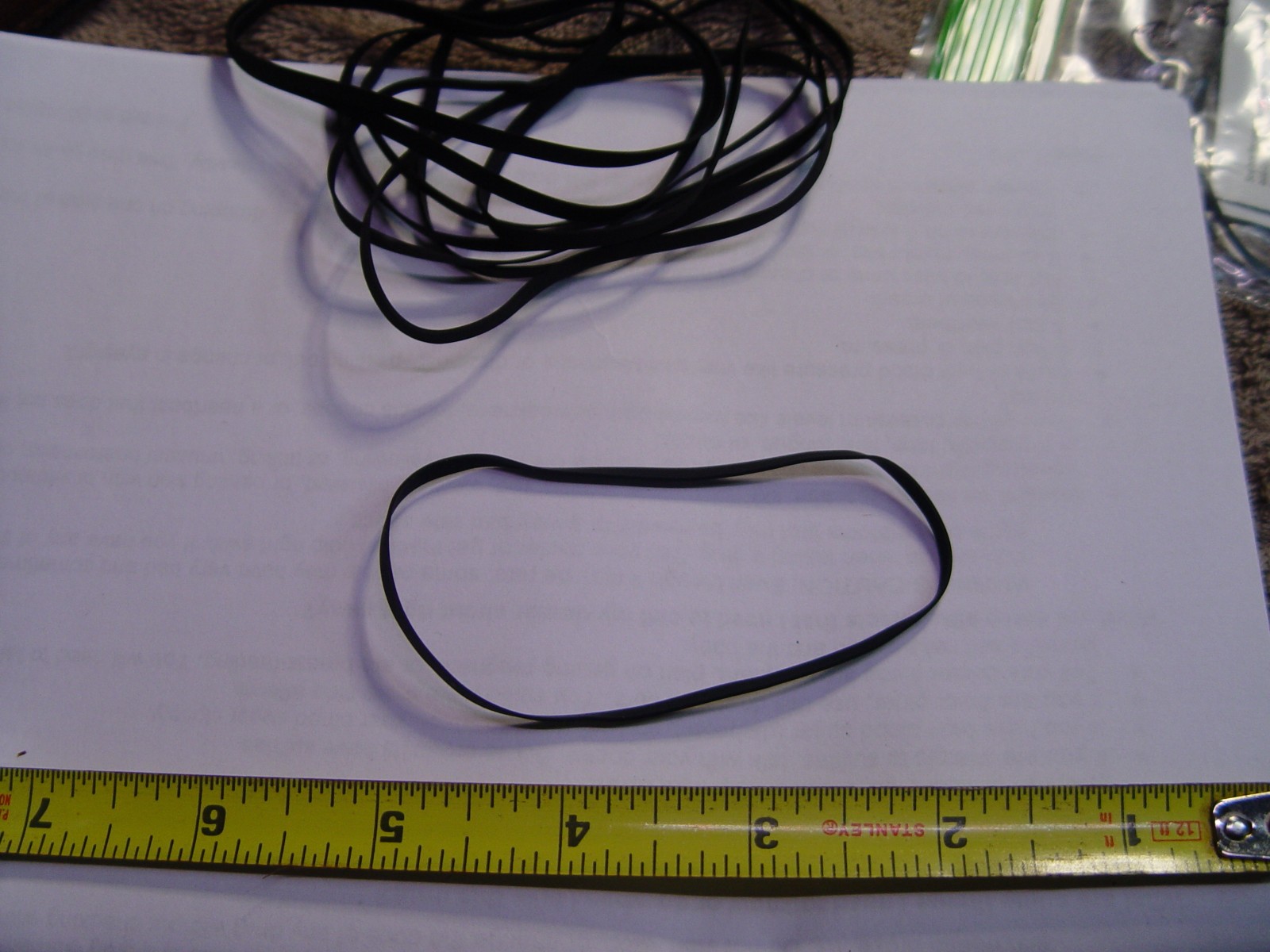
As with all vintage reel-to-reel decks, the Teac V-850-X requires careful maintenance to perform at its best. Over four decades, rubber components such as drive belts, capstan tires, and pinch rollers can harden or deteriorate. These should be replaced during any restoration.
Other common issues include:
- Dirty or worn tape heads: Can cause muffled sound or dropouts. Regular cleaning with isopropyl alcohol and demagnetizing are essential.
- Sticky or sluggish transport mechanisms: Often due to dried grease in the gear trains. A full mechanical service is recommended every 10–15 years.
- Capacitor aging: The power supply and audio circuitry may have degraded electrolytic capacitors, which can affect performance or cause failure.
- Head alignment drift: Over time, head azimuth and alignment can shift, requiring professional calibration for optimal stereo imaging.
Finding replacement parts can be challenging, but the V-850-X shares some components with other Teac V-series models, and enthusiast communities (such as those on AudioKarma or Tapeheads.net) often source or reproduce hard-to-find parts.
Current Market Value and Collectibility
The Teac V-850-X is a highly sought-after model among reel-to-reel collectors and analog audio enthusiasts. While not as widely known as the legendary Tascam or Studer decks, it occupies a respected niche for its build quality, innovative features, and superb sound.
In working condition, a fully serviced V-850-X typically sells for $800 to $1,500, depending on cosmetics, included accessories (such as the remote), and proven performance. Units with original packaging and manuals command a premium. Fully restored examples with new belts, cleaned heads, and recapped power supplies are especially valuable.
Its rarity—particularly outside Japan—and the decline of reel-to-reel usage mean that finding a functional V-850-X requires patience. However, for those who appreciate the ritual of threading tape and the unmatched warmth of analog tape, the V-850-X is more than a machine—it’s a portal to a golden age of high-fidelity sound.
Conclusion and Legacy
The Teac V-850-X stands as a testament to a time when audio equipment was built to last, designed to inspire, and engineered to deliver emotional, lifelike sound. While the world has moved on to digital streaming and solid-state storage, the V-850-X reminds us of the tactile joy and sonic richness of analog tape.
It may not have achieved the fame of a Nakamichi Dragon or a Revox A77, but among those in the know, the V-850-X is revered as a sleeper classic—a sophisticated, beautifully crafted deck that delivers performance far beyond its era. For collectors, restorers, and analog purists, the Teac V-850-X is not just a vintage curiosity, but a living piece of audio history worth preserving, playing, and celebrating.
eBay Listings


As an eBay Partner, we earn from qualifying purchases. This helps support our independent vintage technology research.
Related Models
- Teac A-6700DX (1980)
- Teac A-105 (1975)
- Teac A-106 (1975)
- Teac A-170 (1976)
- Teac A-2300 (1978)
- Sony TC-2050SD (1978)
- Aiwa AD-F990 (1993)
- Kenwood KX-3060 (1982)
- Sony TC-2130A (1974)
- Sony TC-2220 (1972)